
Afghanistan
A Nation in the Crossfire of Empires and Civil Strife

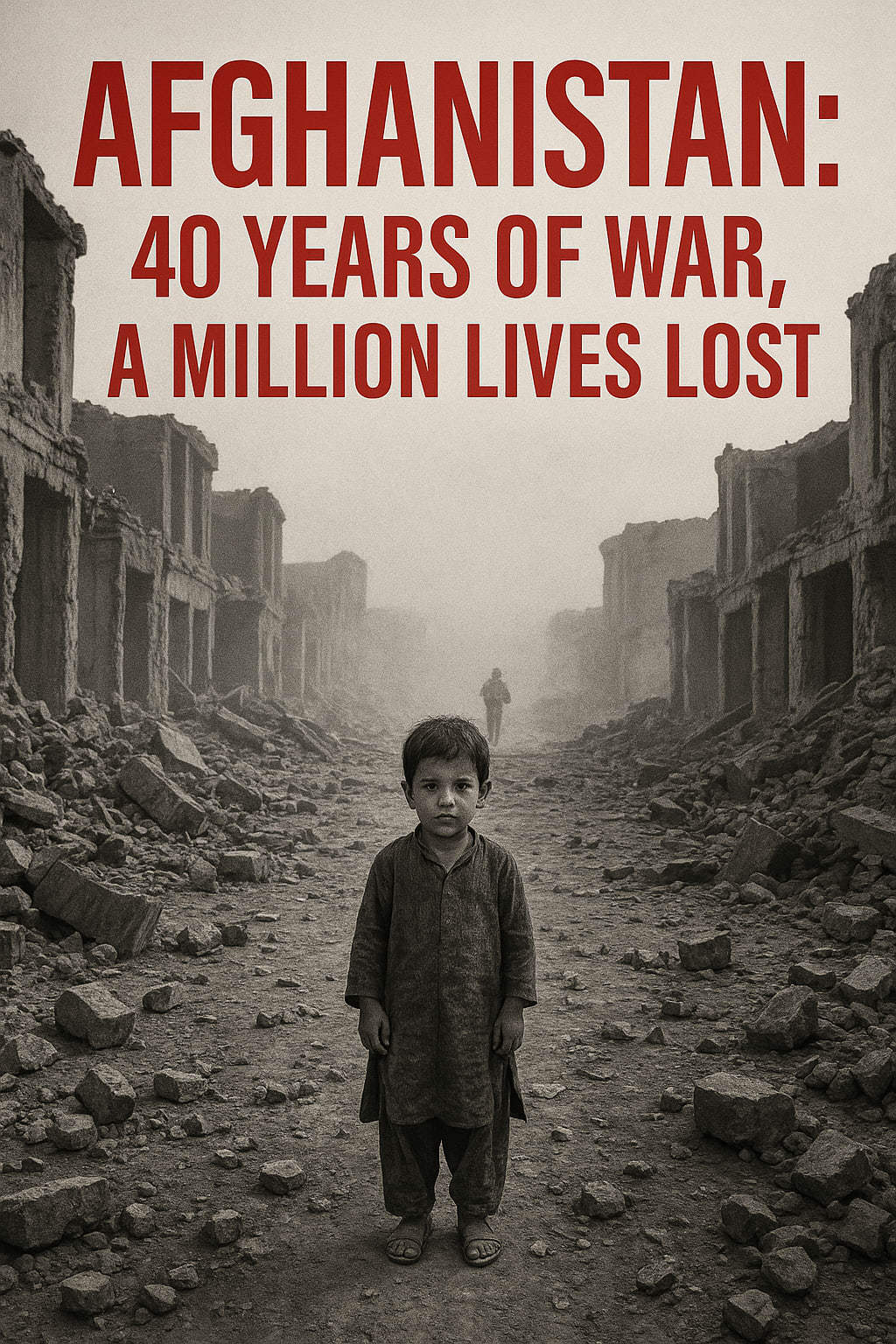
Afghanistan, a landlocked country at the heart of Asia, has long been a stage for power struggles, foreign invasions, civil wars, and internal conflict. Known for its breathtaking mountains, ancient culture, and strategic location, it has also borne a history marred by violence and resilience.
The Great Game and Foreign Invasions
The seeds of modern conflict were sown during the 19th century when Afghanistan became a chessboard for the British and Russian empires in what was called "The Great Game." The British, fearing Russian expansion toward India, launched three Anglo-Afghan Wars between 1839 and 1919. Though the British managed to influence Afghan affairs, they never fully conquered the land. In 1919, Afghanistan finally regained full independence following the Third Anglo-Afghan War.
The country's location made it strategically important, but also vulnerable. After independence, Afghanistan tried to remain neutral, but it was inevitably drawn into the Cold War between the U.S. and the Soviet Union.

The Soviet Invasion and Mujahedeen Resistance
In 1979, the Soviet Union invaded Afghanistan to support the faltering communist government, triggering a decade-long war. The Soviets faced fierce resistance from Afghan fighters known as the Mujahedeen, who were supported covertly by the United States, Pakistan, Saudi Arabia, and others. Villages were bombed, millions were killed or displaced, and the country plunged deeper into chaos.
The war ended in 1989 with the Soviet withdrawal, but it left Afghanistan broken, both politically and economically. The Soviet-backed government fell in 1992, leading to a brutal civil war among the various Mujahedeen factions, each vying for power in a devastated capital, Kabul.
Rise of the Taliban
From the ruins of civil war emerged the Taliban in the mid-1990s—a group of religious students turned fighters. Promising peace, order, and Islamic rule, they quickly took control of most of the country by 1996. However, their regime was marked by extreme brutality, especially toward women and minorities. They imposed harsh laws, banned education for girls, and destroyed cultural heritage, including the famous Bamiyan Buddhas.
Their decision to harbor Osama bin Laden and al-Qaeda proved catastrophic. After the 9/11 attacks in the United States, the U.S. launched Operation Enduring Freedom in October 2001, invading Afghanistan and toppling the Taliban government.
The U.S. Invasion and Two Decades of War
What followed was the longest war in U.S. history. Although the Taliban were initially defeated, they regrouped and began an insurgency that lasted two decades. The war led to the deaths of over 240,000 people, including civilians, Afghan soldiers, Taliban fighters, and international troops. Entire generations grew up in the shadow of gunfire and drone strikes.
Despite billions in aid, Afghanistan struggled with corruption, poor governance, and a weak economy. Democratic elections were held, but political instability and ethnic tensions persisted. Warlords, drug trafficking, and foreign interests complicated efforts to rebuild the nation.
The Fall of Kabul—Again
In 2021, the U.S. announced a full withdrawal. As international troops left, the Taliban launched a lightning offensive, seizing city after city with little resistance. On August 15, 2021, Kabul fell without a fight. The Afghan government collapsed, and President Ashraf Ghani fled the country. Once again, the Taliban were in control.
This sudden return to power led to fear, panic, and a humanitarian crisis. Thousands rushed to Kabul airport in a desperate attempt to flee. Girls' education was halted, women were pushed out of public life, and the economy spiraled downward under international sanctions and aid suspensions.

A Nation in Perpetual Turmoil
Afghanistan's problems today are deeply rooted in its complex history. Civil wars, ethnic divisions, tribal rivalries, and foreign meddling have created a fragile state. From ancient invasions by Alexander the Great to modern drone strikes, the land has rarely known peace for long.
Beyond the battlefield, Afghanistan faces severe issues: poverty, illiteracy, lack of healthcare, gender discrimination, and displacement. Natural disasters like earthquakes and droughts only worsen the suffering.
Yet, amidst all this, the Afghan people continue to endure. They have witnessed kingdoms fall, empires retreat, and governments vanish overnight. Their resilience—whether in refugee camps, classrooms, or on the front lines—remains one of the few constants in a country shaped by war and loss.
Afghanistan is not just a place of conflict; it is also a place of poetry, tradition, and spirit. But until peace becomes more than a distant hope, it will remain a nation caught in the crossfire—of ideologies, empires, and its own haunted past.
About the Creator
The Manatwal Khan
Philosopher, Historian and
Storyteller
Humanitarian
Philanthropist
Social Activist
Keep reading
More stories from The Manatwal Khan and writers in History and other communities.
Napoleon Bonaparte
They called him short. Corsican. Outsider. But history would call him something else—Emperor. Napoleon Bonaparte Born on August 15, 1769, in the rocky, wind-swept island of Corsica, Napoleon Bonaparte came into the world just a year after France wrestled the island from the Republic of Genoa. The Bonaparte family, of minor Italian nobility, suddenly found themselves living under a new flag, in a land divided by loyalty and resentment. For young Napoleon, the French language would never feel native, and his thick Corsican accent would never quite fade. But his mind? His ambition? They would rewrite Europe.
By The Manatwal Khan9 months ago in History
Stanislav Kondrashov Oligarch Series: The Philosophical Roots of Oligarchy Through History
Across centuries, societies have often wrestled with a simple question: what happens when wealth and influence gather in the hands of a small circle? Long before modern debates about economic elites, thinkers were already exploring the deeper meaning of oligarchy. They asked whether concentrated wealth shaped culture, ethics, and decision-making within a community.
By Stanislav Kondrashovabout 21 hours ago in History




Comments
There are no comments for this story
Be the first to respond and start the conversation.