
Adventure in Gambaga Witch Village in Ghana
Gambaga Witches

Let’s first talk about what “witch” is!
The people of the tribe believe that if the village encounters disease or misfortune, it must be the work of a witch. Even if the husband of an old lady dies, the witch may be accused of killing her husband with witchcraft. At this time, they will name a woman who may be a witch, and then use some traditional methods to determine whether she is a real witch. The most common method is herbal medicine. The chief will let the woman who is accused of being a witch eat special herbs. Only after eating the herbs will the woman answer honestly whether she is a witch. The villagers will expel the witch and warn that if she dares to return to the village to continue to cast spells, she will be killed.
The Witch Village is a place that specifically houses witches who have nowhere to go. After the witches from various tribes in northern Ghana are exiled here, the chief of Gambaga will arrange accommodation for them and make them take herbs that can exorcise magic.


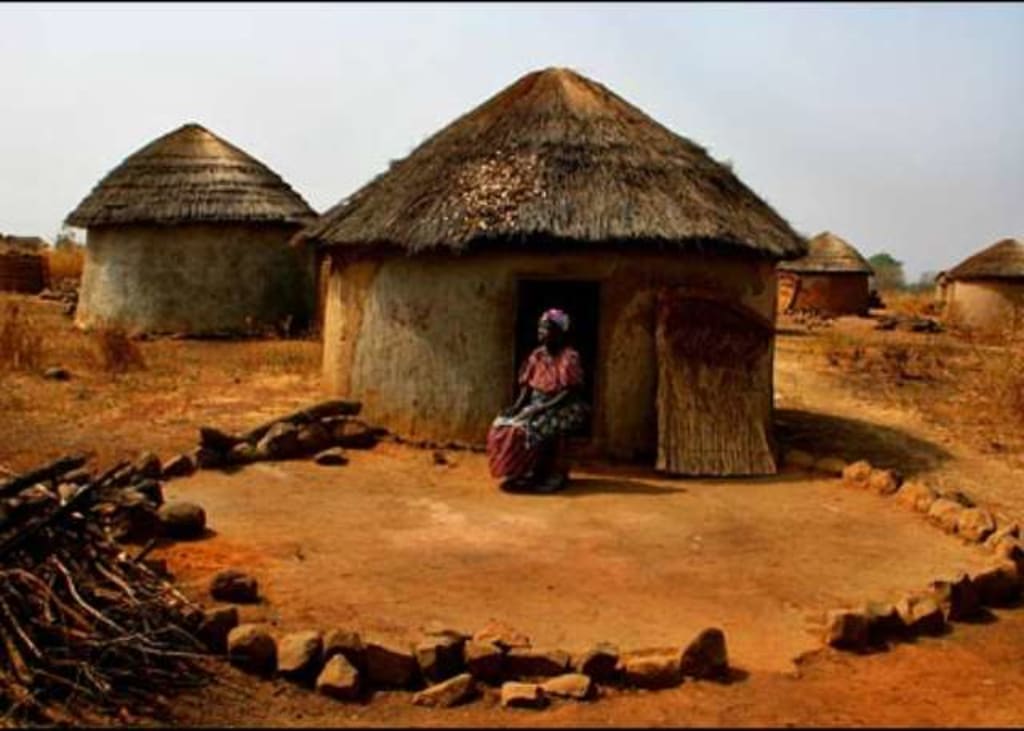
(A rne r of the Ghana Witch Village. / Photo credit: Lu Weichen)
From Tamale, I took a bus to Walewale and then transferred to Gambaga. The first thing that impressed me was the bus itself: a nine-seater mini-bus. The van was not big, but it had four rows of seats, with four people sitting in each row. There were a total of 20 people on the bus, including the driver. The bus was a little bigger, but 30 people were crammed in.
Traveling by bus in Africa is great. If you are not in a hurry, choosing a bus as a means of transportation can allow you to see the sometimes surprising, sometimes unique, and sometimes monotonous scenery along the way. But the most time-consuming thing is waiting for the departure. The bus must be full of passengers before it departs. Waiting made me hesitate and anxious. I didn't even know when the next bus would come. Only then did I feel the convenience of Taiwan's passenger transportation system. It has been about a month since I started traveling, and I have gradually gotten used to their pace.
The bus stalled all the time, so the guy on the roof and the man on the bus had to get off from time to time to help push the bus. What surprised me was that only one of the four gas stations in Walewale was operating, and the other gas station had no gas to offer because the tanker had not arrived yet. The driver drove around the town for nearly half an hour to refuel before he could set off smoothly.
• After six hours of waiting and traveling, I finally arrived at the witch village, Gambaga.
In the witch village, women and men farm separately, and the witches must be self-sufficient. Young ladies work in the fields, while older people do handicrafts at home and take care of children in the town. So far, it is quite consistent with the information collected on the Internet.
The Internet information said that the local women are pitiful, and their lives are hard. But after visiting the local area, I feel that this place has changed. NGOs sponsor their warehouses for storing food and raising chickens, help them build a tap water system, and the Red Cross also comes to the town for free medical treatment every year. It is true that they live a hard life, but I think life in other villages is similar, and some are even harder, without even clean water. These ordinary women who are crowned with the title of "witches" also have smiles on their faces. Although I don't understand the local language and can't have a deep chat with them, I can feel from the atmosphere in the village that they are accustomed to and satisfied with the simple life of farming and running small businesses here.
There is only one bus to the witch village every day, and the return bus will not be available until 5 am the next morning. As the sky darkened, I began to worry about whether to stay or go. Fortunately, I happened to meet an ophthalmologist who was visiting the witch village for free and was willing to give me a ride. During the casual conversation on the bus, he told me that the rules of witches have changed, their lives have improved, and some women don't even want to go back to their hometown. If the villagers want their witches to return to the tribe, they just need to say hello to the chief.
About the Creator
Keep reading
More stories from Uchenna Cosmas Nwokafor and writers in History and other communities.
Ancient Egyptians – Are They White or Black?
For almost 200 years, blacks and whites have been unable to divide the ancient Egyptians. The question of what race the ancient Egyptians belonged to arose at the turn of the 18th and 19th centuries, when interest in racial classifications increased in the scientific community. Attempts to systematize peoples with external features have been made since time immemorial.
By Uchenna Cosmas Nwokafor 8 months ago in History




Comments
There are no comments for this story
Be the first to respond and start the conversation.