
A Transformational Story of the Economic Boom in Africa
A Transformational Story of the Economic Boom in Africa


Africa was once known as the "dark continent," but it is now enjoying a golden age of progress, new ideas, and opportunities. A significant shift is taking place across the continent, from the golden sands of the Sahara to the lush green forests of the Congo Basin, from the Atlantic coast cities to the bustling trade centers of the Indian Ocean. It is not just numbers on spreadsheets or graphs in reports that are rewriting Africa's future; rather, it is the pulse of a new generation. First Chapter: A New Beginning in Nairobi Aisha Mwangi watched the sunrise over an ambitious city from the rooftop of her apartment in Nairobi, Kenya. She finished high school ten years ago and had no idea where she was going. She now owns a digital fashion startup with 14 young employees. Her business specialized in clothing with African influences, combining contemporary Western designs with traditional fabrics like kitenge. With just a single phone and an Instagram account, her journey began. Her designs are now available to customers in Rwanda, Ghana, the United Kingdom, and even Japan due to Kenya's robust mobile banking infrastructure and expanding e-commerce market. Africa's economic development was being largely supported by the digital economy, which was fueled by necessity and innovation. The Tech Revolution in Lagos,
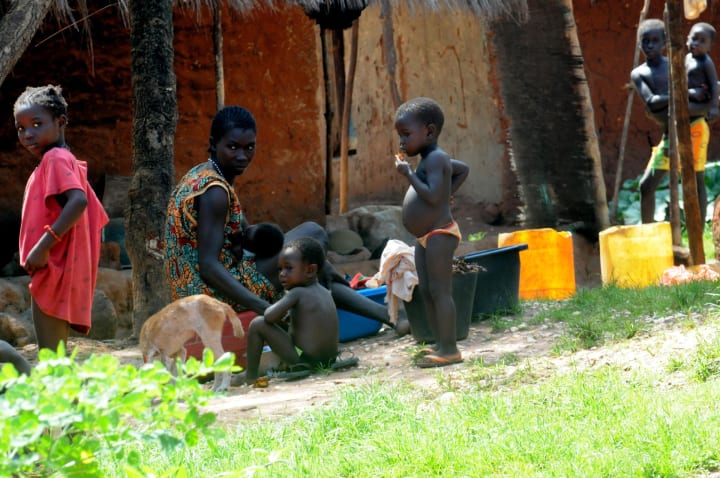
Chapter 2 A different kind of story was taking place thousands of kilometers to the west, in Lagos, Nigeria. The Yaba neighborhood had developed into a tech hub comparable to an African Silicon Valley. Tunde Bakare, a 25-year-old software developer, led a team working on an AI-driven education app for rural African schools that could run without internet. Silicon Valley, China, and European venture capitalists had begun to notice. African startups raised over $6 billion in funding alone in 2024. Andela, Flutterwave, and Paystack were now household names worldwide. The young people, who had previously been plagued by joblessness and the "brain drain," were now creating opportunities domestically and attracting attention from around the world. The Infrastructure as the Backbone of Chapter 3 Without infrastructure, economic growth cannot flourish. Addis Ababa, Ethiopia's capital, had established itself as a symbol of contemporary African ambition. Workers, students, and tourists were transported through a city that was bustling with construction and commerce by its clean and effective electric light rail. Manufacturing facilities that shipped electronics and textiles to Europe and Asia were located in industrial parks that were funded by China. Trade efficiency was being enhanced by roads connecting remote towns to major highways. Farmers in Zambia can now deliver fresh produce to Lusaka in hours rather than days. In Ghana, a massive digital address system made logistics easier, reducing delivery times and empowering local businesses.
From Villages to Vibrancy, Chapter 4 Claudine, then 18 years old, walked into the solar-powered computer lab at her school in rural Rwanda. Her village didn't even have internet or electricity a few years ago. Students in Africa's most remote regions are now learning coding, robotics, and financial literacy thanks to investments in solar microgrids and digital literacy programs. Women farmer cooperatives in Malawi were utilizing mobile apps to access microloans, monitor the health of the soil, and track crop prices. The gender gap was getting smaller and communities as a whole were getting out of poverty thanks to this technology access. The Cultural Renaissance,
Chapter 5 Africa's cultural boom was in addition to its economic boom. The creative economy in Africa was flourishing. Global music charts were dominated by Nigerian Afrobeats. By volume, the "Nollywood" film industry ranked second in the world. Global fashion trends were being set by fashion designers from Dakar, Johannesburg, and Accra. Africans felt a sense of pride as a result of this cultural revival. Once distant, the diaspora was returning, bringing stories, investments, and skills. Through film, literature, and art, young Africans were reshaping the world's view of their continent and telling their own stories. Trade Without Borders, Chapter 6 The largest free trade zone by number of countries, the African Continental Free Trade Area (AfCFTA), was opening up new markets. A Ugandan manufacturer could sell goods in South Africa without incurring prohibitive costs thanks to tariff-free trade. Africa's disparate economies were beginning to function as a single entity, and cross-border trade was becoming more seamless.

Chapter 7: Potential Obstacles But there were also storms during the boom. Africa's problems with corruption, governance, and regional conflicts persisted. Agriculture and water sources were threatened by climate change. Countries making large infrastructure loans were becoming increasingly concerned about debt sustainability. Nevertheless, the response was the difference. Anti-corruption laws were being enacted in more African nations, green energy investments were being made, and local governance was being promoted. Movements led by young people were making leaders accountable. A new era of accountability was about to begin. The End: A Hope-Forged Future Aisha's company had just signed a contract with a distributor in Europe. Five nations have adopted the education app from Tunde. Claudine had applied to the University of Cape Town to study computer engineering. These tales were reflections of millions rising, not isolated incidents. The economic boom in Africa was not a brief flash. Innovation, perseverance, and unity fed it like a steady fire. The world was no longer pitying Africa but rather working together. Additionally, a future that was being created—not by accident but by choice—was illuminated by the golden light of the sun each day as it set over the continent.
About the Creator
Habib Mahmud
Passionate storyteller and historian focusing on the past in order to comprehend the present. With clarity and depth, I write compelling articles about historical events, world history, and current events.
Keep reading
More stories from Habib Mahmud and writers in History and other communities.
Dengue: The Fastest Growing Mosquito-Borne Disease in the World
In a world already facing multiple health crises, one silent killer continues to surge across borders, fueled by climate change, urbanization, and global travel. Dengue — once confined to a few tropical and subtropical regions — has now become the fastest-growing mosquito-borne disease on Earth. Its rapid spread and increasing severity pose a serious threat to global public health. What is Dengue? Dengue is a viral infection caused by the dengue virus (DENV), which belongs to the Flaviviridae family. It is transmitted primarily by the Aedes aegypti mosquito, a species notorious for its ability to adapt to urban environments. There are four known serotypes of the virus — DENV-1, DENV-2, DENV-3, and DENV-4. Infection with one serotype usually provides lifelong immunity to that specific type but not to the others. If a person is infected with a different serotype later, it significantly increases the risk of developing severe dengue, which can be fatal. Global Spread: From Local Outbreaks to Worldwide Epidemics The global burden of dengue has increased dramatically in recent decades. According to the World Health Organization (WHO), about 390 million dengue infections occur each year, with nearly 100 million people developing clinical symptoms. Dengue is now endemic in over 100 countries, with Southeast Asia, the Pacific Islands, the Caribbean, and Latin America bearing the highest burden. In recent years, dengue has also appeared in places where it was previously unknown — including parts of Europe and North America, fueled by rising temperatures and changing ecosystems. Symptoms: More Than Just a Fever Dengue is often called “breakbone fever” due to the intense muscle and joint pain it causes. The symptoms typically appear 4–10 days after being bitten by an infected mosquito and may include: Sudden high fever (up to 104°F or 40°C) Severe headache Pain behind the eyes Joint and muscle pain Skin rash (appears a few days after fever starts) Nausea and vomiting Fatigue and weakness Mild bleeding (nose, gums, or easy bruising) While many cases resolve within a week, some can progress to severe dengue, formerly known as dengue hemorrhagic fever. This life-threatening form includes: Severe bleeding Organ damage Plasma leakage leading to shock Difficulty breathing Sudden drop in blood pressure (dengue shock syndrome) Children, the elderly, and those with previous dengue infections are at higher risk of developing complications. Why Is Dengue Spreading So Rapidly? Several global trends have contributed to the explosive growth of dengue:
By Habib Mahmud9 months ago in History
Understanding the Insurrection Act
The Insurrection Act is one of the most powerful and least understood laws in American history. Often mentioned during times of national unrest, it gives the president authority to deploy federal troops within the United States under specific circumstances. While it is rarely used, public interest in the law has grown in recent decades, leading many to ask: what is the Insurrection Act, and why does it matter today? What Is the Insurrection Act? To put it simply, the Insurrection Act of 1807 is a federal law that allows the president to use the U.S. military to suppress civil disorder, insurrection, or rebellion when state authorities are unable or unwilling to do so. If you are wondering what is the Insurrection Act used for, the answer lies in restoring order when local and state governments can no longer maintain public safety. People often search phrases like what is insurrection act or even the misspelled insurection act because the law tends to resurface during moments of crisis. Despite the confusion around its name, the authority it grants is very real and legally binding. What Is the Insurrection Act of the U.S.? So, what is the Insurrection Act of the US in legal terms? It is a collection of statutes now codified under Title 10 of the U.S. Code. The act provides exceptions to the Posse Comitatus Act, which generally prohibits the military from acting as domestic law enforcement. Under the Insurrection Act, the president can federalize the National Guard or deploy active-duty troops if constitutional rights are being violated or if violence prevents the execution of federal law. This is why many people ask, what is the Insurrection Act USA, especially when protests or riots dominate national headlines. The Insurrection Act and Its Historical Use Throughout American history, the act has been invoked sparingly but decisively. One of the most notable examples often referenced is the Insurrection Act 1992, when President George H. W. Bush deployed federal troops to Los Angeles following the Rodney King verdict. Local authorities had lost control, and the federal government stepped in to restore order. Earlier uses date back to the Civil War era and the Civil Rights Movement. Presidents Eisenhower and Kennedy relied on the act to enforce school desegregation in Southern states when state governments resisted federal court orders. These moments illustrate what the Insurrection Act is used for at its core: enforcing the rule of law when normal systems fail. Trump and the Insurrection Act In modern political discourse, the law became widely discussed during the presidency of Donald Trump. Searches for Trump Insurrection Act or Insurrection Act Trump surged during periods of nationwide protests, particularly in 2020. Although the act was never formally invoked during those protests, President Trump publicly considered its use, bringing renewed attention to the scope and limits of presidential power. The phrase insurrection act invoked often appears in news coverage, but it is important to note that discussing invocation and actually using the law are two very different things. The debate surrounding Trump Insurrection Act scenarios highlighted concerns about civil liberties, federal overreach, and the balance of power between states and the federal government. What Is the Insurrection Act in Minnesota? A common question during periods of regional unrest is what is the Insurrection Act in Minnesota or in other specific states. Legally, the act does not change from state to state. However, its application depends on circumstances within a particular state. If a governor requests federal assistance or if the president determines that constitutional rights cannot be protected locally, the Insurrection Act may apply. Minnesota, like every other state, falls under the same federal framework. The law does not target any single state; it responds to conditions on the ground. What Is the Insurrection Act Used For Today? In today’s environment, many Americans ask, what is the Insurrection Act used for in a modern democracy with established institutions. Supporters argue it is a necessary safeguard for extreme emergencies. Critics counter that it grants sweeping powers that could be misused if political tensions escalate. Understanding what is the Insurrection Act? requires recognizing that it is both a legal tool and a symbol. Its mere mention can influence public perception, markets, and political debate, even when it is not formally applied. Ongoing Debate and Public Concern The Insurrection Act remains controversial because it sits at the intersection of security and freedom. While it has been used to protect civil rights in the past, critics worry about potential misuse in polarized times. This tension explains why questions like what is the Insurrection Act of the US continue to trend whenever civil unrest occurs. Ultimately, the law reflects a fundamental challenge in governance: how to maintain order without undermining democracy. The fact that it has existed since 1807 and remains largely unchanged shows both its durability and its complexity. Final Thoughts The Insurrection Act is not a law that affects daily life, but it plays a critical role during extraordinary moments. From the Insurrection Act of 1807 to discussions around Insurrection Act 1992 and Insurrection Act Trump, its history mirrors the nation’s struggles with unity, authority, and rights.
By Saboor Brohi 2 days ago in History
From Desert Sands to a Global City
Long before Dubai became a city of glittering skyscrapers and global ambition, it was a quiet settlement shaped by the desert, the sea, and the determination of its people. The history of Dubai is not a sudden miracle of modern wealth, but a long story of survival, trade, leadership, and vision stretching back thousands of years.
By The best writer 4 days ago in History



Comments
There are no comments for this story
Be the first to respond and start the conversation.