
AThe Chola Dynasty’s Maritime Gold: The Lost Wealth of the Ocean Kings
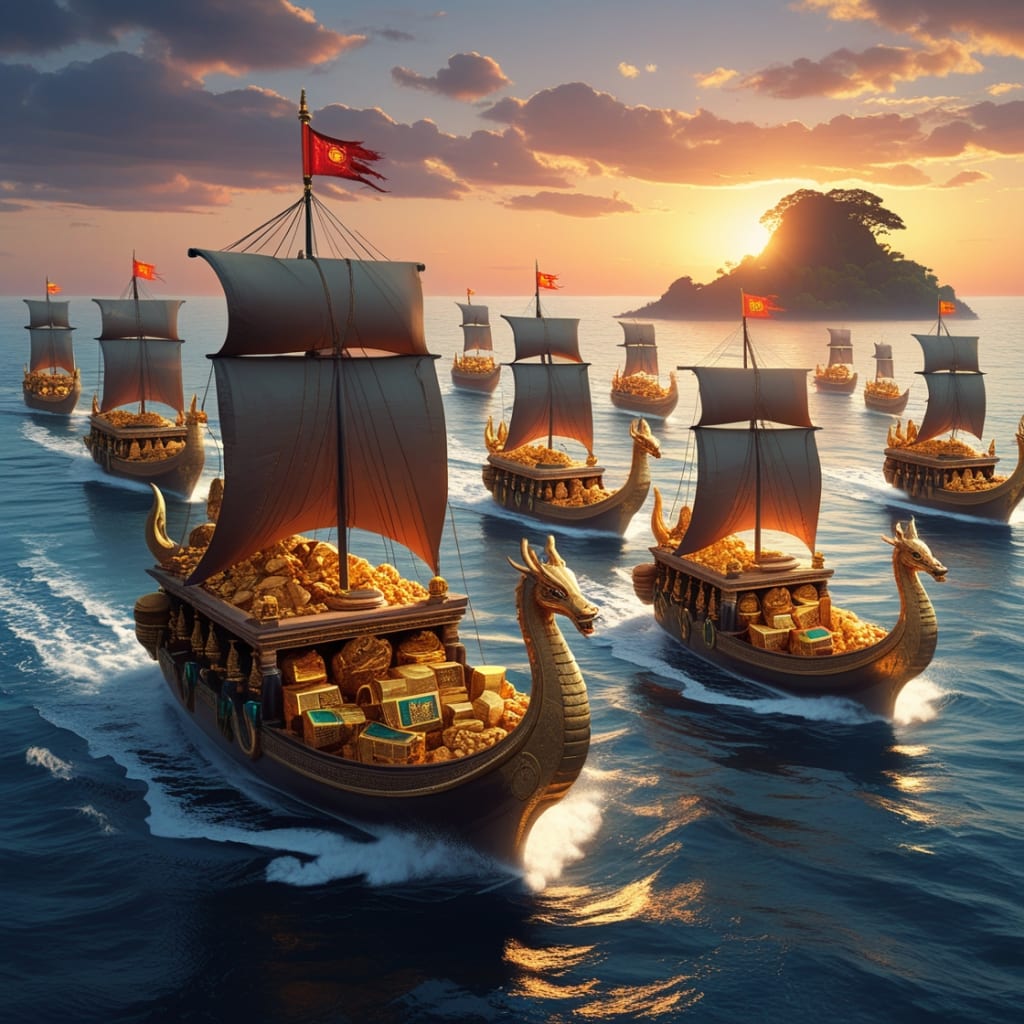
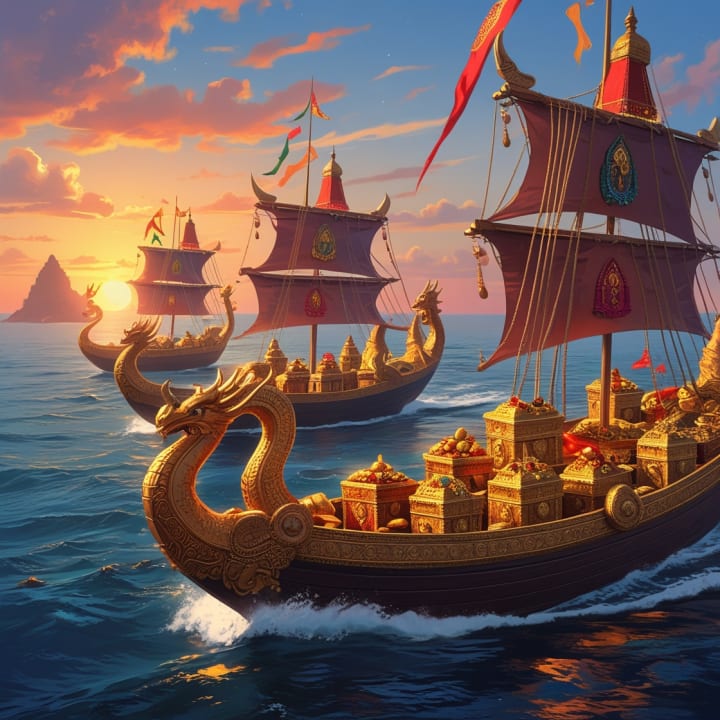
This digital illustration portrays the grandeur and power of the Chola Dynasty’s naval supremacy during its golden age (circa 9th–13th century CE). The artwork features massive, richly decorated Chola ships sailing across the Indian Ocean, transporting gold, spices, jewels, and temple wealth from Southeast Asia. At the heart of the image lies a legendary treasure chest, symbolic of the rumored lost maritime wealth that disappeared in the depths of time. The illustration pays homage to the dynasty's maritime trade, conquest, and the mysterious fortunes that were never recovered.

The Chola Dynasty’s Maritime Gold: Concealed Wealth of the Southern Oceans
This manuscript investigates the fabled maritime riches of the Chola Dynastyits commerce routes, naval supremacy, gold reserves, and the enigmatic treasures yet to be accounted for.
The Chola Dynasty’s Maritime Gold: Concealed Wealth of the Southern Oceans
In the chronicles of Indian history, few dynasties have bequeathed a heritage as splendid, extensive, and economically robust as the Cholas. Thriving between the 9th and 13th centuries CE, the Chola Empire was not merely a powerful political entity in southern India but also a naval powerhouse with economic pursuits that extended from the Indian Ocean to Southeast Asia. With formidable fleets, sophisticated trading systems, and a penchant for temple construction and gold accumulation, the Cholas gathered an enormous wealthsome of which is believed to still be submerged beneath the tides or secured within ancient repositories.
This manuscript probes deeply into the narrative of the Chola treasure, its origins, safeguarding, and the cryptic disappearance of portions of its vast riches.
The Ascendancy of a Maritime Empire
The Chola Dynasty ascended to prominence in the Tamil sector of South India, with its capital located at Thanjavur (Tanjore). Sovereigns such as Rajaraja Chola I and Rajendra Chola I transfigured this regional authority into a formidable maritime empire.
What distinguished the Cholas was their expertise on the waters. Unlike most Indian empires, they heavily invested in a naval forcenot solely for combat but for commerce. This naval capability enabled them to extend their influence over the Maldives, Sri Lanka, sections of Indonesia, and even the Malay Peninsula.
These maritime routes flourished with commerce: spices, pearls, silk, textiles, sandalwood, ivoryand most cruciallygold.
Sources of Wealth
Trade with the East and West:
The Cholas engaged in extensive commercial exchanges with China, the Middle East, and Southeast Asia. Items such as black pepper, cardamom, precious stones, and superior textiles were traded for gold and silver.
Tributes and Military Spoils:
Rajendra Chola I's renowned expedition to the Srivijaya Empire in Southeast Asia was not merely a demonstration of military prowess but a treasure trove of wealth. Chola inscriptions reference tributes of gold, elephants, and gems returned to South India.
Temple Contributions:
Temples were not solely religious institutions but also functioned as treasuries. Kings and traders contributed vast quantities of gold and jewels to temples like Brihadeeswara in Thanjavur, which were often safeguarded by temple militias.
Taxation and Agricultural Prosperity:
The Cholas had a well-organized administrative system that guaranteed the collection of taxes in both currency and produce. This economic framework supported the financing of their military, temples, and overseas endeavors.
The Gold That Disappeared
Despite this documented affluence, the Chola treasury remains elusive. Although some temple vaults still contain immense wealth, historians and treasure seekers speculate that a significant segment of the Chola fortune has dissipated over timepotentially looted, interred, or lost at sea.
Potential Sites of Lost Chola Treasures:
Submerged Vessels in the Bay of Bengal:
Maritime archaeologists have long contemplated the existence of Chola trading vessels that may have perished during monsoonal storms or naval confrontations. These ships, burdened with gold coins, jewelry, and rare relics, could still remain concealed beneath the ocean’s surface.
Unopened Temple Chambers:
Certain ancient temples in Tamil Nadu and Keralaerected or supported by Chola monarchsmay still have sealed compartments containing donations in gold and silver that have endured for centuries.
Concealed Underground Passages:
Folklore from Tamil Nadu narrates tales of clandestine tunnels and chambers created during the Chola period, intended to safeguard treasures from invading armies. These pathways have never been thoroughly investigated.
Gold Coins and Inscriptions:
The Cholas minted gold coins featuring inscriptions in Tamil and Sanskrit, along with representations of rulers and deities. Some coins have been discovered in Sri Lanka and Southeast Asia, indicating their extensive influence. These coins, now displayed in museums, provide insights into the grandeur of the empire, yet they represent only a small portion of what once existed.
Contemporary Search Initiatives:
While not as renowned as the treasure of the Padmanabhaswamy Temple or the fabled city of Dwaraka, the Chola treasure has captivated the attention of archaeologists and enthusiasts alike.
Underwater archaeological endeavors along the Tamil Nadu coastline have yielded pottery, anchors, and remnants of shipssuggesting that a great deal more may be concealed beneath layers of sediment.
Residents in regions such as Karaikal and Nagapattinam occasionally report the discovery of ancient coins and artifacts during construction or agricultural activities.
Nevertheless, stringent government regulations and religious sentiments complicate large-scale excavations or explorations.
Cultural Significance Beyond Wealth:
The legacy of Chola wealth transcends mere lost gold. Their patronage of art, architecture, dance (Bharatanatyam), and literature transformed southern India into a cultural luminary. Temples like the Brihadeeswarar and the Airavatesvara remain today as monumental testaments to their splendor.
Conclusion:
The maritime gold of the Chola Dynasty is more than mere folkloreit serves as a glimpse into an epoch when India dominated the seas, captivated foreign traders, and radiated opulence. While the actual treasures may remain hidden beneath ocean depths or temple floors, the historical and cultural wealth bestowed by the Cholas continues to enrich India.
Perhaps, one day, technology or serendipity will unveil the mysteries surrounding the Chola treasure. Until then, it persists as a luminous enigmaa golden narrative awaiting full revelation
About the Creator
Say the truth
"Say the Truth: Explain Everything in the World" is your trusted source for uncovering facts and exploring the wonders of history, science, technology, and beyond. We simplify complex ideas and reveal truths to inspire curiosity .
Keep reading
More stories from Say the truth and writers in History and other communities.
“India’s Hidden Fortunes: Uncovering the Lost Treasures of Ancient Empires”
The Concealed Riches of India: Revealing the Untold Narratives of Buried Wealth India’s past is characterized not only by empires and triumphs but also by remarkable stories of treasuresome discovered, many still concealed. While contemporary technology has revealed a few valuables interred beneath palaces and temples, an even greater wealth remains inaccessible to treasure seekers, archaeologists, and historians. This article continues our exploration into the enigmatic legacy of India’s uncharted riches by examining lesser-known myths, historical evidence, and royal mysteries that hint at unimaginable fortunes still hidden beneath the earth.
By Say the truth 10 months ago in History
3 Historical Events That Were Ruined by One Incredibly Small Detail
History is shaped by big ideas, brave leaders, and sweeping movements—but sometimes, the tiniest, most overlooked detail changes everything. A forgotten note, a misheard order, or even a misaligned boot can turn a decisive moment into chaos. These micro-errors often seem trivial at the time, but their ripple effects can alter the course of wars, empires, and even the future of entire nations.
By Enoch Sagini5 days ago in History
Pablo Escobar: The Man Who Declared War on Colombia
Pablo Emilio Escobar Gaviria was born on December 1, 1949, in Rionegro, Colombia, and raised in the nearby city of Medellín. He grew up in a modest household, the son of a farmer and a schoolteacher. From an early age, Escobar showed ambition and defiance. He dreamed of power, wealth, and influence—dreams far larger than his surroundings. In a country struggling with inequality and limited opportunity, Escobar believed the rules were written to keep people like him down. Instead of trying to change the system, he chose to dominate it.
By The best writer 2 days ago in History



Comments
There are no comments for this story
Be the first to respond and start the conversation.