
7 Shocking Secrets Ancient Greece Tried To Erase From History
The dark and untold truths that challenge everything you knew about Ancient Greece.

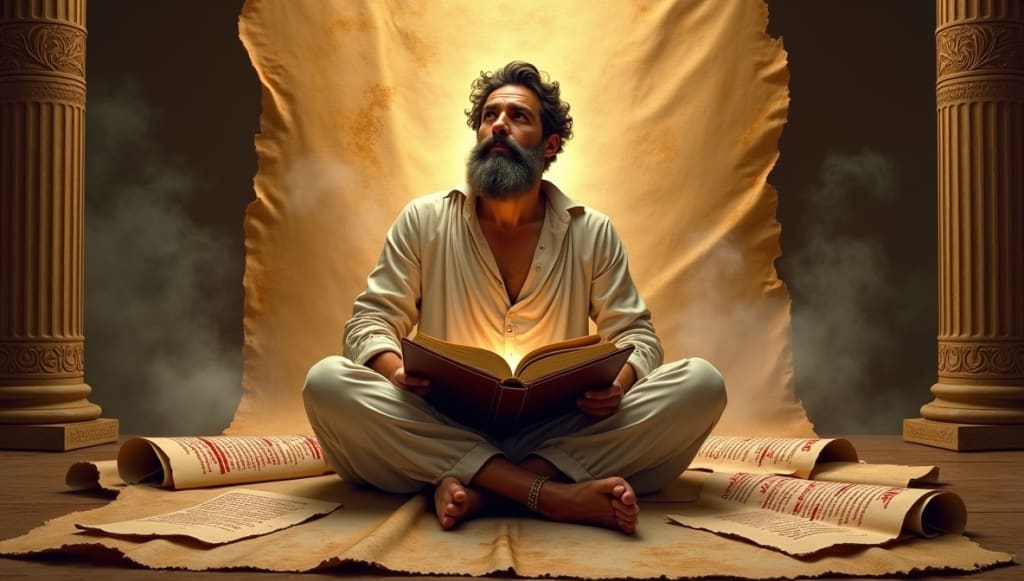
Ancient Greece — a civilization that is often praised for its contributions to philosophy, democracy, and the arts.However, beneath all the glory that we know of — was a life that was far from perfect.
Harsh laws, strange beliefs, and questionable beauty practices reveal a world that was often brutal and strange.From legal punishments that could cost a person their life over minor thefts to a fear of the undead, Greek society had its fair share of bizarre customs.
Beauty standards that led people to apply toxic substances to their skin and medical practices that relied on outdated theories only added to the chaos.These details show a different side of ancient Greece — one that is rarely discussed.
7- Persecution Of Great Minds
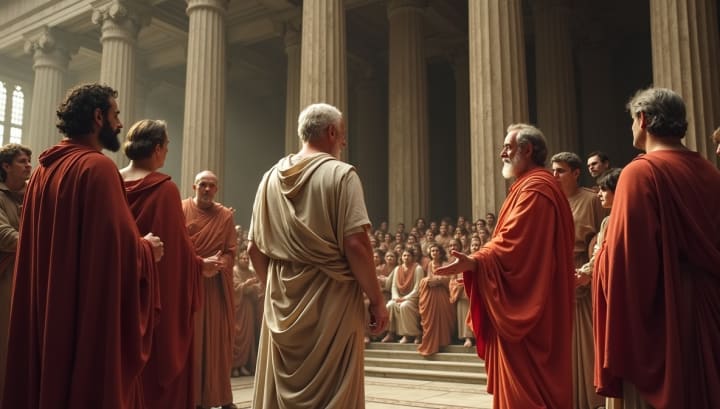
Socrates stood before his accusers in 399 BC, his fate sealed before the trial began. He had questioned the gods, challenged the powerful, and filled young minds with dangerous thoughts.
The city turned against him. His words, once debated in Athens’ streets, were now treated as poison.The court found him guilty of impiety and corrupting the youth. His punishment was death.A cup of hemlock, cold and bitter, drained his life away. The city that had once prided itself on wisdom had silenced one of its greatest thinkers.
His death was not an isolated act. Philosophers who spoke too freely or dared to question authority were threats.Their words, no matter how brilliant, could lead them to exile, prison, or execution. Athens, the birthplace of philosophy, proved that even in the land of reason, fear ruled.
6- Their Obsession With Unibrows
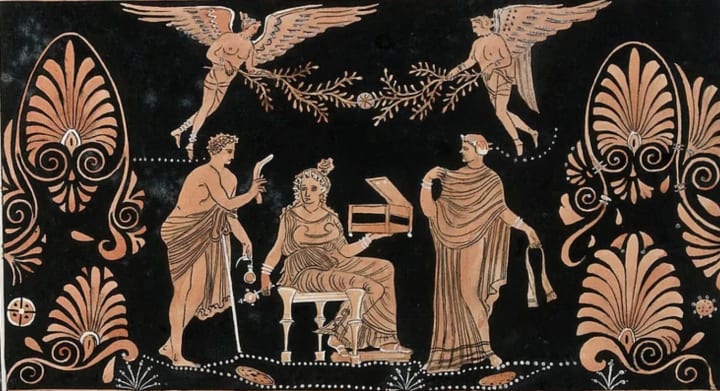
Facial symmetry was highly valued in ancient Greece — leading to some unusual beauty trends. Unibrows, which are now often removed or hidden, were once seen as a mark of perfection.
A continuous brow was believed to indicate intelligence, attractiveness, and even good character.Those who were not naturally blessed with one would darken the area with kohl, an eyeliner made with lead-based ingredients.
Egyptian influences played a role in this practice, as kohl had long been used in the region. The trend was popular among both men and women, proving that ideals of beauty were not limited by gender.
Greek mathematician Pythagoras introduced the Golden Ratio and — this fascination with symmetry extended even to the human face.As a result, everything from architecture to physical appearance was judged based on — mathematical harmony. The lengths people went to in order to meet these ideals were extreme.
5- The Draconian Justice Of Ancient Greece
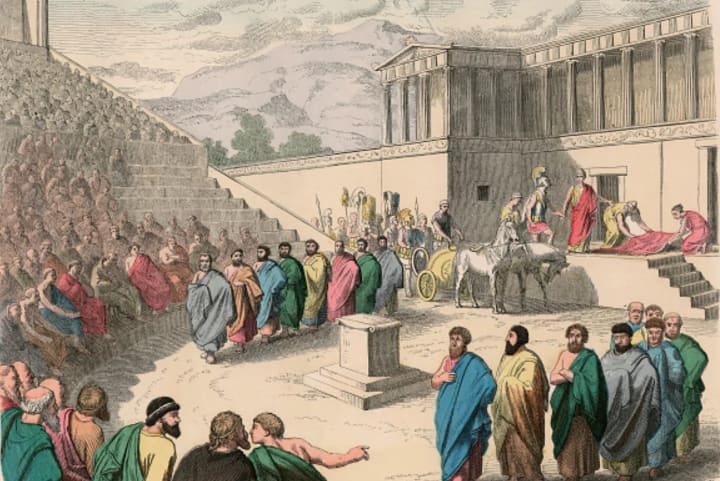
In ancient Greece, punishment was designed to break not only the body but the spirit.The Brazen Bull was a masterpiece of suffering, a grotesque fusion of execution and performance.
Once locked inside, the condemned felt the flames licking at their flesh, the searing heat turning the hollow bronze chamber into a blazing tomb.
Their agonized cries, transformed by hidden pipes, emerged as eerie bellowing sounds — entertainment for the sadistic and a nightmare for the victim.
Public humiliation could be just as vicious. Ostracism cast individuals into exile, stripped of their home and identity, left to wither in isolation. The unlucky ones suffered even worse.The ancient Greeks employed mutilation, branding criminals with marks that would follow them until death, a silent accusation carved into flesh.
Some suffered through stoning, a brutal, drawn-out spectacle where friends and neighbors became executioners, pelting their victim with rocks until life bled away.
Punishment was not just about justice — it was a cruel spectacle, a warning that suffering awaited those who defied the order.
4- The Acceptance Of Infanticide
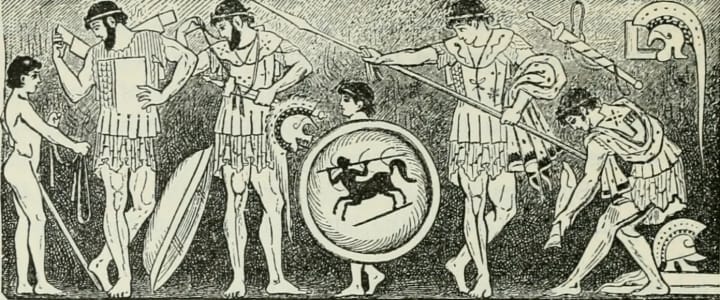
Infants born in ancient Greece — with visible deformities or perceived weaknesses often faced a cruel fate.Spartan newborns were inspected by a council of elders, who decided if the child was strong enough to live.
Those deemed unworthy were discarded like refuse — left on mountainsides or thrown into deep chasms.
This wasn’t considered murder; it was a calculated decision to eliminate those seen as burdens. Exposure was a slow, merciless death.
A child might freeze, starve, or fall prey to wild animals. Some were left in public places, their fate uncertain, dependent on the pity of strangers.
Even outside Sparta, abandonment of disabled infants was whispered about, though rarely acknowledged.
Skeletal remains tell stories of infants who died young, but others lived, evidence of care despite their conditions.
While some were nurtured, others were discarded before they had a chance to draw more than a few breaths.
3- The Fear Of The Undead
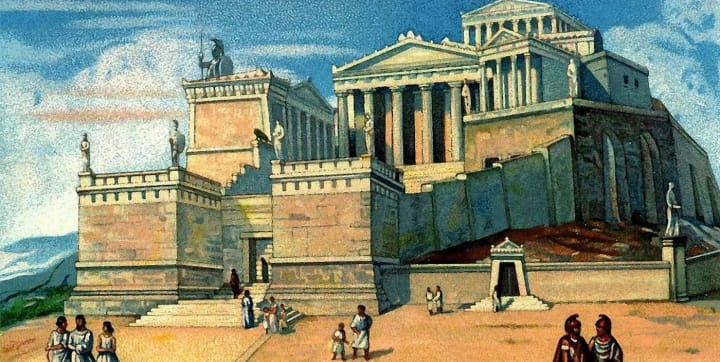
Despite being known for philosophy and rational thinking, ancient Greeks had a strong fear of the dead rising from their graves.
Archaeologists have uncovered burial sites where bodies were pinned down with heavy stones or broken pottery to stop them from returning.
Writings from the time mention the concept of revenants — corpses that came back to life to seek revenge.
Those who suffered from unexplained illnesses or deformities were often suspected of becoming the undead after burial.
The Greeks even had a legendary creature called the vrykolakas, which was something between a zombie and a vampire.This being was believed to wander at night — attacking and even consuming those unlucky enough to cross its path.
The fear of zombies was so intense that people took extra precautions to prevent the dead from escaping their graves.
2- The Dark Side Of Olympics
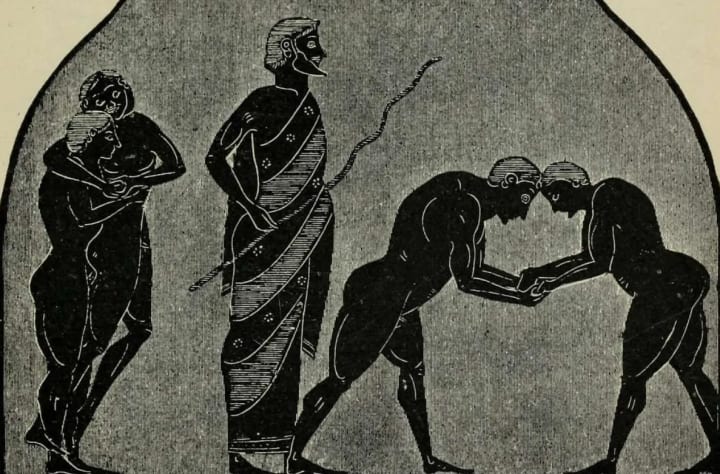
The ancient Olympics were not just about athletic glory; they carried a darker edge that few acknowledge.The games were deeply tied to religious sacrifices, with animals — sometimes by the hundreds — slaughtered to appease Zeus.
Athletes trained under brutal conditions, pushing their bodies beyond limits, sometimes resulting in fatal injuries.There were no second chances; losing meant disgrace, while victory could bring dangerous levels of power and arrogance.
Cheating was rampant, from bribery to secret training programs designed to cripple rivals. Those caught faced public humiliation and harsh penalties — sometimes forced to fund statues of Zeus as punishment.
The games also reflected the rigid inequalities of Greek society — only freeborn men could compete, while women, especially married ones, were strictly banned from even watching under threat of death.
Beneath the grand spectacle lay a world where physical dominance ruled, corruption thrived, and the price of failure could be devastating.
1- Toxic Beauty Standards
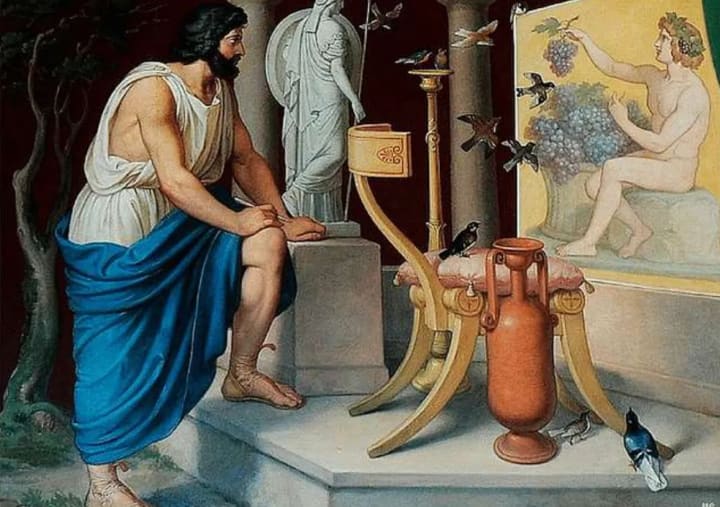
Makeup in ancient Greece was more dangerous than it was glamorous. Women, and even some men, applied a whitening paste to their faces to achieve a pale complexion, which was associated with beauty and status.
This paste often contained lead, a substance that slowly poisoned the wearer over time. The side effects included skin damage, disfigurement, and severe illness.
Instead of stopping, many people simply applied more makeup to cover the damage, worsening their condition.
The Greek word for beautification — kommotikon, was often criticized by male writers, who claimed it was mainly used by lower-class women, but historical evidence suggests that people from all social backgrounds used these products.
Beauty was linked to morality, with the idea that those who were attractive must also be virtuous.
Points To Ponder
Ancient Greece was among the most advanced civilizations of its era, leaving a lasting influence.Alongside their achievements — they engaged in practices that history often pushes aside. Like those before them, their greatness coexisted with unsettling customs.
Even today, similar things happen, hidden from public attention. These lesser-known aspects shape civilizations just as much as their successes.
The world continues to repeat patterns of the past, but change is possible.
Hopefully, we will be the ones to break this cycle — leaving a future where progress stands without being tied to the troubling customs of history.
About the Creator
Isabella
Hi there! I'm Isabella a passionate blogger with a love for storytelling.Visit my blog - https://lifehubstyle.com/
Military Strength of Alexander the Great and the Chola Empire: A Historical Comparison
Though separated by more than a thousand years and operating in vastly different geographical and cultural contexts, both forces achieved extraordinary success through discipline, innovation, and strategic brilliance. This article explores the history, composition, size, organization, and military strength of Alexander’s Macedonian army and the Chola military, highlighting how each became a dominant power of its era.
By Say the truth 4 days ago in History
The Hard Ways Trump Could Try to Take Greenland
When Donald Trump was president of the United States, he shocked the world by saying he wanted to buy Greenland. Many people laughed, but others took the idea seriously. Greenland is a huge island in the Arctic. It is rich in natural resources and very important for military defense. Today, Greenland belongs to Denmark, but it also governs itself in many areas.
By sehzeen fatima7 days ago in History
Miss Persephone's Manual to a Seemingly Ordinary Life
Miss Persephone was found at the dining table, her blue eyes swollen, her tears arriving and retreating like the tides of the ocean. Earlier that day, her family had visited her in the retirement home where she had lived for eight years. It was her eightieth birthday.
By Imola Tóth2 days ago in Fiction




Comments
There are no comments for this story
Be the first to respond and start the conversation.