
23,000-Year-Old Footsteps Discovered in the US Are Rewriting Human History
Ancient Footprint

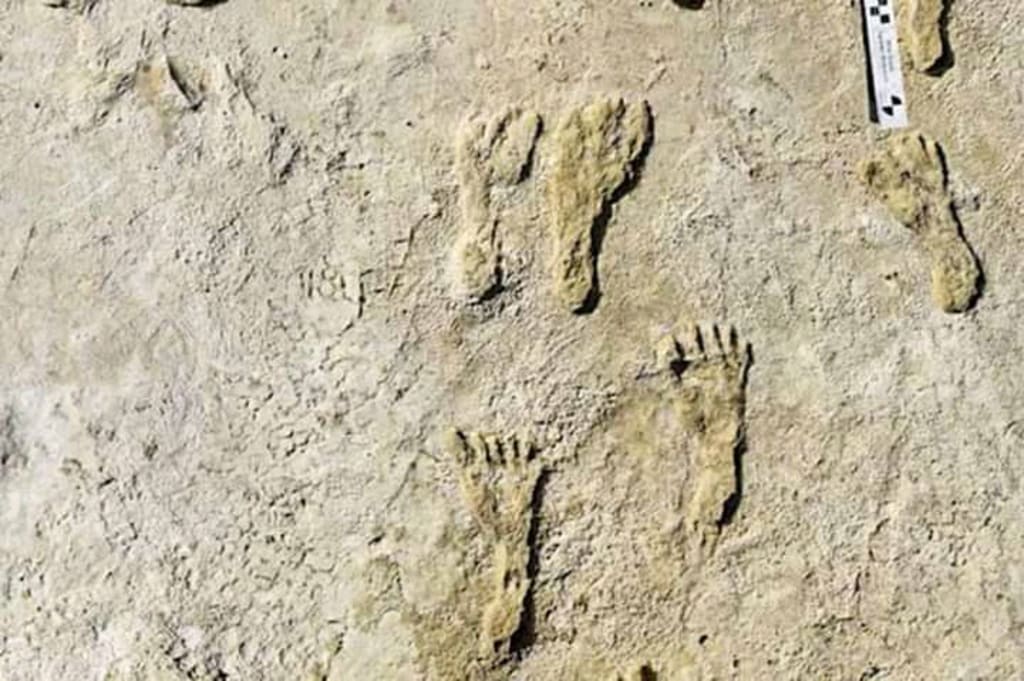
In an astonishing discovery that challenges long-standing narratives, archaeologists at White Sands National Park in New Mexico have unearthed the oldest known human footprints in the United States. These prints, estimated to be about 23,000 years old, provide compelling evidence that humans were present in North America approximately 10,000 years earlier than previously believed. This finding has ignited fresh debates among historians, archaeologists, and anthropologists, reshaping our understanding of human migration patterns and prehistoric life.
White Sands: An Archaeological Treasure Trove
White Sands National Park is already renowned for its breathtaking gypsum dunes and its status as a hub of archaeological significance. The park’s unique environment has preserved fossils and footprints from various species, providing a window into life during the Ice Age.
The footprints, first spotted in a dry lakebed, belong to what is now referred to as Lake Otero. During the last Ice Age, this area was a lush oasis teeming with life, including mammoths, giant ground sloths, and now, as we know, early humans.
Dating the Discovery
Researchers used radiocarbon dating on seeds embedded in the sediment layers of the footprints to estimate their age. The results were groundbreaking: the footprints date back approximately 23,000 years, placing them in the Late Pleistocene era.
Previously, it was widely believed that humans arrived in North America around 13,000 years ago, following the retreat of massive glaciers that covered much of the continent. This theory, known as the Clovis-first model, posited that the first Americans were part of the Clovis culture, named after distinctive stone tools found in Clovis, New Mexico. The discovery at White Sands, however, challenges this timeline and suggests humans were present during the height of the Ice Age.
A Day in the Life of Ice Age Humans
The footprints reveal much more than just a timeline; they provide a vivid glimpse into the lives of these ancient people. Analysis of the tracks suggests that they were made by adolescents and children, with some tracks showing evidence of playful activity. These insights humanize the prehistoric figures and hint at the daily lives of early Americans.
Moreover, the tracks are interspersed with footprints of Ice Age megafauna such as mammoths and sloths, indicating that humans coexisted with these now-extinct creatures. This cohabitation would have posed both opportunities and challenges, as these large animals were both a source of food and potential threats.
Implications for Human Migration
The discovery has profound implications for our understanding of human migration into the Americas. It supports the idea that humans may have arrived via the Bering Land Bridge—a now-submerged landmass that once connected Asia and North America—much earlier than previously thought.
However, it also raises new questions: Did these early settlers come via coastal routes, traveling along the Pacific coastline in boats or along icy shorelines? Or did they move inland, navigating through glacial corridors? The evidence from White Sands adds weight to the theory that humans were exploring and adapting to diverse environments much earlier than assumed.
Rewriting History
The discovery at White Sands is part of a growing body of evidence challenging the Clovis-first model. Other sites in North and South America have yielded artifacts and remains suggesting human presence prior to 13,000 years ago. However, these findings often faced skepticism due to concerns about dating accuracy or interpretation.
The footprints at White Sands stand out because they are direct, tangible evidence of human activity, leaving little room for doubt about their significance. The meticulous research and advanced dating methods used to verify their age further strengthen their credibility.
What’s Next for Archaeology?
As with any groundbreaking discovery, the White Sands footprints have opened up as many questions as they have answered. Researchers are now focused on exploring other areas in and around White Sands to uncover additional evidence of early human activity.
Furthermore, the discovery emphasizes the importance of preserving archaeological sites. Environmental factors such as erosion, climate change, and human activity threaten many potential discoveries, underscoring the urgency of safeguarding these precious windows into the past.
A New Chapter in Human History
The 23,000-year-old footprints at White Sands are more than just ancient impressions in the ground—they are a testament to human resilience and adaptability. They remind us that history is not a fixed narrative but a puzzle that we are continuously piecing together.
For decades, the Clovis-first model shaped our understanding of early human migration, but discoveries like this are rewriting the script. Each new finding brings us closer to understanding where we come from, how we adapted to challenging environments, and how our ancestors carved out lives in the wilderness.
As researchers delve deeper into the mystery of White Sands, the story of humanity continues to unfold, revealing not only our ancient past but also our enduring curiosity to uncover the truth about who we are and where we’ve been.
The footprints may have been left behind thousands of years ago, but their discovery is a step forward in understanding the incredible journey of humanity.
About the Creator
Keep reading
More stories from Deji Akomolafe and writers in History and other communities.
A 700-Year-Old Templar Sword Unearthed: A Glimpse into a Dark Chapter of History
Deep in a small, private forest in England, an extraordinary discovery has shed light on one of history’s most enigmatic and tumultuous periods. Beneath a tree, within the confines of an ancient cave, archaeologists uncovered a 700-year-old sword believed to have belonged to the Knights Templar. This stunning find provides not only a tangible connection to the medieval order but also a glimpse into their desperate struggle for survival during the persecutions of 1312.
By Deji Akomolafeabout a year ago in History
Military Strength of Alexander the Great and the Chola Empire: A Historical Comparison
Though separated by more than a thousand years and operating in vastly different geographical and cultural contexts, both forces achieved extraordinary success through discipline, innovation, and strategic brilliance. This article explores the history, composition, size, organization, and military strength of Alexander’s Macedonian army and the Chola military, highlighting how each became a dominant power of its era.
By Say the truth 5 days ago in History




Comments
There are no comments for this story
Be the first to respond and start the conversation.