
20 things to know about "Persepolis"
Where did the title "Takhte Jamshid" come from?

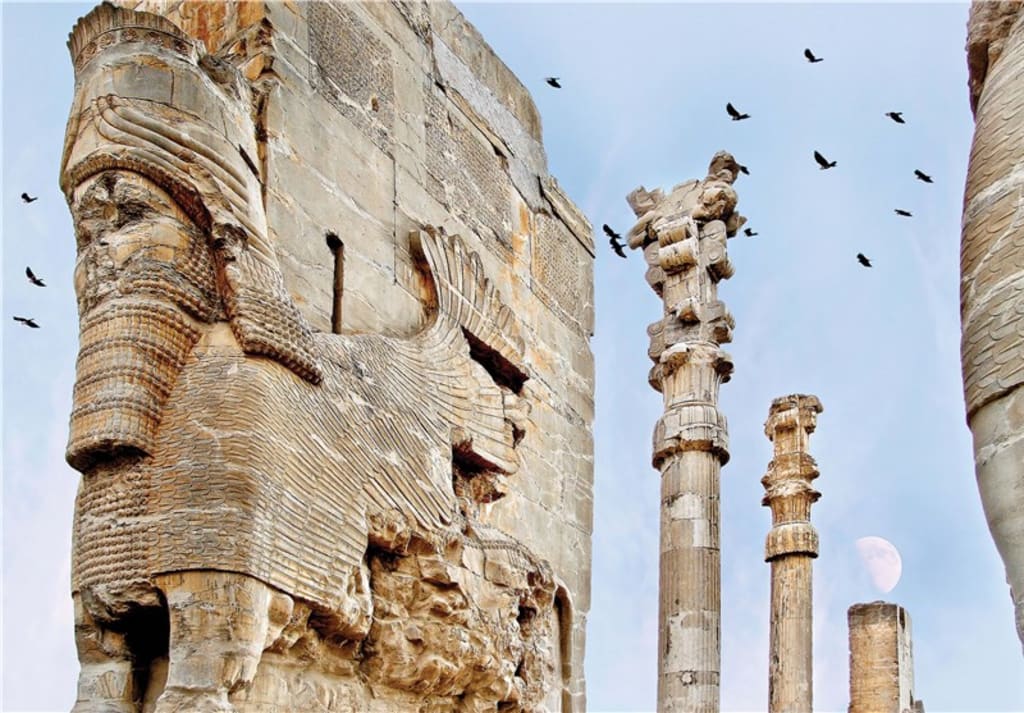
"Takht Jamshid", the capital of the Kingdom of Iran, which is also called by 5 other names, including Persepolis, Persepolis, Hazarstun, Sedstun and Chihlmanar, has a lot to know, including that architects, artists and men and women have built this ancient building with the support of labor insurance for 120 years. they built.
According to the social group of Tasnim news agency, Takht Jamshid or Parse (or Persepolis, Persepolis, Hazarstun, Sedstun or Forty Minars) is the name of one of the ancient cities of Iran, which was the magnificent and ceremonial capital of the kingdom of Iran during the Achaemenid Empire. Since 1979, this place is one of the registered works of Iran in the UNESCO World Heritage.
- In 518 BC, the building of Persepolis was placed in Parse as the new capital of Achaemenids. Takht Jamshid is located in the north of Maroodasht city, north of Fars province (northeast of Shiraz).
- The founder of Persepolis was Darius the Great, of course, after him his son Xerxes and his grandson Ardeshir I added to the expansion of this complex and this building has been prosperous for about 200 years.
Countless architects, artists, craftsmen, workers, women and men were involved in the construction of this magnificent building, who, in addition to receiving salaries, also benefited from labor insurance benefits. The construction of this large and beautiful complex took 120 years according to a story.

- One of the architectural arts in Persepolis is that the ratio of the height of the doors to their width, as well as the ratio of the height of the columns to the distance between the two columns, is the golden ratio. The golden ratio is an important ratio in geometry that exists in nature. This shows the art of ancient Iranians in architecture.
- Apart from the builders of Persepolis, who were Darius, Xerxes, and Ardeshir I, Ardeshir III also made repairs in Persepolis. The tombs of Ardeshir II and III have been excavated in the eastern foothills of Persepolis.
- Much of the existing knowledge that is available about the background of the Achaemenids and their culture is due to the stone inscriptions and metal inscriptions that were carved in these palaces and on the walls and tablets.
- Takht Jamshid was not only one of the capitals of the Achaemenid period and a ceremonial, administrative and economic center, but also became a model for the art of later nations. Later, in Istakhar and Naqsh Rostam, they created works imitating Parse.
- The Sassanians also respected Parse, and by the order of Babak and his two sons, Ardeshir and Shapur, carved their portraits in the north wall of the harem hall.

- The name of Takht Jamshid at the time of its construction was "Parse" meaning "City of Persians". The Greeks called it Persepolis (in Greek it means "Perseshahr"). In contemporary Persian, this building is called Takht Jamshid or the royal palace of Jamshid, the mythical king of Iran.
- At the time of the Sassanids, Persepolis was called Sat Seton (Hundred Pillars).
According to chtn report, it is stated in Ferdowsi's Shahnameh: Jamshid was a just and beautiful king who celebrated Nowruz and reigned over Iran for seven hundred years. His aurang or royal throne was so big that they carried the divan on their shoulders.
- Hundreds of years after the attack of Alexander and the Arabs and at a time when the memory of the Achaemenid kings was forgotten, the people who passed by the ruins of Parse saw the carved images of the royal throne raised on the hands of the people and since they could not read the cuneiform inscriptions carved on the stones, they thought that this is the same Aurang Jamshid that Ferdowsi mentioned in his Shahnameh. That's why they named this place Takht Jamshid. Later, when the archaeologists were able to translate the cuneiform inscription, they realized that its original name was Parse.
The great inscription of Darius the Great on the southern front wall of Persepolis clearly testifies that there was no building in this place before. The total area of the palaces of Persepolis is 125 thousand square meters.
- The first scientific explorations in Persepolis were carried out by the German Ernst Emil Herzfeld in 1931. He was sent by the Institute of Oriental Studies of the University of Chicago. His findings are still kept in this institute.
- In the petroglyphs of Takht Jamshid, no one can be seen in a submissive or humiliated state, and the representatives of the nations are not seen as defeated or slaves, but all are equally members of the great world community, and all nations from Medes to Indians, Tunisians, Africans and Greeks are all independent characters. And they relied on the role itself.
- In the petroglyphs of Takht Jamshid, the distance between each nation is separated by a cypress tree, which is a sacred tree. The ranking of representatives of nations is based on their culture and background or their distance and proximity, such as Medes, Elamites, Khozis, Babylonians, Assyrians.
- The guide of the nations is Persian, Madi, or Elamite, which is hand in hand with other nations to guide the guests, and the people of all nations were free to use their clothes, culture, and language. No, there is no attempt to show superiority or brag about Persians compared to other nations.
- The representatives of the nations extended their hands to each other as a sign of friendship. Having a scepter is a sign of high status and rank, a long furrowed hat is a sign of military status, a simple long hat is a sign of greatness, and a short cylindrical hat is a sign of a court employee, royal guard, and servants.
- Historians believe that Alexander the Great, the Greek general, attacked Iran in 330 BC and burned Persepolis and probably destroyed a huge part of Achaemenid books, culture and art."Takht Jamshid", the capital of the Kingdom of Iran, which is also called by 5 other names, including Persepolis, Persepolis, Hazarstun, Sedstun and Chihlmanar, has a lot to know, including that architects, artists and men and women have built this ancient building with the support of labor insurance for 120 years. they built.
According to the social group of Tasnim news agency, Takht Jamshid or Parse (or Persepolis, Persepolis, Hazarstun, Sedstun or Forty Minars) is the name of one of the ancient cities of Iran, which was the magnificent and ceremonial capital of the kingdom of Iran during the Achaemenid Empire. Since 1979, this place is one of the registered works of Iran in the UNESCO World Heritage.
- In 518 BC, the building of Persepolis was placed in Parse as the new capital of Achaemenids. Takht Jamshid is located in the north of Maroodasht city, north of Fars province (northeast of Shiraz).
- The founder of Persepolis was Darius the Great, of course, after him his son Xerxes and his grandson Ardeshir I added to the expansion of this complex and this building has been prosperous for about 200 years.
Countless architects, artists, craftsmen, workers, women and men were involved in the construction of this magnificent building, who, in addition to receiving salaries, also benefited from labor insurance benefits. The construction of this large and beautiful complex took 120 years according to a story.
- One of the architectural arts in Persepolis is that the ratio of the height of the doors to their width, as well as the ratio of the height of the columns to the distance between the two columns, is the golden ratio. The golden ratio is an important ratio in geometry that exists in nature. This shows the art of ancient Iranians in architecture.
- Apart from the builders of Persepolis, who were Darius, Xerxes, and Ardeshir I, Ardeshir III also made repairs in Persepolis. The tombs of Ardeshir II and III have been excavated in the eastern foothills of Persepolis.
- Much of the existing knowledge that is available about the background of the Achaemenids and their culture is due to the stone inscriptions and metal inscriptions that were carved in these palaces and on the walls and tablets.
- Takht Jamshid was not only one of the capitals of the Achaemenid period and a ceremonial, administrative and economic center, but also became a model for the art of later nations. Later, in Istakhar and Naqsh Rostam, they created works imitating Parse.
- The Sassanians also respected Parse, and by the order of Babak and his two sons, Ardeshir and Shapur, carved their portraits in the north wall of the harem hall.
- The name of Takht Jamshid at the time of its construction was "Parse" meaning "City of Persians". The Greeks called it Persepolis (in Greek it means "Perseshahr"). In contemporary Persian, this building is called Takht Jamshid or the royal palace of Jamshid, the mythical king of Iran.
- At the time of the Sassanids, Persepolis was called Sat Seton (Hundred Pillars).
According to chtn report, it is stated in Ferdowsi's Shahnameh: Jamshid was a just and beautiful king who celebrated Nowruz and reigned over Iran for seven hundred years. His aurang or royal throne was so big that they carried the divan on their shoulders.
- Hundreds of years after the attack of Alexander and the Arabs and at a time when the memory of the Achaemenid kings was forgotten, the people who passed by the ruins of Parse saw the carved images of the royal throne raised on the hands of the people and since they could not read the cuneiform inscriptions carved on the stones, they thought that this is the same Aurang Jamshid that Ferdowsi mentioned in his Shahnameh. That's why they named this place Takht Jamshid. Later, when the archaeologists were able to translate the cuneiform inscription, they realized that its original name was Parse.
The great inscription of Darius the Great on the southern front wall of Persepolis clearly testifies that there was no building in this place before. The total area of the palaces of Persepolis is 125 thousand square meters.
- The first scientific explorations in Persepolis were carried out by the German Ernst Emil Herzfeld in 1931. He was sent by the Institute of Oriental Studies of the University of Chicago. His findings are still kept in this institute.
- In the petroglyphs of Takht Jamshid, no one can be seen in a submissive or humiliated state, and the representatives of the nations are not seen as defeated or slaves, but all are equally members of the great world community, and all nations from Medes to Indians, Tunisians, Africans and Greeks are all independent characters. And they relied on the role itself.
- In the petroglyphs of Takht Jamshid, the distance between each nation is separated by a cypress tree, which is a sacred tree. The ranking of representatives of nations is based on their culture and background or their distance and proximity, such as Medes, Elamites, Khozis, Babylonians, Assyrians.
- The guide of the nations is Persian, Madi, or Elamite, which is hand in hand with other nations to guide the guests, and the people of all nations were free to use their clothes, culture, and language. No, there is no attempt to show superiority or brag about Persians compared to other nations.
- The representatives of the nations extended their hands to each other as a sign of friendship. Having a scepter is a sign of high status and rank, a long furrowed hat is a sign of military status, a simple long hat is a sign of greatness, and a short cylindrical hat is a sign of a court employee, royal guard, and servants.
- Historians believe that Alexander the Great, the Greek general, attacked Iran in 330 BC and burned Persepolis and probably destroyed a huge part of Achaemenid books, culture and art.
About the Creator
atiyeh mehri
Hi guys, I'm Ati and I am a interior designer. In this blog I want to share some great tips about interior decoration and making your home cozy!
Keep reading
More stories from atiyeh mehri and writers in History and other communities.
8 Best Ways To Hang Wall Art Without Nails
Decorating your walls with beautiful artwork can instantly transform the ambiance of any room. However, the traditional method of using nails to hang art may not always be feasible or desirable, especially if you're renting a space or have delicate walls. Fortunately, there are numerous creative alternatives that allow you to hang your wall art without nails. In this article, we'll explore eight of the best ways to do just that.
By atiyeh mehri3 years ago in Lifehack
Al-Jahiz: The Muslim Thinker Who Proposed Evolutionary Ideas a Thousand Years Before Darwin
When the theory of evolution is discussed, the name that immediately comes to mind is Charles Darwin, the 19th-century scientist who transformed biology with his groundbreaking work On the Origin of Species. However, what many people do not know is that more than 1,000 years before Darwin, a Muslim scholar from the Islamic Golden Age had already proposed ideas that strongly resemble evolutionary thinking. His name was Al-Jahiz.
By Irshad Abbasi 5 days ago in History




Comments
There are no comments for this story
Be the first to respond and start the conversation.