
10 Horrifying Facts about the Roman Legions
Entertaining and educational
The Roman Legions were a formidable military force that exerted dominance over the ancient world. However, their success was not without its dark side. Presented below are ten alarming facts about the Roman Legions:
10. Military Training
At the outset of Rome's history, its army was composed of local farmers who were summoned to fight neighboring settlements. However, after a devastating defeat by the Gauls in 390 BC, the Romans recognized the necessity for a professional military force. They spent centuries refining their Legions through rigorous training, including endless drills, marches, and weapons training. This provided the Roman Legions with a significant advantage in warfare.
9. Discipline through Fear
The Roman Legions were renowned for their strict discipline, which was instilled through fear. Severe punishments were common for even minor offenses, including stoning to death for cowardice in battle or falling asleep on sentry duty. This ruthless treatment proved useful in creating a cohesive and dependable military force.
8. The Decimation
One particularly brutal punishment for any Legion was the Decimation, where groups of soldiers guilty of capital offenses were divided into groups of ten and made to draw straws. The soldier who drew the short straw was killed by the other nine, regardless of their level of involvement, rank, or distinction.
7. Weapons and Armor
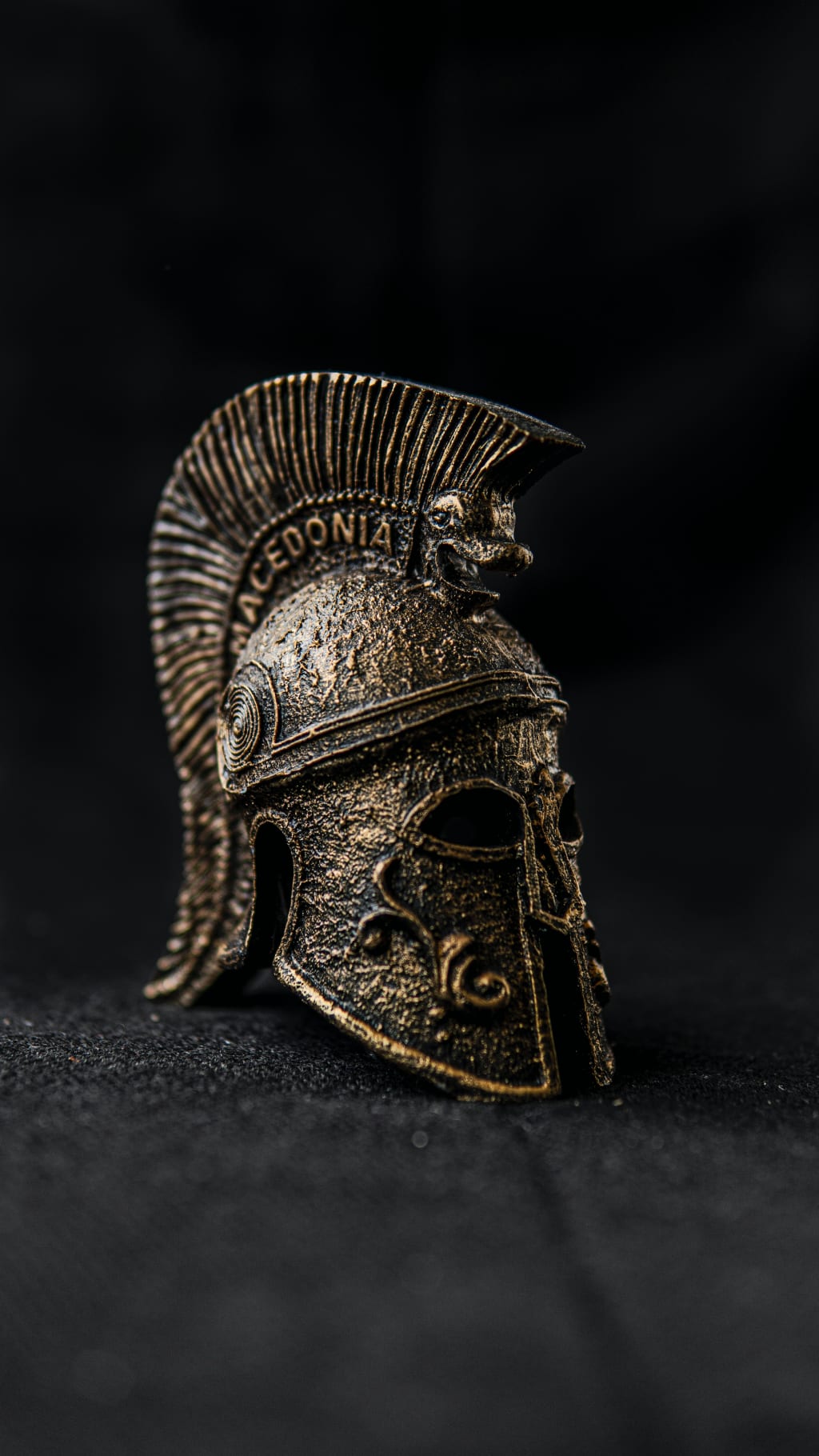
As Rome expanded, the army became more standardized, with equipment provided by the state. Chainmail was the first line of defense, but it was partially replaced by segmented plate armor during the 1st century AD. The Roman helmet was redesigned and improved over the centuries to offer maximum protection without blocking the senses. The Roman shield was made of layers of wood glued together and covered with leather and metal, offering both defensive and offensive capabilities.
6. Battle Tactics and Formations
The Roman Legions were known for their structured nature and the formations they used in battle. A Legion was comprised of 4,800 men, divided into 10 Cohorts of 480, which in turn contained 6 Centuries of 80 soldiers, each commanded by a Centurion. This highly structured form offered the army both unity among the ranks and coordination on the battlefield.
5. Sea Battles Fought on "Land"
The Romans lacked skilled soldiers for sea warfare, so they turned their attention to building their own navy. While waiting for the ships to be built, the Legionnaires began practicing rowing in unison while still on dry land. They also invented the Corvus, a boarding bridge that could be raised or lowered at will, turning sea battles into land battles.
4. Bellum Gallicum
The Gallic Wars were a series of military campaigns waged by the Roman Legions under Julius Caesar against the Gauls living in present-day France, Belgium, and parts of Switzerland. These wars lasted from 58 BC to 52 BC and culminated with a definite Roman victory and expansion of the Roman Republic over the whole of Gaul.
3. Crucifixions
The Romans were notorious for their brutal treatment of anyone who threatened their domination. Crucifixion was a particularly brutal form of punishment used as a means of torture and to send a message. Those crucified were often accused of sedition or conspiracy to rebellion.
2. The Praetorian Guard
The Praetorian Guard was the most powerful of all the Roman Legions, stationed in Rome itself. They acted as bodyguards to the Emperor, emergency firefighters, the secret police, crowd control, and even fought in the arena to show off their prowess to the masses. However, they were often involved in corruption and intrigue, and even engineered the assassination of several emperors.
1. Making and Breaking the Empire
The Roman Empire was made by the many Legions who fought and killed for it. However, the army was also what brought Rome down. Loyalty shifted from the city and the Empire to the generals who soldiers served under. Army generals realized they could become Emperor just by marching into Rome, which they often did. By 395 AD, the Empire was divided into the east and west, and by 476 only its eastern part survived. The Eastern Roman Empire would rule from Constantinople and be a dominant force in the region for the following 1,200 years.
About the Creator
Power's Sake
When it comes to gaining power, bad people use it to gain more They never gain power to do something with it, they gain power to have it, relish in it, double it down on itself so it grows exponentially and never goes anywhere. Even if you see the people in power commit an atrocity, that is never the true goal. It is a deplorable action for sure but the action itself usually doesn't matter it's the outcome.
By Donny Foley3 days ago in History
Military Strength of Alexander the Great and the Chola Empire: A Historical Comparison
Though separated by more than a thousand years and operating in vastly different geographical and cultural contexts, both forces achieved extraordinary success through discipline, innovation, and strategic brilliance. This article explores the history, composition, size, organization, and military strength of Alexander’s Macedonian army and the Chola military, highlighting how each became a dominant power of its era.
By Say the truth 3 days ago in History
Miss Persephone's Manual to a Seemingly Ordinary Life
Miss Persephone was found at the dining table, her blue eyes swollen, her tears arriving and retreating like the tides of the ocean. Earlier that day, her family had visited her in the retirement home where she had lived for eight years. It was her eightieth birthday.
By Imola Tóth2 days ago in Fiction




Comments