
Wormtown: A Raw Glimpse into the Decay and Resilience of Small-Town America
A haunting indie film that captures the beauty and heartbreak of forgotten America

Independent cinema has always had a knack for unearthing the strange, the gritty, and the profoundly human corners of America that mainstream Hollywood often overlooks. Wormtown, directed by Mike Heslin, is a perfect example of this. The film dives headfirst into the underbelly of a forgotten Massachusetts town, presenting a world where addiction, economic decay, and fractured dreams intertwine like the roots of an ancient, dying tree. It’s uncomfortable, raw, and eerily familiar—a portrait of small-town America in slow collapse, but also of the stubborn spirit that refuses to vanish.
A Setting That Breathes Decay and Humanity
Wormtown takes its name from a nickname long associated with Worcester, Massachusetts—a place where punk culture, working-class struggle, and rusted industry meet. The setting is more than a backdrop; it’s a character in its own right. The cinematography captures the chipped paint of old diners, the flicker of broken streetlights, and the hum of bars that never quite close. There’s a palpable sense of decay, but the film avoids making it purely bleak. There’s life here, even in the cracks.
Cinematographer Tyler Blanchard deserves special mention. His camera lingers on empty lots and tired faces, finding poetry in disrepair. The use of natural lighting gives the film a documentary-like realism that complements its grounded performances. The visual palette—muted browns, greys, and washed-out blues—evokes the feeling of a world both lived-in and abandoned. You can almost smell the rust and rain.
The Story: Redemption in the Shadows
At its core, Wormtown follows Danny (played by Jack Murphy), a former high school football star whose life has spiraled into addiction and regret. When his estranged sister, Claire (Jessica McKee), returns home to settle their late father’s affairs, old wounds resurface. What begins as a story about a broken family soon expands into a broader commentary on the opioid crisis, poverty, and the uneasy search for redemption in a place that seems built to swallow people whole.
The plot unfolds slowly, deliberately, much like life in a place where nothing seems to change. Danny’s journey feels authentic, and Murphy’s performance is unflinchingly real. He doesn’t play an addict for sympathy; he plays a man drowning quietly, too proud to ask for help. McKee’s Claire, on the other hand, represents the conflict between escape and obligation. She left to build a better life, yet the pull of her hometown—and the people she loves—keeps dragging her back. Their chemistry is complicated and electric, built on unspoken history.
Themes: The American Dream in Ruin
Wormtown is a film about cycles—cycles of poverty, addiction, violence, and forgiveness. It doesn’t romanticize despair, nor does it offer easy answers. The “American Dream,” as the film suggests, has eroded into something unrecognizable for people like Danny and Claire. The factories are gone, the jobs are scarce, and the community that once held everything together now crumbles under the weight of fentanyl and lost faith.
What makes the film powerful is its refusal to judge. There are no villains here, just people trying to survive. Even the characters who make terrible choices are portrayed with empathy. In one of the film’s most moving scenes, Danny visits a childhood hangout and finds it abandoned. The silence of that moment speaks louder than any dialogue—this is what’s left behind when dreams die.
Performances: The Heart of the Story
Jack Murphy delivers a career-defining performance as Danny. He captures the restless energy of a man who can’t forgive himself, balancing anger, humor, and hopelessness with striking authenticity. There’s a scene where Danny attends a Narcotics Anonymous meeting, only to walk out halfway through, muttering that “no one in this town ever really gets clean.” It’s devastating—not because of what he says, but because we believe he’s right.
Jessica McKee’s portrayal of Claire is equally compelling. She embodies the quiet strength of someone who’s seen too much yet refuses to harden completely. The tension between her and Danny—love mixed with resentment—is the emotional core of the film. Supporting performances, especially from the late Bill Ransom as their father’s old friend, add layers of texture and humanity to the ensemble.
Direction and Style
Director Mike Heslin brings a documentarian’s patience and an artist’s eye to the film. His pacing is unhurried, sometimes deliberately slow, allowing the audience to sit with discomfort. That choice may alienate some viewers used to faster narratives, but it feels true to the film’s world. In Wormtown, change doesn’t happen in dramatic bursts—it comes in small, painful realizations.
The dialogue is sparse but potent. Characters often speak in half-truths, deflections, and silences, mirroring real conversations in families fractured by trauma. Heslin’s restraint is what makes the emotional moments hit harder. When the film finally allows its characters to confront their past, the release feels earned, not manufactured.
Soundtrack and Tone
The soundtrack leans heavily on local punk and folk tracks, grounding the film in its regional identity. The music isn’t just background—it’s a heartbeat. Songs from local bands play in car radios and bar jukeboxes, weaving authenticity into every scene. Combined with a subtle original score by composer Lila Hartman, the film achieves a haunting balance between melancholy and defiance.
The overall tone of Wormtown is somber but not hopeless. There’s beauty in the ruins, and Heslin knows how to find it. By the time the credits roll, you don’t feel uplifted in the traditional sense—but you do feel something rare: understanding.
A Mirror for Our Times
In many ways, Wormtown feels like a snapshot of modern America. It captures the disillusionment of those left behind by globalization, the pain of the opioid epidemic, and the quiet endurance of people who keep going anyway. It’s not a film that offers solutions, but it demands empathy—and that’s its triumph.
As an independent production, it’s also a testament to what can be achieved outside the Hollywood system. Without big budgets or star power, Wormtown manages to be more emotionally resonant than most studio dramas. It reminds us that cinema’s true power lies not in spectacle, but in honesty.
Final Verdict
Wormtown isn’t an easy watch, but it’s an essential one. It’s a film that crawls under your skin and stays there, whispering questions about who we are and what we’ve lost. The performances are extraordinary, the direction fearless, and the storytelling profoundly humane.
For anyone who’s ever driven through a once-thriving town and felt the weight of its silence, Wormtown will feel like coming home—to a place you wish you could forget, but can’t.
About the Creator
Keep reading
More stories from James S Pope and writers in Geeks and other communities.
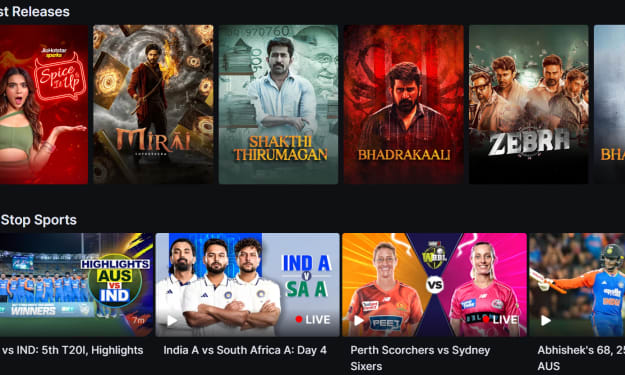
How to get Hotstar in UK?
JioHotstar is an Indian subscription video-on-demand streaming service that resulted from the merger of Disney+ Hotstar and JioCinema. It is owned by JioStar and offers a vast library of content, including Disney, Hollywood, and local Indian movies, TV shows, and live sports, under one unified platform.
By James S Pope2 months ago in Geeks
Marvel Zombie
The last entry into our 2025 superhero projects catalogue is Marvel Zombies. This was a show that was anticipated by absolutely no one and it disappeared from the public consciousness as quickly as it was released. There was nothing special about the project that made it a must see, or a must remember. In fact if anything it's a must forget.
By Alexandrea Callaghan16 days ago in Geeks
Book Review: "Coffee" by H.E Jacob
You guys have probably realised that I love coffee and I normally drink between 8 and 12 cups a day. My coffee of choice is either L'Or's Ristretto Pods for my Nespresso Machine, or if I'm having a cafetière then it would be Skull Crusher's French Vanilla Ground Coffee. I also enjoy Nespresso's own Istanbul blend and of course my favourite coffee shop is Costa and their double espressos are amazing. Coffee is one of the few joys in my life that I have left and so, I expect to carry on with it regardless of what others think. Money spent on coffee is never wasted. But if you put sugar and milk in my coffee then you will no longer be my friend, put it in yours if you want - just not in mine. I could only listen to Coffee by Chappell Roan whilst writing this review, there was no other way...
By Annie Kapur2 days ago in Geeks


Comments
There are no comments for this story
Be the first to respond and start the conversation.