
Winnie the Pooh by A. A Milne
Why It's a Masterpiece (Week 83)

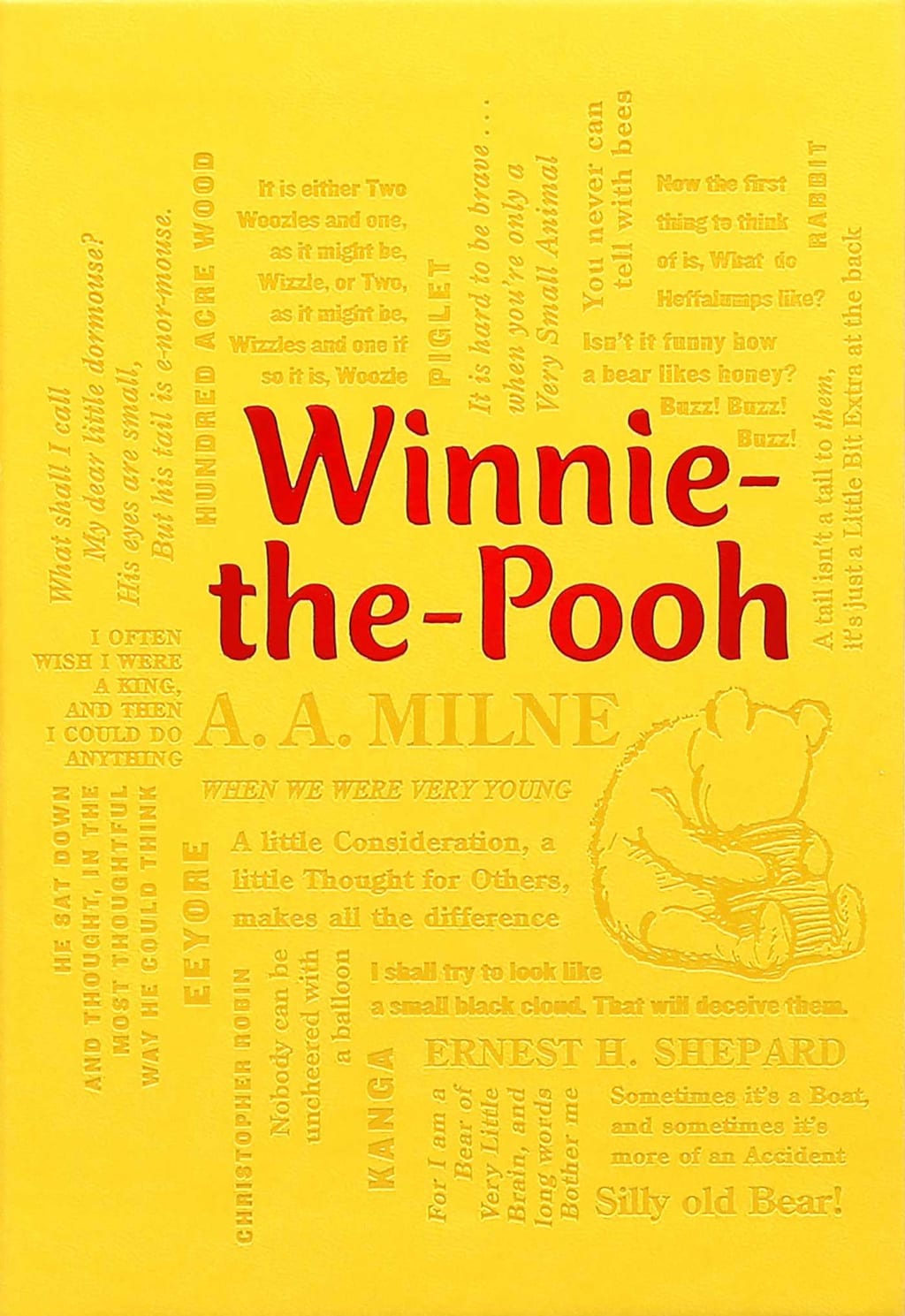
Winnie-the-Pooh by A.A. Milne is one of the most beloved children’s books in English literature. Published on 14 October 1926, the book introduces readers to the whimsical world of "The Hundred Acre Wood" and its inhabitants, including: the titular bear, Winnie-the-Pooh, Piglet, Eeyore, and others. The stories are inspired by Milne’s son, Christopher Robin Milne, and his collection of stuffed toys, which provided the basis for the book’s characters.
Alan Alexander Milne was an established playwright and humourist before turning his hand to children’s literature. Within the book there are illustrations by E.H. Shepard, based on Milne’s descriptions and the real-life Ashdown Forest, became as iconic as the stories themselves.
The name "Winnie" comes from a black bear that lived at the London Zoo, adored by Christopher Robin. "Pooh" was the name of a swan the family had encountered. Together, these two inspirations formed the name of the now-famous bear.
Plot
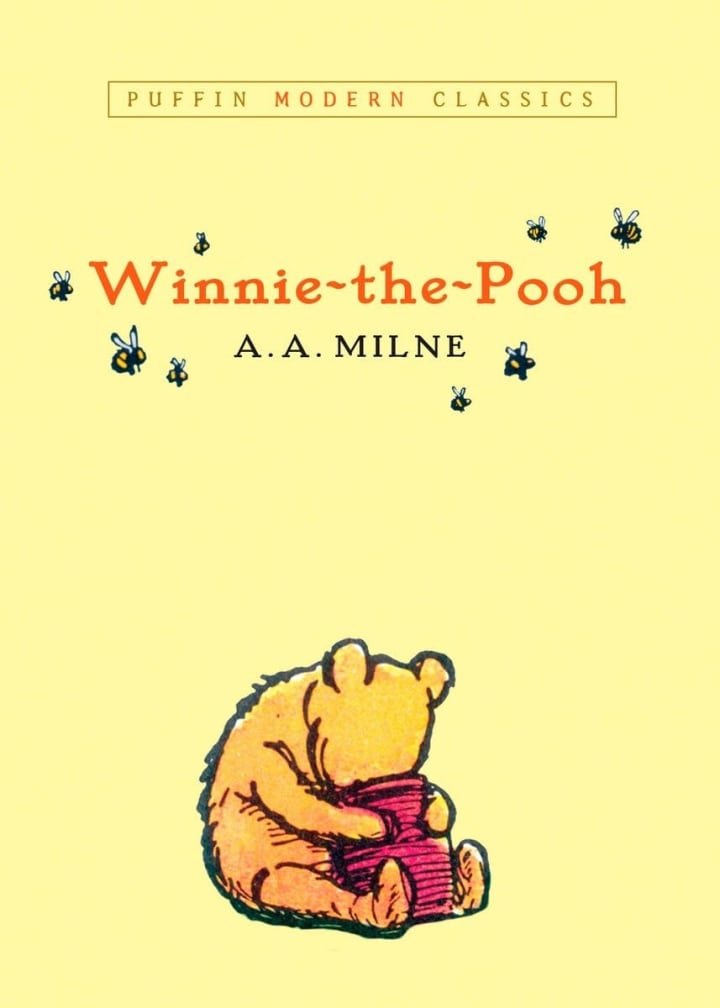
This book has ten stories that interconnect - they are all set in the woods and follow the titular character and his friends as they learn problem-solving, kindness and friendship.
It opens with a whimsical introduction to Winnie-the-Pooh, a bear “of very little brain” but a big heart. Pooh’s love for honey is noted from the outset, and his attempts to satisfy his hunger lead to the first adventure, in which he disguises himself as a cloud to trick bees but ultimately fails to secure honey.
Other memorable episodes include Pooh’s visit to Rabbit’s house, where he eats so much that he becomes stuck in Rabbit’s doorway. With his friends’ help, Pooh is eventually freed, demonstrating the friendship that underpins the stories. The tale of Piglet’s bravery during a flood showcases the small character’s growth and his friendship with Pooh, while Eeyore’s missing tail provides a comical yet heartwarming episode as Pooh helps his gloomy friend recover it.
The book introduces Christopher Robin, who plays a guiding role in the animals’ lives, offering wisdom and support during their various escapades. One of the most touching stories involves a party that Christopher Robin throws in Pooh’s honour, recognising the bear’s unique charm and endearing clumsiness.
Each character in the Hundred Acre Wood is distinct and memorable, representing different personality traits. Piglet is timid but loyal, Eeyore is pessimistic yet lovable, and Tigger, introduced later, is exuberant and full of energy. Through their interactions, we get the bigger picture of friendship with those who perhaps are not the exact same as us.
The closing chapter is especially important, as it captures the bittersweet passage of time. Christopher Robin prepares to leave the world of the Hundred Acre Wood as he grows up, but his bond with Pooh remains steadfast. This gentle message portrays the importance of the maintenance of childhood memories.
Into the Book
Friendship and Community:
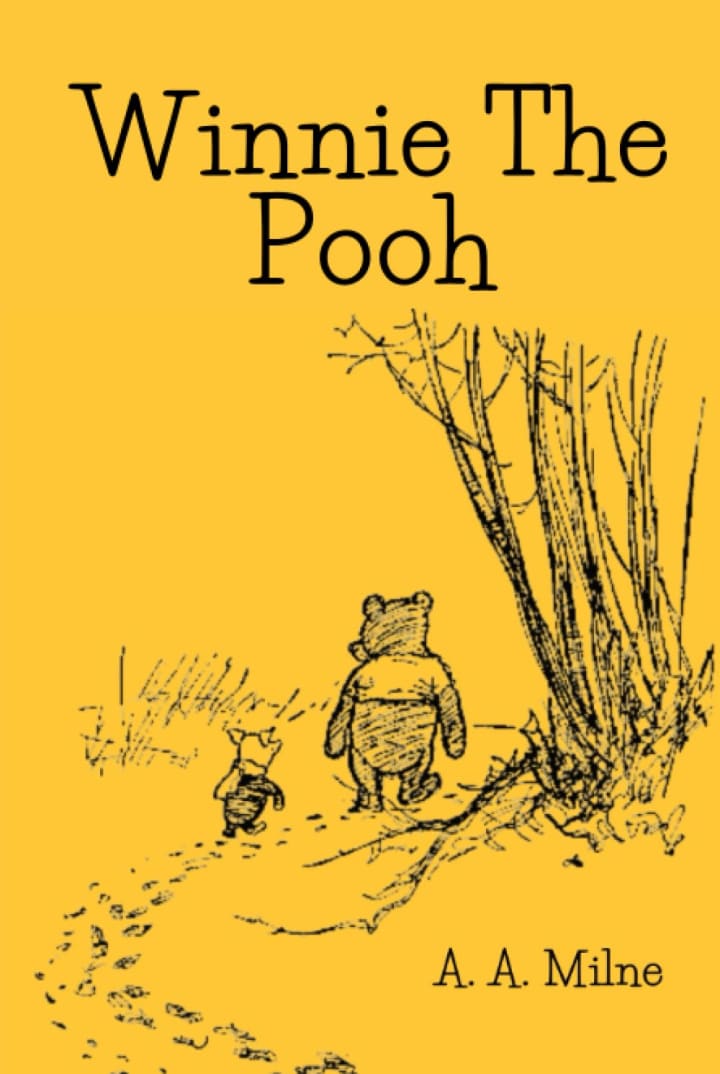
Within Winnie-the-Pooh lies an exploration of friendship and the importance of community. The Hundred Acre Wood is home to a diverse group of characters, each with distinct quirks and flaws, yet they come together to support one another in times of need. Pooh’s selflessness, as seen in his attempts to cheer up Eeyore or rescue Piglet during the flood, exemplifies how acts of kindness strengthen friendships.
Piglet’s line, “Even though he is a Very Small Animal, he can do big things,” reflects the story’s message that everyone, regardless of their size or abilities, plays a valuable role in the community. This is further highlighted when Eeyore’s friends collectively work to find and reattach his missing tail. Through these episodes, Milne shows that true friendship is about accepting others’ imperfections and celebrating their unique contributions.
“You can't stay in your corner of the Forest waiting for others to come to you. You have to go to them sometimes.”
- Winnie-the-Pooh by AA Milne
Childhood Magic:
The stories of Winnie-the-Pooh are mixed with the innocence of childhood. Milne captures the magic of imaginative play, turning simple objects like a jar of honey or a puddle of water into sources of wonder and adventure. The Hundred Acre Wood itself, based on the real Ashdown Forest, becomes a fantastical landscape where animals speak, and the ordinary becomes extraordinary.
This theme is most present in the character of Christopher Robin, who serves as a bridge between the child’s world of make-believe and the adult world of responsibility. His interactions with the animals showcase the boundless creativity and innocence of youth. When Christopher Robin tells Pooh, “Promise me you’ll always remember: You’re braver than you believe, and stronger than you seem,” it highlights how imagination and belief fuel the characters’ courage and optimism.
“It is more fun to talk with someone who doesn't use long, difficult words but rather short, easy words like "What about lunch?”
- Winnie-the-Pooh by AA Milne
Growing Up:
While the book largely celebrates the joys of childhood, it also subtly addresses the inevitability of growing up. The final chapter, where Christopher Robin prepares to leave the Hundred Acre Wood, carries a melancholic undertone. The dialogue between Pooh and Christopher Robin, filled with unspoken understanding and captures the bittersweet realisation that childhood cannot last forever.
The line, “But wherever they go, and whatever happens to them on the way, in that enchanted place on the top of the forest, a little boy and his bear will always be playing,” underscores the enduring power of memory and the idea that the essence of childhood remains in the heart, even as one grows older. Milne suggests that the magic of youth can be cherished and preserved through stories and relationships.
“I think we dream so we don’t have to be apart for so long. If we’re in each other’s dreams, we can be together all the time.”
- Winnie-the-Pooh by AA Milne
Why It's a Masterpiece
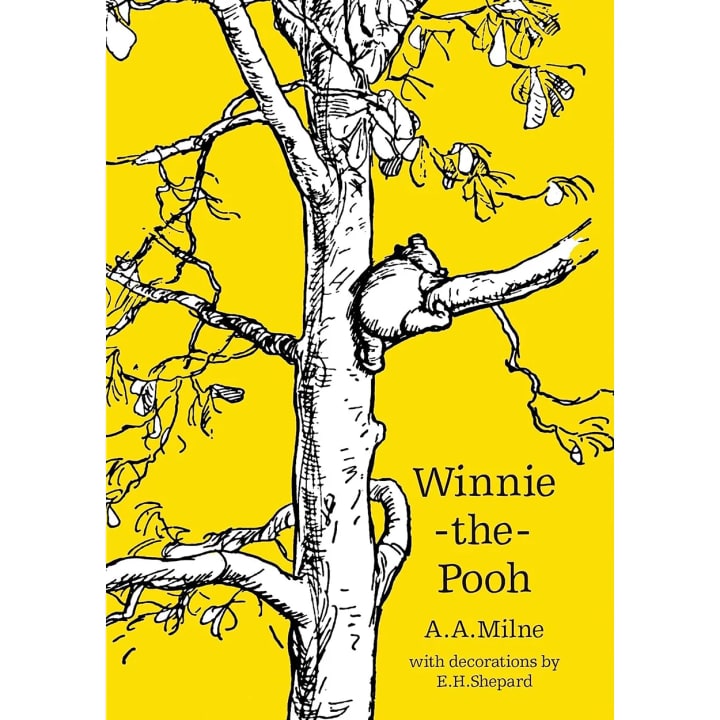
One of the book's greatest strengths is its characterisations. Each member of the text embodies a trait that reflects an aspect of human nature from optimism to melancholy. The well-rounded and relatable nature of these traits makes them also accessible to the younger generation, for whom these characters are written.
Conclusion
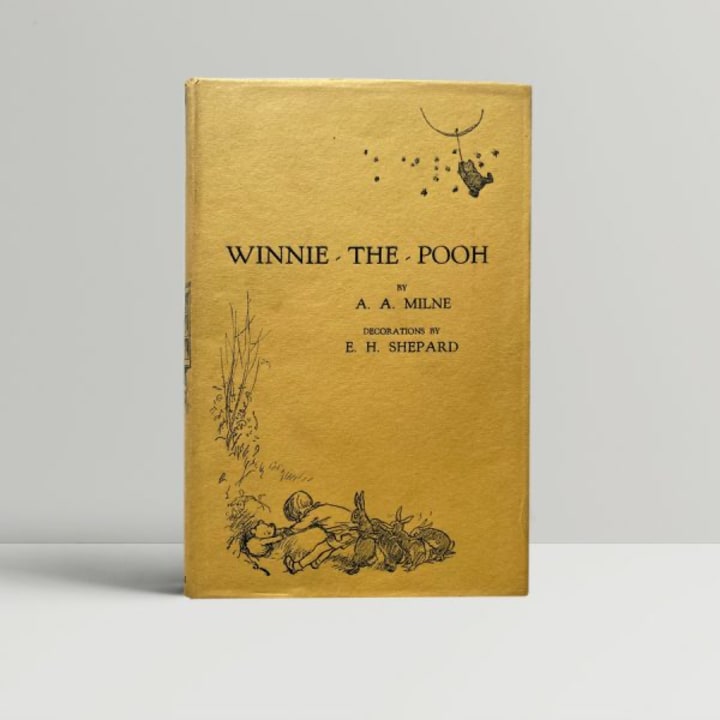
One of the most beloved children's books of all time would definitely make it into this series. I think every child after its publication possibly had some sort of copy of this text, often read it and learnt something about empathy and friendship. The moral of the story is not just that this narrative teaches us something, but that now as adults - we might want to give it another go.
Next Week: Night and Day by Virginia Woolf
About the Creator
Annie Kapur
I am:
🙋🏽♀️ Annie
📚 Avid Reader
📝 Reviewer and Commentator
🎓 Post-Grad Millennial (M.A)
***
I have:
📖 280K+ reads on Vocal
🫶🏼 Love for reading & research
🦋/X @AnnieWithBooks
***
🏡 UK
Keep reading
More stories from Annie Kapur and writers in Geeks and other communities.
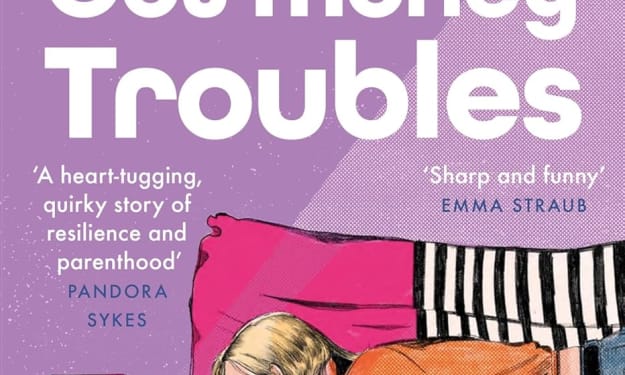
Book Review: "Margo's Got Money Troubles" by Rufi Thorpe
Every now and again I do want to read something a little heartfelt, lighter and sometimes, it can be funny too. I'm really picky when it comes to comedy in books because more than often, I simply don't find it funny. Books like I Hope This Finds You Well and My Year of Rest and Relaxation often get the balance between breakdown and comedy completely right and now, I have had someone recommend me Margo's Got Money Troubles which, at first seems nice and light but when you dig deeper - it has quite an intense message about motherhood and expectation.
By Annie Kapur4 months ago in Geeks
Silver Screen Magic with Mae West
American actress and singer Mae West became a popular film actress during the Great Depression. She started entertaining in vaudeville, then performed on Broadway, and finally went to Hollywood. She signed up with Paramount Pictures and made her debut in the 1932 film “Night After Night.” She also starred in musicals, comedies, and crime dramas. The American Film Institute named her one of the best classic Hollywood actresses.
By Rasma Raisters4 days ago in Geeks
Why The Last Holiday Still Resonates Even 20 Years Later
Plot Summary Georgia Byrd, a kindhearted but shy department store employee, discovers she has a terminal illness. Faced with her mortality, she decides to abandon her mundane life and take a lavish vacation to Europe, determined to live life to the fullest before her passing. Along the way, Georgia embraces adventure, discovers her own courage, and forms unexpected friendships that change her outlook. Amid luxury hotels, fine dining, and breathtaking scenery, she also encounters romance and laughter, learning to cherish every moment. The Last Holiday is a heartfelt story about finding the true joy of life and self-discovery.
By TheScreenAnalyst3 days ago in Geeks



Comments
There are no comments for this story
Be the first to respond and start the conversation.