
Why We Should Loosen The Reins, Just A Little, On What Is Considered 'Problematic Content' For Kids
Use your own judgement.

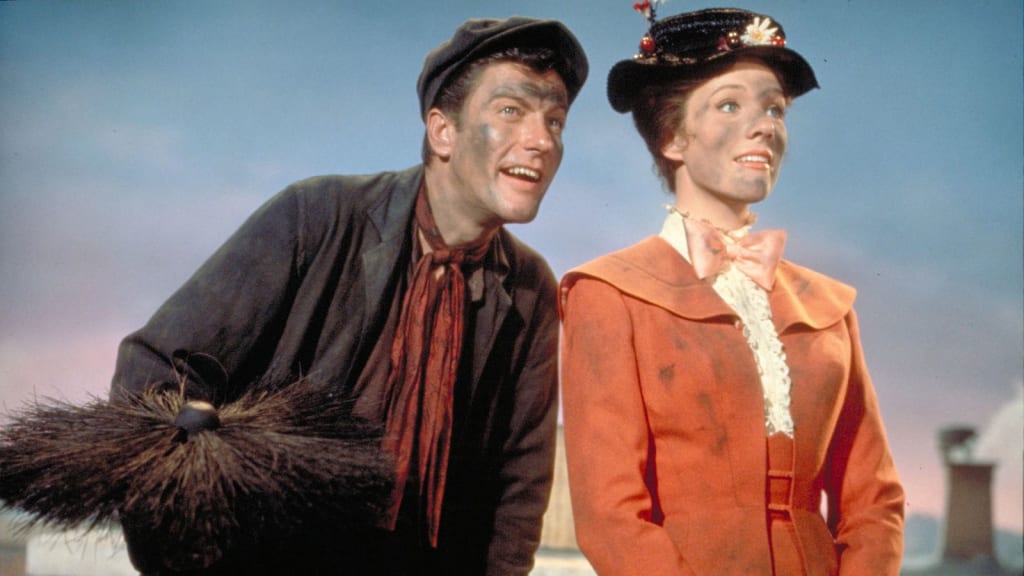
In what came as a shock to some fans, the classification of beloved Disney classic Mary Poppins was bumped up from the all ages 'G' aka General Audiences to a 'PG', Parental Guidance recommended. This means that the film has been deemed no longer suitable for all ages, with the recommendation that a parent or adult should be present to watch the film with young children. It also means some Primary/Elementary schools will require permission slips from parents if they wish to screen the film for students.
The reason for the change? The brief use of some obscure discriminatory language. The matter could go further than this, with some Classification authorities campaigning for the power to review and reclassify films every ten years, to keep with the values of the time. While there are times when this may be necessary, some believe the Mary Poppins example is slightly extreme, even calling it censorship gone mad, and many parents have vowed to continue showing it to their children regardless of the rating.. And they should.
Times have changed, but there's nothing wrong in loosening the reins, and reverting to your own judgement, when it comes to what is genuinely problematic content for children.
Consider the amount of problematic content, context, and whether a lesson can be learned
In the case of Mary Poppins, the problematic content refers to the minor character of Admiral Boom. In two separate, brief scenes, Admiral Boom refers to some sooty faced Chimney Sweeps as 'Hottentots', a discriminatory term once used by White Europeans to refer to nomadic Native tribes in southern Africa. While discriminatory language should be discouraged, it is worth noting that Mary Poppins classification was not raised during its previous review in 2013, and the British Board of Film Classification, the first authority to up the film's age rating, only chose to do so after conducting research.
If an organisation who's job it is to notice problematic content or language let this one slip just over a decade ago, and only caught it after research, the chances a child would take much notice of the word are minimal. Even if a child did ask questions, the worst that could happen would be opening a dialogue with the child about what the word means and why they shouldn't use it.
Also, in this case, context is key. Admiral Boom is an elderly man, likely with some form of Dementia, who still believes he is in the Navy with a ship under his charge. In the second instance of the objectionable language, the Admiral genuinely believes he is coming under attack. Though it is not outright stated, the other characters in the film humour Boom out of kindness, and respect for his former service.
While that doesn't make his discriminatory language okay, it could provide a chance to explain that elderly or unwell people may say things they shouldn't, that a child shouldn't repeat, because the elderly person no longer knows any better. On top of all this, the problematic language takes up less than two minutes of Mary Poppins 139 minute runtime. Should children miss an otherwise fun film with important lessons about spending time with family for less than two minutes of a single unfortunate word? Probably not.
It may be better for kids to see, and learn from, low-impact racial stereotypes rather than bar that content entirely
As most fans know, some older Disney films include some racial stereotyped characters that would be considered offensive by today's standards. The most obvious and often condemned example is in the portrayal of Native Americans in Peter Pan, particularly the 'What Makes the Red Man Red' musical sequence. Other films, such as Lady and the Tramp and The Aristocats, portray Siamese Cats as racially insensitive Asian caricatures. All three films, among others, now include a warning before the film when played on Disney Plus.
Some parents have used the Warning as a reason not to show their children these films, not wanting them to be exposed to racist content. However, that is not necessarily the intention behind the warning. One can not learn from the past if they do not know it.
The world is an imperfect place, and kids will probably stumble into racially insensitive content at some point no matter how hard we try to keep it from them. It is better that they run into it in a controlled, low impact scenario as seen in The Aristocats. A parent can discuss why racist content appeared in the past, and why it is offensive. If a child then notices racial differences between themself and others, they will know not to discuss or bring attention to those differences in an offensive way.
The Balance of Problem vs Positive
Disney's Winnie The Pooh franchise, based on the books by A.A Milne is considered one of the greatest children's film and TV series of all time. It is heartwarming, suitable for all ages, and packed with great lessons about love, friendship, family and more. However, the franchise has come under minor fire from the latest generation of parents, claiming Winnie the Pooh is now behind the times due to a gender imbalance in the main cast of characters, and therefore their daughters cannot find role models or anyone to relate to among them.
It is true that the cast of the Winnie the Pooh films is almost entirely male, aside from Kanga (although the Disney Junior series My Friends Tigger and Pooh does add Darby, a young female friend of Christopher Robin). However, this makes perfect sense in the context that the characters are stuffed toys belonging to a little boy. The characters are also not necessarily meant to be 'role models', but equals on the same level as the children watching, learning with them.
Finally, being of the opposite gender to a character does not render one unable to relate to them. A little girl who suffers from nerves will find things in common with the also nervous Piglet regardless of the fact that he is a boy.
Should little girls miss out on the wonderful lessons Pooh Bear has to offer over the cast's gender imbalance? Probably not.
While there are definitely problematic elements in older children's films, there's nothing wrong with Parents deciding themselves what is a potential discussion opener, what is truly a non-negotiable problem, and when it's okay to just let it go.
About the Creator
Kristy Anderson
Passionate About all things Entertainment!
Reader insights
Nice work
Very well written. Keep up the good work!
Top insights
Easy to read and follow
Well-structured & engaging content
Expert insights and opinions
Arguments were carefully researched and presented
Eye opening
Niche topic & fresh perspectives
Heartfelt and relatable
The story invoked strong personal emotions
On-point and relevant
Writing reflected the title & theme
Keep reading
More stories from Kristy Anderson and writers in Geeks and other communities.
10 Pieces Of Score That Elevate The Film
Recently, we saw the release of a new teaser for the upcoming live-action remake of the classic animated film How to Train Your Dragon. Fans of the original have been uncertain about the necessity of such a remake, but some admit to having been slightly won over by the teaser, particularly through the use of a few bars of 'Test Drive', an iconic piece of John Powell's score from the original film.
By Kristy Anderson12 months ago in Geeks
Silver Screen Magic with Mae West
American actress and singer Mae West became a popular film actress during the Great Depression. She started entertaining in vaudeville, then performed on Broadway, and finally went to Hollywood. She signed up with Paramount Pictures and made her debut in the 1932 film “Night After Night.” She also starred in musicals, comedies, and crime dramas. The American Film Institute named her one of the best classic Hollywood actresses.
By Rasma Raisters5 days ago in Geeks
‘If You’re Flushing the Toilet with Grey Water, People Should Know’: How China Turned Rain into an Asset
China, a nation grappling with rapid urbanization, rising populations, and the mounting pressures of climate change, has taken an innovative approach to one of humanity’s oldest challenges: water management. In cities stretching from Beijing to Shenzhen, rainwater is no longer merely something to drain away—it’s an asset, captured, reused, and integrated into urban infrastructure. This approach, blending modern engineering with environmental foresight, is redefining how millions of Chinese citizens interact with water, whether it’s drinking, bathing, or flushing their toilets. Grey Water and Urban Innovation One of the key components of China’s water management strategy is the extensive use of grey water. Grey water refers to wastewater from sinks, showers, and washing machines—essentially, water that is not heavily contaminated by human waste. Rather than sending this water directly to treatment plants, cities across China are filtering and redirecting it for secondary purposes, such as irrigation, industrial cooling, and even flushing toilets in residential buildings. As one Chinese environmental engineer candidly put it, “If you’re flushing the toilet with grey water, people should know.” Transparency and public education have been central to the success of these programs, ensuring that residents understand how recycled water is treated and reused safely. This awareness is crucial in overcoming cultural stigma and building public trust around non-traditional water sources. Capturing Rainwater: Turning a Seasonal Resource into Daily Utility China’s approach goes beyond recycling household wastewater. Urban planners have transformed entire cityscapes into rainwater catchment systems. Green rooftops, permeable pavements, and underground storage reservoirs are now common in many Chinese cities. These systems not only mitigate urban flooding during the rainy season but also provide a supplementary water supply during dry periods. In Shenzhen, for instance, a city of over 17 million residents, municipal authorities have installed expansive rainwater harvesting networks. Rainwater is channeled through pipes into filtration systems and stored for later use in gardens, parks, and even residential complexes. These initiatives have reduced dependence on distant reservoirs and groundwater extraction, lowering the ecological footprint of water consumption. Public-Private Partnerships Fueling Progress The scale of China’s urban water innovations would not have been possible without collaboration between government authorities, private enterprises, and local communities. Companies specializing in water filtration and smart monitoring systems have partnered with municipalities to ensure that rainwater and grey water meet rigorous quality standards. Smart meters track usage, detect contamination, and regulate distribution, ensuring that every drop of recycled water is both safe and efficiently deployed. In residential complexes, dashboards display daily water savings, raising awareness among tenants and motivating more sustainable practices. This blend of technology and community engagement has been a cornerstone of China’s success in turning rain and grey water into valuable urban resources. Environmental and Economic Benefits The impact of China’s water strategy is multifaceted. Environmentally, recycling grey water and capturing rainfall reduces strain on natural water bodies, helps maintain groundwater levels, and cuts the energy required for pumping and treating fresh water. Urban rivers and lakes benefit from reduced runoff and pollution, while green spaces thrive on sustainable irrigation. Economically, the strategy reduces water procurement costs for municipalities and homeowners alike. In some regions, residents have reported up to 30% savings on their monthly water bills by utilizing grey water systems and rainwater harvesting. For cities facing the twin pressures of population growth and climate-induced water scarcity, these savings are substantial. Challenges and Lessons Learned Despite its successes, China’s approach is not without challenges. Ensuring consistent water quality, maintaining infrastructure, and educating the public about grey water usage remain ongoing priorities. Some residents initially expressed concern about potential health risks, highlighting the importance of transparency and rigorous monitoring. China’s experience offers lessons for other countries facing similar water scarcity issues. By integrating urban planning, technology, and public engagement, cities can transform water from a limited resource into a renewable asset. It is a reminder that infrastructure investments, when paired with community awareness, can produce sustainable solutions for the 21st century. The Future of Water in Chinese Cities As climate change intensifies and urban populations grow, China’s innovations in water management are likely to become even more critical. Policymakers are exploring expanded applications, including industrial reuse, advanced filtration for potable water, and artificial recharge of aquifers. The ultimate goal is a resilient urban water ecosystem where rain and grey water reduce dependency on conventional sources, minimize environmental impact, and support sustainable growth. By turning rain and grey water into assets rather than waste, China is demonstrating that scarcity can drive ingenuity. Citizens are learning to embrace the idea that the water they use, even in the bathroom or laundry, can serve multiple purposes if treated and managed wisely. The transformation is not just technological—it’s cultural, signaling a shift in how humans value one of their most essential resources.
By Fiaz Ahmed Brohia day ago in Geeks


Comments (1)
As a former kid, I can tell you that no adult prevented me from reading, watching, hearing or experiencing what I wanted to know. In fact, the censorship made it even more attractive (why don't people understand that forbidden fruit tastes the best?). And no wonder so many kids are triggered and have anxiety. We have scared them to death without letting them learn from experience. Just my thoughts on this matter...