
Why People Prefer Mobile Wallets Over Cards Today?
A personal look at why modern life makes phones feel lighter, safer, and more fitting than the cards we once trusted.

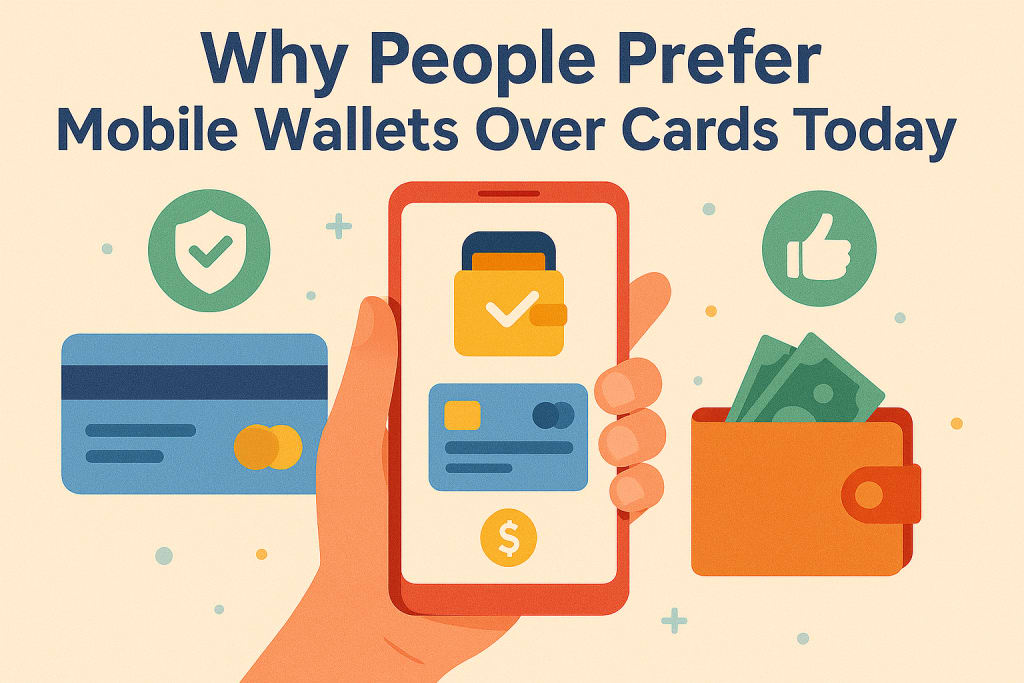
A thin leather wallet used to live in my back pocket. A few cards, some folded receipts, maybe a stray movie stub I forgot to throw away. I carried it around burdened with pointless little responsibilities and it felt like a small tether to adulthood.
However, I saw a man walk up to the glass, tap his phone, get his brisket taco and leave before I even made it to the front of a packed food truck near Riverside one afternoon in Austin. I remember thinking-when did the world change so slightly that I failed to notice?-while looking at my own card, edges tattered.
Working with Austin mobile app development, I have sunk even deeper into this evolution. We talk about convenience, speed, and incentives. But the real reasons-for-features-consumers leave cards are life moments.
When the World Speeds Up and the Hands Stay Full
One time, I saw a mother trying to find a card from her bag while holding a child on her hip. The toddler, growing impatient and confused about the sudden stop in movement, continued pulling at her shirt. She mumbled an apology when she finally paid-as if the world does punish small delays.
She told me later that she turned to a mobile wallet because her hands were never free, not because she had some grand idea about innovation. One finger-even one-handed-could be used to tap a phone. More coordination was needed to pull, swipe, insert and wait for a card.
Technology did not win.
Relief won.
Quiet Safety People Don’t Always Talk About
After a long day, I paused outside a small coffee shop on South Lamar one evening and began talking to an older man whose card had been taken at a gas station the year before. Grateful that someone was finally paying attention, he showed me the frozen alerts on his phone in much the same way people used to show pictures of their children.
He said, “A card is just plastic. Whoever finds it can start spending if I drop it. But my phone? It needs my face, and sometimes even my face is not enough.”
There was something stunning about the way he put it.
He trusted a device more than the card that he had been carrying around for decades.
What people don’t articulate is that mobile wallets give them a sense of control which they never had earlier. Not because the tools are perfect, but security happens to be more immediate than some bank statement arriving days later.
Small Satisfaction of Easy
Once, in an Austin corner store, I saw a college girl get her points on her phone and giggle. Like she’d run into a friend while picking up something at the grocery store. A small moment of surprise happiness.
What she liked was that “everything lived in one place.” Her ID is the only thing standing between her fully embracing the future and keeping it old school by carrying it in her pocket. Everything else, including her bus pass, meal credits, discount coupons, and debit card, is neatly stored within her phone.
You have to remember cards.
Wallets need room.
But our phones already store our playlists and alarms and pictures and maps and texts.
It seems like a logical extension of what was already happening once payment is added to the mix.
When Identity Changes Faster Than Plastic
Once, a business owner showed me a stack of brand new debit cards he had never used because by the time they arrived his life had already changed. A new address. A new phone number. A new daily routine.
His e-wallet quickly adapted.
The actual card sat unused and unsuspected in a drawer.
That conversation stayed with me. It helped me later realize that consumers aren’t choosing mobile wallets over credit cards because they want to belong to the next wave. Cards lag behind their lives, which is why they are selecting them.
Stability comes from flexibility rather than permanency in a city like Austin where individuals change jobs, residences, schedules, and relationships frequently within the same year.
Feeling Aspect of Tapping Rather Than Swiping
Tapping your phone to pay has a soft touch. It removes the discomfort, the rummaging through pockets, and checking if a card’s magnetic strip is still working. In an environment that is always on the move, the gesture appears barely deliberate.
At the cinema queue, a young man standing with his date in front of me hesitated to reach for his card and tapped his phone. Walking away, he sheepishly told her, “I always mess up my PIN and forget which card to use.” People like me feel less foolish because of this.
Short moment, real.
Not only what works that people like.
They like things that give them a sense of competence.
When Companies Move to the Beat of Their Clients
For years, I have dealt with retailers who were simply against mobile payments. They feared the time to acclimate, the cost, and the setup. But this is what they always told me after eventually making the switch:
“It sped everything up.”
Lines moved faster.
Receipts instantaneously synced.
There is no need to go through previous slips for refunds anymore.
Consumers stopped apologizing for taking so long.
When machines froze, cashiers did not apologize anymore.
Friction- the unseen tension that underlies so many encounters gradually dissipated, softening the entire atmosphere.
Moment I Fully Understood the Shift
Last month, out of habit, I carried my old leather wallet. It was heavier than I remembered. At the counter, without thinking much about it or hardly noticing whether anyone had seen me do so because tapping phones to pay is such a common gesture nowadays anyway-I tapped my phone first deal went through immediately.
Still, I almost reluctantly pulled the wallet out as if I owed the past a small gesture of loyalty. However, strange were the cards when I opened it; they quietly reminded me of a world that had simply moved on.
That is what made me realize people are not giving up on cards.
Cards have just become too many.
In the flow of their day, they are choosing what feels appropriate.
Not something from the future.
Not trendy.
Just easier.
What This Change Really Means
Rarely do people get into the technical details of mobile wallets, such as tokenization, encryption and security features, when I ask them why they prefer using mobile wallets.
They talk about mornings being late with so many things on their heads.
They talk about nights feeling safer with just their phones.
They talk about how it is comfortable to have one smooth move instead of four awkward moves.
Convenience does not make a person a modern man.
He becomes because life puts more demands on him.
And he will have more energy for the big moments if he has fewer obstacles in the small ones.
The arrival of mobile wallets is not some technological feat.
It reflects how people behave. Silently hustling for the things that keep their days going, keep their stress levels down, and maintain self-esteem.
Cards played out yesterday’s schedule.
Today’s is paced by mobile wallets.
During that shift, all of us found a new way to carry what’s necessary without carrying more than we need.
About the Creator
Eira Wexford
Eira Wexford is a seasoned writer with 10 years in technology, health, AI and global affairs. She creates engaging content and works with clients across New York, Seattle, Wisconsin, California, and Arizona.
Keep reading
More stories from Eira Wexford and writers in Geeks and other communities.
How AR in Sports Apps can Keep Fans Hooked and make Businesses Profitable?
I can still picture that leisurely night at the stadium, when everyone moves with easy patience and the sky is warm and low. More than anything, I had gone there to decompress. I wanted a vacation from screens and deadlines because work had been noisy that week. Even so, amid the grass and conversation, I noticed something that stuck with me much longer than the actual game.
By Eira Wexford3 months ago in Geeks
Rocky Power Rankings
The world of Rocky & Creed isn’t about fair fights or clean victories—it’s about grit, heart, and who can endure the most punishment while keeping their fists up. Some fighters look unstoppable until they crack, while others quietly dominate with technique, strategy, and unrelenting will.
By Top Rankedabout 12 hours ago in Geeks



Comments
There are no comments for this story
Be the first to respond and start the conversation.