
Why Design is Becoming More and More Similar to Art
All of us are often confronted with the argument that design is not art. That it's an applied industry that has a task and is created with a purpose. And it's not without merit. So where is the art in design?

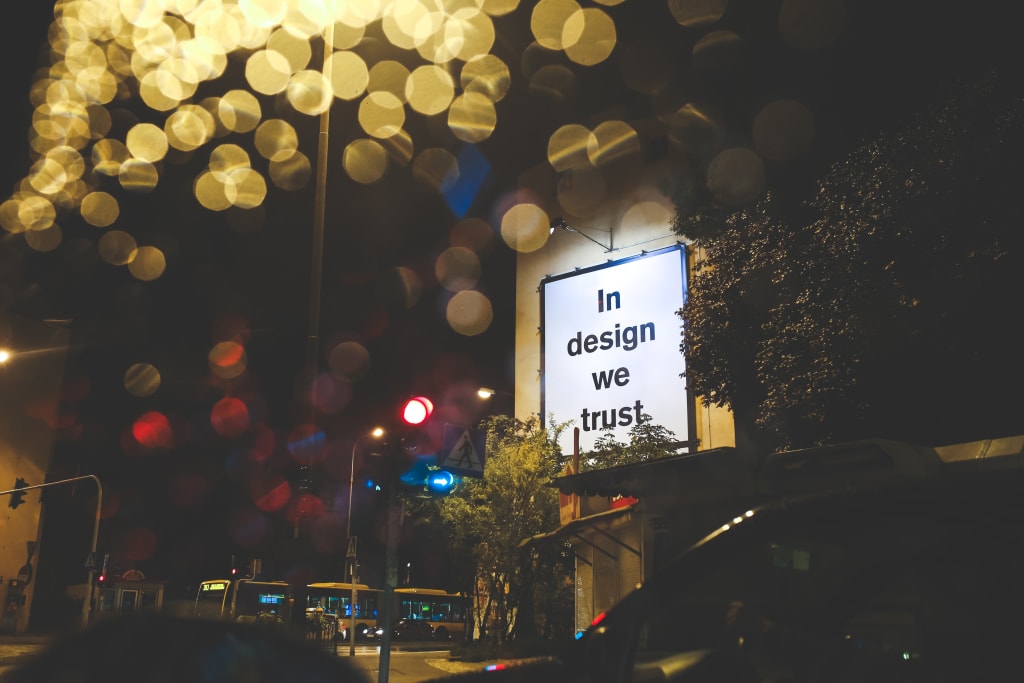
The challenge of design is to make visual symbols and coding, or technical solutions, easy to understand. It seems that this is all synonymous with consumerism and drab. But as we can see in the examples of the best works, this is not the case.
Let's break down what is art and what is design, from my point of view. It does not have any claim to objectivity, so you can argue if you want.
Art is the expression of a view of the world from the artist's head. He creates images and forms, concepts that live in his head, he looks at the world from his own particular perspective and visualizes it all with the means available to him. All this seems to happen often without any task, and what he does is just a stream of consciousness. And I think this is where the bottleneck lies. Let me explain my position.
Art on Demand
Suprematism and constructivism with their abstraction and planar compositions were a response or reaction to what was happening in the social and political space, both in the country and the world. It was a kind of public request for a new image, a new concept of visualization of the changing world. Later this avant-garde found its application in propaganda posters.
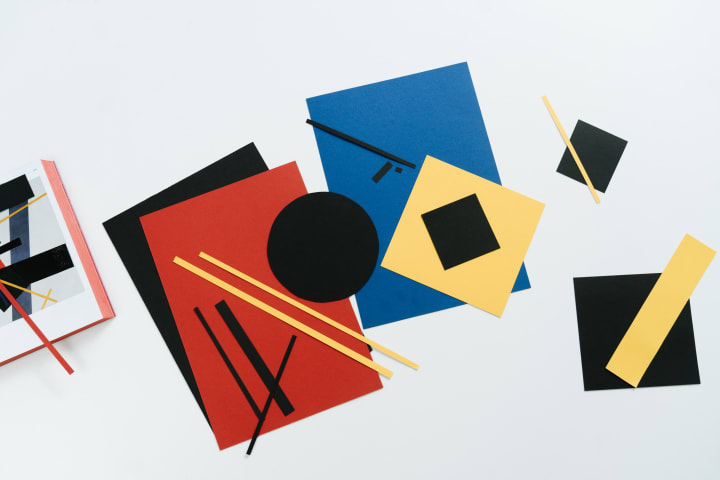
Artists were and are working proactively, and that's their strength. They are visionaries of the future. It's no wonder that a lot of what's going on in art is first transferred into our everyday reality and then used for practical purposes.
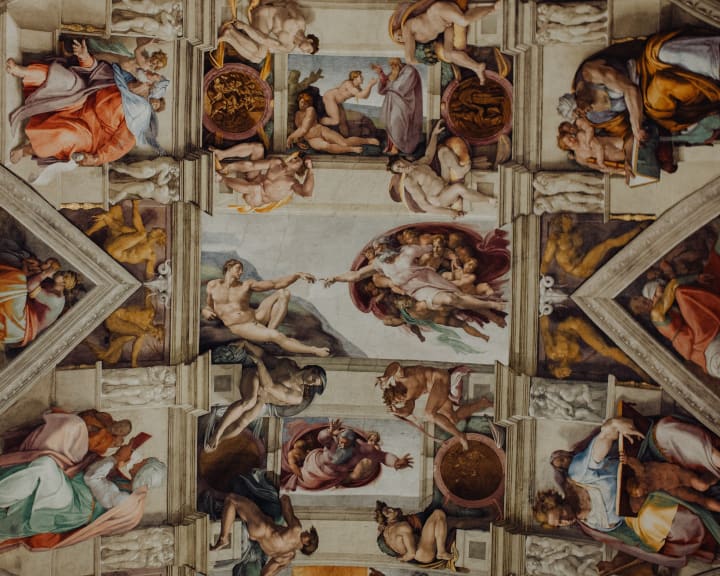
If we look anywhere in the earlier eras of painting, graphic arts, sculpture, and so on, we see that all the works were created on commission. It was the authorities, the patrons, the church. Especially the church, which always and everywhere used art to promote its values. But all this has never prevented artists from conveying their views on this or that theosophical issue.
The question of the chicken and the egg is not an issue here. First of all, art is a reaction to the world, which is essentially created "by order" of society. And then this reaction is replicated in the mass market because it has somehow become relevant to the masses at large.
It turns out that art is created on-demand and always serves more or less an applied purpose, from propaganda to interior decoration. Real art is always a concept - without a concept, it doesn't seem like art anymore. So we can marvel at a banana with scotch tape or a sculpture that only exists in the artist's head. And wonder who's buying all this. That's because these concepts have a development, a world of their own, and a piece of the future that can change a lot of things around them.
Another example would be the creation of logos. Salvador Dali, an outstanding artist, created the logo for Chupa Chups, but no one calls him a designer or says that he created applied things. Moreover, in today's world, creating a logo can cost hundreds of millions of dollars, and often the result is not worth the money paid. Exactly like some types of modern art, isn't it?
What about design.
As opposed to art, we are told that design solves problems. It is a completely applied tool. As you understood from my reasoning, art is also quite an applied story and also solves problems. Albeit on a slightly different level. The design begins with the solution of everyday problems, while art reaches its lowest point.
Everything happens with design in exactly the opposite way: being created to solve problems, it sometimes becomes art itself. Let's look at Phillip Stark's Juicy Salif, the typeface posters of the Swiss school, or the Bauhaus, or the iPhone - they all become part of our cultural code, not just solving simple problems like delivering information or calling a friend.
My opinion is this: the designer's personality is just as important as the artist's in the product. Any design product could be completely different for another author, even if they were working to the same TOR and were specialists of the same level. Isn't that the author's view of the world inherent in the artist?
What's the difference?
Artists anticipate, and designers often work with real things. Although they can also work with things that don't yet exist - like mobile phones, for example, when they didn't yet exist.
In my opinion, the reality is that machine learning algorithms are becoming more and more widespread, learning to solve design problems. But machine learning is in any case imitation and at best a compilation from samples. It will soon learn to do things in a way that is neat and clear and probably even predictable. The clearer and more predictable the result of the algorithm, the more relevant the view of the creator becomes. Why? Because otherwise, we will get almost identical design solutions.
The relevance of art is not in doing something beautiful or fashionable, but in the timeliness of the concepts offered. Design is now moving inexorably in the same direction - creating something beautiful and neat is no longer enough. More and more you have to show something from a special angle, put in and tell an unusual idea.
So, in my opinion, if even before it was possible to oppose art to design, now it makes less and less sense.
About the Creator
Bonnie Charron
Passionate writer, conversationalist. Interested in HR, IR, and economics, but always ready to discover a new topic
Keep reading
More stories from Bonnie Charron and writers in Geeks and other communities.
How to Save Your Mental Health - 5 Easy Tips
The need to take care of one's mental health as one does at one physical health no longer raises questions or doubts. At the very least, we are witnessing serious steps toward the destigmatization of mental disorders. In addition, more and more often, celebrities and public figures are being empowered to talk openly about the mental illnesses they are experiencing and to encourage their fans not to be afraid to ask for help. Gradually, society's priorities are changing - taking care of oneself and one's health is coming to the fore.
By Bonnie Charron5 years ago in Longevity
Silver Screen Magic with Mae West
American actress and singer Mae West became a popular film actress during the Great Depression. She started entertaining in vaudeville, then performed on Broadway, and finally went to Hollywood. She signed up with Paramount Pictures and made her debut in the 1932 film “Night After Night.” She also starred in musicals, comedies, and crime dramas. The American Film Institute named her one of the best classic Hollywood actresses.
By Rasma Raisters7 days ago in Geeks
5 Pieces Of 'X-Men' Content Worth Revisiting Before 'Avengers: Doomsday
It's an exciting time to be a fan of the Fox X-Men films. While 2024's Deadpool and Wolverine initially seemed to act as a love letter/goodbye to the Fox-verse, fans were delighted earlier in 2025 with the reveal that some of the Fox-verse X-Men were set to appear in Avengers: Doomsday. Doomsday's third teaser focuses on a few of these returning characters, including Patrick Stewart as Professor X, Ian McKellen as Magneto, and James Marsden as Cyclops.
By Kristy Anderson8 days ago in Geeks




Comments
There are no comments for this story
Be the first to respond and start the conversation.