
When Ice Becomes a Battlefield
European Troops, Greenland, and the Quiet Return of Old Power Games

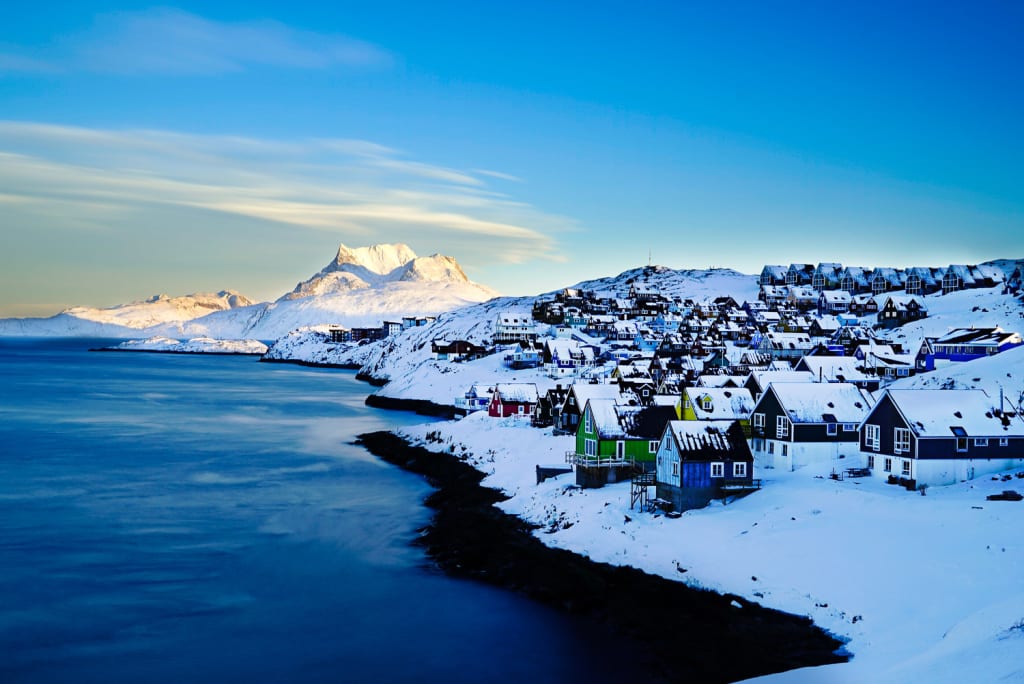
For most of the world, Greenland exists as a blur on the edge of the map—vast, frozen, distant. A place of ice sheets and silence. A place you don’t think about unless you’re scrolling past climate headlines or watching a documentary late at night.
But history has a way of turning quiet places into loud warnings.
As European nations send additional troops to Greenland amid escalating U.S. annexation rhetoric, the ice is no longer just melting—it’s speaking. And what it’s saying should make us all uneasy.
Because this isn’t really about Greenland.
It’s about power.
A Frozen Island, a Heated World
Greenland has always been strategically important, even when most people weren’t paying attention. During the Cold War, it was a critical military outpost. Today, it sits at the crossroads of shipping routes, rare earth minerals, and Arctic dominance—assets that grow more valuable as climate change redraws the map.
When reports surfaced of renewed U.S. interest in annexation—or at least expanded control—it reignited a tension many assumed belonged to the past. The idea of acquiring territory, once framed bluntly as empire, now arrives dressed in softer language: security, stability, strategic necessity.
Europe’s response—deploying additional troops—signals something deeper than diplomacy.
It signals fear.
Not fear of invasion tomorrow, but fear of precedent.
The Return of a Dangerous Language
Annexation is an old word. A heavy word. One we associate with history books, not modern press briefings. Yet here it is again, slipping back into public discourse as if it were merely a negotiation tactic.
But words matter.
When powerful nations begin to talk about land as something to be taken rather than respected, smaller regions stop being homes and start becoming assets. Greenland, with its Indigenous Inuit population and autonomous governance, risks being reduced to coordinates on a military map.
Europe knows this story well. It has lived it, authored it, and suffered from it.
So when European troops arrive, they are not just defending territory—they are defending an idea: that borders are not bargaining chips, and people are not footnotes.
Climate Change: The Silent Accomplice
None of this is happening in isolation. Climate change is the quiet force behind the curtain, reshaping the Arctic faster than diplomacy can keep up.
As ice retreats, access expands. New shipping lanes open. Buried resources emerge. What was once unreachable becomes irresistible.
And where opportunity appears, power follows.
Greenland’s ice is melting—but so are the old restraints that once kept territorial ambition in check. The Arctic is becoming the world’s newest stage for competition, where environmental collapse and military strategy intersect in unsettling ways.
The tragedy is that those who contribute least to climate change—the Arctic’s Indigenous communities—stand to lose the most.
Europe’s Message to the World
By reinforcing Greenland militarily, European nations are sending a signal—not just to the United States, but to every global power watching closely.
The message is simple: the world is tired of unilateral moves.
This isn’t necessarily a rejection of alliance or cooperation. It’s a rejection of entitlement. A reminder that even allies must respect sovereignty, consent, and international norms.
Because if Greenland becomes negotiable, what comes next?
If ice-rich land can be discussed as property, then no region—especially those weakened by climate stress—is truly safe.
The Human Cost Behind the Headlines
Lost in the language of troops and threats are the people who actually live there.
Greenland is not empty. It is not a chessboard. It is home.
For many Greenlanders, this escalation revives old anxieties: being spoken about but not spoken to. Being protected without being asked. Being valued for land rather than life.
History shows us that militarization rarely arrives quietly—and it almost never leaves without scars.
When nations argue over territory, communities pay the price.
A Mirror for the Future
What’s happening in Greenland is not an anomaly—it’s a preview.
As resources become scarce and climate pressures intensify, more regions will find themselves under the gaze of powerful nations. Islands, coastlines, and once-forgotten lands will suddenly matter.
The question is not whether competition will increase.
It’s whether we’ve learned anything from the last century.
Will we repeat the mistakes of expansion and dominance?
Or will we finally accept that security built on control is fragile—and temporary?
Ice Doesn’t Forget
Greenland’s ice holds centuries of memory. Climate records. History. Silence.
Now it holds soldiers.
And that should trouble us.
Because when even the coldest places on Earth become contested, it’s a sign that the world is running out of room—not just physically, but morally.
This moment calls for restraint, dialogue, and humility. Not louder threats. Not more boots on ice.
The Arctic should be a warning—not a prize.
And Greenland deserves to be more than a headline in someone else’s power struggle.
#WorldAffairs #Greenland #Geopolitics #ClimateAndConflict #GlobalPower #HumanImpact #VocalMedia #InternationalRelations #HopeForTheFuture
Disclaimer
This article is written for commentary and reflective analysis based on publicly discussed geopolitical developments.
About the Creator
KAMRAN AHMAD
Creative digital designer, lifelong learning & storyteller. Sharing inspiring stories on mindset, business, & personal growth. Let's build a future that matters_ one idea at a time.
Keep reading
More stories from KAMRAN AHMAD and writers in Geeks and other communities.
The Day Everything Changed
I missed the last bus on purpose. Not because I wanted to be stranded, but because I couldn’t face going home. That day had been one long unraveling—work mistakes, a call from my sister about our mother’s health, the kind of exhaustion that lives in your bones. The bus stop bench was cold, the sky bruised with storm clouds, and I just… stayed. Let the schedule pass. Let the world move on without me.
By KAMRAN AHMAD2 months ago in Geeks
The Politics of Playing Dress-Up
Well, to start off I'd like to say a happy world book day to all who celebrate. I know I haven't really posted anything on my socials about it but I'm not a jubilant kind of person. I lay low most of the time. Let's start off with a popular anecdote from the vaults...
By Annie Kapur4 days ago in Geeks


Comments
There are no comments for this story
Be the first to respond and start the conversation.