
What makes us love 90's - 2000's cartoons, and hate what's aired now?
A glance into the production of cartoons across the ages.
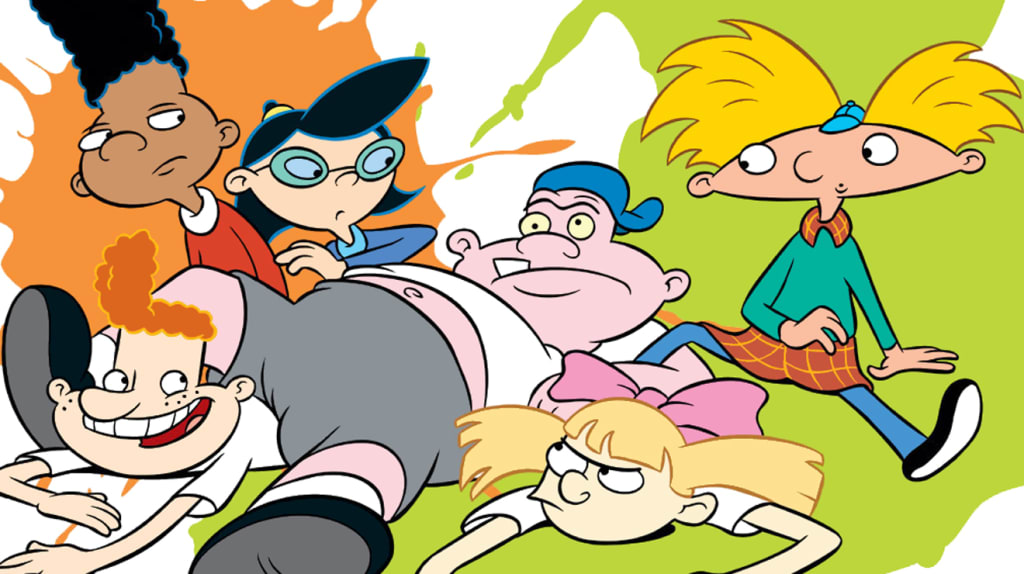
Cartoons, no matter the stage of life you find yourself in, you will always remember the cartoons you used to watch as a kid for hours on end. Starting from the 1960s with the Flintstones to now with shows like The Amazing World of Gumball, there is a universal understanding that kids love cartoons, but what happens when you are no longer a kid? A burning question appears, why do kids even like to watch this stuff?
Many factors lead to this question, quality, culture, and age. When it comes to quality, we think of a story, creativity, and image quality. Because of the 90's limited technology, image quality was not nearly as nice and easy as it is today. This is why no cartoon from that time featured 3-dimensional scenes other than to showcase the very rudimentary but new technology, which was very rare and only for a few seconds if at all. It also took much longer to produce episodes with 90's technology, a single episode of SpongeBob took around eleven months to produce. To compensate for this, writers and drawers were forced to think more creatively, create a compelling story, and have visuals that made sense while not being unrealistic to animate. This is one of the most important appeals of 90's cartoons, they made up for image quality with unique plots and creative and innovative ways to convey that. On the other hand, modern cartoons have access to CGI, allowing high-quality imagery at a fraction of the time it took to produce a 90's cartoon episode, and the effects of that are clear. Because modern cartoons take much less time and effort to produce, their story and innovative quality decrease, resulting in mass production of episodes to please the masses. Rather than a year for one episode, it's a year for one season.
Culture is also a very important factor to consider, as no doubt 90's culture is drastically different than todays. For one, humor elements were spread apart and well-timed. This is likely because the technology was just coming out back then, tiny flip-phones, handheld videogames, CDs, and the web was a much smaller place when Yahoo ruled the internet. This lead to a perfect mix of new bright ideas and colors of the new era while also adhering to the traditional slow-going formulas found in old cartoons. Nowadays, we are flooded with information constantly, millions of new videos, articles, images one after another and so it only makes sense that cartoons should reflect that, throwing jokes, action, screaming, anything that grabs attention with any given opportunity at the new audience. The best piece of evidence to prove this is something we have all said, " I miss the good ol' days when things were simpler when I was a kid".
And that very quote is the most important factor, we are no longer kids. While habits are a great thing to have as an adult, it's the greatest part of childhood. The part of childhood we all remember the most is our routine, and a very important part of that routine was cartoons. As you can guess, when we are presented with time to watch cartoons now, we expect the same feeling we received as a kid, the ads, the music, the colors, everything, only to be disappointed because not only are all the cartoons completely different, they don't hold the same quality or culture as the old ones. It is so far from the routine that it is no longer a kids cartoon, it is a disaster, an anomaly, mindless nothingness. We have grown, the same jokes that got us laughing as a kid are no longer present in new cartoons as the current generations cant relate. You cant expect a child to have the same reaction to an impact font meme from 10 years ago if they weren't around to experience it, and the same applies to cartoons, as the old episode no longer elicits the same response as they for us 30-ish years ago.
The cultural and technological advancements should not hinder us from enjoying cartoons nowadays, we just need to understand what still makes them entertaining to children. So next time you take a glance at what's on the kid's channel, ask the kids watching, why? Our habitual and grown minds may not understand the value in modern cartoons, but the kids can tell you, and most likely you will hear the same thing you would say as a kid watching your favorite show on the television; Whatever that may be, there's only one way to know.
About the Creator
Keep reading
More stories from Everest Severson and writers in Geeks and other communities.
The Confusing and Convoluted Lore of the Pikmin Franchise, part 1
For a game where cute little plants follow you around, sing little tunes, and bring become your best friends no questions asked, the lore surrounding the Pikmin franchise is quite dark and extreme. Hidden behind its cute and bright facade lies a post-apocolyptic earth, an ancient Japanese spirit who intentionally maroons spacecraft, and a unholy amount of mutated creatures your must fend off. excluding the creatures, most of the elements of Pikmin's lore is subtle and only visible to those who look for it. For those who played the game and weren't looking (how Nintendo intended you to play), here is what hides behind the scenes in the first game, Pikmin.
By Everest Severson4 years ago in Gamers
Silver Screen Magic with Mae West
American actress and singer Mae West became a popular film actress during the Great Depression. She started entertaining in vaudeville, then performed on Broadway, and finally went to Hollywood. She signed up with Paramount Pictures and made her debut in the 1932 film “Night After Night.” She also starred in musicals, comedies, and crime dramas. The American Film Institute named her one of the best classic Hollywood actresses.
By Rasma Raisters4 days ago in Geeks
5 Pieces Of 'X-Men' Content Worth Revisiting Before 'Avengers: Doomsday
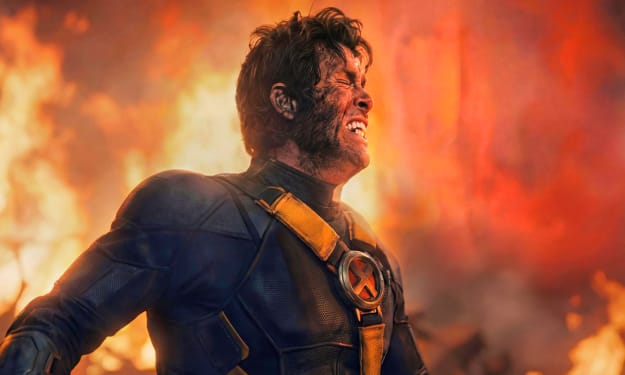
It's an exciting time to be a fan of the Fox X-Men films. While 2024's Deadpool and Wolverine initially seemed to act as a love letter/goodbye to the Fox-verse, fans were delighted earlier in 2025 with the reveal that some of the Fox-verse X-Men were set to appear in Avengers: Doomsday. Doomsday's third teaser focuses on a few of these returning characters, including Patrick Stewart as Professor X, Ian McKellen as Magneto, and James Marsden as Cyclops.
By Kristy Anderson5 days ago in Geeks



Comments
There are no comments for this story
Be the first to respond and start the conversation.