
Waiting for Godot by Samuel Beckett
Why It's a Masterpiece (Week 40)


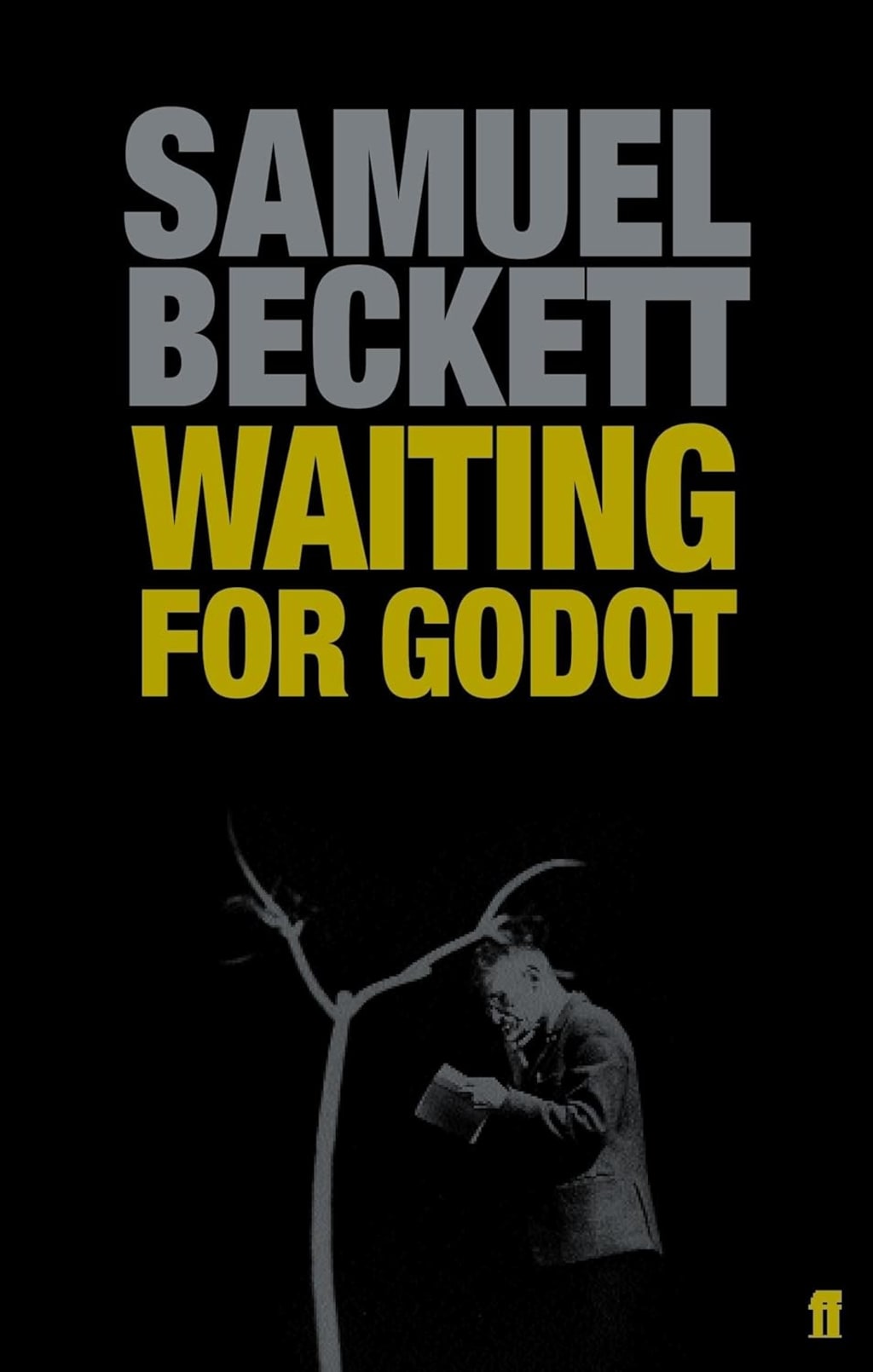
"Waiting for Godot," a seminal work by Samuel Beckett, was first published in French in 1952 as "En attendant Godot." This groundbreaking play, which Beckett wrote between October 1948 and January 1949, marks a significant shift in modern theatre. Initially, Beckett struggled to find a publisher willing to take on the unconventional piece, but it eventually found a home with Les Éditions de Minuit, a Parisian publisher known for embracing avant-garde literature.
The play premiered on 5 January 1953 at the Théâtre de Babylone in Paris, directed by Roger Blin. Its English translation, undertaken by Beckett himself, was published in 1954 and premiered in London on 3 August 1955. Despite its initial mixed reviews, the play soon gained acclaim for its innovative approach to narrative and structure, cementing Beckett's reputation as a leading figure in the Theatre of the Absurd.
"Waiting for Godot" defies traditional storytelling conventions, presenting a bleak yet darkly comic exploration of human existence, characterised by its minimalist setting and repetitive dialogue. This is really the main attraction of the whole play, presenting everything about human existence as being absurd and out of the realm of true understanding.
Plot
Act I begins with Vladimir and Estragon, who engage in a series of repetitive and often nonsensical conversations to pass the time. Their dialogue is filled with existential ponderings, moments of humour, and expressions of despair. The monotony of their waiting is occasionally broken by the arrival of Pozzo and his servant, Lucky. Pozzo, a bombastic and imperious figure, mistreats Lucky, who remains mostly silent until he is ordered to "think" and delivers a lengthy, disjointed monologue that further adds to the play's sense of absurdity. Pozzo and Lucky leave, and a boy arrives with a message that Mr. Godot will not come today but will surely come tomorrow. The act ends with Vladimir and Estragon deciding to leave, but they remain stationary.
Act II mirrors the first, with slight variations indicating the passage of time. The tree now has a few leaves, symbolising a faint hint of change. Pozzo and Lucky return, but Pozzo is now blind, and Lucky is mute, signifying a decline in their circumstances. Their interactions with Vladimir and Estragon are similarly strained and futile. The boy reappears, delivering the same message: Godot will not come today but will come tomorrow. The play concludes with Vladimir and Estragon once again contemplating departure but remaining where they are.
The cyclical nature of the plot, with its lack of conventional progression or resolution, reinforces the themes of existential uncertainty and the human condition's inherent absurdity. The waiting itself becomes a metaphor for life's indefiniteness, where meaning and purpose are perpetually deferred. It is a brilliant piece of commentary on life's true meaning and that when we seek it out - are we really not just waiting around for things to happen?
Into the Book
The book's first and most prominent theme is the absurdity of human existence. The characters' endless waiting for Godot, who never arrives, symbolises the futile quest for purpose in a chaotic and indifferent universe. This theme is evident in the repetitive dialogue and actions of Vladimir and Estragon.
Their conversations often lead nowhere, filled with circular reasoning and non-sequiturs, mirroring the absurdity of their situation. For instance, Estragon's repeated attempts to remove his boot and his forgetfulness about previous events underscore the disjointed and nonsensical nature of their reality. The arrival and departure of Pozzo and Lucky add to this sense of absurdity, as their interactions are equally devoid of logical progression or meaning.
“Let us do something, while we have the chance! It is not every day that we are needed. Not indeed that we personally are needed. Others would meet the case equally well, if not better. To all mankind they were addressed, those cries for help still ringing in our ears! But at this place, at this moment of time, all mankind is us, whether we like it or not. Let us make the most of it, before it is too late!
- Waiting for Godot by Samuel Beckett
The second biggest theme is the passage of time and how it is . In the play, the days blur together, with little distinction between them, creating a sense of stasis. This theme is exemplified by the tree, which changes only slightly between the acts, suggesting the slow and imperceptible passage of time. Vladimir and Estragon's uncertainty about how long they have been waiting or what day it is further emphasises their detachment from temporal reality. Pozzo's blindness and Lucky's muteness in the second act indicate a deterioration over time, yet this change seems arbitrary and without significance. The passage of time therefore changes a lot within the moment, but nothing impacting the possibilities of the characters.
“Have you not done tormenting me with your accursed time! It's abominable! When! When! One day, is that not enough for you, one day he went dumb, one day I went blind, one day we'll go deaf, one day we were born, one day we shall die, the same day, the same second, is that not enough for you? They give birth astride of a grave, the light gleams an instant, then it's night once more.”
- Waiting for Godot by Samuel Beckett
Hope and despair is also a huge theme in the text. Vladimir and Estragon's hope for Godot's arrival keeps them waiting, yet this hope is continually dashed, leading to repeated despair. The boy's messages, promising Godot's arrival the next day, perpetuate this cycle of expectation and disappointment.
The characters' dependence on external validation for meaning and purpose is a poignant commentary on human vulnerability. Estragon's suggestion to leave is always met with Vladimir's reminder that they cannot, indicating their entrapment in a state of perpetual hope and despair. Therefore, human fragility lies deeper than simply some arbitrary meaning based on circumstances, it is also dependent on the amount of hope that can be felt at any one time - though the hope itself is by all means, fleeting.
“The tears of the world are a constant quantity. For each one who begins to weep somewhere else another stops. The same is true of the laugh. Let us not then speak ill of our generation, it is not any unhappier than its predecessors.”
- Waiting for Godot by Samuel Beckett
Why It's a Masterpiece
The play's radical departure from traditional theatre conventions revolutionised the landscape of modern drama. Beckett's minimalist setting, sparse dialogue, and lack of conventional plot challenged audiences and critics to rethink the possibilities of theatrical expression. For those of you interested in reading some theatre criticism by Peter Brook, now is your time to shine.
Beckett's use of language, characterised by its economy and precision, enhances the play's impact, conveying complex ideas through seemingly simple dialogue. The characters, despite their absurdity, are profoundly human, embodying universal experiences of waiting, hoping, and despairing. "Waiting for Godot" captures the essence of human existence in its purest form, stripped of artifice and pretence. Thus making the play one of the most important for depicting the unpredictable but solidly whimsical reality of being a human being, especially in the modernising world.
Conclusion
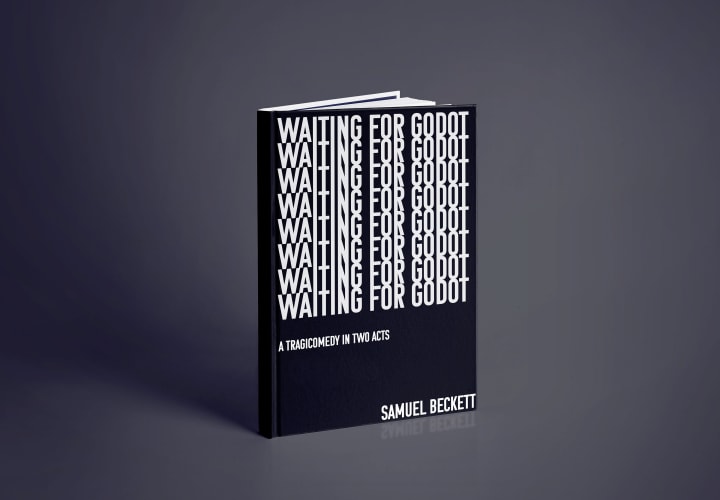
It remains a timeless work because it addresses fundamental aspects of the human experience. Its themes of existential uncertainty, the passage of time, and the interplay between hope and despair are universally relatable. The play's open-ended nature allows each generation to find new meanings within its text, ensuring its continued reading by theatre critics and bookworms alike. As for me, I enjoy "Waiting for Godot" for its fun, odd characters and scenes of complete repetitions in which our characters are the mouthpieces for humanity's weirdness.
Next Week: Dangling Man by Saul Bellow
About the Creator
Annie Kapur
I am:
🙋🏽♀️ Annie
📚 Avid Reader
📝 Reviewer and Commentator
🎓 Post-Grad Millennial (M.A)
***
I have:
📖 300K+ reads on Vocal
🫶🏼 Love for reading & research
🦋/X @AnnieWithBooks
***
🏡 UK
Keep reading
More stories from Annie Kapur and writers in Geeks and other communities.
Book Review: "You're Not Listening" by Kate Murphy
Full Title = You're Not Listening: What You're Missing and Why It Matters by Kate Murphy I chose to read this after seeing it on the list of Penguin Nonfiction I was browsing through one day (yes, I like to scroll through the Penguin Nonfiction books). After a while of the scrolling and going back and forth saying to myself 'no, I don't want to read this one...' I ended up reading it. To be honest, it was rather here and there - neither amazing nor awful. It was one of those middle of the road books where the problem again, as we have seen with some of our more recent nonfiction...is data.
By Annie Kapurabout a year ago in Geeks


Comments (6)
Very well written and insightful piece. I love Waiting for Godot although, it has been many years since I have read it. Maybe I should look it up again. I don't know if you have written about No Exit, but that is another existential play you might enjoy.
I really enjoyed your piece; it was beautifully written and resonated with me. I would be honoured if you could give my stories on Vocal a look and share your thoughts. And if you like what you read, please consider subscribing. Let's support each other's creative journeys. Have a great day.
Congratulations on Top Story
Congrats on Top Story. I'm glad to know I'm not the only fan of Becket. I thought the play was a masterpiece too. Isn't it weird how there are two actresses with strange names: Anne Hathaway and Gal Gadot? I wonder if they are related? LOL
I love the play and saw it with Mckellan and Stewart. My friend the writer wove it into an episode of the series "Doctors" much to the chagrin of some die-hard fans, and I have used it in two or three of my stories. Excellent article
I read Beckett before I read Shakespeare (says a lot about my reading habits). Thank you for this. I am attempting to read his novels for the first time, but those plays still entice... 🍂