
Under the Volcano by Malcolm Lowry
Why It's a Masterpiece (Week 53)

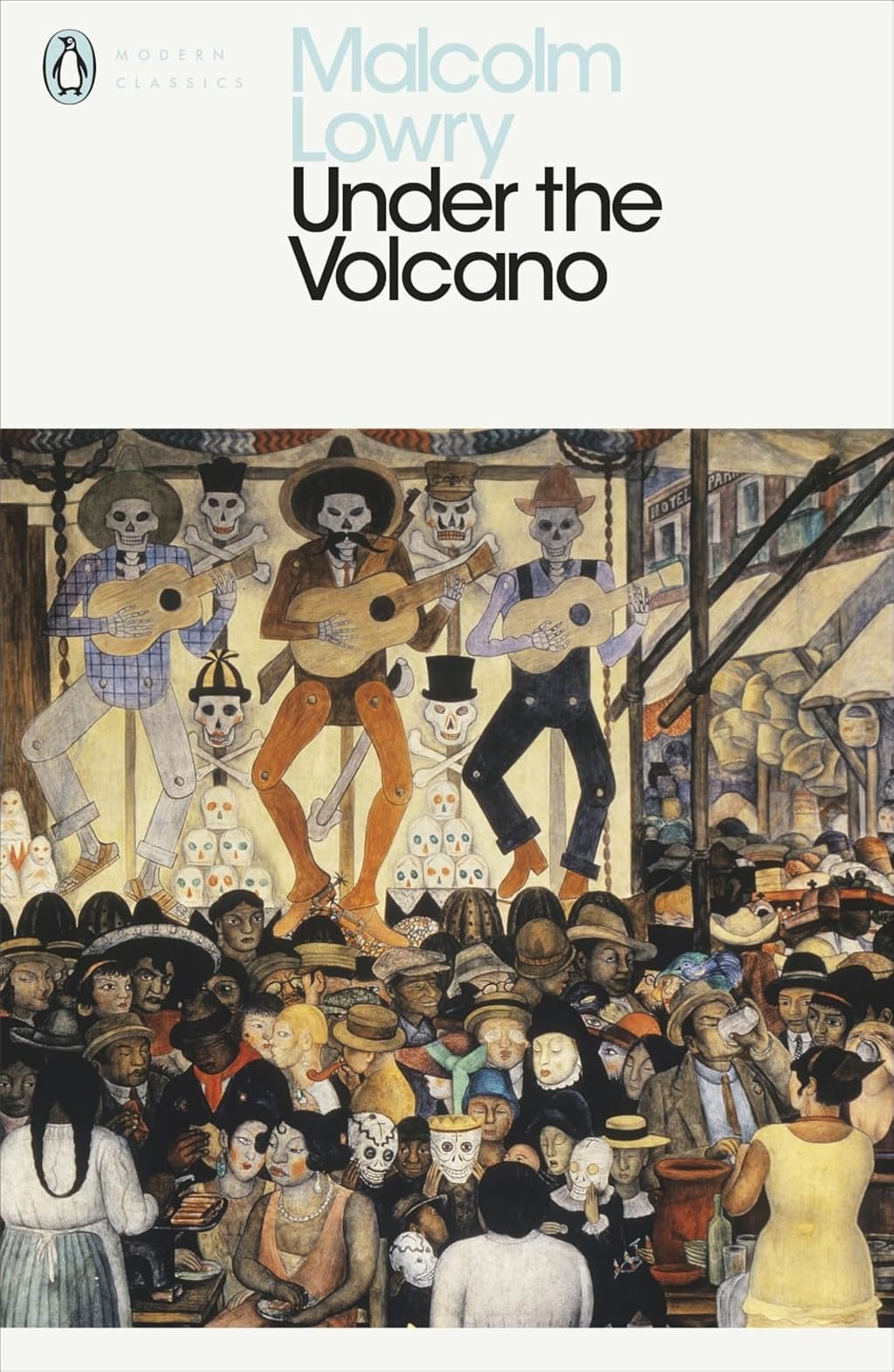
"Under the Volcano," a seminal work by British writer Malcolm Lowry, was first published in 1947. The novel, which had undergone numerous rewrites and faced multiple rejections, stands as a testament to Lowry's perseverance and literary vision.
The publication journey of "Under the Volcano" was fraught with difficulties, reflective of Lowry’s tumultuous life. The novel was initially conceptualised in the early 1930s, and Lowry worked on it intermittently while grappling with personal demons, including alcoholism and mental health issues. Despite these struggles, Lowry's determination to see his vision realised never waned.
The manuscript finally found a home with Reynal & Hitchcock in the United States, and subsequently with Jonathan Cape in the United Kingdom. Upon its release, "Under the Volcano" received critical acclaim for its intricate narrative structure, vivid descriptions, and profound thematic depth. Critics hailed it as a modernist masterpiece, comparing Lowry's work to that of James Joyce and William Faulkner.
The novel's complex portrayal of the protagonist’s descent into despair amidst the backdrop of Mexico on the Day of the Dead resonated deeply with readers and established Lowry’s reputation as a significant literary figure. Despite its initial mixed commercial success, "Under the Volcano" has since been recognised as one of the greatest novels of the 20th century, celebrated for its stylistic innovation and emotional intensity.
Plot
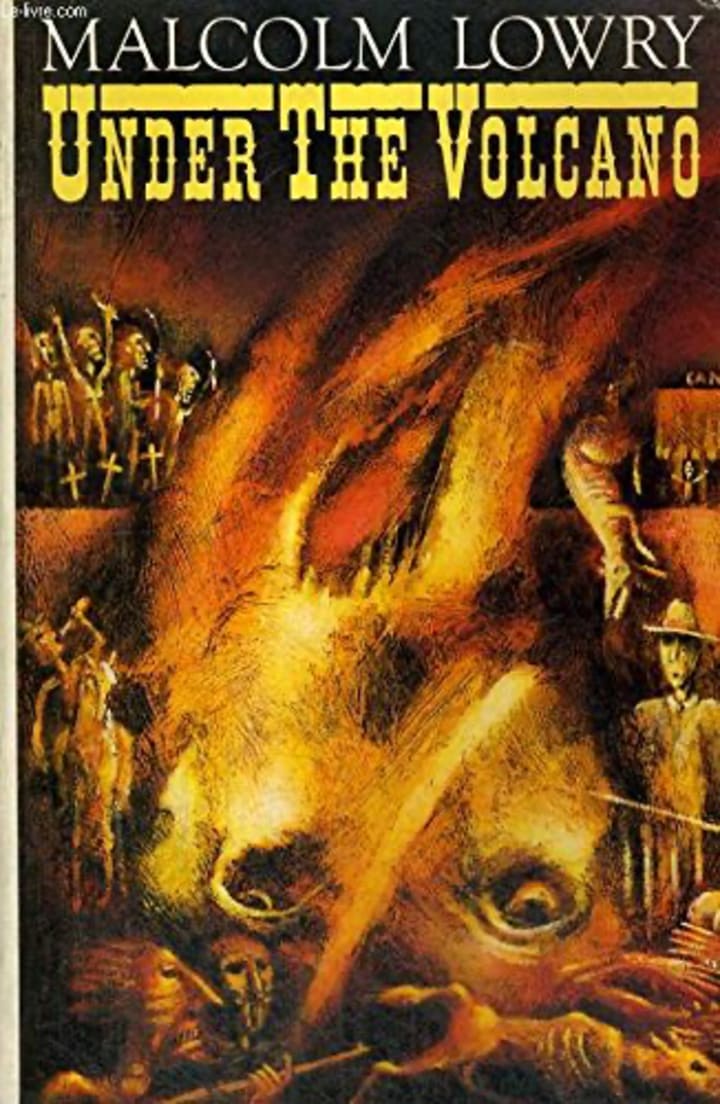
"Under the Volcano" unfolds over the course of a single day, the Day of the Dead, 1938, in the small Mexican town of Quauhnahuac. The novel centres on Geoffrey Firmin, a British consul whose life is spiralling out of control due to his severe alcoholism. The story begins with the arrival of Firmin’s estranged wife, Yvonne, who hopes to rekindle their relationship and save him from his self-destructive tendencies.
Geoffrey Firmin is portrayed as a tragic figure, trapped in a cycle of addiction and haunted by his past. His alcoholism has cost him his career, his reputation, and his marriage. Despite Yvonne's return, Firmin remains unable to break free from his dependency on alcohol, leading to a series of increasingly desperate and reckless actions throughout the day.
As Firmin and Yvonne attempt to reconnect, they are joined by Firmin’s half-brother, Hugh, and his friend, Jacques Laruelle. Hugh is a disillusioned journalist and adventurer, who harbours unspoken feelings for Yvonne. The group’s interactions are fraught with tension and unresolved emotions, reflecting the fractured relationships and personal failures that define their lives.
Throughout the day, Firmin’s intoxication deepens, and he becomes increasingly disconnected from reality. His internal monologues reveal his profound sense of guilt, regret, and despair. The narrative is punctuated by flashbacks that provide insight into Firmin's and Yvonne's troubled past, including their passionate but ultimately doomed love affair.
As the day progresses, Firmin's behaviour becomes more erratic and self-destructive. He wanders through the town, encountering various symbolic and hallucinatory figures that reflect his inner turmoil. Despite Yvonne's efforts to save him, Firmin's descent into alcoholism proves irreversible. The novel culminates in a tragic and violent climax, as Firmin's actions lead to his untimely death.
"Under the Volcano" is a powerful exploration of human frailty, love, and loss, set against the rich cultural backdrop of Mexico on the Day of the Dead. Its intricate narrative structure and deeply flawed characters offer a poignant and unflinching portrayal of the human condition.
Into the Book
The most prominent theme in "Under the Volcano" is the devastating impact of alcoholism, embodied in the character of Geoffrey Firmin. Firmin’s addiction is not merely a personal failing but a symbol of existential despair and self-destruction. Throughout the novel, Lowry vividly illustrates how alcoholism has ravaged Firmin’s life, alienating him from those he loves and eroding his sense of self.
One poignant example is Firmin’s internal monologue: "He knew he was drinking himself to death deliberately... It was no longer possible to see any other way out." This quote encapsulates Firmin’s awareness of his self-destructive path, yet also his helplessness to alter it. Alcohol serves as both his solace and his curse, a means to numb his pain but also the source of his deepest suffering.
Lowry’s depiction of Firmin’s alcoholism is unflinching and raw, capturing the physical and psychological toll it takes. The narrative frequently delves into Firmin’s desperate need for alcohol, his erratic behaviour when intoxicated, and his moments of clarity filled with regret and self-loathing. The novel's setting during the Day of the Dead further underscores the theme, as Firmin is metaphorically and literally haunted by the ghosts of his past and his own impending death.
“To say nothing of what you lose, lose, lose, are losing, man. You fool, you stupid fool ... You've even been insulated from the responsibility of genuine suffering ... Even the suffering you do endure is largely unnecessary. Actually spurious. It lacks the very basis you require of it for its tragic nature. You deceive yourself.”
- Under the Volcano by Malcolm Lowry
Despite the overwhelming presence of despair, "Under the Volcano" also explores the theme of redemption. Yvonne’s return to Quauhnahuac represents a glimmer of hope and the possibility of salvation for Firmin. She embodies love and forgiveness, seeking to rescue Firmin from his downward spiral and rebuild their shattered relationship.
Yvonne’s determination is evident in her reflections: "She had come back because she loved him and hoped to save him, to bring him back to life." Her efforts to reconnect with Firmin and rekindle their love are motivated by a desire to redeem both herself and Firmin from the mistakes of their past. However, Firmin’s deep-seated guilt and addiction create an almost insurmountable barrier to this redemption.
The theme of redemption is also explored through the character of Hugh, who seeks purpose and meaning in his life, and through Jacques Laruelle, who grapples with his own regrets. Each character’s journey reflects a yearning for atonement and a struggle against the forces that hold them back. Ultimately, the novel suggests that redemption is elusive and fraught with obstacles, particularly when individuals are ensnared by their own demons.
“Try persuading the world not to cut its throat for half a decade or more...and it'll begin to dawn on you that even your behavior's part of its plan.”
- Under the Volcano by Malcolm Lowry
"Under the Volcano" is permeated with a sense of fatalism, as characters grapple with forces beyond their control. Firmin’s tragic trajectory seems preordained, his fate sealed by his addiction and the choices he has made. The novel’s structure, with its foreshadowing and symbolic references, reinforces the inevitability of Firmin’s demise.
This theme is poignantly illustrated in a conversation between Firmin and Yvonne: "Do you believe, Geoffrey, that everything is fated? That there's no escape from the consequences of our actions?" Firmin’s response, "Perhaps. But what if our actions are themselves fated?" reflects his resignation to his destiny. The narrative suggests that despite their efforts, the characters are unable to escape the consequences of their past and the inexorable pull of their inner conflicts.
The setting of the Day of the Dead further amplifies the theme of fate, as the day is traditionally associated with honouring and remembering the dead. Firmin’s journey through Quauhnahuac on this day mirrors a descent into the underworld, with his encounters and experiences symbolising a confrontation with his fate.
Lowry’s use of symbolism and allegory throughout the novel reinforces the theme of inevitability. The constant references to death, decay, and cyclical patterns suggest a world where individuals are caught in an inescapable web of destiny. Firmin’s final moments, marked by a sense of inevitability and tragic acceptance, underscore the profound fatalism that pervades the novel.
“The movements of some more little red birds in the garden, like animated rosebuds, appeared unbearably jittery and thievish. It was as though the creatures were attached by sensitive wires to his nerves.”
- Under the Volcano by Malcolm Lowry
Why It's a Masterpiece
"Under the Volcano" is widely regarded as a masterpiece due to its profound exploration of complex themes, its innovative narrative structure, and its richly textured prose. Malcolm Lowry’s ability to convey the inner turmoil of his characters, particularly Geoffrey Firmin, with such depth and authenticity, sets the novel apart as a towering achievement in modern literature.
One of the novel’s most striking features is its narrative technique, which seamlessly weaves together multiple perspectives and timelines. Lowry employs stream-of-consciousness, flashbacks, and symbolic imagery to create a richly layered narrative that mirrors the fragmented and chaotic inner world of Firmin. This complexity challenges readers to engage deeply with the text and uncover the intricate connections between the characters and their experiences.
Lowry’s prose is another key factor in the novel’s enduring acclaim. His vivid descriptions of the Mexican setting, combined with his lyrical and often hallucinatory style, create a sense of immersion that draws readers into the world of Quauhnahuac. The novel’s language is dense with symbolism and metaphor, enriching the reading experience and inviting multiple interpretations.
Thematically, "Under the Volcano" resonates on a universal level, addressing fundamental aspects of the human condition such as despair, love, and the search for meaning. Lowry’s unflinching portrayal of Firmin’s alcoholism and his exploration of existential themes evoke a deep emotional response, making the novel both poignant and thought-provoking.
Critics and scholars have lauded "Under the Volcano" for its artistic ambition and its capacity to capture the complexities of human experience. It stands as a testament to Lowry’s literary genius and his ability to transform personal suffering into a work of profound beauty and insight.
Conclusion
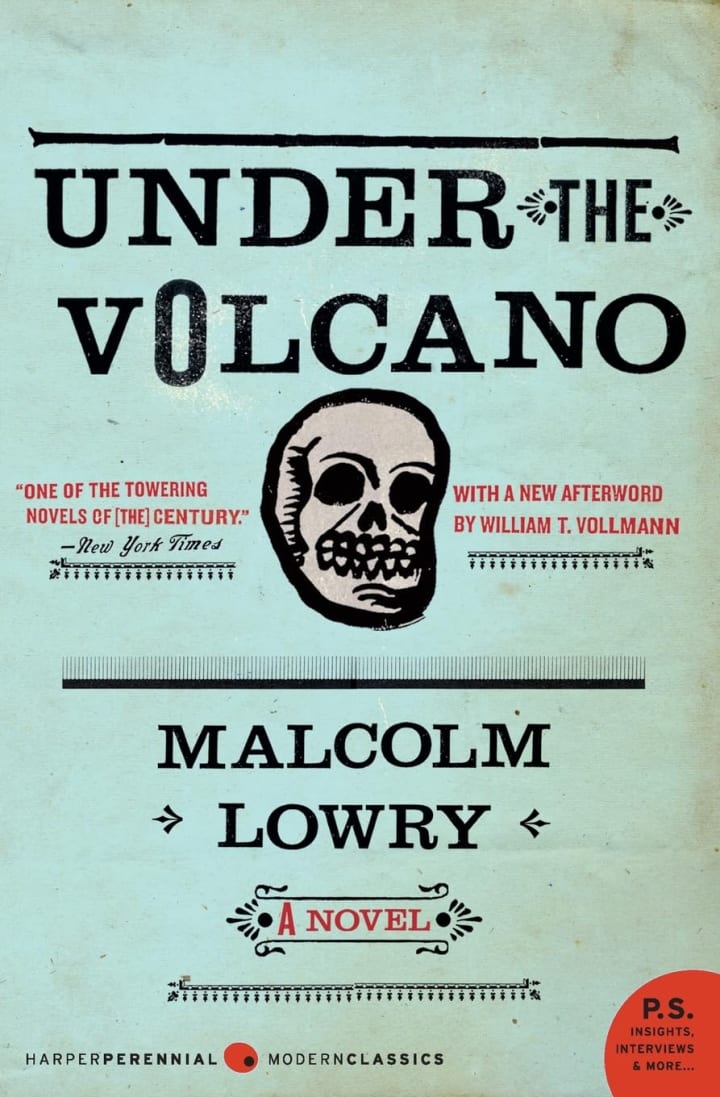
"Under the Volcano" endures today because it speaks to timeless themes of human frailty and the quest for redemption. Its richly layered narrative and evocative prose continue to captivate readers, while its exploration of the darker aspects of the human psyche remains profoundly relevant. Malcolm Lowry’s masterpiece invites us to confront our own vulnerabilities and reflect on the forces that shape our destinies, ensuring its place in the pantheon of great 20th century literature.
Next Week: Ragtime by EL Doctorow
About the Creator
Annie Kapur
I am:
🙋🏽♀️ Annie
📚 Avid Reader
📝 Reviewer and Commentator
🎓 Post-Grad Millennial (M.A)
***
I have:
📖 280K+ reads on Vocal
🫶🏼 Love for reading & research
🦋/X @AnnieWithBooks
***
🏡 UK
Keep reading
More stories from Annie Kapur and writers in Geeks and other communities.
Book Review: "Simple Passion" by Annie Ernaux
This is one of those books that I saw was being talked about online and I kept putting off reading it. In fact, I've had it on my Kindle for an awfully long time and never bothered to open it. As one of my resolutions is to read more authors that I have never read before, I thought it would be a great idea to give this a go now in order to fulfil that. I have to say, I was more confused than anything else and I didn't think that an uninteresting love affair could be dragged out for several pages. However, I did like the writing style which definitely reflected the mundane qualities of everyday life juxtaposed brilliantly with her insatiable obsession. Perhaps this is going to be a good review after all...
By Annie Kapur11 months ago in Geeks
Silver Screen Magic with Mae West
American actress and singer Mae West became a popular film actress during the Great Depression. She started entertaining in vaudeville, then performed on Broadway, and finally went to Hollywood. She signed up with Paramount Pictures and made her debut in the 1932 film “Night After Night.” She also starred in musicals, comedies, and crime dramas. The American Film Institute named her one of the best classic Hollywood actresses.
By Rasma Raisters6 days ago in Geeks
‘If You’re Flushing the Toilet with Grey Water, People Should Know’: How China Turned Rain into an Asset
China, a nation grappling with rapid urbanization, rising populations, and the mounting pressures of climate change, has taken an innovative approach to one of humanity’s oldest challenges: water management. In cities stretching from Beijing to Shenzhen, rainwater is no longer merely something to drain away—it’s an asset, captured, reused, and integrated into urban infrastructure. This approach, blending modern engineering with environmental foresight, is redefining how millions of Chinese citizens interact with water, whether it’s drinking, bathing, or flushing their toilets. Grey Water and Urban Innovation One of the key components of China’s water management strategy is the extensive use of grey water. Grey water refers to wastewater from sinks, showers, and washing machines—essentially, water that is not heavily contaminated by human waste. Rather than sending this water directly to treatment plants, cities across China are filtering and redirecting it for secondary purposes, such as irrigation, industrial cooling, and even flushing toilets in residential buildings. As one Chinese environmental engineer candidly put it, “If you’re flushing the toilet with grey water, people should know.” Transparency and public education have been central to the success of these programs, ensuring that residents understand how recycled water is treated and reused safely. This awareness is crucial in overcoming cultural stigma and building public trust around non-traditional water sources. Capturing Rainwater: Turning a Seasonal Resource into Daily Utility China’s approach goes beyond recycling household wastewater. Urban planners have transformed entire cityscapes into rainwater catchment systems. Green rooftops, permeable pavements, and underground storage reservoirs are now common in many Chinese cities. These systems not only mitigate urban flooding during the rainy season but also provide a supplementary water supply during dry periods. In Shenzhen, for instance, a city of over 17 million residents, municipal authorities have installed expansive rainwater harvesting networks. Rainwater is channeled through pipes into filtration systems and stored for later use in gardens, parks, and even residential complexes. These initiatives have reduced dependence on distant reservoirs and groundwater extraction, lowering the ecological footprint of water consumption. Public-Private Partnerships Fueling Progress The scale of China’s urban water innovations would not have been possible without collaboration between government authorities, private enterprises, and local communities. Companies specializing in water filtration and smart monitoring systems have partnered with municipalities to ensure that rainwater and grey water meet rigorous quality standards. Smart meters track usage, detect contamination, and regulate distribution, ensuring that every drop of recycled water is both safe and efficiently deployed. In residential complexes, dashboards display daily water savings, raising awareness among tenants and motivating more sustainable practices. This blend of technology and community engagement has been a cornerstone of China’s success in turning rain and grey water into valuable urban resources. Environmental and Economic Benefits The impact of China’s water strategy is multifaceted. Environmentally, recycling grey water and capturing rainfall reduces strain on natural water bodies, helps maintain groundwater levels, and cuts the energy required for pumping and treating fresh water. Urban rivers and lakes benefit from reduced runoff and pollution, while green spaces thrive on sustainable irrigation. Economically, the strategy reduces water procurement costs for municipalities and homeowners alike. In some regions, residents have reported up to 30% savings on their monthly water bills by utilizing grey water systems and rainwater harvesting. For cities facing the twin pressures of population growth and climate-induced water scarcity, these savings are substantial. Challenges and Lessons Learned Despite its successes, China’s approach is not without challenges. Ensuring consistent water quality, maintaining infrastructure, and educating the public about grey water usage remain ongoing priorities. Some residents initially expressed concern about potential health risks, highlighting the importance of transparency and rigorous monitoring. China’s experience offers lessons for other countries facing similar water scarcity issues. By integrating urban planning, technology, and public engagement, cities can transform water from a limited resource into a renewable asset. It is a reminder that infrastructure investments, when paired with community awareness, can produce sustainable solutions for the 21st century. The Future of Water in Chinese Cities As climate change intensifies and urban populations grow, China’s innovations in water management are likely to become even more critical. Policymakers are exploring expanded applications, including industrial reuse, advanced filtration for potable water, and artificial recharge of aquifers. The ultimate goal is a resilient urban water ecosystem where rain and grey water reduce dependency on conventional sources, minimize environmental impact, and support sustainable growth. By turning rain and grey water into assets rather than waste, China is demonstrating that scarcity can drive ingenuity. Citizens are learning to embrace the idea that the water they use, even in the bathroom or laundry, can serve multiple purposes if treated and managed wisely. The transformation is not just technological—it’s cultural, signaling a shift in how humans value one of their most essential resources.
By Fiaz Ahmed Brohi3 days ago in Geeks


Comments (2)
I have had this on the shelf for such a long time. And I know that it was mainly composed in my home country, so I should take a look (his biography is truly a wild ride). Thank you, Annie. I plan on getting back to reviews one day.
This is an awesome review. I get lost in other things, especially my own writing, so I don't read nearly as much as I used to, but this story of yours definitely makes me want to read this book. ⚡💙⚡