
Tylor Chase, a former child actor for Nickelodeon, was found homeless in California.
The actor best known for Ned’s Declassified School Survival Guide is now facing life on the streets, reigniting debate over child stardom and mental health support.
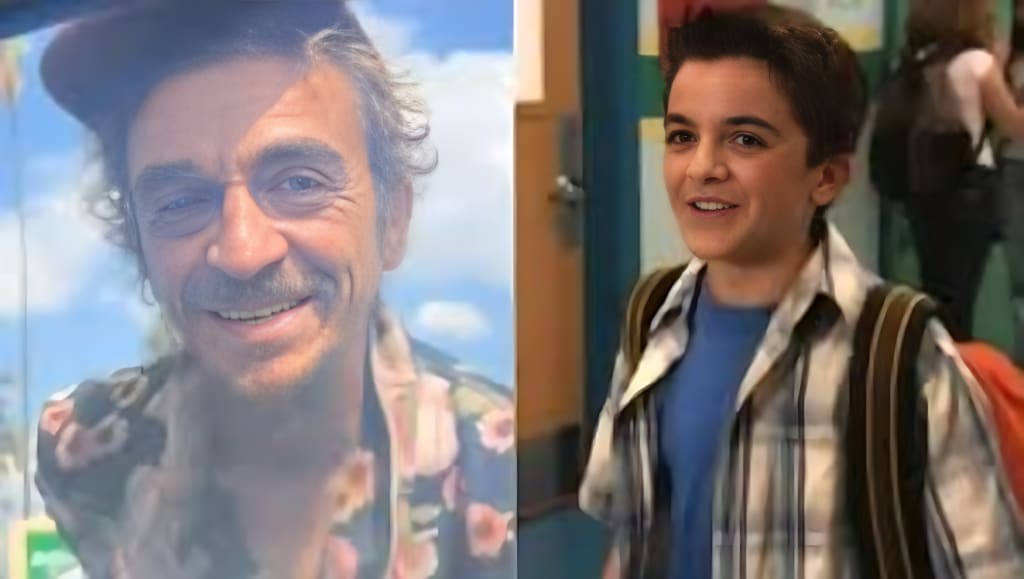
Tylor Chase was once adored by the camera. As a child actor, he stood under bright studio lights, delivering lines that made young audiences laugh and remember his face long after the episode ended. In the early 2000s, Chase appeared on Nickelodeon’s Ned’s Declassified School Survival Guide, a show that became a staple of childhood television for an entire generation. Back then, few could have imagined that years later, the same actor would be spotted not on a screen, but on the streets of California, struggling to survive.
The first glimpse of this new reality came through a shaky phone video that quickly spread across social media. In it, Chase appears older, thinner, and visibly worn down. His clothes are tattered, his hair unkempt, and his manner hesitant. A passerby recognizes him, asking if he is really the actor from the beloved show. Chase confirms it quietly. The stark contrast between the past and the present makes the moment feel jarring, not because fame guarantees safety. As the video circulated, memories resurfaced for fans who grew up watching him. Many expressed disbelief and heartbreak. Some asked how a former television star could end up homeless, while others pointed out that fame, especially at a young age, rarely comes with lasting security. The internet responded the only way it often knows how — with a mix of sympathy, outrage, and fleeting attempts to help.
Earlier encounters added more layers to the story. An influential person had met Chase on the streets of Los Angeles months prior to the Riverside sighting and posted an online account of their conversation. That video drew millions of views, transforming Chase’s private struggle into a public conversation. Messages of encouragement, cash donations, and demands for accountability from the entertainment industry were shared by viewers. However, a far more complicated truth lay concealed beneath the sudden focus. Those close to Chase revealed that mental health has played a significant role in his decline. Years ago, he had openly spoken about living with bipolar disorder and the emotional toll of losing his place in the industry. For a child actor, the transition into adulthood can be unforgiving. Roles dry up, recognition fades, and the identity once built around applause is left without a foundation. For Chase, this loss appears to have collided with untreated or inconsistently treated mental illness, making stability increasingly difficult to maintain.
A small fundraiser was briefly created by concerned individuals hoping to help him get back on his feet. The intention was genuine, but it was soon halted after his family intervened. According to messages shared publicly, Chase’s mother stressed that money alone was not the solution. What he needed most was medical care, consistent treatment, and structured support — things that cannot be fixed with a viral moment or a short-term donation.
The story took on deeper emotional weight when reports emerged that some of Chase’s former co-stars had reacted to seeing him in this condition. For those who once worked alongside him as children, the reality was painful. It served as a reminder that the industry often celebrates young talent but rarely stays to guide them once the spotlight moves on.
Chase’s situation is not an isolated case. History is filled with stories of former child stars who struggled after early success, facing addiction, financial ruin, or mental health crises. Fame at a young age can amplify vulnerabilities rather than protect against them. Without strong support systems, the fall can be long and unforgiving.
Today, Chase is still seen in public spaces in California, navigating life day by day. There is neither a guaranteed comeback nor a dramatic rescue. Instead of being shaped by scripts or sets, his story now unfolds quietly, influenced by the realities of thousands of homeless people across the country. Yet his journey continues to resonate because it forces uncomfortable questions. What happens to children once the cameras stop rolling? When the applause stops, who is responsible for their well-being? And how many other familiar faces are living unseen struggles, unnoticed until a chance encounter brings them back into view?
The life of Tylor Chase is no longer the subject of a sitcom. It is a human story — unfinished, fragile, and deeply reflective of how easily success can vanish, and how urgently compassion, care, and long-term support are needed when it does.
About the Creator
Keep reading
More stories from Raviha Imran and writers in Geeks and other communities.
Joe Ely Dead at 78: Texas Country and Americana Legend Dies After Long Illness
This week saw the passing of Joe Ely, a legendary figure in American roots and country music whose career spanned five decades. His death shook the music industry. Ely died at the age of 78 after battling multiple incurable illnesses, according to statements from his family. For fans, fellow musicians and generations of songwriters, his death marks the end of an era defined by fearless creativity, Texas grit and a sound that never fit neatly into one box.
By Raviha Imranabout a month ago in Geeks
Silver Screen Magic with Mae West
American actress and singer Mae West became a popular film actress during the Great Depression. She started entertaining in vaudeville, then performed on Broadway, and finally went to Hollywood. She signed up with Paramount Pictures and made her debut in the 1932 film “Night After Night.” She also starred in musicals, comedies, and crime dramas. The American Film Institute named her one of the best classic Hollywood actresses.
By Rasma Raisters5 days ago in Geeks
Wild Card Weekend Recap: What Happens Now?
I think I figured out why I love Wild Card Weekend so much. It's because it's the first playoff anything of the calendar year. The NFL season starts in the fall, and once upon a time, the champion was crowned either on or slightly before New Year's. The evolution of the NFL schedule has resulted in the playoffs starting just into the New Year, and currently, the final week of the season falls on the first weekend of the New Year, with Wild Card Weekend coming a week after that. So yes, chronologically, the NFL's Wild Card Weekend serves as the first playoff anything of the calendar year.
By Clyde E. Dawkins6 days ago in Unbalanced



Comments
There are no comments for this story
Be the first to respond and start the conversation.