
Twisty Mind-Benders To Engage Your Brain
ICYMI Challenge


From shutdowns to delays as a result of COVID-19, we’ve become more apt to plop down in front of the TV and binge watch the latest craze.
Of course, an engaging show is often a great means of both killing time and relaxing, but after two months of quarantine, the prospect of wasting more time watching Tiger King or reruns of The Office has become less and less appealing.
“I have all this time to spare,” you may say to yourself. “Shouldn’t I be using this time to better myself?”
Indeed, many of us have contemplated using our extra time to learn a new skill, open ourselves up to different experiences, or at least stimulate our brains instead of letting them turn into zombified mush. But what if you could do just that with an overlooked, mind-bending TV show?
Now there’s been a lot of great shows that forced their audience to think critically; we all scrambled to figure out what the numbers 4, 8, 15, 16, 23 and 42 stood for in Lost, we all made guesses as to who would rule the Seven Kingdoms in Game of Thrones and we all watched as hapless good guy Walter White transformed into the sadistic drug kingpin Heisenberg in Breaking Bad.
We’ve devoured these shows, but now — with a little more time to spare — we can catch up with a few others that can and will stimulate our minds.
Trust (2018)
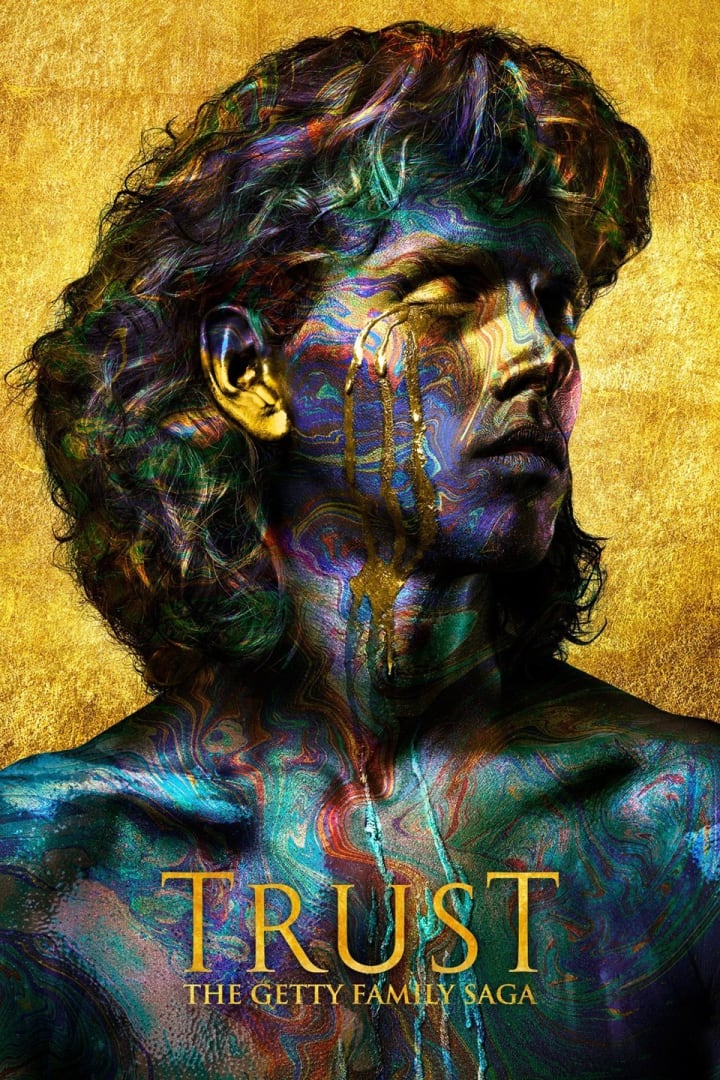
Consider Trust, the star-studded yet tragically underrated miniseries from 2018. The FX production told the “crazier than fiction” true story of the kidnapping of John Paul Getty III by Italian gangsters, and how his billionaire oil tycoon grandfather refused to pay the ransom money.
The series was unfortunately cast out of the limelight because the story had been adapted a few months prior for the big screen in All the Money in the World. However, while Ridley Scott’s film was an effective kidnapping thriller, Trust stretched the same story out into a luxurious 10-episode run that explores how each background player factored into the fateful kidnapping, and how one of America’s wealthiest families could also be one of its unhappiest.
At the center of the story is the theme of what money really means, and how hard it is to quantify people and their perceptions. For the eldest Getty, played brilliantly by President Snow himself, Donald Sutherland, the asking price of $17 million is a mere fraction of his vast fortune.
So, why does he refuse to pay for his grandson’s freedom? While Getty himself offers only timid deflections in response, such as his claims that paying the ransom would set up a dangerous precedent that could lead to further losses, the show itself offers a different perspective.
Getty’s wealth is an extension of his very being, and to forsake part of it would be to forsake part of the power he holds so dearly. We see through his actions that Getty has no concern for his legacy or his family. Throughout the course of the tumultuous journey to rescuing the young Getty III (played in a breakout role by Harris Dickinson), we see the extent of which the old tycoon has personified his own riches.
What makes Dickinson’s performance as the target of this kidnapping interesting is that it’s the rare occasion in which a character must contemplate their own inherent privilege. As a child born to indescribable wealth, Getty’s initial arc revolves around his timid rebellion, as he attempts to break free of the shackles of familial responsibility and live among the bohemian artists of Rome. As this young man comes of age and finds a world outside of the shielded constraints, his kidnapping calls into question the value with which he’d previously ascribed to his life: if not $17 million, what is he worth? The consequences of being born into a family that prioritizes its own bottom line, he learns, is that he’s just another one of his grandfather’s trophies; something to be bargained for, negotiated and even discarded.
The viewer is inclined to be sympathetic to this spoiled child — not only because of the dire, dingy prison cells he finds himself in — but because of the bond he shares with his mother, Gail Getty (Hillary Swank). There’s a softness to Gail that is necessary for such a dark show. She married into the Getty clan by way of the cheating, drug addicted John Paul Getty II (Michael Esper), and still feels like an outsider when observing their customs.
The show doesn’t ask us to care about John Paul Getty III because he’s endearing, but because his mother cares for him, and no matter how rotten a child is, maternal love transcends and rounds off the edges.
And while watching the infighting of a corrupt family of privileged business moguls doesn’t feel necessarily like escapism given the reality of the current United States administration, Trust peppers a healthy dose of surrealist humor in with the grimmer aspects.
Among the revolving narrators of the show is James Fletcher Chace, a special investigator employed by the elder Getty whose job description ranges between “bodyguard,” “spy” and the all-encompassing, “fixer.”
The milk-chugging, cowboy hat-donning gentlemen is played by none other than early 2000s staple, Brendan Fraser, in a performance so wacky you’ll find it similar to a side-of-the-road car wreck — impossible to look away.
Fraser breaks the fourth wall, speaking to the audience Deadpool style about the nature of his work, and though his strange mannerisms are sure to incite some laughter, they also help communicate something very important to the audience: the rich exist in a completely different system of reality than everyone else.
When trying to break down the difference to a few friendly members of the Italian mafia who are confused as to why Getty won’t pay to free his grandson, the southern lawman describes it as such, “The rich are not like us. They’re different. I mean, you put the same water in and they piss the same water out, but they are different. They play a different game.”
Although John Paul Getty III may have spared no expenses, the producers of Trust were certainly able to indulge themselves, as the expenses poured into the high production value are evident.
It’s not enough for the series to simply cut between establishing exterior shots in order to introduce each new location; the camera lingers in the backwaters of a seedy ally, the window of a musty apartment, the floor of a damp prison cell, or the ballroom of the Getty palace. Each location is lived in and well-realized, and while part of that is due to the painstaking recreation of 1970s Europe, it’s also due to the high caliber talent behind the scenes.
Produced and partially directed by Academy Award winning filmmaker Danny Boyle, whose impressive resume includes such classics as Slumdog Millionaire, Trainspotting, Steve Jobs, Sunshine and 28 Days Later, the show possesses the formal brilliance and cinematic opulence of a master filmmaker.
Rarely has a true crime story ever felt so alive. Instead of skimming over history as a series of facts and figures, Trust engages with the past and explores how these themes of inequity, celebrity, media circus and generational wealth shaped this case and remains unafraid to draw parallels to today’s climate.
It’s the type of show that will lead you down an Internet hole looking into the real players that are depicted, and with frequent bursts of acidic humor and shocking violence, Trust never fails to captivate. Whether you’re trying to determine which sycophant is the most appealing or are putting together clues on where Getty is being held, Trust is sure to give your mind a workout.
Genre: Drama
Seasons: 1
Where: Hulu
Devs (2020)

If Trust’s true crime flare hits a little too close to reality, you may want to go a more supernatural route with cerebral sci-fi layer-cake, Devs.
The surrealist stunner comes from Alex Garland, the filmmaker behind such recent mind-bending classics as Ex Machina and Annihilation and adopts a similarly cold and calculated take on the existential questions about free will and the finality of death.
The story starts with a shattered romance; tech developer Sergei Pavlov (Karl Glusman) has disappeared after his first day working at the enigmatic research conglomerate, Devs. His disappearance prompts his girlfriend, Lily Chan (Sonoya Mizuno), to go down the rabbit hole when she suspects that Devs’s friendly interface may be harboring some sinister secrets.
But what Lily doesn’t expect is that this shrouded Silicon Valley operation is looking for patterns that span the scope of humanity’s existence, and that she is destined to play a part in what follows.
The crux of the show’s thrust is the debate regarding determinism: if the existence of life and the entirety of events can be explained through the process of cause and effect, are we ever really “conscious” if we’re only pawns in this never-ending cycle? What would be the point of resisting an eventual outcome if it’s bound to occur? And how would we ever know what an alternate experience would look like if we’re bound to only one reality?
Devs — both the show and the fictional company — ask these questions as they develop a program designed to predict these patterns, suggesting that if there is a latent through line to these checks and balances, then an advanced program could logically and precisely predict the future.
If you’re already overwhelmed by the multitude of high concept philosophical debates at play, consider what the moral implications are of forecasting what’s to come, and you’re in for a long haul of contemplation.
What elevates Devs above other sci-fi projects is that it understands that in order to level with these complex concepts, the audience must have an emotional investment in finding an answer beyond our inherent curiosity.
At the center of the story is Lily; she’s an audience avatar because she’s asking the same questions as the audience. The quest to find a lost lover can often be such a tired trope, but the writing and performances are so sharp that the romance between Lily and Sergei feels only a few steps removed from reality. They’re bond is real — we understand the years of inside jokes and shared history between the two. And thanks to the rich pathos that come from Mizuno’s performance, viewers are desperate to see her return to a state of happiness. A show that asks us to question the nature of human life must also present us with people who we would want to spend time with.
Let me put it this way — if the esoteric sci-fi mythology is the skeleton of the show, Lily is the beating heart at its center.
But Lily isn’t the only one seeking answers. Devs’s CEO Forest is equally drawn to the idea of fixing traumatic events, a trait that comes into play throughout the entirety of the series as his checkered backstory is filled in.
Forest is played by none other than Nick Offerman, and anyone surprised to see Ron Swanson in a serious role may be startled to see the similarity between the two characters. Both share a deep distrust of formal institutions and prefer to hold their own ethics as the standard. Both share a disinterest in the normal pleasantries of human interaction, and oddly enough, both would prefer to live in their isolate log cabin off the grid.
The similarities aren’t just coincidence, as Offerman has molded himself as an actor who excels at playing characters of high intellect who have trouble communicating or expressing themselves. Forest’s work is his priority, and while his devotion to answers may make him a barrier in Lily’s path, it’s hard to paint him as a traditional antagonist.
Just as Devs warps our brain on what constitutes reality, it similarly challenges us to think of characters as more than simply a “good guy” or a “bad guy.”
While its thematic core is often heavy and its means of tormenting characters is frequently grueling, Devs is a landmark achievement, and there’s few things even remotely similar that have ever been attempted on the same scale.
The dazzling visuals are a sight to see, particularly as the series leans into its Kubrickian influences. And while the plot is dense, the characters are warm and engaging — giving breathing room between the philosophical tirades.
If you’re ready for the life affirming conversations and big questions that it will provoke, Devs is a worthy endeavor for any viewer who likes thinking outside of the box.
Genre: Drama
Seasons: 1
Where: FX on Hulu
Legion (2017)
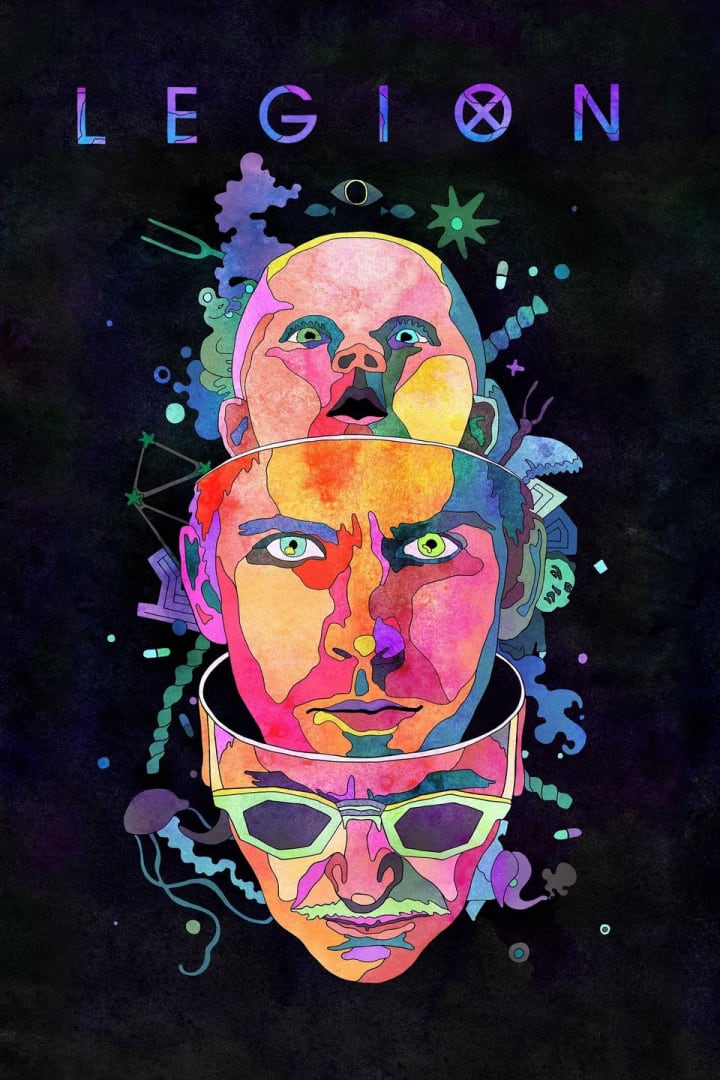
Among some notable pop culture events that have been postponed in the wake of COVID-19 concerns are comic book movies; superheroes are arguably more popular now than ever before, and the films starring caped crusaders routinely make up a majority of the highest grossing films each year.
It may be some time before audiences get the chance to see their favorite heroes on the big screen, as hotly anticipated titles Black Widow and Wonder Woman 1984 pushed back their release dates, but there’s also some great superhero related stories being told on the small screen.
Take Legion, for example; the three season FX series was inspired by the Marvel comic book storyline of the same name, but the idiosyncratic superhero series has as much in common with the work of David Lynch and Charlie Kauffman as it does Stan Lee and Jack Kirby.
Legion, otherwise known as David Haller, who is played by the imminently charming Dan Stevens, is not your typical superhero. He didn’t grow up in a faraway kingdom or off in the distant reaches of space, but rather in a mental institution.
David’s superpowers, which include telekinesis, telepathy and various psychic abilities, were interpreted as signs of schizophrenia at a young age, causing him to second guess his abilities and question his own sanity.
The theme of isolationism and the separation from traditional sociability are common in superhero stories, but Legion takes the time to explore what it’s like to truly not feel comfortable in your own skin. David spent his entire life being told that he was “different,” and the realization that this is because he’s a mutant superhero does little to alter his self-esteem.
Between second guessing his own memories and deconstructing the traits that defined him, David finds himself on a path of self-actualization. What traits — be them physical, mental or superpower-related — make him him.
The crux of Legion’s story is David exploring the extent of what he is capable of, and the discussion regarding the nature of identity establishes Legion as a novelty within its marriage of comic book counterparts.
The supporting cast of characters are as equally developed and modernized as David, with each member of the mutant squad wrestling with similarly complex issues of personal integrity.
Take David’s love interest, Sydney Barrett, for example; she can switch bodies with anyone she touches, a power that not only allows her to help the team with their schemes but gives her the chance to break out of the constraints of her own body. Sydney’s development as a character comes from her experimentation with seeing how people view her based on what form she takes, and the forms she chooses to take plays into an interesting commentary about body image, specifically for women. While many female superheroes are sexualized and defined by their physical attributes, Sydney is an exception in that her physical form is malleable, and her characterization is defined purely by the subjective image she chooses to share.
Legion is also the rare superhero show where the supervillain presents a personal threat to the heroes rather than threatening to level cities and wipe out human civilization. The sinister, Amahl Farouk, who takes on the name Shadow King as his villainous moniker, exists as a malevolent manifestation within David’s mind, amplifying his worst traits and egging him on to use his powers purely for personal gain.
In his physical form, Farouk was the arch nemesis of David’s father — who avid comic book fans will know as Professor X himself, Charles Xavier — and following Xavier’s disappearance, he’s forced to question his purpose.
Just as Xavier’s absence within the story gives David a lost father to yearn for, it throws Farouk’s purpose into question when his habitual nemesis is gone. David and Farouk have more in common than they first realize, and as they begin to lean into their defining archetypes, both have reason to question their grounds for combating each other.
Being a show that often seeks to visualize and examine theoretical concepts about memory and personhood, Legion often brings its storylines to life by means of dazzling visual invention.
There’s no standard sets or recurring locations, and the show is able to bend and meld its visual language based on what the story requires. Sometimes this means surrealist animated segments, or perhaps neon-dipped disco numbers or bits of macabre horror lifted straight out of New Wave 1970s cinema.
There’s a leniency to the way Legion expresses itself that is just plain remarkable, and the show is hard to pin down as being just one thing because its very nature is ripe with such frequent experimentation.
This is all without mentioning the music; elaborate dance numbers and strange musical interludes are integral to Legion’s idiosyncratic identity, and the eclectic range of song covers range from an operatic rendition of The Who’s “Behind Blue Eyes” in the backdrop of a major action sequence to a stripped back banjo cover of The Muppets’ “The Rainbow Connection” from David himself.
While many of the songs have clear symbolic connotations, such as the use of “Happy Jack” to guide us through David’s fraught childhood or Superorganism’s “Something For Your M.I.N.D.” as an indicator that the show is entering a character’s subconscious, the consistent homages to classical and modern music is part of what makes Legion so unique.
Unlike most superhero films and shows, Legion isn’t as interested in a story and plot as it is in mood and tone, and it’s often much more interesting to indicate a tonal shift through a clever musical number than it is with expositional dialogue.
Showrunner Noah Hawley has indicated on several occasions that the music of Pink Floyd is a major influence on the show’s feel. And it’s hard not to think of the iconic English rock band when witnessing Legion’s austere philosophy and abstract visuals.
Superhero stories are often referred to as “modern mythology,” and in the overabundance of comic book stories, Legion is one that feels distinctly modern. It wrestles with real hot-button issues relating to gender roles, mental health stigma and self-control, while also paying homage to classic tropes of the medium.
Whether you’re a lifelong comic book fan who possesses a vast knowledge of the respective universes or a novice who may have trouble connecting emotionally to costumed characters, Legion is an engaging reinvention of said genre that will surely keep you guessing through the entire journey.
Genre: Action
Seasons: 2
Where: FX on Hulu
About the Creator
Keep reading
More stories from writers in Geeks and other communities.
10 Times Rotten Tomatoes and I Disagreed
***Disclaimer*** I will be ranking these movies in the following manner: The greater the divide between Rotten Tomatoes and I, the higher up on the list (and I am referring to the critic's score, not the audience score). I will also show Rotten Tomatoes' score on each one in addition to my score. I am curious to know what everyone thinks, please let me know in the comments below!
By Madison "Maddy" Newton5 days ago in Geeks
Zendaya Shares Rare Comments on "Calming" Fiancé Tom Holland and Their Life in London
Zendaya shared rare comments about her relationship with fiancé Tom Holland, a year after they revealed they're engaged. The Euphoria star opened up about the "calming" actor, as well as what it's like working together. Zendaya also revealed how she and Holland balance their desire for privacy with being a normal couple.
By Dena Falken Esq4 days ago in Geeks
Killing him slowly
There’s an intruder in my house again. He stumbles through the door, wet carrier bags in hand. He’s bought me offerings. I show my appreciation, letting him caress my beautiful body. He wants to touch me. I rub myself against his legs. He sighs, dropping the bags. He can’t resist touching me. Running his hand slowly down my spine, I arch my back towards his caress, let out a low purr. It’s what we both need.
By N J Delmas2 days ago in Horror




Comments
There are no comments for this story
Be the first to respond and start the conversation.