
Top 7 Features Every Successful IoT App Must Have in 2026
Explore the must-have features to build a powerful and user-friendly IoT application.


The Internet of Things (IoT) ecosystem is growing at an unprecedented pace. According to Statista, the number of IoT-connected devices worldwide will reach over 30 billion by 2026, up from 15.14 billion in 2023. Businesses and consumers are increasingly depending on IoT apps for real-time monitoring, predictive insights, and automated control across sectors like healthcare, manufacturing, smart homes, and logistics.
With such rapid expansion, building an IoT app that stands out requires more than just basic connectivity. Organizations working with an IoT app development company need to prioritize features that guarantee security, scalability, and usability. In this article, we’ll explore the top 7 must-have features of a successful IoT app in 2026, backed by technical insights and real-world use cases.
1. Robust Security and Data Privacy
Security remains the top concern in IoT applications. With billions of devices connected, vulnerabilities increase the risk of cyberattacks, data theft, and unauthorized access.
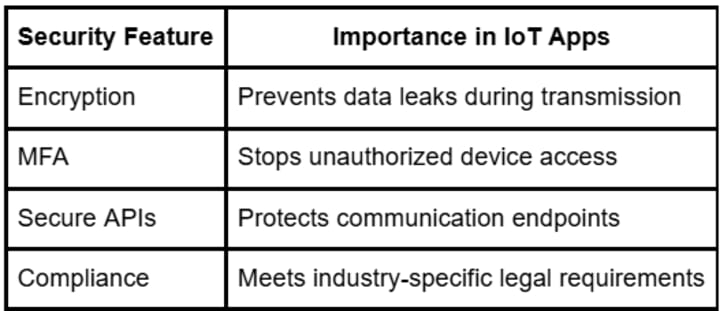
Key Aspects of IoT App Security:
- End-to-End Encryption: Protects data during transmission between devices and servers.
- Multi-Factor Authentication (MFA): Ensures only authorized users access sensitive IoT systems.
- Secure APIs: Prevents malicious attacks on app communication endpoints.
- Regular Security Updates: Keeps applications resilient against emerging threats.
Example: In healthcare IoT, patient monitoring apps must comply with HIPAA standards. Data encryption and secure storage are mandatory to protect patient records.
2. Real-Time Data Processing and Analytics
IoT applications generate vast amounts of data. By 2026, real-time data analytics will be a defining feature for competitive IoT solutions.
Why Real-Time Analytics Matters:
- Detects anomalies immediately, reducing downtime.
- Enhances decision-making with instant insights.
- Improves customer experience through proactive responses.
Example: A smart factory IoT app uses real-time analytics to identify equipment failure before it disrupts production.
Must-Have Tools for IoT Analytics:
- Edge Computing: Processes data closer to devices for faster results.
- AI and ML Models: Identifies patterns, predicts outcomes, and enables automation.
- Interactive Dashboards: Offers users clear visual insights.
An IoT application development company that integrates analytics ensures businesses gain measurable value from connected devices.
3. Seamless Device Integration and Interoperability
IoT ecosystems involve multiple devices, platforms, and communication protocols. Incompatibility creates operational silos, reducing efficiency.
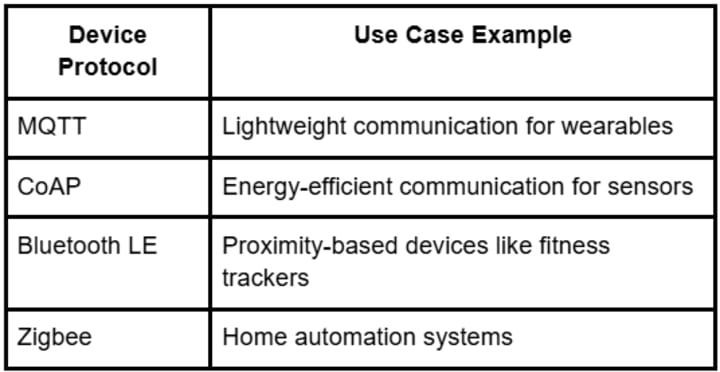
Features Supporting Interoperability:
- Cross-Platform Compatibility: Works with Android, iOS, and web platforms.
- Protocol Support: Includes MQTT, CoAP, Bluetooth, and Zigbee.
- API Integration: Connects with third-party services and devices.
Example: Smart home apps must integrate thermostats, cameras, and lighting systems from different vendors for a unified experience.
Tip: Partnering with an IoT app development company ensures your app supports industry-standard protocols, avoiding device lock-in.
4. Intuitive User Interface (UI) and Experience (UX)
No matter how advanced an IoT app is, poor usability reduces adoption. By 2026, simplicity and clarity in design will define user loyalty.
Key UI/UX Elements:
- Minimal Navigation: Clear paths for key tasks.
- Custom Dashboards: Personalized views for different user roles.
- Responsive Design: Works seamlessly on mobile, tablets, and desktops.
- Voice and Gesture Control: Enhances accessibility.
Example: A smart agriculture IoT app must present soil health and crop data in an easy-to-read dashboard for farmers.
Best Practices:
- Use data visualization (graphs, charts, alerts).
- Provide role-based access (admin, user, technician).
- Support localization for global users.
A trusted provider of IoT Application Development Services ensures UI/UX is designed with both functionality and aesthetics in mind.
5. Scalability and Cloud Integration
IoT ecosystems expand rapidly. An app built for 1,000 devices today may need to support 100,000 tomorrow. Scalability is essential to handle growing workloads.
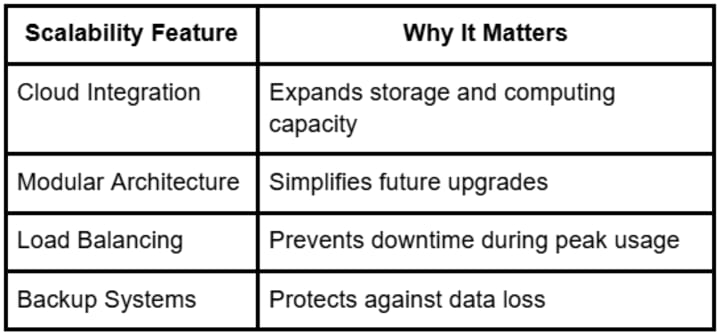
Essential Features for Scalability:
- Cloud Integration: Stores and processes large datasets efficiently.
- Modular Architecture: Allows future feature additions.
- Load Balancing: Distributes traffic across multiple servers.
- Data Backup and Recovery: Ensures uninterrupted operations.
Example: In logistics, a fleet management IoT app must handle an increasing number of vehicles while delivering consistent performance.
An IoT app development company that prioritizes scalability guarantees long-term success for businesses.
6. Offline Functionality and Edge Capabilities
Connectivity issues can disrupt IoT apps. Offline functionality ensures critical features remain active without constant internet access.
Features of Offline IoT Apps:
- Local Data Storage: Saves information until connectivity is restored.
- Edge Processing: Handles tasks like filtering and anomaly detection locally.
- Sync Mechanisms: Updates data automatically when the network reconnects.
Example: In remote oil rigs, IoT monitoring apps rely on offline capabilities for uninterrupted safety monitoring.
By 2026, offline support will no longer be optional—it will be a necessity for reliability.
7. Predictive Maintenance and AI Integration
Predictive maintenance saves industries millions by preventing equipment failures. Integrating AI and machine learning into IoT apps is becoming a standard practice.
Benefits of Predictive Maintenance:
- Reduces operational downtime.
- Extends the lifespan of equipment.
- Cuts unnecessary repair costs.
Example: In manufacturing, AI-powered IoT apps analyze vibration data to forecast machinery breakdowns.
AI Features in IoT Apps:
- Pattern Recognition: Detects irregularities early.
- Automated Alerts: Notifies teams before issues escalate.
- Self-Learning Systems: Improves predictions over time.
An IoT application development company that integrates AI ensures businesses transition from reactive to proactive maintenance strategies.
Conclusion
By 2026, IoT apps will be central to digital transformation across industries. To remain competitive, businesses must focus on seven key features:
- Strong security and privacy.
- Real-time data analytics.
- Interoperability and device integration.
- User-friendly design.
- Scalability and cloud support.
- Offline functionality with edge processing.
- Predictive maintenance with AI.
Working with a professional IoT app development company ensures these features are built into the core architecture. With advanced IoT Application Development Services, businesses can create applications that are secure, scalable, and future-ready.
About the Creator
William Smith
I am an informative tech blogger exploring a wide range of topics, including web, mobile, IoT, etc.
Keep reading
More stories from William Smith and writers in Geeks and other communities.
From Idea to Play Store: Android App Development Roadmap for Startups
The mobile app market continues its robust growth. Statista reports that global mobile app downloads reached 255 billion in 2022. This presents significant opportunities for startups with innovative ideas. However, navigating the Android app development lifecycle can be complex. This article provides a comprehensive roadmap for startups aiming to launch their Android app on the Google Play Store.
By William Smith7 months ago in Geeks
The Politics of Playing Dress-Up
Well, to start off I'd like to say a happy world book day to all who celebrate. I know I haven't really posted anything on my socials about it but I'm not a jubilant kind of person. I lay low most of the time. Let's start off with a popular anecdote from the vaults...
By Annie Kapur5 days ago in Geeks
REVIEW - The Redemption of Faust (Directed by Genel Mejia)
The Redemption of Faust, written by Justin Suran (Muse, Visitors, The Screenplay) and Genel Mejia (Visitors, The Screenplay, The Experiment, Normal, Splash Damage, La Mejia, Muse), and also produced and directed by Mejia, is a short film which takes its name from the famous 19th century work 'Faust' by Johann Wolfgang von Goethe.
By MegaFlix Movie Awardsa day ago in Geeks
The BAFTA Awards
By now, in a stunning departure from recent years, most of the world is aware of what happened at the BAFTA film awards. Social Media Headlines will tell you the bare bones: that John Davidson, a Tourette's Syndrome advocate, shouted a racial slur at two Actors of Colour, Michael B Jordan and Delroy Lindo.
By Natasja Rose6 days ago in Psyche


Comments
There are no comments for this story
Be the first to respond and start the conversation.