
‘Tommaso’ Loses Willem Dafoe in a Swell of Self-Indulgence
A review of the latest film from Abel Ferrara starring Willem Dafoe

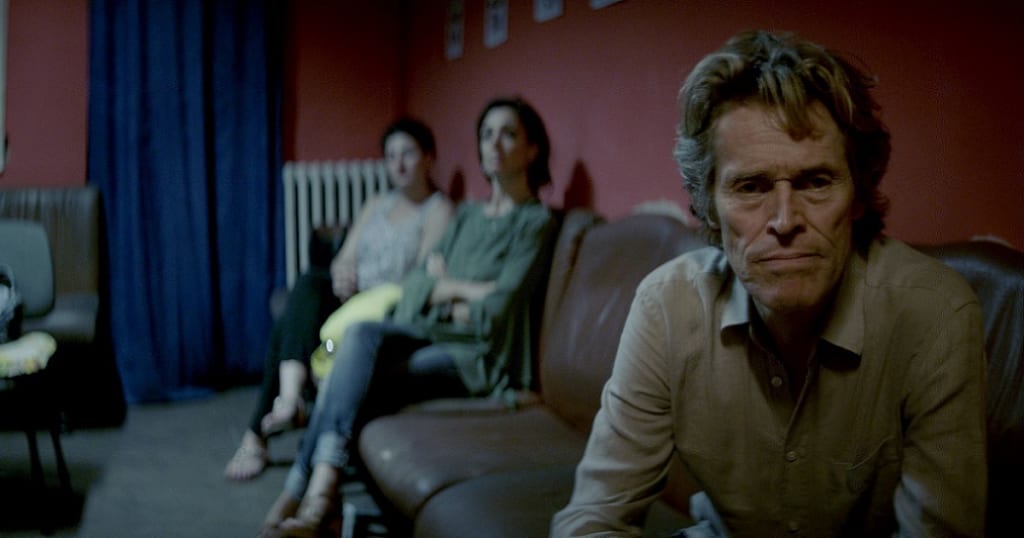
I like to live by a few principles, one of them being Willem Dafoe makes every movie better. It doesn’t matter if he has a hilarious man-bun and speaks a few lines of exposition in Aquaman, he always adds a little something extra to the role. It’s no secret then why director Abel Ferrara has worked with Dafoe on so many different occasions throughout his career; when it was time for Ferrara to find an actor to play a fictionalized version of himself for Tommaso, casting Dafoe was an easy choice.
Dafoe’s ability to move back and forth between blockbuster and independent films is simply remarkable. By the time his career is over, he’ll be one of the most successful and varied actors of his generation. He’s probably earned that distinction already. So, as you might expect, Dafoe is not the problem with Tommaso. Quite the opposite, actually; his work is one of the few highlights in a film full of self-importance.
Calling Tommaso “Self-Referential” is Putting It Lightly
Tommaso (Dafoe) is an American filmmaker looking to put his life back together in Italy while writing his next film. (Many have noted the storyboard elements shown in Tommaso look eerily similar to Siberia, another Ferrara-Dafoe collaboration.) He lives with his much younger wife and daughter; heads to AA meetings regularly; and tries anything else to clear his mind of the sins of his past, mostly mediation and yoga. (Watching Dafoe complete a headstand is a personal highlight.)
Over the last few years, Abel Ferrara has candidly discussed his long-term struggles with addictions of all kinds, which makes the attempted healing by Willem Dafoe’s character in Tommaso a clear and thoughtful-in-theory exercise in filmmaking therapy, as so many great filmmakers have done through the years. What’s even more interesting (and also a little scuzzy) is Dafoe acts alongside Ferrara’s actual wife and daughter, Cristina Chiriac and Anna Ferrara.
Knowing myself and my continuing fascination with art and life blending together, such an experiment piques my interest. The surreal mish-mash of emotions and relationships is too much for me to stay away. But all that intrigue turned to slight dry-heaving when Dafoe and Chiriac engaged in a sex scene. My mind spiraled out of control thinking of Ferrara’s possible Peeping Tom compulsions. I let out what was probably the loudest sigh of relief I’ve had watching a sex scene when Deedee (Anna Ferrara) mercifully put the scene to an end by crying in her crib. Real heroes don’t wear capes.
Placing the Blame
We quickly learn Tommaso is mostly unlikeable, even if he is attempting to better himself. He chastises Nikki (Chiriac) for the smallest of mistakes, like forgetting to charge her phone or eating a meal without him while he is in the other room. The argument could be made these scoldings are a reflection of Tommaso’s inner struggles and lack of confidence, but there is never a moment where he later apologizes or admits fault. He only descends further into his self-pity.
Compounded by Chiriac being Ferrara’s real-life wife, Tommaso’s consistent bad treatment of her falls closer to oddly voyeuristic than refreshingly honest. As if Ferrara could only find the courage to yell at his wife in a movie rather than go to marriage counseling.
Joking aside, Ferrara’s intentions were probably earnest, but I left Tommaso more concerned for Chiriac’s well-being than Ferrara’s. Tommaso reads more like a convulsion of Ferrara’s negative thoughts than a well-constructed movie. It’s so personal to him that it will probably lose all meaning to most viewers.
Willem Dafoe Adds Another Strong Performance
Luckily, Willem Dafoe is a god, so any time Ferrara lets him loose is worthwhile viewing. Dafoe has a few lengthy monologues in AA meetings where he talks about his past struggles and what he’s doing to try to forge a better path forward. These are some of the only moments where Tommaso (and Ferrara) admits some form of guilt. Tommaso‘s dialogue is very natural and clearly improvised, so these monologues feel off-the-cuff and quite honest, filled with the slight awkwardness an embarrassed person would have when talking in such a format.
...
READ THE REST OF THE REVIEW ON OUR WEBSITE: https://moviebabble.com/2020/06/08/film-review-tommaso-2020/
About the Creator
MovieBabble
The Casual Way to Discuss Movies! Head over to moviebabble.com to see all our content!
Keep reading
More stories from MovieBabble and writers in Geeks and other communities.
Man, I Miss Sports: 'Cinderella Man'
Sports has been one of the many casualties of the COVID-19 pandemic. While no one would count the loss of sports among the biggest casualties, or the return of sports a top priority, its absence is definitely making the heart grow fonder. Never in my life has there been a period without sports. It’s always been the great escape for whatever is ailing the world, for myself and so many others. Which makes it odder is to not have it when a distraction is needed now more than ever. So, while there are much bigger things in the world than sports, I still have to admit…man, I miss sports. So here at MovieBabble, we are coping with this by revisiting some classic sports movies!
By MovieBabble6 years ago in Geeks
Silver Screen Magic with Mae West
American actress and singer Mae West became a popular film actress during the Great Depression. She started entertaining in vaudeville, then performed on Broadway, and finally went to Hollywood. She signed up with Paramount Pictures and made her debut in the 1932 film “Night After Night.” She also starred in musicals, comedies, and crime dramas. The American Film Institute named her one of the best classic Hollywood actresses.
By Rasma Raisters5 days ago in Geeks
Emma Watson, Sir Lenny Henry and Sir Elton John lead British Diversity Awards
The prizes will be handed out at a glittering ceremony in London on March 25 2026 and Harry Potter actress/activist Watson will compete with Henry and John for the top gong of Media Personality of the Year with the musician competing alongside his husband David Furnish.
By Dena Falken Esq3 days ago in Geeks



Comments
There are no comments for this story
Be the first to respond and start the conversation.