
To The Lighthouse by Virginia Woolf
Why It's a Masterpiece (Week 44)

To the Lighthouse, published in 1927, is one of Virginia Woolf's most acclaimed novels and a seminal work in the modernist literary movement. Woolf wrote the novel during a particularly productive period of her career, drawing on her own childhood experiences and family dynamics to craft the narrative. The Hogarth Press, founded by Woolf and her husband Leonard Woolf, published the novel, allowing her to maintain control over its production and distribution. Upon its release, To the Lighthouse received widespread praise for its innovative narrative technique and profound psychological depth.
Woolf's use of stream-of-consciousness and shifting perspectives broke new ground in literary form, offering readers an intimate glimpse into the inner lives of the characters. The novel's exploration of themes such as the passage of time, the nature of art, and the complexities of human relationships resonated deeply with contemporary audiences and critics alike. Woolf's introspective and poetic prose established her as a leading voice in modernist literature, and To the Lighthouse remains a pivotal work in her oeuvre. Its publication marked a significant moment in literary history, solidifying Woolf's reputation as a pioneering and influential writer.
Plot
To the Lighthouse is divided into three parts: "The Window," "Time Passes," and "The Lighthouse." The novel is set in the Ramsay family's summer home on the Isle of Skye in Scotland and spans over a decade, capturing the complexities of human experience and the passage of time.
In "The Window," the narrative focuses on a single day in the Ramsay household. Mr. and Mrs. Ramsay are hosting various guests, including Lily Briscoe, a young painter, and Charles Tansley, an academic. Mrs. Ramsay is a nurturing figure, deeply concerned with the well-being of her family and guests, while Mr. Ramsay is portrayed as intellectually imposing but emotionally insecure. The family's youngest son, James, longs to visit the nearby lighthouse, but Mr. Ramsay insists that the weather will not permit it. This unfulfilled promise sets the stage for the novel's central tensions.
As the day unfolds, the inner thoughts and feelings of the characters are revealed through Woolf's stream-of-consciousness technique. Lily struggles with her painting and her perceptions of Mr. and Mrs. Ramsay, while Mrs. Ramsay reflects on her role as a mother and wife. The day culminates in a dinner party, where the characters' interactions highlight their personal conflicts and connections.
"Time Passes" serves as a bridge between the past and the future, depicting the house's gradual decay during the ten years of World War I. The Ramsay family experiences significant losses, including the deaths of Mrs. Ramsay, their son Andrew in the war, and their daughter Prue in childbirth. The passage of time is marked by the relentless forces of nature, which slowly reclaim the house in the family's absence.
In "The Lighthouse," the remaining members of the Ramsay family return to the summer home. Mr. Ramsay, James, and his sister Cam finally make the long-awaited trip to the lighthouse. During the journey, James experiences a moment of reconciliation with his father, feeling a newfound sense of understanding and acceptance. Meanwhile, Lily Briscoe, who has also returned, resumes her painting and achieves a breakthrough, capturing her vision of Mrs. Ramsay and the essence of the moment.
The novel concludes with Lily's artistic triumph and the family's arrival at the lighthouse, symbolising the reconciliation of past and present and the enduring power of memory and art.
Into the Book
One of the central themes of To the Lighthouse is the passage of time and the transient nature of human life. Woolf explores how time affects individuals and their relationships, highlighting the inevitability of change and loss. The middle section, "Time Passes," vividly illustrates this theme, showing the decay of the Ramsay house and the deaths of key characters.
Woolf writes, "The house was left; the house was deserted. It was left like a shell on a sandhill to fill with dry salt grains now that life had left it." This passage underscores the relentless and indifferent passage of time, which erodes both physical structures and human connections. The characters' reflections on their past experiences and the gradual shift from life to death emphasise the fleeting nature of existence.
“To want and not to have, sent all up her body a hardness, a hollowness, a strain. And then to want and not to have- to want and want- how that wrung the heart, and wrung it again and again!”
- To the Lighthouse by Virginia Woolf
Another significant theme is the role of art and the creative process in capturing and making sense of human experience. Lily Briscoe's struggles and eventual success with her painting symbolize the broader quest for artistic expression and the search for meaning. Through Lily, Woolf examines the challenges artists face in reconciling their inner visions with external reality. Lily's final realization, "I have had my vision," signifies her artistic achievement and her ability to immortalize fleeting moments through art. This theme highlights the transformative power of creativity and its potential to transcend the limitations of time and memory.
“For now she need not think of anybody. She could be herself, by herself. And that was what now she often felt the need of - to think; well not even to think. To be silent; to be alone. All the being and the doing, expansive, glittering, vocal, evaporated; and one shrunk, with a sense of solemnity, to being oneself, a wedge-shaped core of darkness, something invisible to others... and this self having shed its attachments was free for the strangest adventures.”
- To the Lighthouse by Virginia Woolf
Woolf delves deeply into the complexities of human relationships, particularly within the Ramsay family. The novel explores the intricate dynamics between husbands and wives, parents and children, and hosts and guests. Mrs. Ramsay's role as the emotional center of the household and her efforts to bring people together contrast with Mr. Ramsay's intellectual pursuits and emotional needs.
Their relationship exemplifies the tension between nurturing and intellectualism, as well as the sacrifices and misunderstandings inherent in intimate connections. The characters' inner thoughts and perceptions reveal the depth of their emotional lives and the often-unspoken bonds that link them. Woolf writes, "She felt this thing that she called life terrible, hostile, and quick to pounce on you if you gave it a chance." This reflects the characters' awareness of the fragility and complexity of their relationships.
“What is the meaning of life? That was all- a simple question; one that tended to close in on one with years, the great revelation had never come. The great revelation perhaps never did come. Instead, there were little daily miracles, illuminations, matches struck unexpectedly in the dark; here was one.”
- To the Lighthouse by Virginia Woolf
Why It's a Masterpiece
To the Lighthouse is widely regarded as a masterpiece for its innovative narrative structure, profound thematic depth, and exquisite prose. Woolf's use of stream-of-consciousness and shifting perspectives allows readers to intimately experience the characters' inner lives and perceptions, creating a rich, multi-dimensional narrative. This technique broke away from traditional linear storytelling, influencing future generations of writers and reshaping modernist literature.
The novel's exploration of time, memory, and human relationships resonates on a universal level, offering insights into the nature of existence and the human condition. Woolf's ability to convey complex emotions and thoughts with clarity and poetic beauty enhances the novel's impact, making it both intellectually stimulating and emotionally engaging.
Additionally, Woolf's portrayal of the creative process and the role of art in capturing and preserving moments of life adds another layer of significance to the work. Lily Briscoe's artistic journey parallels Woolf's own literary endeavours, underscoring the novel's meta-textual elements and its reflection on the act of creation itself.
Woolf's nuanced characterisations and her depiction of the subtleties of human interaction further contribute to the novel's enduring appeal. The Ramsay family and their guests are portrayed with such psychological depth and realism that readers can easily empathise with their struggles and aspirations.
Conclusion
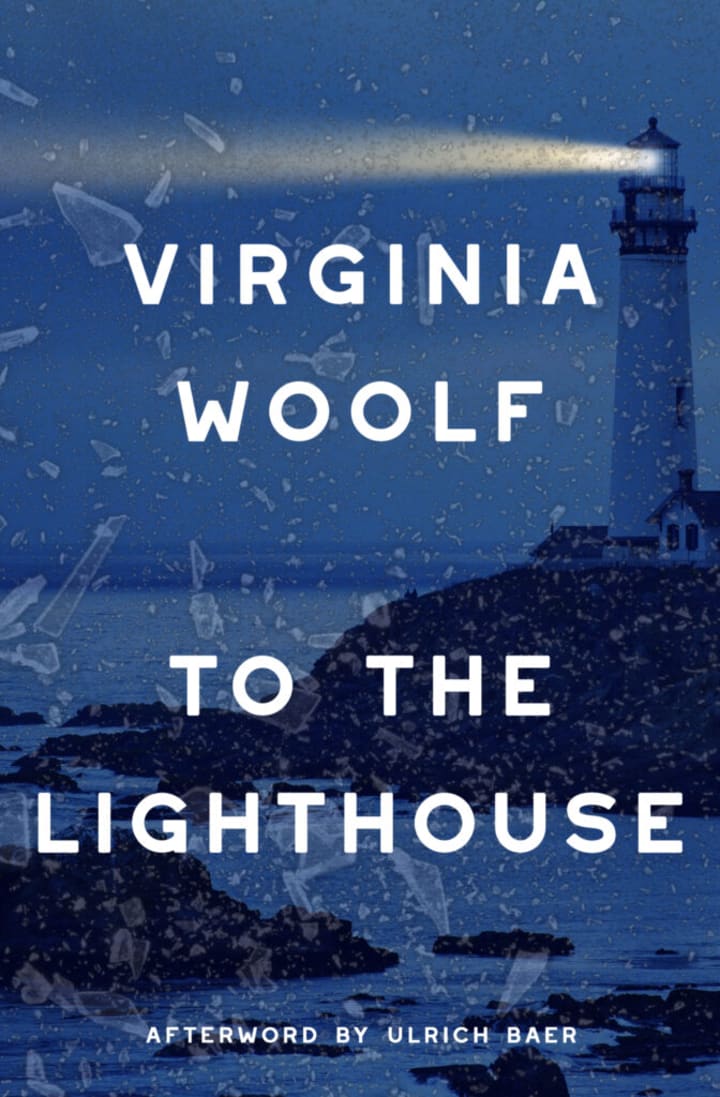
In conclusion, To the Lighthouse by Virginia Woolf stands as a testament to her literary genius and her pioneering contributions to modernist literature. Through its innovative narrative techniques, profound themes, and lyrical prose, the novel offers a timeless exploration of the human experience. Woolf's ability to capture the fleeting nature of time, the complexities of relationships, and the transformative power of art ensures that To the Lighthouse remains a deeply resonant and influential work.
The novel not only reflects Woolf's own artistic vision but also invites readers to contemplate their own lives and the transient beauty of the moments that shape them. As a masterpiece of introspection and literary craftsmanship, To the Lighthouse continues to inspire and captivate readers, affirming Virginia Woolf's place as one of the most significant writers of the 20th century.
Next Week: The Stranger by Albert Camus
About the Creator
Annie Kapur
I am:
🙋🏽♀️ Annie
📚 Avid Reader
📝 Reviewer and Commentator
🎓 Post-Grad Millennial (M.A)
***
I have:
📖 280K+ reads on Vocal
🫶🏼 Love for reading & research
🦋/X @AnnieWithBooks
***
🏡 UK
Keep reading
More stories from Annie Kapur and writers in Geeks and other communities.
Book Review: "A Weekend with Claude" by Beryl Bainbridge
Yes I'm still reading Beryl Bainbridge novels and yes, I will continue to. Her style of being dark but witty at the same time seriously reminds me of other authors such as Yiyun Li, Eliza Clark and to some extent, Ottessa Moshfegh. There is something about novels that can keep a dark tone whilst also presenting us with bizarre situations and people that intrigues me. Keeping the realism whilst making everything seem to feel a bit wrong or 'off' is a key skill in writing that very few have and I have to say, Beryl Bainbridge deploys it so well in her novels. Let's now review A Weekend With Claude, a novel which again, has made me want to read more Beryl Bainbridge.
By Annie Kapurabout a year ago in Geeks
Silver Screen Magic with Mae West
American actress and singer Mae West became a popular film actress during the Great Depression. She started entertaining in vaudeville, then performed on Broadway, and finally went to Hollywood. She signed up with Paramount Pictures and made her debut in the 1932 film “Night After Night.” She also starred in musicals, comedies, and crime dramas. The American Film Institute named her one of the best classic Hollywood actresses.
By Rasma Raisters6 days ago in Geeks
In the Blink of an Eye: A Forgotten Thriller That Explores How Fast Life Can Shatter
Some movies don’t rely on spectacle or big budgets to leave an impression. Instead, they unsettle you quietly, planting a sense of unease that lingers long after the credits roll. In the Blink of an Eye (1996) is one such film—a made-for-television thriller that may not be widely remembered today, but one that delivers a chilling message about how quickly trust, identity, and safety can disappear.
By David Cook5 days ago in Geeks
Miss Persephone's Manual to a Seemingly Ordinary Life
Miss Persephone was found at the dining table, her blue eyes swollen, her tears arriving and retreating like the tides of the ocean. Earlier that day, her family had visited her in the retirement home where she had lived for eight years. It was her eightieth birthday.
By Imola Tóth4 days ago in Fiction



Comments (1)
This was my first Woolf, and it almost kept me from reading more of her work... Almost. Okay, let's head over to one of my favourites...