
The War of the Rohirrim: a war story against war
Fans display mixed reviews over the new Middle-earth anime

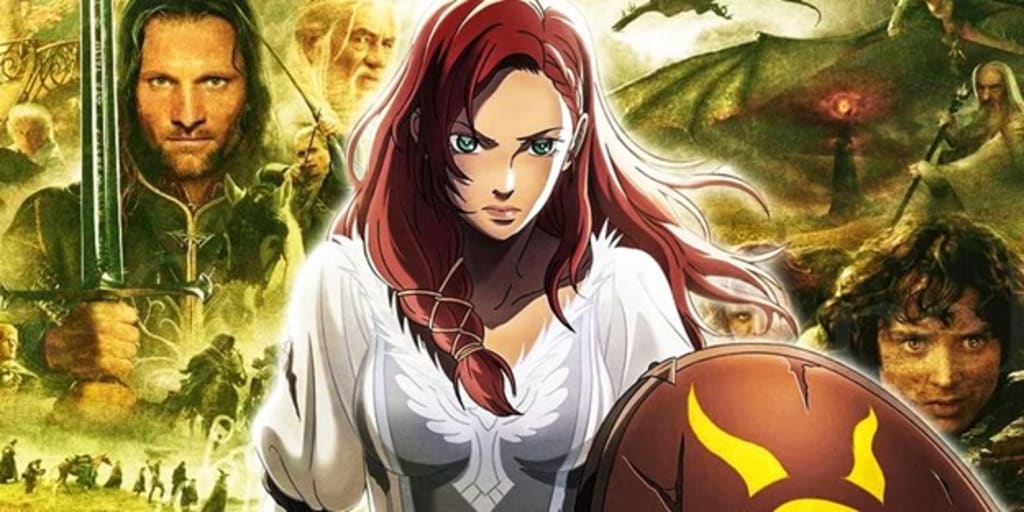
When we all first learned three years ago that a Tolkien project in anime was on schedule, I was ecstatic. Though I didn’t experience anime as much growing up, I’ve been steadily catching up. What I love about the genre style is its ability to capture movements and concepts and art that simply cannot be reproduced via live-action. It’s a great technique to get at larger-than-life themes.
Which makes it perfect for Tolkien’s legendarium.
FACING UPHILL BATTLES
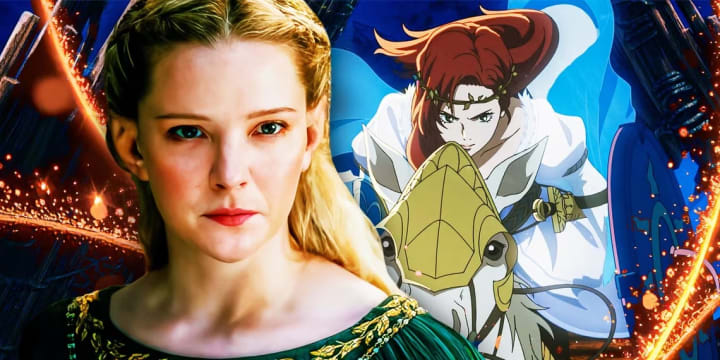
What is most impressive about this project is its origin material. Like the team behind Rings of Power, directors and producers were limited only to the Appendices–anything in The Silmarillion was off limits by copyright. So while it might seem intimidating at first, anyone familiar with Tolkien’s work knows that every line is so dense that it gives three times the material to explore than any other author’s work might permit.
Screenwriters Phoebe Gittins and Arty Papageorgiou (who took over for the originally listed writers, Jeffrey Addiss and Will Matthews) were ecstatic at the potential: "It's Tolkien!” Gittins said. “The strength of his world-building means there's always going to be a thread that pulls another thread that pulls another thread." Gittins is the daughter of the notable Philipa Boyens from the Jackson trilogy, and Boyens was also co-producer to maintain the vision.
Pair that with the incredibly impressive art design (aided by Weta and the legendary illustrators John Howe and Alan Lee), and the visuals make the entire story bloom in texture. Director Kenji Kamiyama (known for Ghost in the Shell and Kiki’s Delivery Service) knew the weight of expectations in treating this world with care. He told Anime Corner in an interview how well anime works with the fantasy genre since “the energy that you can create by using the hand drawing technique is something that has the potential to actually top even the live-action versions.”
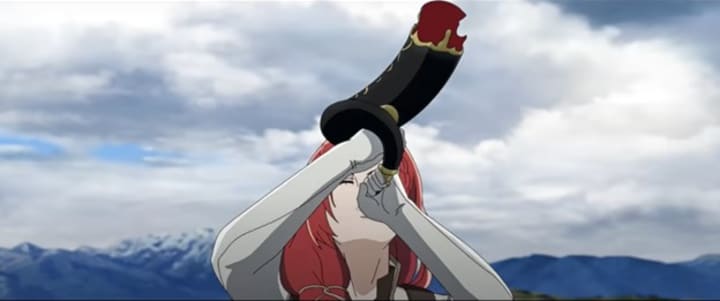
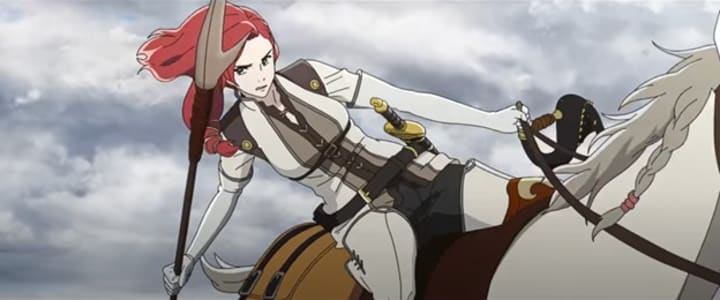
Kamiyama also told CultMTL that he used inspiration from “characters in anime like Miyazaki’s Nausicaa and Princess Mononoke.” This makes sense for Hèra, but the animation style felt almost too traditional, like those same films. It’s never an insult to say that something is too Miyazaki-ish, but I personally wondered what the film might look like if it used a more detailed and realistic approach to the animation style, like that of Powerhouse Animation Studios’ for its Netflix projects: Ayami Kojima’s in Castlevania, or Mua Film and Hanho Heung-Up’s in Blood of Zeus. Instead, it felt very 2D to me–and I watched it in IMAX.
I won’t waste further time talking about the plot; enough have already done so. I know the pre-released Rotten Tomato score was a low 63%, and viewers have no doubt been more skeptical than usual from the mixed (and mainly low) response to Rings of Power. They had an uphill battle on their hands from the beginning.
But that’s not unlike the battle Helm Hammerhand and the Rohirrim faced in the story.
CHARACTERS FIGHTING FOR RELEVANCE
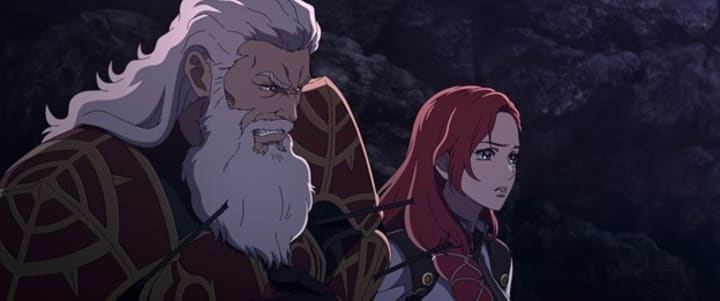
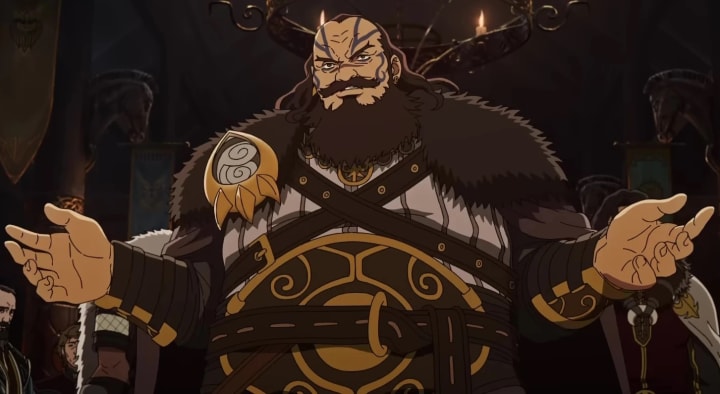
Hammerhand’s punch that literally killed Freca, one of the Dunland lords of Rohan, was surprising to me at first (I hadn’t read the story in a long time and wanted to go in fresh). But it was exciting in a way that immediately reminded me of Tolkien’s power of legend. These characters are bigger than life and mythical in that way.
Someone like Helm Hammerhand (voiced by Brian Cox) would be able to kill a person with a punch. He would be able to survive his wounds from battle, survive witnessing the death of both his sons, Haleth and Hama, and survive to slip away to play wraith-solo-killer with Wulf’s enforcements and mercenaries. He would be found frozen in fighting action outside the gates after the battle, a sight for everyone to see and be recorded in story. Knees unbent.
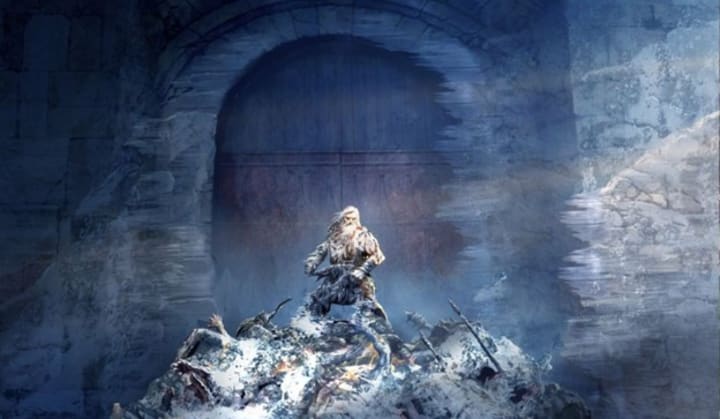
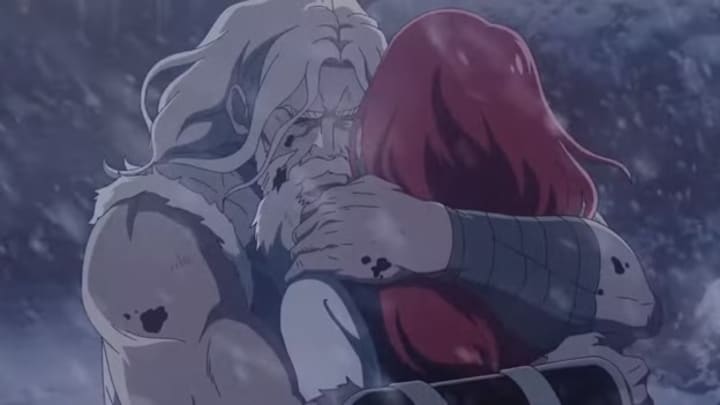
And, like all stronger than life characters, Rohan’s ninth king would fall by way of hubris. If he’d listened to his nephew, Fréaláf Hildeson, and evacuated to Dunharrow’s keep, they would have been better fortified both to defend and attack Wulf (Freca’s son and Hèra's childhood friend). Instead, even once they get there with the few soldiers who are left and the citizens Hèra had the wisdom to evacuate, they are imprisoned–barricaded in. The keep is now a tomb, and somehow even Wulf and his forces survive the winter outside the walls.
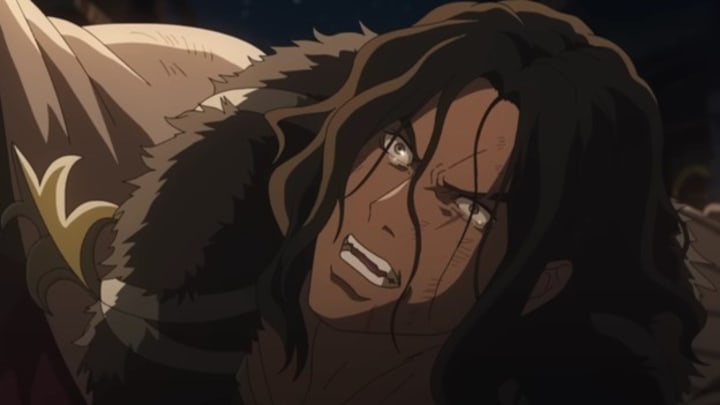
The main antagonist, Wulf, did not make war against Helm's Deep in the Appendices, but kept the throne in Edoras until Fréaláf killed him and became King. Unfortunately, Wulf maintains some problematic stereotypes in his physical appearance, including dark skin and a scar across his eye (which Hèra herself gave him during a childhood spar). He also sports an earring, and Freca had tattoo designs on his face. These details of the Wild Men of Dunland against the ivory white complexion and "purity" of Rohan's nobles in Edoras makes for a troublesome comparison of who is "worthy."
Wulf is fueled only by revenge for his father’s death, though it was clear to him throughout that his father was not noble. And he takes Hèra’s decline to marry as a personal affront instead of believing her that she wanted to marry no one–something he should have known about her if they were friends from childhood.
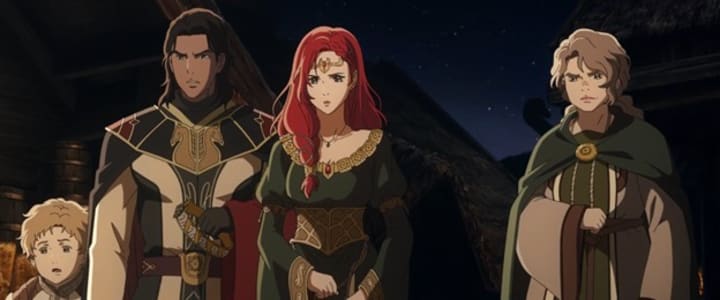
All who are left are Hèra, her aunt and lady in waiting, Olwyn, and the young servant, Lief (a very Samwise character), and they must now take charge. Olwyn is probably my favorite character, actually. Voiced by Lorraine Ashbourne, Olwyn is a Shieldmaiden of Rohan, one whom the lords and court members say are long gone. “There aren’t any alive anymore.” She fought with Hammerhand before in battle, lending Hèra her same broken shield at the end, and now she sets aside that renown and serves behind the scenes. A servant in all appearances, she protects Hèra, who is the true future. When the time comes, however, her knowledge, experience, and skill become indispensable; her leadership saves the people. She gives me many Aragorn vibes in that way–quiet and humble strength, highly titled yet never acknowledging the renown her true position demands.
Gaia Wise talked about Olwyn with Nerdist and said, “I think that she looks on them [Shieldmaidens] as being her ancestors and the people that she wants to live up to. And so I think she probably, at the beginning of the film, doesn’t really feel like she can and is probably quite scared to take on that responsibility. But then realizes that it was within her all along and that she can.”
Hèra, voiced by Gaia Wise, plays the unfortunate archetype character of the wild and untamed daughter, the one who is the lesser of her two elder brothers, who had no mother figure growing up, yet who dreams of greatness. She was not named in the Appendices, and the whole story is narrated by Miranda Otto’s Éowyn, linking both women as two sisters across history to lead Rohan to victory and defend her king.
I am, however, tired of the Princess Merida-like wild and untamed heroine stereotype–someone who is always causing trouble and ignoring rules and doing whatever they want. That is not Hèra. She’s incredibly wise and skilled and she’s not ignored–just overruled. Her king wants to keep her safe in Edoras because he knows she is better than all of them and that she out of all of them must survive. This, however noble, sentiment is outdated and insulting, quite frankly.
Even The New York Times reviews the film and states that, though it “feels like a noble attempt to expand the number of valiant women characters in J.R.R. Tolkien’s canon, Héra doesn’t feel fully realized. Though she’s independent and bonded to nature, the character lacks personality and feels ancillary to the story.” She is defined by her relation to others: a daughter and a sister. A princess. Unfortunately, she just didn’t have enough substance to be her own character. She was a last resort by necessity.
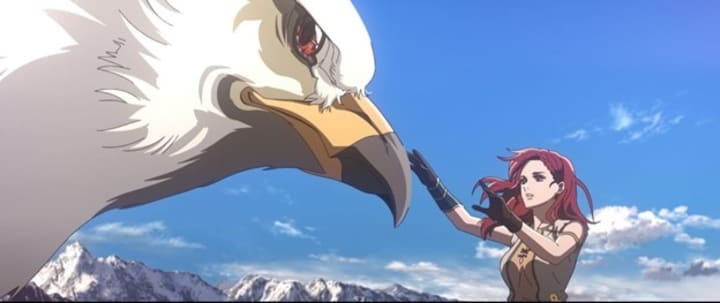
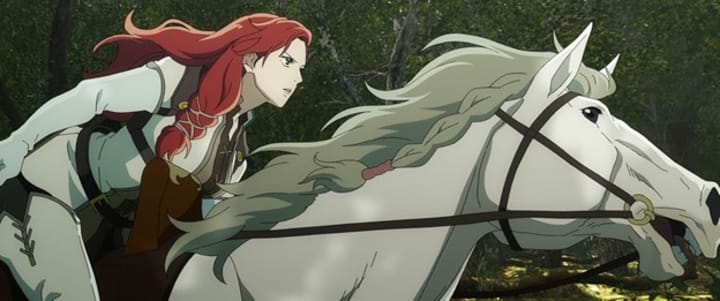
She is unorthodox, but not untraditional. Rohan honored women like her and then forgot about them. She is not wild and untamed. She is powerful and courageous.
And yet, that is the very point the film seemed to be making (or attempting to). Éowyn’s narration warns us not to look for her in the tales of old. Because there are none. Rohan always seems to forget their greatest leaders.
But, as Hèra says, there are still songs of her people to be sung. Ones that include her and Olwyn, even if she remains–sadly–unnamed herself.
THE EASTER EGGS
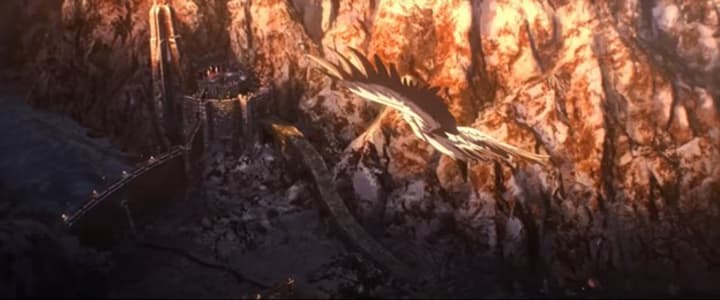
In addition to Miranda Otto’s familiar voice offering narration, there are many details for Peter Jackson fans to notice. The very discussion of Shieldmaidens, for instance, makes direct connection to Éowyn, the one audiences know will come later. This is a story of her ancestors, and it shows us the rich line of legacy from which she comes.
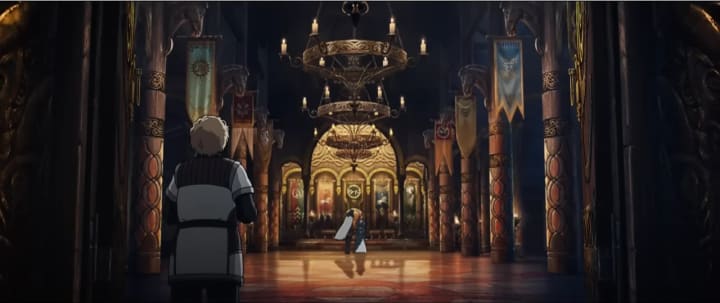
The art behind many of the landscapes and setting choices is breathtaking. No detail is too small. The wide angle shots show the full view of scale in the design work. The world is large and vast, and it feels like every inch of space was used to the max. Cinematic in the very best way.
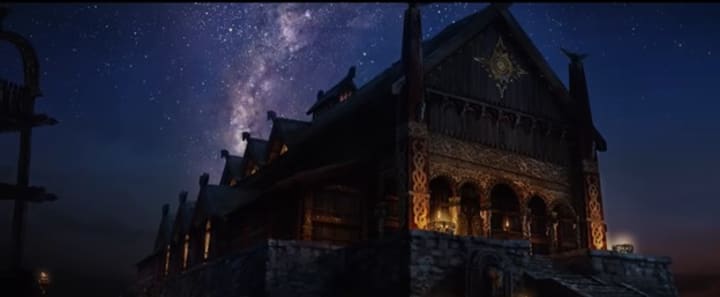
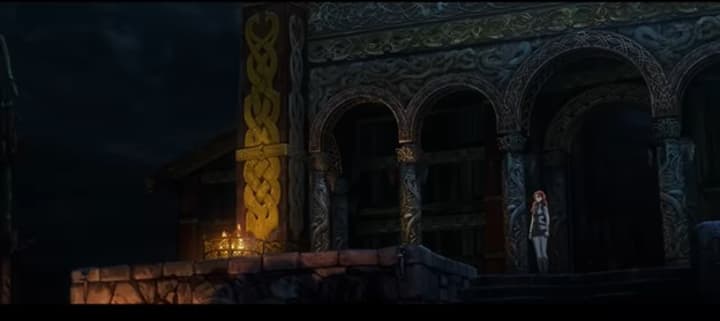
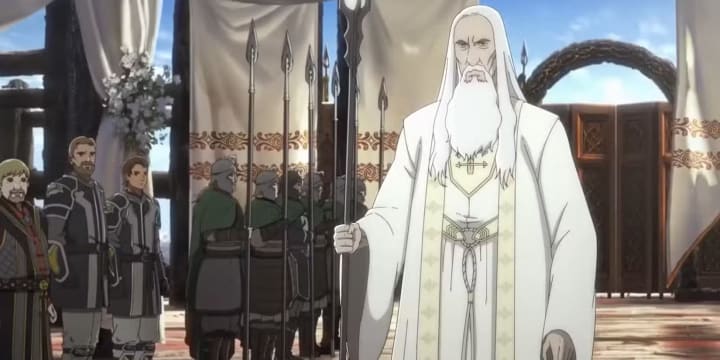
We also see familiar sights and beings: the Great Eagles, the Hall of Meduseld and Edoras up on the hill, the fortress of the Hornburg, which Hèra proudly claims will be forever known as Helm’s Deep, Isengard and the tower, Orthanc, and even the cliff overlook of Dunharrow. Fréaláf begs Hammerhand to call on Gondor for aid, but he refuses outside help. They are even betrayed by someone within Rohan’s court, Lord Thorne, calling up connections to Grima Wormtongue. And even Saruman himself appears at the end, voiced from combined sound clips by Sir Christopher Lee himself.
Writer and producer Philippa Boyens said that they seriously considered the ethics of using Lee's voice recordings. They knew his passion for the stories, however, being the only cast member in The Lord of the Rings to have met Tolkien himself. He famously reread the trilogy each year, even. They revisited a letter he'd sent them before his passing in 2015 that expressed compliments and gratitude. In addition, "a conversation with Lee’s wife, Birgit Kroencke, who passed away in 2024, helped solidify the anime team’s decision to use his voice recordings for The War of the Rohirrim."
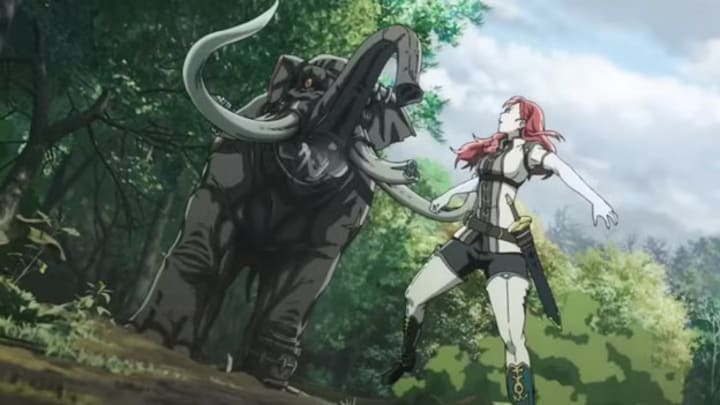
Oliphaunts, also known as Mûmakil, make an interesting and unexpected appearance early on. Hèra leads one into the forest where a Watcher of the Water kills it–the only other such creature lies in the waters outside the gates of Moria. Connections such as that, in my opinion, were unnecessary (especially since it had a tree and plants growing on top of its head as part of its disguise?).
But the use of Haradrim aids for Wulf was useful to show how terrifying and threatening the Mûmakil are as a weapon of war. They’re possibly more intense in anime design than the CGI design in The Return of the King. The wild fury in the eyes is far more visible here, and it's frightening. And, in a way, you feel just as bad for them, animals who were trained and tortured from birth to be one thing only. (I also have a thing for elephants, though, so it might just be me.)
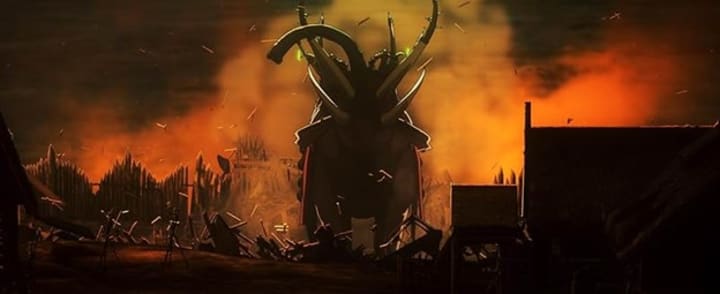
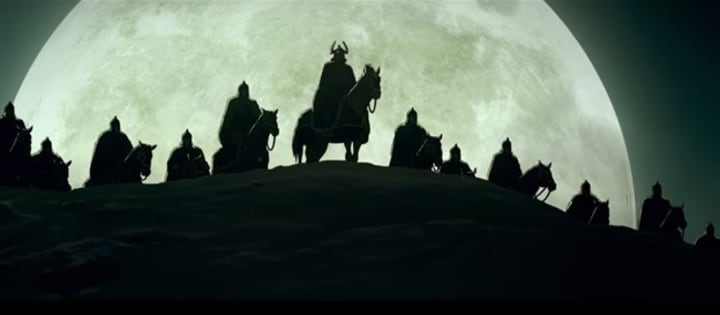
In the original charge against Wulf's army, Hammerhand blows the horn with a chilling sound, and the riders shout "Death!" and attack with eager ferocity in a gorgeous similarity to Théoden's attack in Gondor at Minas Tirith. The time that, notably, ended the bitter feud of cold shouldering between Rohan and Gondor. The famous string theme of Rohan sent me full of immediate goosebumps, and to hear it again in surround sound Dolby speakers was absolutely thrilling.
In other connections, Hèra's plan to distract Wulf while the people escape to the mountain pass is akin to Aragorn’s same plan to draw the attention of the Uruk-hai sent by Saruman while Éowyn helps everyone escape (as well as his plan to distract Sauron for Frodo and Sam to cross the Plains of Gorgoroth). But for Hèra, there are no male royalty left, and she gets to take the lead. She charges down the bridge the way Aragorn and Theoden and his men charged down the path from the gate.
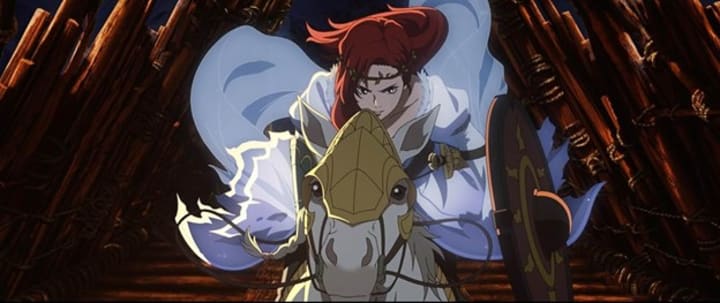
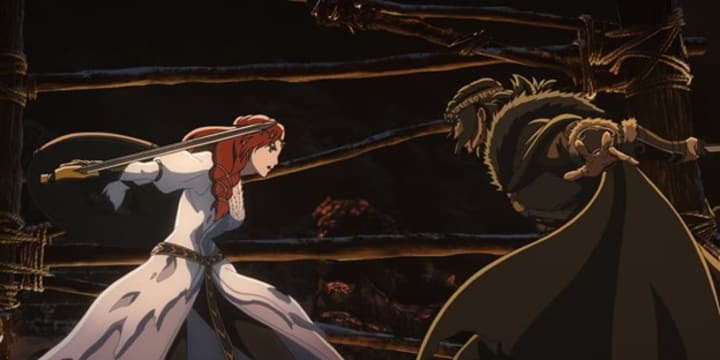
The most impressive call-back (call-forward?) was when Hèra asks the Great Eagle to send news to Fréaláf at Dunharrow. He’s there at the top overlooking the minimal troops he’s been able to manage, wishing (like King Théoden and Aragorn, that there’d been more). They are set to retreat the next day, having heard nothing from Edoras. But we know they’ll arrive, just as Éomer and the Rohirrim were the deus ex machina to save the Battle at Helm’s Deep. And there’s the same steep hillside descent of the horses and the rubble and the spears and the epic, epic music. The eucatastrophe–Tolkien’s word for the immediate relief and joy at the climax of an inevitably doomed end.
More humorously, we even had characters voiced by the unbreakable duo of Domnic Monaghan and Billy Boyd (Merry and Pippin) in their cameos as two random orcs named Shank and Wrot. While completely unrecognizable in their orc voices (comparable to the troll voices in The Hobbit: An Unexpected Journey), their roles in retrospect were a neat little nod to the fans and to the two actors’ own influence in the franchise. But…why did Sauron have orcs collecting every ring they could find out as far as the Wild Lands? Answer: he wouldn’t have.
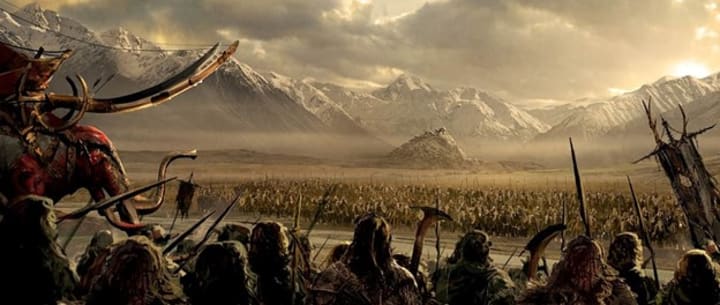
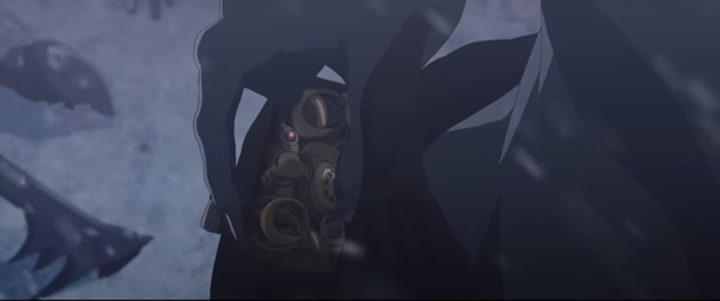
At the end of the film, we even learn that Hèra has been invited by a wizard to talk about Shank and Wrot and what she’d overheard. She shows Olwyn the envelope marked with a very familiar symbol, and we learn that she was invited by none other than Gandalf the Grey.
“CUTTING A PATH THROUGH THE DARK”
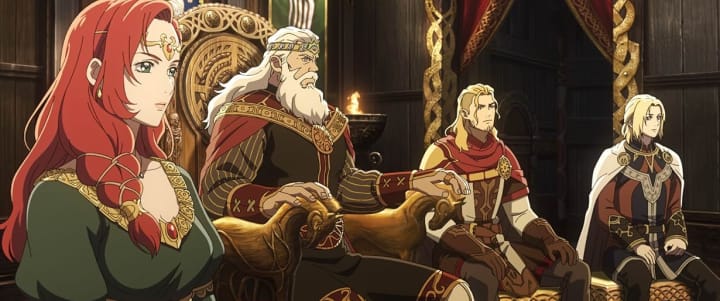
Despite many of its unnecessary narrative choices, this film still left me hopeful and inspired and invigorated in a way that only Tolkien stories can. Some of my college students have described feeling “more alive” when they watch the Jackson trilogy (at least–the first one). At the end, it’s a story that reminds people about the necessity of bravery and honor and continuing even when the odds seem hopeless.
It’s also a story that’s incredibly applicable in our own world–today more than ever (though every historian could say the same of their own time, no doubt). Kamiyama also told CULTMTL that the concept of war itself was heavy on his mind through directing Hammerhand’s story. “Rather than attempt to root war in something noble and beautiful,” he states, “it never transcends petty egos. We watch as people suffer and leaders refuse to concede ground in service of power. It’s a movie effectively about the pointless sacrifice of war as well, as Helm Hammerhead sees his bloodline destroyed in service of empty victories. The film doesn’t present battle as noble or good, but a fraught undertaking that cheapens the value of human life.”
A nation ruled by the greed of military might is never one also ruled by honor. War is never desirable and must always be considered as the absolute last resort. And when it stems from such egregious exaggerations of offended pride, it is all the more tragic. Honor is built on humility–pride on greed. The consequences can be (and usually are) deadly for those who have no part in the quarrel.
At the end, the question is always, "What was the point?"
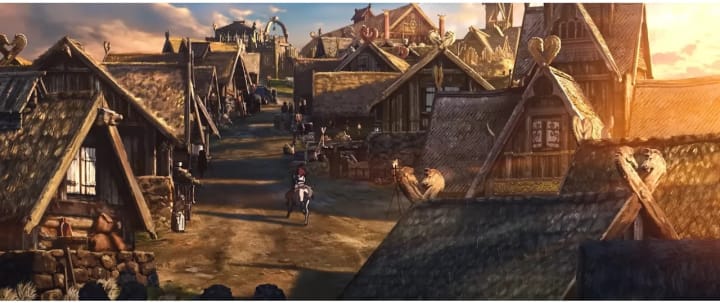
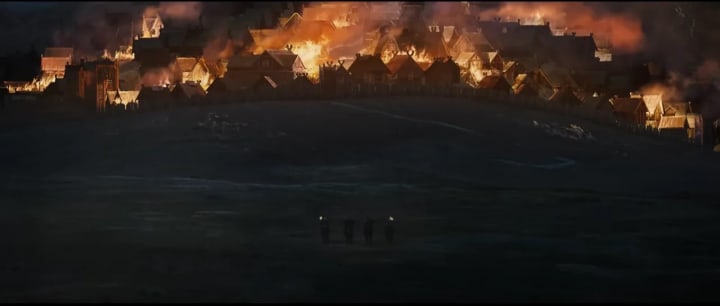
The War of the Rohirrim is a fable and a warning message as much as it is a sad legend of lost heroes and better days. And though many viewers were dissatisfied, I am always pleased with an adaptation that seeks to expand and continue Tolkien’s legendarium–left for us to safeguard and celebrate. The more the stories are shared, the more people will be inspired to return to the original source material.
As for me, I eagerly await the arrival of my new POP Funkos.
About the Creator
Bryana
English major who never left college. Lover of Victorian novels, Ravenclaw, and Rivendell. Teaching applications at Hogwarts and Starfleet Academy still pending.
Silver Screen Magic with Mae West
American actress and singer Mae West became a popular film actress during the Great Depression. She started entertaining in vaudeville, then performed on Broadway, and finally went to Hollywood. She signed up with Paramount Pictures and made her debut in the 1932 film “Night After Night.” She also starred in musicals, comedies, and crime dramas. The American Film Institute named her one of the best classic Hollywood actresses.
By Rasma Raisters5 days ago in Geeks
Taylor Swift and Sabrina Carpenter lead 2026 iHeartRadio Music Awards nominations
Today, January 8, 2026, iHeartMedia and FOX Entertainment officially pulled back the curtain on the nominees for the 13th annual iHeartRadio Music Awards. The star-studded event is scheduled to air live from the Dolby Theatre in Los Angeles on Thursday, March 26, celebrating the most-played tracks and artists of 2025.
By Dena Falken Esq6 days ago in Geeks


Comments
There are no comments for this story
Be the first to respond and start the conversation.