
The Top 10 Christmas Movie Sequels That Actually Delivered
How Holiday Follow-Ups Beat Expectations, Deepened the Meaning of Christmas, and Earned Their Place in the Annual Tradition


Christmas movies are not just films. They are rituals.
Most movies are watched once, maybe twice, and then filed away as “something you saw.” Christmas movies, by contrast, are revisited annually, often at the same time, in the same rooms, with the same people. They become embedded in personal history. You remember watching Home Alone while wrapping gifts. You remember Christmas Vacation playing in the background during chaotic family gatherings. You remember A Christmas Story looping endlessly on cable while everyone drifted in and out of the room.
That ritualistic quality is what makes Christmas sequels uniquely difficult.
A standard sequel only has to justify its narrative existence. A Christmas sequel has to justify its intrusion into tradition. It risks not just disappointing viewers, but disrupting something emotionally sacred. When a sequel fails, it doesn’t just feel bad — it feels unwelcome.
Most studios don’t understand this. They mistake recognition for affection and assume familiar characters plus holiday aesthetics equal success. The result is an endless stream of sequels that recycle iconography without understanding meaning. They repeat jokes instead of themes. They reset characters instead of letting them grow.
The Christmas sequels that work do something radically different.
They accept that time has passed — for the characters and the audience. They acknowledge that Christmas doesn’t feel the same at every stage of life. What once felt magical can later feel stressful, lonely, or bittersweet. Rather than fighting that evolution, these sequels build their stories around it.
They don’t preserve Christmas in amber.
They interrogate it.
That’s what earns them a place back in the rotation.
10. The Santa Clause 2 (2002)
The Santa Clause 2 is often dismissed as a typical early-2000s family sequel — louder, broader, and more commercial than its predecessor. On the surface, that criticism isn’t wrong. The humor skews younger, the set pieces are bigger, and the tone is more overtly “movie-ish.”
But beneath that surface is a sequel far more interested in the emotional cost of responsibility than it’s ever given credit for.
By the time the film begins, Scott Calvin hasn’t just accepted being Santa — he has perfected it. Christmas runs flawlessly. Children adore him. The elves idolize him. He is, by every external measure, a success. And yet the sequel immediately establishes a quiet truth: Scott is profoundly isolated.
The North Pole, once a whimsical escape from adult life, has become a workplace defined by endless obligation. Scott’s days are scheduled, his identity consumed by expectation. He no longer exists as a man with relationships — he exists as a symbol that must never fail.
This is where the film becomes unexpectedly adult.
The “Mrs. Clause” rule is not a random plot device; it’s a narrative intervention. The story insists that no matter how noble a role may be, it cannot replace intimacy. Christmas magic cannot survive on performance alone. It must be grounded in human connection.
That idea resonates strongly with adult viewers, especially parents. Scott’s struggle mirrors real-world burnout — the quiet realization that in trying to be everything to everyone else, you’ve become emotionally inaccessible to yourself.
The Toy Santa subplot, often mocked for its silliness, reinforces this theme with surprising clarity. Toy Santa isn’t evil because he’s malicious — he’s evil because he’s efficient. He is Christmas stripped of empathy, warmth, and spontaneity. He represents a version of the holiday optimized for output rather than feeling.
In positioning Toy Santa as the antagonist, the film draws a clear ideological line: Christmas is not about flawless execution. It’s about presence.
As a sequel, The Santa Clause 2 doesn’t try to recreate the wonder of discovering Santa. It explores the harder question of what happens after belief becomes duty. That thematic pivot gives the film far more emotional weight than its reputation suggests and earns its place as a legitimate Christmas sequel.
9. Home Alone 2: Lost in New York (1992)
Home Alone 2 is one of the rare sequels that openly embraces repetition — and then uses it as a storytelling tool rather than a crutch.
Kevin McCallister isn’t accidentally left home again. He’s lost in New York, a city that amplifies everything the first film explored: freedom, danger, temptation, and loneliness. The sequel isn’t asking whether Kevin can survive alone — it’s asking what independence actually gives him, and what it takes away.
Kevin is noticeably different this time. He’s more confident, more assertive, and more comfortable navigating adult systems. He understands money. He understands authority. He understands how to manipulate environments to his advantage. In New York, those skills are rewarded.
But the film quietly reveals the emotional tradeoff.
The city is thrilling, but it’s indifferent. Kevin can move through it unnoticed as long as he behaves like an adult. That anonymity is empowering — and deeply isolating. Christmas sharpens that isolation because it’s a season defined by togetherness. The more festive the city becomes, the more Kevin feels the absence of his family.
The Plaza Hotel scenes are especially telling. Kevin’s access is transactional. Staff respond to wealth and confidence, not care. He’s welcome — but not held. It’s a subtle contrast to the warmth he ultimately finds in the least welcoming place imaginable: Central Park.
The Pigeon Lady is the emotional heart of the sequel. She embodies what happens when rejection calcifies into withdrawal. Her story isn’t just a mirror of Old Man Marley from the first film — it’s a warning. Kevin’s compassion toward her represents his rejection of emotional self-sufficiency as a permanent state.
Even the exaggerated slapstick violence serves a purpose. By pushing danger into cartoon territory, the film keeps fear abstract, allowing its emotional themes to surface without overwhelming younger viewers.
As a Christmas sequel, Home Alone 2 works because it understands that growing up isn’t just about competence — it’s about choosing connection even when independence feels easier.
8. A Christmas Story Christmas (2022)
A Christmas Story Christmas succeeds where most legacy sequels fail because it understands that nostalgia ages.
The original film is about desire — anticipation, longing, and the belief that one perfect gift will complete Christmas. The sequel shifts focus entirely. Ralphie is no longer waiting for Christmas to arrive. He’s responsible for making it happen.
The death of the Old Man hangs over the film without spectacle. There are no dramatic flashbacks or heavy-handed speeches. Instead, grief is communicated through logistics: who fixes the furnace, who organizes the meal, who absorbs the stress when things go wrong. This is adulthood rendered honestly.
Christmas traditions, once effortless, now require labor. The film understands that holidays don’t magically assemble themselves — they are constructed, often by people who are tired, grieving, and unsure if they’re doing it right.
What makes the sequel remarkable is its restraint. It resists the urge to recreate iconic moments for applause. Familiar settings appear organically, serving the story rather than hijacking it. Nostalgia is present, but never weaponized.
The film also refuses to idealize the past. The Old Man wasn’t perfect. Christmas wasn’t flawless. Memory softened it. By forcing Ralphie to confront the mechanics behind those memories, the sequel reframes nostalgia as something to be honored without being replicated.
Ralphie’s journey isn’t about becoming his father — it’s about accepting that he can’t. He must create his own version of Christmas, one that accommodates loss rather than denying it.
As a Christmas sequel, A Christmas Story Christmas works because it understands something painfully true: the holidays don’t freeze time. They reveal how much it has passed.
7. Bad Santa 2 (2016)
Most Christmas movies operate on an unspoken promise: no matter how broken a character is at the start, the holiday will soften them by the end. Redemption is treated as seasonal inevitability. Bad Santa 2 rejects that promise outright — and that refusal is precisely why it works.
When the sequel opens, Willie Soke is worse than we left him. Not stagnated. Not plateaued. Worse. Time hasn’t healed him; it’s sharpened his bitterness. This is one of the boldest creative choices a Christmas sequel can make, because it refuses the comforting fantasy that growth is automatic.
Christmas doesn’t redeem Willie — it exposes him.
Every festive environment becomes a mirror reflecting what he lacks. The decorations, the music, the forced cheer all amplify his emotional emptiness. In a genre where Christmas is usually a cure, here it’s a diagnostic tool.
The introduction of Willie’s mother is crucial, not just for shock humor, but for narrative context. She isn’t meant to excuse Willie’s cruelty — she’s meant to explain its origin. Abuse, neglect, and emotional deprivation are shown not as tragic backstory garnish, but as active forces shaping adult behavior. The film draws a straight line between received cruelty and inflicted cruelty, refusing to sanitize either.
What’s especially striking is how restrained the sequel is with its moments of potential redemption. When Willie connects with others, those moments are fleeting and fragile. There’s no sweeping transformation, no sentimental montage signaling permanent change. Instead, the film suggests that improvement, if it happens at all, happens unevenly and without guarantees.
As a Christmas sequel, Bad Santa 2 functions as a counter-myth. It dismantles the idea that the holidays magically fix people. Instead, it argues that Christmas simply magnifies what’s already there — kindness or cruelty, connection or alienation.
That honesty is uncomfortable. It’s also rare.
And in a genre built on comforting illusions, Bad Santa 2 earns its place by refusing to lie.
6. The Chronicles of Christmas: Part Two (2020)
If the first Chronicles of Christmas film was about rediscovering belief, Part Two is about maintaining it.
That distinction matters.
This sequel reframes Christmas magic not as something that simply exists, but as something fragile — something that requires care, community, and emotional labor. The shift from individual adventure to mythological responsibility deepens the story without overwhelming its younger audience.
The villain’s arc is especially important. His fall from grace isn’t driven by greed or lust for power, but by abandonment and bitterness. He believed, once. He served, once. And when that belief went unsupported, it curdled into resentment. That emotional framing allows the film to explore disillusionment in a way that feels accessible rather than cynical.
Goldie Hawn’s Mrs. Claus becomes the film’s moral anchor. While Santa embodies spectacle and wonder, Mrs. Claus represents endurance — the quiet, often invisible work that sustains joy. Her presence reinforces a crucial Christmas truth: magic doesn’t maintain itself. Someone has to show up consistently, even when it’s exhausting.
The sequel also benefits from expanding its mythology thoughtfully. Elves aren’t just quirky helpers; they’re cultural participants with history and consequence. Belief isn’t binary — it exists on a spectrum, influenced by care, neglect, and connection.
What truly elevates Part Two is its sincerity. The film doesn’t undercut emotion with irony or self-awareness. It commits fully to its message, trusting its audience to accept earnestness without embarrassment.
As a Christmas sequel, it succeeds because it reframes belief as communal responsibility rather than personal nostalgia — a subtle but powerful evolution.
5. A Very Harold & Kumar Christmas (2011)
On the surface, A Very Harold & Kumar Christmas looks like an excuse to slap holiday decorations onto an already outrageous franchise. But beneath the absurdity is a sequel deeply concerned with what happens when adulthood pulls friendships out of alignment.
Harold and Kumar don’t drift apart because of betrayal or conflict. They drift because life advances unevenly. One settles into domestic stability; the other remains untethered. Christmas, a holiday built on shared history, forces that imbalance into sharp focus.
The film understands that nostalgia can be both comforting and corrosive. Shared memories create warmth, but they also create pressure — expectations that the relationship should still function as it once did. When it doesn’t, resentment and insecurity creep in.
The holiday setting intensifies this tension. Christmas compresses time emotionally, encouraging comparison between who you were and who you’ve become. For Harold and Kumar, that comparison is unavoidable. Every tradition becomes a reminder of divergence.
What makes the sequel effective is how it uses outrageous humor as emotional insulation. The absurdity allows the film to explore anxiety about relevance, aging, and identity without becoming sentimental. Beneath the chaos is a genuine fear: that the people who defined your youth might no longer fit into your future.
Importantly, the film doesn’t romanticize arrested development. It doesn’t argue that staying the same is virtuous. Instead, it suggests that maintaining friendship requires effort, forgiveness, and adaptation — especially when growth isn’t synchronized.
As a Christmas sequel, A Very Harold & Kumar Christmas works because it understands that the holiday isn’t just about celebration. It’s about reckoning with change — and deciding which connections are worth the work.
4. Die Hard 2 (1990)
Die Hard 2 is often dismissed as “more of the same,” but that criticism overlooks what the sequel actually understands about both its genre and its holiday setting. Where the original Die Hard trapped John McClane in a single corporate tower, the sequel expands the battlefield into something far more familiar — and far more stressful — an airport during the Christmas travel rush.
This choice is not incidental. Airports during the holidays are pressure cookers. Everyone is trying to get somewhere meaningful. Every delay carries emotional weight. Missed flights aren’t just inconveniences; they threaten reunions, traditions, and carefully constructed plans. Die Hard 2 weaponizes that anxiety.
The film’s central conflict isn’t just between McClane and terrorists. It’s between the individual and systems that fail precisely when they’re most needed. Bureaucracy collapses under pressure. Authority figures hesitate. Protocols become obstacles rather than safeguards. McClane’s frustration isn’t heroic bravado — it’s the same helpless anger felt by anyone who has watched holiday plans unravel due to forces beyond their control.
Christmas iconography plays a crucial role here. Holiday music underscoring violence isn’t just ironic — it’s critical. The cheerful soundtrack clashes with chaos, exposing the gulf between how Christmas is marketed and how it’s often experienced. Decorations frame destruction. Festive lighting highlights danger. The holiday doesn’t soften the world; it sharpens its edges.
McClane himself embodies a uniquely modern Christmas paradox: being surrounded by people while feeling utterly alone. He’s in the middle of a crowded airport, yet functionally isolated — unheard, dismissed, and ignored. That alienation mirrors a very real holiday experience for many adults, especially those carrying responsibility without authority.
As a sequel, Die Hard 2 succeeds because it doesn’t dilute its core thesis. It recognizes that Christmas isn’t inherently peaceful — it’s emotionally charged. That recognition makes it one of the most honest holiday action sequels ever made.
3. Gremlins 2: The New Batch (1990)
Gremlins 2 is a sequel that doesn’t just reject expectations — it actively mocks them.
Where the original Gremlins balanced horror and holiday warmth, the sequel abandons subtlety entirely. It becomes anarchic, meta, and deliberately overwhelming. On the surface, this feels like a betrayal. In practice, it’s a brilliant act of thematic escalation.
The chaos of Gremlins 2 mirrors the chaos of unrestrained consumption — a phenomenon deeply intertwined with modern Christmas culture. Excess, noise, spectacle, and indulgence collide without consequence or reflection. The film exaggerates these traits until they become absurd, forcing the audience to confront how normalized they’ve become.
Corporate satire replaces small-town menace. The gremlins don’t just disrupt — they multiply, mutate, and consume everything in sight. This mirrors how sequels themselves often function, expanding endlessly without purpose. Gremlins 2 is not just a sequel; it’s a commentary on sequel logic.
Christmas, while less overt than in the original, still lingers in spirit. The film captures the sensory overload of the holidays — flashing lights, relentless stimulation, and the erosion of boundaries. It’s Christmas stripped of sentiment and pushed into excess.
What makes the sequel endure is its refusal to comfort. It doesn’t offer nostalgia as refuge. Instead, it interrogates it. By rejecting the coziness audiences expected, the film avoids becoming trapped by it.
As a Christmas-adjacent sequel, Gremlins 2 works because it understands that unchecked indulgence — whether cultural, commercial, or narrative — eventually becomes destructive. That insight feels increasingly relevant with time.
2. National Lampoon’s Christmas Vacation (1989)
If there is a definitive Christmas sequel, it’s Christmas Vacation. Not because it idealizes the holiday — but because it understands its psychological weight better than almost any other film.
Clark Griswold’s obsession with creating the perfect Christmas isn’t rooted in joy. It’s rooted in fear. Fear of inadequacy. Fear of failure. Fear that if this one day collapses, everything else might too. Christmas becomes a referendum on his worth as a provider, husband, and father.
The sequel format allows this anxiety to metastasize. Clark isn’t embarking on a vacation adventure — he’s trapped at home, surrounded by relatives, expectations, and traditions that refuse to cooperate. Every disaster compounds pressure, turning slapstick into emotional release.
What makes the film resonate is how deeply recognizable its dysfunction is. Family members are intrusive, exhausting, and frustrating — yet inseparable from the holiday itself. The film doesn’t mock family chaos; it normalizes it.
Christmas, in this film, is not magical. It’s labor-intensive, emotionally volatile, and occasionally miserable. And that’s exactly why audiences return to it every year. It doesn’t promise perfection. It promises survival.
As a sequel, Christmas Vacation surpasses its predecessors by narrowing its focus. Instead of road-trip antics, it explores domestic pressure. Instead of novelty, it delivers recognition.
It became the defining installment of its franchise because it articulated something audiences rarely admit: Christmas is exhausting precisely because it matters so much.
1. Paddington 2 (2017)
Calling Paddington 2 a Christmas sequel almost undersells what it accomplishes, yet the holiday framework is essential to why the film works as profoundly as it does. Christmas is not merely present in the story — it is the moral atmosphere the film breathes.
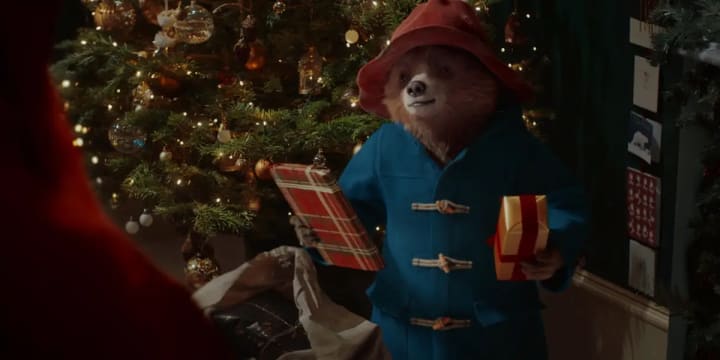
Unlike most sequels, Paddington 2 does not escalate conflict by increasing danger or spectacle. Instead, it deepens its emotional thesis. The film is concerned with one question above all others: What does kindness do when it is practiced consistently, without expectation of reward?
Paddington himself is often misread as naïve, but the sequel makes clear that his optimism is intentional. It is not ignorance of cruelty, but refusal to replicate it. In a world that frequently rewards suspicion and cynicism, Paddington chooses openness — again and again — even when it costs him.
That choice becomes the film’s narrative engine.
The central injustice Paddington faces is not framed as tragic fate or villainous genius, but as indifference. Systems fail him. Assumptions replace empathy. People stop listening. This is a deeply modern anxiety, and the film addresses it not with outrage, but with persistence.
The prison sequence is the clearest expression of the film’s philosophy. Paddington doesn’t dominate his environment or outsmart it. He transforms it through patience, routine, and care. He learns names. He listens. He cooks. Small acts accumulate until hostility dissolves into community.
Christmas, here, is not a deadline or an event. It is a way of being. The holiday represents generosity without transaction, warmth without performance, and belief without proof. Paddington embodies those ideals not once, but consistently, even when they seem impractical.
The sequel format is crucial to this impact. The first film introduced Paddington’s worldview. The second tests it. It asks whether kindness can survive bureaucracy, injustice, and confinement. The answer is not delivered through sentimentality, but through process. Kindness works — slowly, imperfectly, and only when practiced deliberately.
What makes Paddington 2 extraordinary as a Christmas sequel is its refusal to rely on nostalgia. It doesn’t trade on familiarity. It earns affection through moral clarity. The film argues that Christmas isn’t about preserving innocence — it’s about choosing decency in a world that often discourages it.
Few sequels deepen their themes rather than dilute them. Fewer still do so with this level of confidence and emotional intelligence.
That is why Paddington 2 doesn’t just top this list — it transcends it.
Conclusion: Why These Christmas Sequels Endure
What unites these films is not tone, genre, or audience. Some are family-friendly. Some are aggressively adult. Some are chaotic, others gentle. What they share is understanding.
They understand that Christmas is not static.
For children, Christmas is anticipation and wonder.
For adults, it is responsibility, memory, and pressure.
For many, it is grief, distance, or reconciliation.
The sequels that endure do not deny those shifts. They incorporate them.
They allow characters to grow older, lonelier, more complicated. They recognize that belief must be maintained, not rediscovered. That tradition requires labor. That joy often coexists with exhaustion. That kindness, when practiced consistently, can reshape environments.
Most importantly, they refuse to freeze Christmas in childhood.
A bad Christmas sequel tries to recreate a feeling exactly as it was. A great one asks why that feeling mattered — and how it might evolve.
That’s why these films return to the rotation year after year. Not because they repeat what we loved, but because they help us understand it from where we are now.
And in a season defined by memory, that may be the greatest gift a sequel can give. 🎄
About the Creator
Lawrence Lease
Alaska born and bred, Washington DC is my home. I'm also a freelance writer. Love politics and history.
Keep reading
More stories from Lawrence Lease and writers in Geeks and other communities.
Gunther Retires John Cena at Saturday Night's Main Event
There was nothing dramatic or chaotic about the moment itself, just the heavy realization that came from being in Washington, D.C., after watching John Cena wrestle the final match of his career. The night as a whole was strong, with a card that delivered across the board. The women’s match stood out, the tag team bout was excellent, and the segment featuring The Miz, R-Truth, and Joe Hendry struck the right balance between fun and importance, giving all three a meaningful spotlight on a show built around John Cena. Everything worked, everything had purpose, and yet none of it was what lingered most once the night was over.
By Lawrence Lease28 days ago in Geeks
Marvel Zombie
The last entry into our 2025 superhero projects catalogue is Marvel Zombies. This was a show that was anticipated by absolutely no one and it disappeared from the public consciousness as quickly as it was released. There was nothing special about the project that made it a must see, or a must remember. In fact if anything it's a must forget.
By Alexandrea Callaghan16 days ago in Geeks
Can you get SonyLIV in UAE
Want to watch SonyLIV in UAE? SonyLIV is a popular Indian streaming platform featuring live sports, Bollywood movies, TV series, and original content — but it’s geo-restricted outside India. This guide explains the legitimate methods to access SonyLIV in UAE in 2026.
By David Cook3 days ago in Geeks
Bruce Lee and The God of War: Kuan Ti
It starts with love.. The Power to the God Of War and Wealth Walk into a Chinese restaurant (even in Oklahoma, USA), a Chinese police station, a kung fu martial arts studio or even a Chinese temple and you often see a red faced warrior holding a heavy quan-do (spear like weapon).
By WILD WAYNE : The Dragon King5 days ago in Chapters


Comments (1)
I watch movies all the time. Surprisingly, “Home Alone” is the only one on your list that I have watched.