
Gunther Retires John Cena at Saturday Night's Main Event
Gunther Forced John Cena to Tap Out, Sending Him Out Beaten

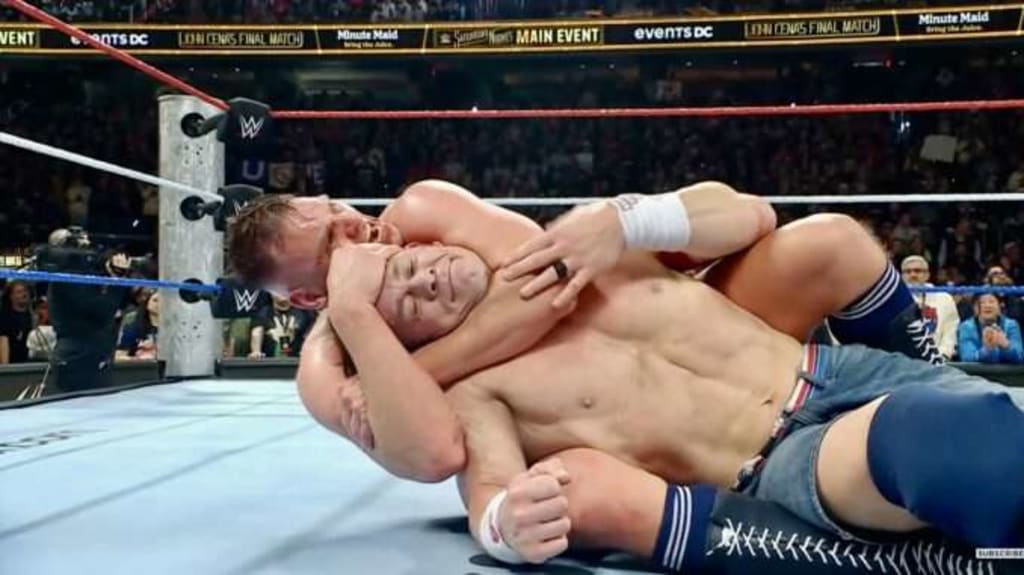
There was nothing dramatic or chaotic about the moment itself, just the heavy realization that came from being in Washington, D.C., after watching John Cena wrestle the final match of his career. The night as a whole was strong, with a card that delivered across the board. The women’s match stood out, the tag team bout was excellent, and the segment featuring The Miz, R-Truth, and Joe Hendry struck the right balance between fun and importance, giving all three a meaningful spotlight on a show built around John Cena. Everything worked, everything had purpose, and yet none of it was what lingered most once the night was over.
What stayed with everyone was how it felt to watch John Cena’s final match.
From a storytelling standpoint, particularly through the lens of professional wrestling as long-form narrative, the match was remarkably effective. Not because it provided a happy ending, but because it honored the story that had been unfolding for an entire year. This was not simply one match on a card. It was the culmination of a retirement tour, the closing chapter of a career, and the final expression of a character that had been built over decades. Everywhere Cena went during this run, he made it clear that this was the end and that his goal was not self-glorification, but leaving the business better than he found it by giving everything he had left.
Knowing there was a real end date changed the way he performed. Every match carried more weight, every moment felt deliberate, and every reaction mattered in a way it hadn’t before. That reality was impossible to ignore inside the arena. The crowd in Washington, D.C., was not just loud but relentless, maintaining an emotional intensity from bell to bell that rarely exists in an enclosed space. Stadium crowds at WrestleMania are always massive, but those environments allow sound to escape. Here, the noise stayed, and it built on itself. Fans reacted to everything, and for long stretches, logic gave way to emotion as people allowed themselves to believe that maybe John Cena could still find a way to win, not because it made sense on paper, but because it felt right in the moment.
That emotional investment is one of the most powerful elements professional wrestling can still offer.
For much of his career, John Cena’s greatest opponent was never the men he faced in the ring, but the audience itself. He endured years of boos, rejection, and resistance, often regardless of what he did or how he performed. Yet he never abandoned the character, never compromised his role, and never stopped believing in what he represented. On this night, it was impossible to argue that he had not finally won that long battle. Gunther did not have a single supporter in the building, while John Cena was embraced with overwhelming love from start to finish.
One of the most striking moments came when the crowd began chanting “Super Cena,” a term that once existed purely as a criticism. For years, it symbolized frustration with predictability and creative stagnation. In Washington, it became a celebration. Fans didn’t want reinvention or clever subversion. They wanted the five moves of doom, the very formula they once rejected, and when they got it, the reaction was explosive. What was once mocked had become cherished, and that shift said everything about how perspectives can change over time.
Despite that love, there was never another ending that truly made sense. From the moment the tournament was announced and Gunther’s name entered the picture, the destination was clear. If a heroic figure defeats John Cena, that wrestler is instantly elevated, a moment that had already been given elsewhere. If a dominant villain defeats him, that villain is transformed into something greater. That role belonged to Gunther, and it always did. Any argument that Gunther gained nothing from this victory ignores the fundamentals of wrestling storytelling. He is undeniably a bigger star coming out of this match than he was going in.
Years from now, Gunther will not simply be remembered as a former champion. He will be remembered as the man who retired John Cena, and that single distinction will define his legacy in a way few accomplishments ever could. This is how professional wrestling creates lasting meaning, not through feel-good endings, but through moments that linger, challenge expectations, and stay with the audience long after the final bell.
About the Creator
Lawrence Lease
Alaska born and bred, Washington DC is my home. I'm also a freelance writer. Love politics and history.
Keep reading
More stories from Lawrence Lease and writers in Geeks and other communities.
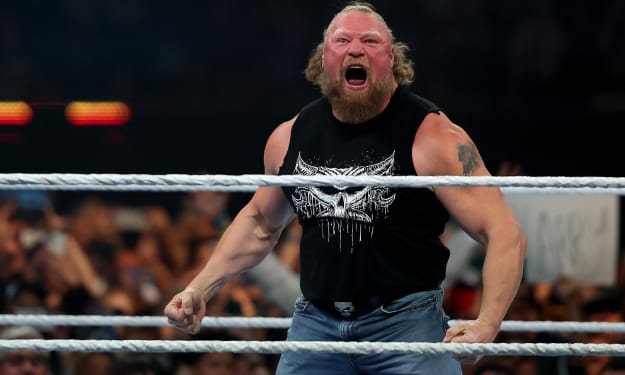
Brock Lesnar Potentially Retiring from WWE in 2026
At September’s Wrestlepalooza PLE, John Cena went head-to-head with Brock Lesnar in a match that quickly turned into a dominant showcase for the returning Beast. Lesnar overwhelmed the 17-time WWE Champion with ease, and with Cena’s retirement just hours away, it was clear there was never any plan to extend their latest—and final—encounter beyond that night. The bout felt less like a competitive clash and more like a statement, reinforcing Lesnar’s aura as WWE’s ultimate final boss rather than serving as a sentimental farewell for Cena.
By Lawrence Lease3 months ago in Geeks


Comments (1)
I just read another story and its amazing how differently you guys wrote about Cena retirement. Maybe , losing is part of the whole show?