
The Substance Horror Film:The Brilliantly Crazy Story That Could Win an Osca
The Substance horror film has generated an impressive impact on this genre

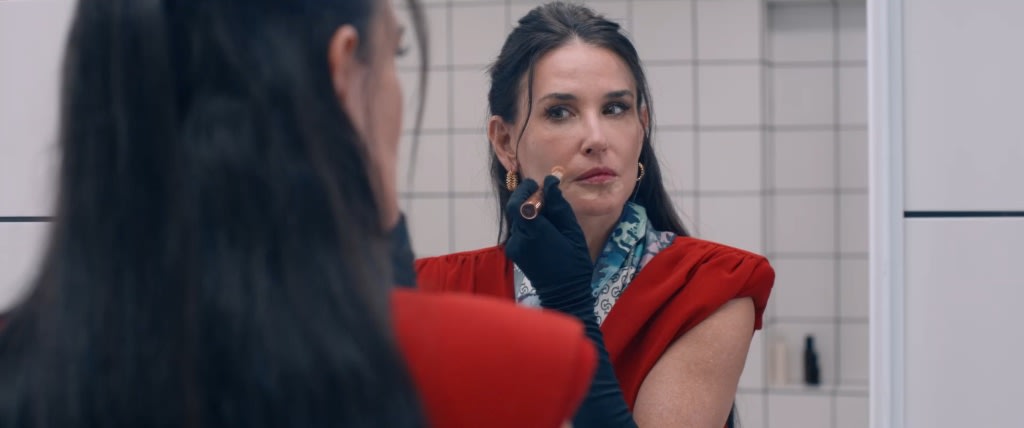
The Substance is a body horror film that is revolutionizing the genre thanks to a gritty plot, excellent performances and masterful direction.
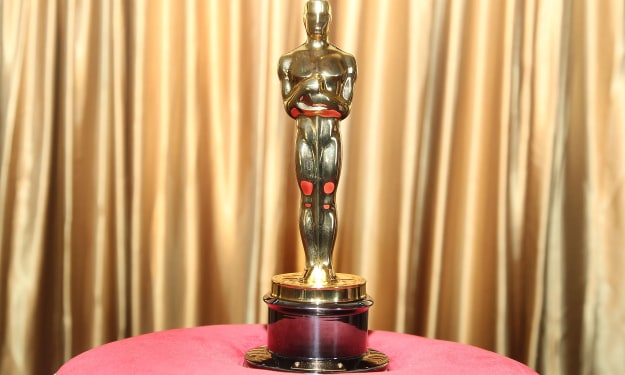
The Substance horror film, directed by talented French filmmaker Coralie Fargeat, has five Oscar nominations, including Best Picture. The other four nominations are: Best Actress, Demi Moore; Best Director, Coralie Fargeat, Best Makeup and Best Original Screenplay.
If this Sunday, March 2, The Substance wins the Oscar for Best Picture, it would be the second horror film to achieve the feat, as The Silence of the Lambs has been the only horror story to achieve that honor so far.
Elisabeth Sparkle, a 50-year-old former Hollywood icon, finds herself in a battle against the relentless tide of aging and the entertainment industry's obsession with youth in The Substance.
After being unceremoniously dropped from her long-standing aerobics television show due to her age, Elisabeth is driven by a desperate need to reclaim her lost vitality. Her journey leads her to a clandestine black-market drug called The Substance, which claims to unlock a younger, idealized version of oneself through the manipulation of cellular DNA. Upon taking the serum, Elisabeth's body generates a youthful doppelgänger named Sue, played by Margaret Qualley. The two women must alternate their consciousness every week, leaving the dormant body in a state of unconsciousness, sustained only by intravenous nourishment.
As Sue's star rises, Elisabeth's career spirals downward, prompting a haunting exploration of identity, self-worth, and the societal demands placed on women to uphold a youthful facade. The film tackles heavy themes of body dysmorphia, self-hatred, and addiction, employing striking metaphors to illustrate the psychological and physical consequences of the relentless pursuit of eternal beauty.
##A deadly invitation
Elisabeth receives the invitation to experience an improved version of herself, which will reveal to her that all her talent, belittled for considering her too old, can become her greatest strength. In other words, the enigmatic private procedure to which you are invited to participate will bring out the best of your being, using your current experience and your original state of consciousness.
The script effectively keeps its secrets, and when it reveals that the previous idea is cruelly accurate, the film heads towards original and brutal territories. Elisabeth's "new self" is an entity that arises from her body, generated by the properties of the substance, and emerges from her back. The director manages to get the previously established context to make the horror scenes, although explicit, cruel but not arbitrary. Much of the substance has the ability to make sense of the most extravagant visual decisions, making them understandable within their context. Nothing seems out of place or a concession to revulsion, an achievement the director achieves in several of the film's most awkward moments.
##A phenomenal perspective
In the first moments of The Substance, it is shown how Elizabeth is brutally discarded by the entertainment industry upon reaching the age of 50. We have already seen in the cinema numerous narratives illustrating how Hollywood beauty standards sweep away women who have dedicated their lives to acting, but this is just the beginning of the plot of The Substance.
The film delves, through extensive sequences without dialogue, into Elizabeth's intimate life: in her home, in her bathroom, in the reflection she observes in the mirror and even in the deepest part of her being. Her deepest message is revealed: it is not only the entertainment industry that rejects Elizabeth's slightly aging image, but it is she herself who belittles herself.
This is crudely manifested when she is preparing for a date with an old classmate, a moment that could be considered the emotional climax of the film. Immersed in her reflection and haunted by the image of Sue (her younger version), she desperately tries to adjust her makeup and wardrobe, but she never manages to feel satisfied.
She plunges into a nervous breakdown and decides to aggressively shred her makeup and hairstyle, thus ruining her chances of attending the appointment. With this scene, Fargeat highlights the tense relationship that the protagonist maintains with her own body, even before her final transformation takes place. This allows her to address another of the key issues raised by the film: the loss of control.
Despite being aware of the serious repercussions that this will entail, Elisabeth is willing to do whatever it takes to stay in Sue's skin (her younger version) and not in her own. Thus, the substance becomes a satire on beauty standards, but Fargeat complicates the narrative and creates a game that reveals that, sometimes, the villain and the victim are the same person.
##An impressive immersive experience
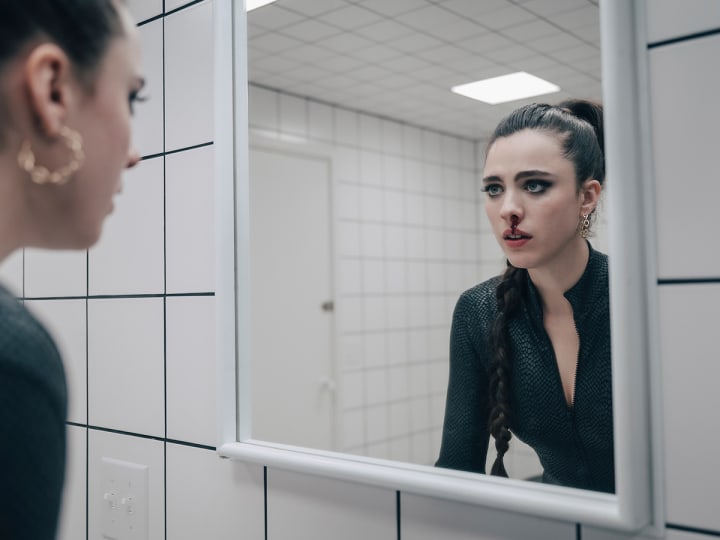
Coralie Fargeat understands that the audience wants to experience what is happening as closely as possible, pushing this resource to the limit of discomfort. In the lunch sequence where Harvey (Dennis Quaid), a misogynistic television producer, informs Elisabeth about his dismissal from the show, the camera gets so close that we can observe how the shrimp he consumes turn into a mass in his mouth, escaping through the corners.
An overlap of the restaurant's music and the sound of the cutlery is perceived, along with the noise generated by his mouth when chewing and swallowing the soft meat covered with sauce. Thus, the film not only recounts Elisabeth's dismissal, but immerses us in her terrifying experience in a very realistic way.
An additional example of how the director weaves her narrative is presented when Sue makes her debut on the aerobics program previously hosted by Elisabeth. In this scene, the camera focuses for several minutes on specific shots of Sue's body, while a version of the 2000s hit "Pump It Up!". The intention of Fargeat is not to replicate the male gaze on the female body, but to exaggerate it in order to criticize it and transform it into a great irony.
##A woman's view of body horror
The film manifests its true intensity the instant Elisabeth opts to inject herself with the substance. We watch her contorting herself on the floor of her bathroom, and in a close-up shot, the pupil of one of her eyes is doubled. Finally, the skin and flesh on his back opens up to free Sue, his younger version. This scene, which required 15 days of filming, is just the first course of an extensive banquet of more than an hour of grotesque sequences, which explore the fear and disgust that the human body and its transformations can generate. Therefore, it is classified as a body horror movie.
Fargeat is not a pioneer in the genre, since she is inspired by great masters like David Cronenberg, but she does take the genre in new directions. The deformations that Elisabeth experiences are not arbitrary; they are reflections on femininity and the male gaze. It is no coincidence that the monster Elisasue (the fusion of Elisabeth and Sue) expels a breast hanging from the umbilical cord at the end of the film.
Every scene is full of symbolism. Fargeat herself has mentioned that she wanted that monster to represent a Picasso of male expectations. Body horror can be a truly powerful tool of expression for female directors, the filmmaker has said on several occasions.
##Real monsters
The entity that gives life to Elisabeth's body, Sue, has the potential to be as successful and powerful as the woman she comes from in her youth. It is at this moment that the substance reaches its maximum splendor. Coralie Fargeat establishes a fusion between symmetrical planes that convey the feeling that beauty encompasses the entire world. At the same time, he uses very close-up shots to illustrate how beauty reaches its peak and subsequently transforms into something monstrous.
The film is so exaggerated and uncomfortable that, at times, it is difficult to distinguish between the pleasure that Elisabeth's new fragmented existence promises and extreme cruelty. On this occasion, the director presents wounds, exposed viscera and deaths in a very graphic way, but without sacrificing a certain aesthetic sense. The play plays with his own interpretation of Doctor Jekyll and Mister Hyde, exploring the lights and shadows that every human being harbors. But, beyond that, he delves into the need to satisfy his darkest and most greedy instincts. This combination is, in most cases, frightening and, in others, ironic. A balance that the director manages to maintain without ever losing her peculiar sense of humor.
The challenge of assembling all the pieces of a story and delivering an outcome that meets expectations is no easy task. Coralie Fargeat partially succeeds, and although in the third act the film loses much of the frenetic energy that characterized it, it is still surprising and terrifying. With a final scene that will be recorded in the history of horror cinema, The substance fulfills, at least, its main promises: to tell a scary story adapted to a generation obsessed with physical appearance.
##Master performances
Elisabeth finds herself in the midst of desolation and discovers what seems to be the solution to her longing for eternal beauty and youth: a strange substance that will divide her into two beings, a younger, beautiful and perfect version of herself, and the other, the one she has always been.
This game evokes a kind of Dr. Jekyll and Mr. Hyde, perverse and strange, or a human version of Fiona from Shrek: "By day I'm one, by night I'm another." What was predictable soon becomes apparent. The young version, played by Margaret Qualley, craves control, even if that means devouring the original version.
The conflict between the two versions of his being contains, perhaps, the true horror of the story. The obsessions, the irrational fear of growing old, of being relegated, of losing fame, are taking shape, becoming a moral avalanche ready to wipe out everything.
The central question lies not only in what you would be willing to sacrifice to never grow old, but in the dark desires that underlie that answer.
The author does not hesitate to present the intense struggle of a woman with herself, but in this context, the masculine side does not come out well either. Dennis Quaid offers a disgusting portrait of an unscrupulous producer, accompanied by other characters who see in women, even the most beautiful, mere disposable objects.
The endless spiral of lies and vanities culminates in an ending that may seem excessive, since it moves away from reality, but it is full of grotesque spectacle. However, it may be excessive to prolong a premise that had already made it clear that it would have a tragic outcome.
The substance in question resembles a magical elixir, longed for by mankind since time immemorial. The film offers us a dark reflection on the desire for the impossible, challenging nature and one's own divinity. Its approach is original, with a magnetic spell, which enchants everyone.
About the Creator
Ninfa Galeano
Journalist. Content Creator. Media Lover. Geek. LGBTQ+.
Visit eeriecast ,where you'll find anonymous horror stories from all over the world. Causing insomnia since 2023.
Keep reading
More stories from Ninfa Galeano and writers in Geeks and other communities.
The only 7 horror films that have been nominated for the Oscar for Best Picture
These seven films represent a unique collection of horror and thriller movies that have been nominated for the Best Picture Oscar, breaking barriers in the genre's recognition by the Academy.
By Ninfa Galeano11 months ago in Geeks
Silver Screen Magic with Mae West
American actress and singer Mae West became a popular film actress during the Great Depression. She started entertaining in vaudeville, then performed on Broadway, and finally went to Hollywood. She signed up with Paramount Pictures and made her debut in the 1932 film “Night After Night.” She also starred in musicals, comedies, and crime dramas. The American Film Institute named her one of the best classic Hollywood actresses.
By Rasma Raisters5 days ago in Geeks
Internet in Pakistan Will Go Down on 15 January: Fact, Fear, or Misinformation?
In recent days, social media platforms across Pakistan have been flooded with alarming claims that the internet will completely shut down on 15 January. From WhatsApp forwards to trending posts on X (formerly Twitter) and Facebook, users are expressing concern about possible disruptions to work, education, banking, and daily communication. But how much truth is there to these claims? Is Pakistan really heading toward a nationwide internet blackout, or is this another case of digital misinformation spreading faster than facts? Where Did the Claim Originate? The rumor appears to have originated from unverified social media posts suggesting that undersea cable maintenance, cybersecurity measures, or political developments could trigger a nationwide internet shutdown. Some messages warn of a “planned outage,” while others hint at security-related restrictions similar to those imposed during sensitive political events in the past. However, it is important to note that no official government department, internet service provider (ISP), or telecom regulator has issued a confirmed notice announcing a complete shutdown on 15 January. Pakistan’s Internet Infrastructure: How Vulnerable Is It? Pakistan’s internet connectivity relies heavily on multiple international submarine cables that connect the country to global networks. While these cables occasionally require maintenance or face faults, such incidents typically result in slow speeds or partial disruptions, not a total nationwide blackout. Over the years, Pakistan has diversified its internet routes to reduce dependence on a single cable. As a result, even when one connection faces issues, traffic is usually rerouted through alternative pathways. A full shutdown would require an extraordinary technical or administrative decision—something unlikely without official communication. Past Shutdowns Fuel Public Anxiety Public concern is understandable. Pakistan has experienced temporary internet slowdowns and mobile data suspensions during: Elections Political protests Security operations National examinations These disruptions, often localized or time-limited, have created a sense of uncertainty among users. As a result, any rumor about internet shutdowns quickly gains traction, especially in a country where millions depend on online platforms for income, freelancing, remote jobs, and digital payments. What Authorities Are Saying (So Far) As of now, no confirmation has been released by: Pakistan Telecommunication Authority (PTA) Ministry of IT & Telecommunication Major ISPs such as PTCL, Nayatel, StormFiber, or Jazz In the absence of official statements, experts urge the public to remain cautious and avoid spreading unverified claims. Historically, when large-scale internet disruptions are planned—such as during maintenance or security operations—authorities issue formal notifications in advance. The Economic Impact of Internet Disruptions Even the possibility of an internet outage highlights a deeper issue: Pakistan’s growing dependence on digital connectivity. A nationwide shutdown, even for a day, could impact: Freelancers and remote workers E-commerce platforms Online banking and digital wallets Students attending virtual classes Ride-hailing and delivery services Pakistan is one of the world’s fastest-growing freelance markets. For many, the internet is not a luxury—it is a livelihood. This makes transparency and timely communication from authorities more critical than ever. Misinformation in the Digital Age The rumor surrounding 15 January is a textbook example of how misinformation spreads in the digital era. A single unverified post can create panic when amplified by fear, screenshots, and emotional language. Algorithms often prioritize engagement over accuracy, allowing sensational claims to spread rapidly. Digital literacy experts advise users to: Verify news through official sources Avoid sharing unconfirmed alerts Follow credible journalists and regulatory bodies Question posts that lack evidence or citations Should Pakistanis Prepare for an Outage? While there is no verified evidence of a nationwide internet shutdown on 15 January, users can still take basic precautions: Back up important files and documents Schedule critical work ahead of time Stay informed through official channels Preparation should not stem from panic, but from awareness. Conclusion: Calm Over Clickbait At present, the claim that “Internet in Pakistan will go down on 15 January” remains unverified and speculative. While Pakistan has faced internet disruptions in the past, a complete nationwide blackout without official notice is highly unlikely. This episode serves as a reminder of the power—and danger—of unchecked information in a connected world. Until confirmed by reliable authorities, such claims should be treated with caution rather than fear. In an era where the internet fuels economies, education, and expression, responsible communication is just as important as connectivity itself.
By Fiaz Ahmed Brohi5 days ago in Geeks


Comments
There are no comments for this story
Be the first to respond and start the conversation.