
The Struggles of Youth: A Journey of Love, Violence, and Missed Opportunities in "And Their Children After Them"
Paul Kircher's Poignant Portrayal of an Awkward Teen Navigates Family Turmoil, First Love, and the Harsh Realities of Growing Up in a Stifling Industrial Town
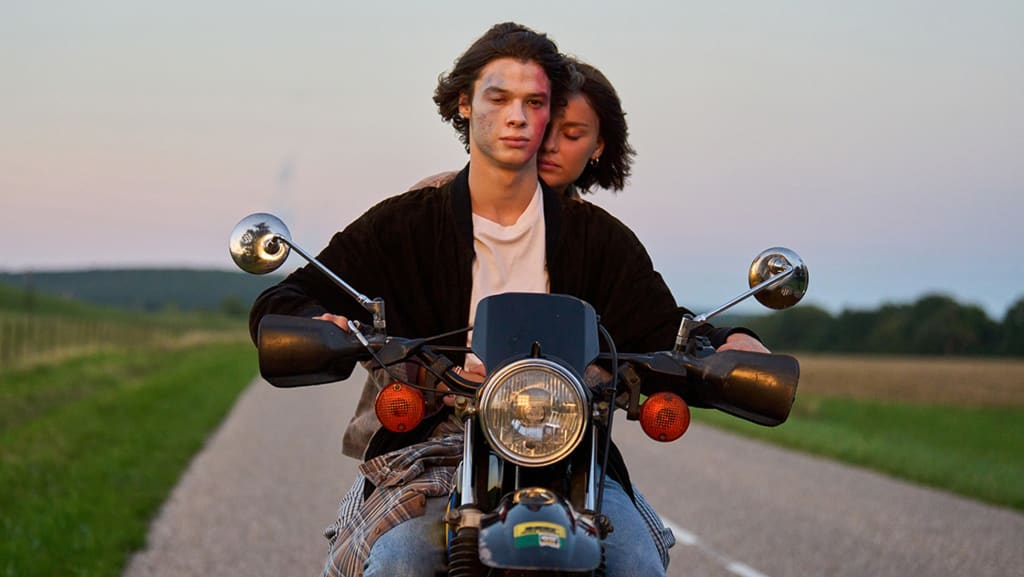
Emerging talent Paul Kircher, known for his captivating performances in Christophe Honoré’s Winter Boy and Thomas Cailley’s The Animal Kingdom, steps into the role of Anthony, an awkward 14-year-old introvert. From the moment we meet him, donning a leather motorcycle jacket despite the sweltering heat, it's clear that Anthony is trying to project a cool exterior. His misguided attempts to impress his cousin and appear more mature are signaled early when he casually flicks a cigarette into a lake, muttering that the water is too filthy for a swim. This minor act foreshadows his inability to truly fit in, a recurring theme throughout the story.
However, his self-consciousness takes a back seat when two teenage girls, Clémence (Anouk Villemin) and Steph (Angélina Woreth), swim out to a floating platform, prompting Anthony’s hormonally charged cousin to seize the opportunity and join them. The way Anthony sneaks awkward glances at Steph, slightly older and more confident, reveals his complete lack of experience and signals the beginning of his frustrating journey through first love—one that will largely remain out of reach.
Clémence and Steph invite Anthony and his cousin to a party that night, held at a rich friend’s house, too far to reach on their bikes. Anthony’s cousin, sensing an opportunity for adventure, pressures him into "borrowing" his father’s prized motorbike. Anthony hesitates, knowing his father, Patrick (played by Gilles Lellouche), a hot-tempered alcoholic, would fly into a rage if he found out. His weary mother, Hélène (Ludivine Sagnier, delivering a fantastic performance), adds to the weight of this decision. Despite the obvious risks, Anthony sneaks out on the Yamaha, a rash decision that will set off a chain of events with long-lasting repercussions.
The party itself is a stark cultural divide for Anthony and his cousin, who are immediately out of place in the lavish surroundings of the wealthy host’s home. Left on his own when Clémence whisks his cousin away, Anthony drifts into a drunken stupor, overwhelmed and out of his depth. But his desperation to impress Steph pushes him to make a reckless decision when a Moroccan teenager, Hacine (Sayyid El Alami), and his friend are told they’re not welcome at the predominantly white party. In an attempt to stand out, Anthony trips Hacine as he leaves, a small act of humiliation that escalates into a cycle of violence and retaliation, affecting both their families.
This seemingly insignificant moment triggers a much deeper conflict. As tensions between Anthony and Hacine build, the story deftly mirrors their struggles, emphasizing the similarities between their two families despite their different cultural backgrounds. Patrick and Hacine's father, Malek (Lounès Tazaïrt), were once coworkers at a now-closed steel mill, a symbol of the economic decline that haunts the town of Heillange. The grim industrial backdrop serves as a reminder of the limited options facing both boys, underscoring the title’s suggestion that they are trapped in a stifling environment with few paths to escape.
Although Anthony’s story is the primary focus, Hacine’s arc feels somewhat underexplored. Despite El Alami’s compelling portrayal of Hacine—his brooding good looks and fiery presence drawing the audience in—the character’s involvement in the local drug trade, a critical element of his development, is mentioned only briefly. The decision to confine the narrative to four summers leaves certain plot threads dangling, encouraging viewers to fill in the blanks themselves.
The narrative interweaves acts of aggression between Anthony and Hacine with the gradual unraveling of Anthony’s family. Patrick, who begins as a snarling, unpredictable brute, gradually becomes a broken man by the film’s end. Lellouche’s portrayal of this downward spiral is moving, although it occasionally verges on heavy-handed. The most poignant scenes involve Patrick’s failed attempts to reconcile with Anthony, moments that reflect the broader theme of missed opportunities for connection.
Equally heartbreaking is Anthony’s unrequited love for Steph, played with understated vulnerability by Angélina Woreth. Despite her more stable middle-class upbringing, Steph harbors insecurities of her own, which draw her to Anthony without ever fully allowing their relationship to blossom. Their near-miss encounters provide much of the emotional weight of the film, especially as Anthony matures and becomes more aware of his own shortcomings.
Anthony’s interactions with Vanessa (Christine Gautier), a friend of his sister, introduce a darker strain to the narrative. First seen with her hair in sad barrettes, Vanessa becomes Anthony’s go-to when his affections for Steph seem out of reach. Anthony’s treatment of her—using her for casual hookups while showing little regard for her feelings—paints him as a deeply flawed character. His casual racism and reluctance to accept help or make amends only add to his complexity. Yet Kircher’s portrayal of Anthony softens these rough edges, capturing his vulnerability and awkwardness with a delicate touch. His hesitations in conversation, his shuffling walk, and his Chaplin-esque nervousness around Steph make him endearing despite his many faults.
As the years pass and Anthony returns home tougher after a stint in the army, he remains in many ways the same uncertain boy he was at 14. His moments with Steph, particularly during a Bastille Day celebration where they share a tender dance to a Francis Cabrel song, offer fleeting glimpses of what might have been. The soulful music, both French and international, adds depth to these scenes, capturing the melancholy that underpins even the film’s lighter moments.
The Boukherma brothers, adapting a bildungsroman, skillfully balance intimate character moments with a broader social context. Their cinematic style feels more Hollywood than French, with sweeping traveling shots and fluid tracking sequences that create a rhythm and momentum throughout the film. While the movie could benefit from some trimming—the nearly two-and-a-half-hour runtime occasionally feels indulgent—the pacing allows for a deeper exploration of Anthony’s emotional journey.
Ultimately, And Their Children After Them carries a deep sense of sadness. Even moments of joy, such as the euphoria of France’s 1998 World Cup win or the excitement of Bastille Day fireworks, are tinged with the knowledge that for many in this town, life is a series of unfulfilled promises. The story speaks to the frustration of being stuck in a place where dreams are hard to realize, a place where generation after generation is left behind by those with the means to escape. The film’s emotional resonance lingers long after the credits roll, a poignant reflection on youth, love, and the painful process of growing up.
About the Creator
PETER J
Driven by a passion to inspire and uplift, Peter. J is a motivational story writer who weaves tales of resilience, personal growth, and triumph over adversity.
Silver Screen Magic with Mae West
American actress and singer Mae West became a popular film actress during the Great Depression. She started entertaining in vaudeville, then performed on Broadway, and finally went to Hollywood. She signed up with Paramount Pictures and made her debut in the 1932 film “Night After Night.” She also starred in musicals, comedies, and crime dramas. The American Film Institute named her one of the best classic Hollywood actresses.
By Rasma Raisters6 days ago in Geeks
Allu Arjun teams up with Lokesh Kanagaraj for 'AA23':Makers drop the big reveal on Makar Sankranti
After months of speculation, the official announcement of the new film starring Pan-India superstar Allu Arjun and director Lokesh Kanagaraj has finally been made. On the occasion of Makar Sankranti, producer Mythri Movie Makers announced the film, which has currently been named AA23. This means it will be Allu Arjun's 23rd film.
By Dena Falken Esq5 days ago in Geeks



Comments
There are no comments for this story
Be the first to respond and start the conversation.