
The Slave by Isaac Bashevis Singer
Why It's a Masterpiece (Week 92)

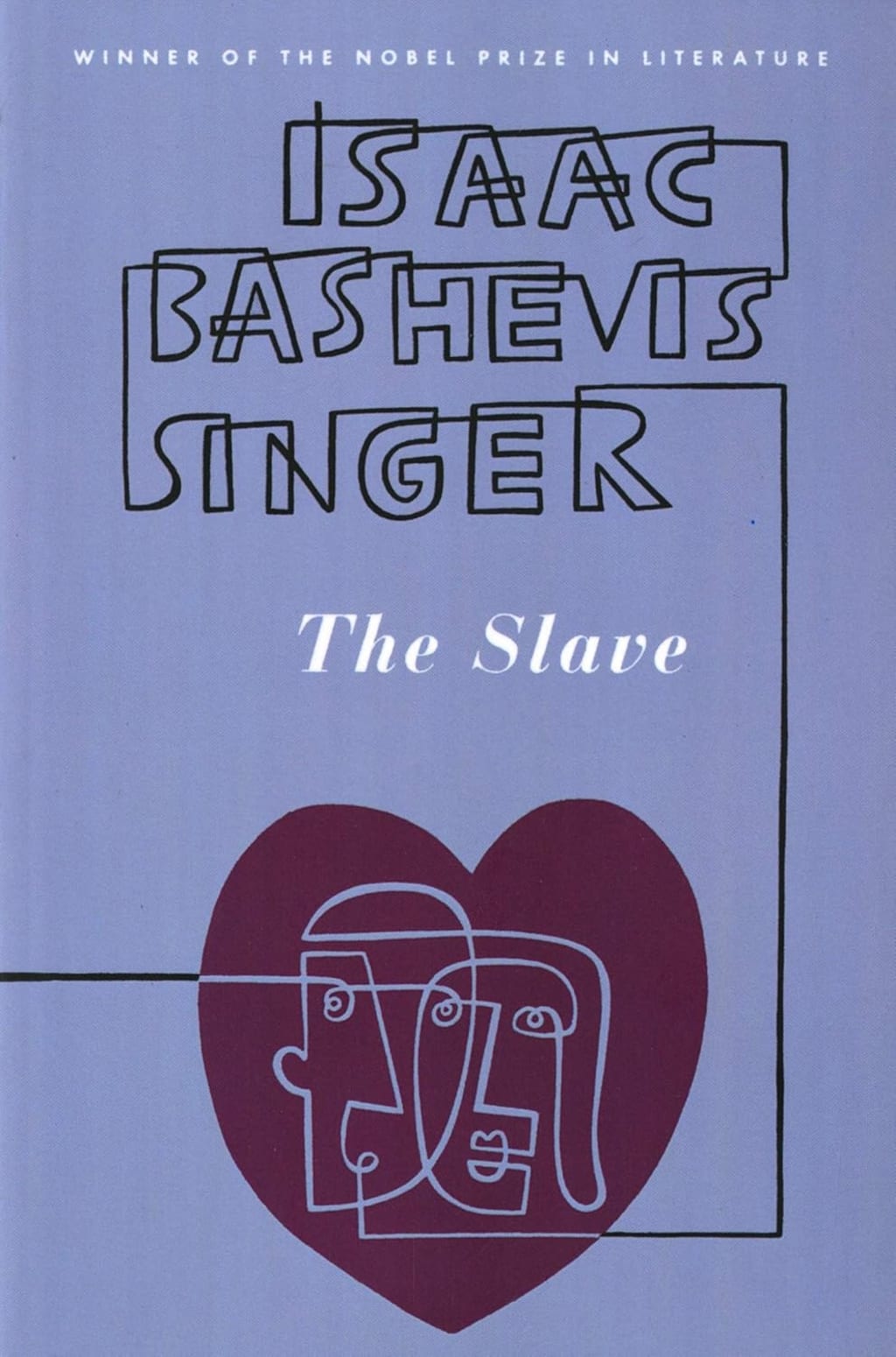
Isaac Bashevis Singer’s novel The Slave (Der Knecht in Yiddish) was first published in 1962 and is widely considered one of his most intense explorations of faith, identity, and love. He was a Polish-born Jewish writer who later emigrated to the United States and wrote primarily in Yiddish. His works were later translated into English, earning him the Nobel Prize in Literature in 1978.
The Slave is set in the aftermath of the Chmielnicki Massacres of 1648–1649 which was a brutal series of pogroms carried out by Cossack forces against Jewish communities in Poland and Ukraine. This historical set provides a deeply tragic and violent context for the novel. It explores the themes of: Jewish survival, forced servitude, religious devotion, and forbidden love.
The protagonist, Jacob, is a Jewish scholar who is enslaved by Polish peasants after the destruction of his village. As he toils in servitude, he falls in love with Wanda, the daughter of his master. Their love is forbidden by both Jewish and Christian societies, forcing Jacob to confront profound questions about faith, duty, and personal happiness. Again, a timeless style of the forbidden love story.
Plot

The book begins with Jacob, a Jewish scholar from Josefov, who has been captured and enslaved by Polish peasants after the Chmielnicki Massacres. He is forced to work as a shepherd for a brutal Polish landowner, living in a state of humiliation, isolation, and despair. Though treated as property, Jacob clings to his Jewish faith, continuing to pray and observe Jewish laws in secret, despite being forbidden from doing so.
During his enslavement, Jacob develops a forbidden bond with Wanda, the daughter of his master. Unlike the other villagers, Wanda is kind and curious about Jacob’s faith, asking him questions about Judaism and expressing a fascination with his beliefs. Over time, their sympathy deepens into love, though their relationship is impossible within the rigid confines of their world. This is not only because of religious differences but because Jewish law strictly forbids intermarriage with non-Jews.
When an opportunity arises, Jacob escapes and returns to the Jewish community, but his heart remains divided. Wanda, unwilling to live without him, converts to Judaism, taking on the name Sarah, and secretly reunites with Jacob. Together, they settle in Josefov, posing as a Jewish couple, but their happiness is shadowed by fear. If their secret is revealed, they will face social religious condemnation, and possibly death.
Time passes and Jacob struggles between his love for Sarah and his loyalty to Jewish law. His internal conflict is intensified by the strict orthodoxy of his community, which views his relationship as both immoral and heretical. When Sarah becomes pregnant, their secret is nearly exposed, forcing them to flee once again.
Tragedy strikes. Sarah dies in childbirth, leaving Jacob alone to care for their child. In his grief, he decides to return to his people, submitting himself fully to his faith, his traditions, and the laws that had once torn him away from the woman he loved.
Into the Book

Faith and Desire:
One of the novel’s central themes is the conflict between faith and personal desire. Jacob is a devout Jew, raised in a world where Jewish law is absolute. His enslavement tests his religious devotion: can one still be a Jew when stripped of freedom, community, and ritual? Despite his suffering, Jacob remains faithful, secretly praying and observing Jewish laws, even when it brings him punishment.
However, his love for Wanda challenges his religious identity. In Jewish law, a relationship with a Gentile is forbidden, yet Jacob’s love for Wanda feels as sacred as his devotion to God. Singer does not present this conflict in simple terms; instead, he forces readers to confront the complexities of faith. Does religious law matter more than love? Or can love itself be a kind of divine truth?
Jacob chooses faith, yet the novel never fully resolves whether this is a triumph or a tragedy. His return to Jewish orthodoxy at the end feels both inevitable and heartbreaking, as he embraces the security of tradition while mourning the loss of personal happiness.
"Dejection is only one small step from denial"
- The Slave by Isaac Bashevis Singer
Love as Suffering and Salvation:
Love in The Slave is both a force of salvation and a source of suffering. Wanda’s love for Jacob leads her to renounce her past and embrace Judaism, a radical transformation that speaks to the power of love to transcend barriers. Yet their relationship is also doomed from the start, making their passion both beautiful and tragic.
Singer presents love as an unstoppable force, but one that is at odds with societal and religious structures. In a world defined by rigid laws and communal obligations, love has no place outside these boundaries. This tension drives much of the novel’s emotional depth as Jacob and Wanda’s relationship is tender and genuine, but no amount of love can overcome the weight of tradition and history.
"How could he have known that such passion and love as Wanda's existed? He again heard Wanda's voice, the words she had whispered to him, her groans, the swift intake of her breath, and he again felt the touch of her tongue and the sharpness of her teeth. She had left marks on his body. She was willing to flee with him across the mountains in the middle of the night. She spoke to him exactly as Ruth had spoken: 'Where thou goest, I go. Thy people are my people. Thy God is my God.'"
- The Slave by Isaac Bashevis Singer
Exile and Isolation:
As in much of Singer’s work, The Slave explores the theme of Jewish exile, both physical and spiritual. Jacob is first exiled through literal enslavement, but his true exile is internal and it is literally the sense of being forever an outsider, caught between worlds.
Even after regaining his freedom, Jacob is not fully accepted within his own community, haunted by his past and by his love for Wanda/Sarah. Singer suggests that exile is not merely a historical event but an enduring condition of Jewish existence, reflecting both the suffering and resilience of the Jewish people.
“The grave is a bed, he thought, a most comfortable bed. If men knew this, they would not be so fearful.”
- The Slave by Isaac Bashevis Singer
Why It's a Masterpiece

The Slave is widely regarded as one of Singer’s greatest novels because of its philosophical depth, its emotional intensity, and its tense and tragic historical setting. Singer portrays Jacob's emotional struggle as a universal one, meditating between love and suffering accordingly. The book doesn't offer an easy answer to Jacob's struggles but makes him into this almost folkloric figure where every step of the way in his journey there is redemption and there is loss. Singer blends this with the tragedy, the fire and of course, the Jewish mysticism which pulls the reader in close and asks them for some sympathy these some dark, dark times.
Conclusion

Singer's understanding of human nature shines through the novel's contexts. He very clearly knew how these people should be feeling and how we ourselves would feel when faced with adversity such as the ones Jacob experiences in the book. The extreme exile definitely makes it even more intense and honestly, this is probably one of the best Isaac Bashevis Singer novels I personally have read in my life.
Next Week: Berlin, Alexanderplatz by Alfred Doblin
About the Creator
Annie Kapur
I am:
🙋🏽♀️ Annie
📚 Avid Reader
📝 Reviewer and Commentator
🎓 Post-Grad Millennial (M.A)
***
I have:
📖 280K+ reads on Vocal
🫶🏼 Love for reading & research
🦋/X @AnnieWithBooks
***
🏡 UK
Keep reading
More stories from Annie Kapur and writers in Geeks and other communities.
The Rachels - 2025
Much to my surprise, I have kept a list of the films I‘ve seen this year. I daresay it isn’t complete. There will be films that snuck in on a late night in front of the TV that I would’ve forgotten to note. Or others, that I went to watch at the cinema, but then had a red wine and promptly forgotten about. But it’s not a bad approximation of the films I’ve seen this year. In total, there are 53 films listed, so an average of one a week and one for good luck.
By Rachel Robbins17 days ago in Geeks
Kapil Sharma Admits Facing Pressure from Netflix on The Great Indian Kapil Show: ‘Hisaab Dena Hota Hai’
Comedy icon Kapil Sharma, widely regarded as one of India’s most popular entertainers, recently opened up about the immense pressure he experienced while working on his Netflix venture, The Great Indian Kapil Show. Known for his quick wit, impeccable timing, and charismatic screen presence, Kapil has been entertaining audiences for over a decade. Yet behind the laughter and fanfare, the comedian reveals there was significant scrutiny and accountability involved when collaborating with a global streaming giant. In an exclusive statement, Kapil confessed, “‘Hisaab dena hota hai’ – there’s a lot of accountability involved when you work with platforms like Netflix. You can’t just do things the way you want; every decision, every joke, every segment has to be justified.” This candid admission sheds light on the challenges entertainers face when transitioning from traditional television to digital streaming platforms, which have different expectations, production standards, and creative oversight. From Television Sensation to Streaming Star Kapil Sharma’s rise to fame began with his television shows, particularly The Kapil Sharma Show, which became a household name for its blend of celebrity interviews, sketches, and audience interaction. The show’s immense popularity cemented Kapil’s reputation as a versatile entertainer capable of appealing to audiences across age groups. The leap from television to a global streaming platform like Netflix, however, brought new challenges. Unlike television, which allows for broader content latitude, streaming services demand higher production quality, tighter scripting, and meticulous attention to audience metrics. Every segment is analyzed not just for humor but also for engagement, viewership patterns, and international appeal. For someone like Kapil, accustomed to the creative flexibility of television, this level of scrutiny was a new experience. Pressure Beyond the Spotlight Kapil’s comment, “‘Hisaab dena hota hai,’” reflects more than just professional oversight. It highlights the psychological and creative pressures entertainers face when working under the global lens of digital platforms. Unlike Indian television networks, Netflix operates with a global audience and has a reputation for data-driven decision-making. This means that even an established star like Kapil must consider every joke, every celebrity interaction, and every storyline from multiple perspectives – including cultural sensitivities, global relevance, and streaming analytics. Industry insiders suggest that such accountability can be both motivating and stressful. While it pushes creators to raise their standards and innovate, it can also constrain spontaneity, especially for comedians whose charm lies in improvisation and quick thinking. Kapil Sharma’s experience underscores the delicate balance between maintaining creative freedom and adhering to platform expectations. Fan Reactions and Public Perception Fans of Kapil Sharma have expressed empathy for the comedian’s revelation. Social media platforms are filled with messages supporting him, praising his honesty, and acknowledging the difficulties of navigating global platforms. Many fans noted that while The Great Indian Kapil Show retained Kapil’s trademark humor, the behind-the-scenes pressures were invisible to audiences who often only see the final polished product. Critics have also commented that the transition from TV to streaming requires not just talent but adaptability. Kapil Sharma’s openness about these pressures may encourage more dialogue on how streaming platforms engage with Indian entertainers and the expectations they set for creative content. The Road Ahead for Indian Comedy on Streaming Kapil Sharma’s Netflix experience represents a larger shift in India’s entertainment industry. Streaming platforms have become a hub for diverse content – from drama and thriller series to reality shows and comedy specials. For Indian comedians, this creates exciting opportunities but also unprecedented scrutiny. Maintaining authenticity while satisfying global standards is a challenge that requires careful navigation. Kapil’s candid reflection provides a valuable lesson for aspiring entertainers. Success on international platforms is not just about talent or popularity; it is also about understanding the operational expectations, adapting to new creative standards, and being prepared to answer to detailed scrutiny. His phrase, “‘Hisaab dena hota hai,’” resonates as a reminder that professional accountability is part of global entertainment, even for India’s beloved stars. Conclusion Kapil Sharma’s revelation about the pressures he faced while working on The Great Indian Kapil Show provides a rare glimpse into the realities of global streaming production. While audiences see the laughter, jokes, and celebrity interactions, the behind-the-scenes pressures are immense, especially when transitioning from traditional television to a platform like Netflix. By openly acknowledging the accountability, Kapil Sharma not only humanizes the challenges faced by entertainers but also underscores the evolving landscape of Indian comedy in the digital era. His experience demonstrates that even established stars must adapt, innovate, and navigate pressures while keeping their signature humor intact – a balancing act that defines the future of entertainment in the age of global streaming platforms.
By Fiazahmedbrohi 6 days ago in Geeks




Comments (1)
I have read many of his short stories, but to my shame I left this on a shelf. The TBR list grows...and I thank you for the review!