
'The Plague' Review: A Harrowing Look at Boyhood, Bullying, and the Cost of Belonging
Charlie Polinger’s The Plague is a chilling, deeply human film about boyhood bullying, tribal cruelty, and moral fear.


Rating: ⭐⭐⭐⭐½ (4.5/5)
The Plague
Directed by: Charlie Polinger
Written by: Charlie Polinger
Starring: Joel Edgerton, Everett Blunck, Kayo Martin
Release Date: December 25, 2025
Boyhood as a Battlefield
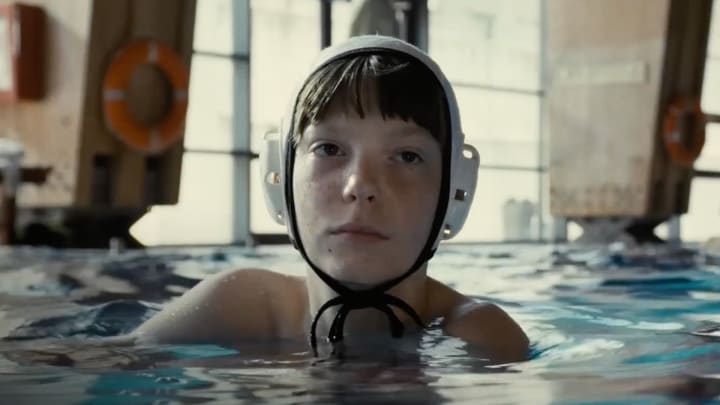
The Plague is a movie that cuts close to the bone for anyone who lived through bullying as a child. It’s set at a summer camp for boys playing water polo—an environment that may not be instantly relatable—but the social dynamics within that space are painfully universal. The film captures, with unnerving precision, the awkward, confusing, and often cruel ways boys between the ages of ten and fourteen bond, fracture, and turn on one another.
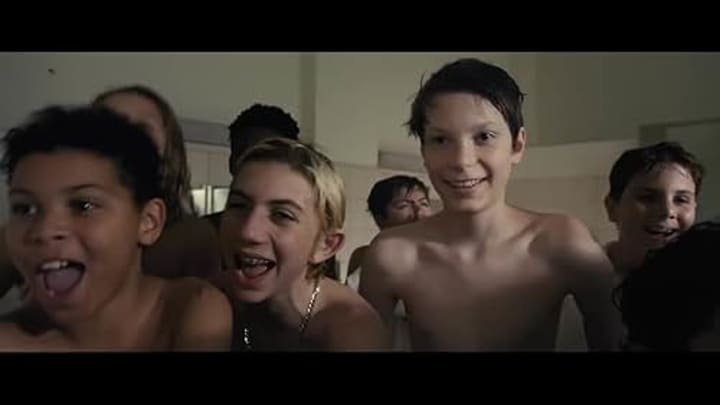
This is a strange age to witness. It’s like watching evolution in real time. Boys form tribes and eliminate perceived weakness through mockery, exclusion, and fear. They cling desperately to the safety of the group, changing the way they dress, speak, and behave to mirror whoever holds power. Leaders emerge—often armed with confidence rather than wisdom—and enforce arbitrary rules that define belonging. Defy those rules at your peril.
The Outsider and the Almost-Outsider
At the center of The Plague is Ben (Everett Blunck), a new kid at the camp who exists in that dangerous middle space—not fully accepted, not fully rejected. He lingers on the fringes, often safe only when someone else is around to absorb the group’s cruelty.
That someone else is Eli (Kenny Rasmussen), a boy who has already failed to find a tribe. Eli suffers from a skin condition, likely a mild reaction to spending hours in chlorinated water. The reason doesn’t matter. He looks different, and that’s enough.
The camp’s dominant bully declares that Eli has “The Plague,” a contagious disease that can be spread by touch. The rules are clear: don’t talk to Eli, don’t associate with him, and above all—don’t touch him. If Ben follows those rules, Eli will remain the target. If he doesn’t, the target will shift.

Cruelty Disguised as Survival
Truth plays no role here. Reality doesn’t matter. Eli is different, and that makes him disposable.
Ben, who is clearly a good kid raised with empathy, tries to reach out—but only in secret. If he’s caught speaking to Eli, he immediately turns on him, mocking him with a ferocity born of fear. It’s not hatred; it’s self-preservation. Ben hopes that by being cruel enough, he can convince the group that he isn’t weak, isn’t different, and certainly isn’t infected.
Eli, meanwhile, moves through the world seemingly indifferent to whether anyone likes him. He goes about his day, slightly strange, unapologetically himself. In doing so, he becomes a living reminder of what Ben fears most—and the kind of freedom Ben secretly envies.

When Fear Becomes Contagious
The film’s emotional turning point comes when Ben helps Eli apply ointment to his back in secret. It’s a small act of kindness, but in the ecosystem of the camp, it’s a radical one.
Soon after, Ben develops a similar skin rash.
From here, The Plague tightens its grip. Ben begins to unravel emotionally, terrified of becoming the next outcast. His fear curdles into anger, and he lashes out with increasing intensity. The film starts to feel as though it’s hurtling toward something irreversible, a tragedy born not from malice but from panic.
Whether that tragedy fully arrives is something you will need to see for yourself when you see The Plague, and I highly recommend that you see it.

Water, Violence, and Plausible Deniability
Visually, The Plague is stark and oppressive. The color palette leans heavily into grays, blues, and faded greens. The water—constantly present—is beautiful, but it carries a quiet violence. Water polo is a physical sport, full of grabbing, kicking, and submerged aggression. It becomes the perfect cover for bullying. Hurt someone, then claim you were just playing the game.
Violence here is rarely overt. It’s hidden in plain sight, masked by competition and camaraderie.
The Failure of Authority
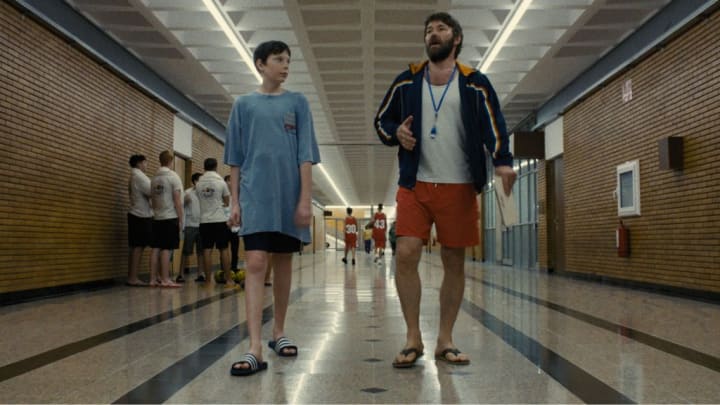
Joel Edgerton plays the only adult figure we see regularly, the coach who oversees the camp. He has presence and authority, but little real power. His attempts to curb bullying amount to lip service—half-measures that fail to address the rot beneath the surface.
Among the boys, one rule is absolute: never involve the adults. Going to the coach is the fastest way to get labeled infected, rash or no rash. The hierarchy polices itself, and it does so ruthlessly.

What the Plague Really Is
Is “The Plague” real? The film smartly refuses a simple answer. We see Eli’s rash. We see Ben’s skin react after prolonged exposure to chlorinated water. Anyone who’s spent enough time in pools knows this happens.
But narratively, the plague isn’t a disease. It’s a mechanism.
It’s a way to mark someone as weak. A tool for enforcing hierarchy. A justification for cruelty that allows children to believe they’re protecting themselves rather than harming someone else.
Writer-director Charlie Polinger understands this world intimately. The Plague feels like it was made by someone who lived in Ben’s skin—a kid desperate not to be bullied, but unwilling to become a bully outright. That moral limbo is where the film finds its power.

Final Thoughts
The Plague is an exceptional and unsettling film. It doesn’t exaggerate childhood cruelty; it observes it. It understands that the most lasting damage often comes not from the bullies themselves, but from the compromises made by those who are afraid.
This is a movie that will linger, especially for anyone who remembers how terrifying it was to simply belong.

Tags
The Plague review, Charlie Polinger, Joel Edgerton, bullying movies, coming-of-age drama, psychological drama, water polo film, films about childhood, social hierarchy in movies, 2025 film reviews
About the Creator
Sean Patrick
Hello, my name is Sean Patrick He/Him, and I am a film critic and podcast host for the I Hate Critics Movie Review Podcast I am a voting member of the Critics Choice Association, the group behind the annual Critics Choice Awards.
Keep reading
More stories from Sean Patrick and writers in Geeks and other communities.
Reasons to Use Node.js in Your Next Web Project
The digital landscape is shifting rapidly, often leaving developers and business owners in a maze of complex frameworks. Deciding on a backend tool is no longer just a technical choice; it is a strategic one. Among the sea of options, Node.js has consistently proven its worth, empowering giants like Netflix and PayPal to build fast, scalable applications.
By Muhammad Owais4 days ago in Geeks
Belle of the Bayou
Bad move, cher. Not just the slip of her kitten heel on the rainy February cobblestones in the Fourth Ward. She got caught snooping. Detective Deleon clucked and strutted like a rooster in his rush to clear her from the scene, waving cigar smoke to and fro as he gesticulated amid the thick air of the speak easy. An experienced crime reporter, Marie knew better than to let the coppers catch her on the wrong side of the line, but curiosity had gotten the better of her.
By Maia Gadwall the metAlchemist6 days ago in Fiction


Comments (1)
This was a powerful review. You did a wonderful job of explaining why this film is important and enticing the reader to watch for themselves. Wonderfully written.