
The Montreal Screwjob: A Necessary Evil
How Vince McMahon’s Controversial Decision Saved WWE and Shaped the Future of Professional Wrestling

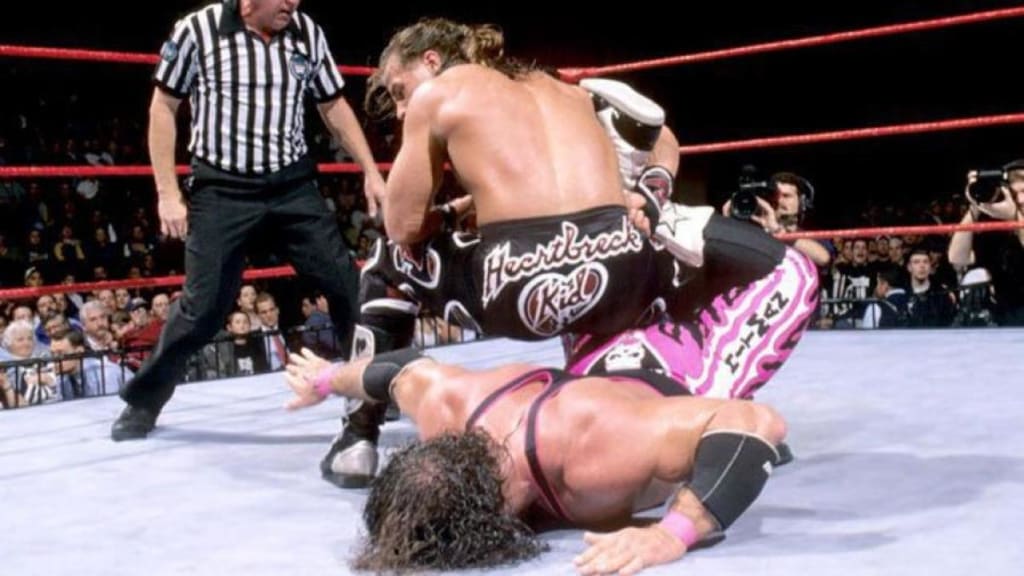
The Montreal Screwjob remains one of the most infamous moments in professional wrestling history. On November 9, 1997, at WWE’s Survivor Series, the match between Bret "The Hitman" Hart and "The Heartbreak Kid" Shawn Michaels ended in controversy when Vince McMahon, owner of WWE, orchestrated an unscripted finish to forcibly remove the WWF Championship from Hart. To fans and many wrestlers, the event felt like a betrayal. However, despite the negative response from certain circles, there’s a compelling case that the Montreal Screwjob was not only justified but necessary from a business standpoint.
The Context: Business Realities and Complications
To fully understand the defense of the Montreal Screwjob, one must consider the broader context in which the incident took place. The WWE (then WWF) was embroiled in a bitter war with WCW (World Championship Wrestling), a rival promotion that had been luring away WWE talent with large, guaranteed contracts. At the time of the Screwjob, Bret Hart had already signed a contract with WCW and was set to leave WWE shortly after the Survivor Series.
Hart, the WWF Champion at the time, was scheduled to defend his title against Shawn Michaels, a real-life rival with whom he had a strained relationship. Hart was not willing to lose to Michaels in Montreal, his home country of Canada, and suggested either winning the match or having it end in a disqualification. His departure from WWE presented McMahon with a unique dilemma: how could he ensure that the WWE Championship, his company’s top prize, did not walk out the door with Hart?
From McMahon’s perspective, the Screwjob was a necessary decision to protect the company. Imagine if Bret Hart, a soon-to-be WCW employee, appeared on WCW programming while still recognized as WWE Champion. This would have been a devastating blow to WWE’s credibility and further fueled WCW’s momentum in the "Monday Night Wars." McMahon could not risk WCW, which had already been humiliating WWE in the ratings, gaining the upper hand by showcasing a WWE Champion on their show. Business demanded that McMahon act decisively.
Protecting the Brand
At the heart of the Montreal Screwjob was Vince McMahon’s responsibility to safeguard his company’s intellectual property, reputation, and long-term success. Hart was leaving for a company that had openly challenged WWE by signing away several of its top stars, including Hulk Hogan, Kevin Nash, and Scott Hall. McMahon had already seen what could happen when stars defected, and he was determined not to repeat that mistake.
Hart had pitched several alternatives to McMahon, including the idea of vacating the title on the next episode of Raw or losing it at a later date. But for McMahon, none of these options were viable. If Bret Hart left WWE while still the champion, even for a short period, there was no guarantee he wouldn’t appear on WCW television with the belt. After all, wrestling is a business, and even the best of intentions can fall apart when contracts and rivalries come into play.
While Bret Hart’s long-standing loyalty to the WWF was not in question, McMahon could not afford to put the fate of his championship in someone else’s hands. Wrestling is scripted, but the perception of legitimacy is crucial. By allowing Hart to hold the title until after he left the company, McMahon would have opened the door to potential embarrassment, should WCW have chosen to exploit the situation. The Screwjob ensured that the WWE Championship remained firmly under McMahon’s control.
Realities of Wrestling Politics
The world of professional wrestling is built on trust, but it is also fraught with political maneuvering. Wrestlers hold significant power in negotiating outcomes, and championship reigns are often key factors in a wrestler’s standing. Bret Hart, a proud performer, wanted to protect his image, especially in front of his home crowd in Canada. Hart’s concern was understandable, given the prestige he carried and his personal rivalry with Michaels, who had been disrespectful toward him both in and out of the ring.
However, WWE’s interests as a business could not be secondary to personal pride. Bret Hart, as valuable as he was to WWE at that time, was still an employee. As his employer, Vince McMahon had the right to determine the direction of his company’s most significant asset—the WWE Championship. While Hart’s desire to control the end of his WWE tenure was understandable, the final call had to align with the company’s needs. McMahon, who had built WWE from the ground up, had to protect the brand above all else.
Furthermore, the nature of wrestling, with its blending of reality and fiction, complicated the situation. It wasn’t just a straightforward business negotiation—it was a storyline playing out in front of millions of fans. McMahon’s decision was a reflection of wrestling politics at its most cutthroat. Wrestlers want to maintain their image, but companies need to maintain control over their product.
The Birth of the Mr. McMahon Character
In hindsight, the Montreal Screwjob not only ensured the protection of the WWE Championship but also catalyzed a new era of wrestling entertainment. McMahon’s public involvement in the Screwjob birthed the iconic "Mr. McMahon" character, the villainous boss who would go on to feud with the likes of "Stone Cold" Steve Austin and become one of the most memorable characters in WWE history. The Screwjob inadvertently laid the foundation for the "Attitude Era," a period often considered the pinnacle of wrestling's popularity and creative innovation.
From a storytelling perspective, the Screwjob added a new layer of unpredictability and realism to professional wrestling. Fans were no longer sure where the line between reality and fiction was drawn, making the product even more compelling. McMahon, now seen as the tyrannical boss who would do anything to protect his company, became the perfect foil for rebellious characters like Austin. This dynamic helped WWE reclaim its spot as the dominant wrestling promotion, defeating WCW in the ratings and eventually putting its competition out of business.
A Necessary Evil
To defend the Montreal Screwjob is not to dismiss the emotions or legacy of Bret Hart. Hart is a legend, and his contributions to WWE and professional wrestling as a whole are immeasurable. However, the Screwjob was ultimately a business decision that McMahon had to make to ensure his company’s survival and the integrity of its championship. In a cutthroat industry like professional wrestling, loyalty and trust are important, but they must be balanced with the realities of business.
The Montreal Screwjob was a pivotal moment that prevented a disastrous outcome for WWE at a time when the company was vulnerable. By ensuring the WWE Championship stayed within his company, Vince McMahon safeguarded his business, and in the process, he ignited a new era of wrestling that would define the industry for years to come.
While controversial, the Montreal Screwjob can be defended as a necessary evil. It was a reminder that in the world of professional wrestling, where reality and fiction blur, business will always come first. And for WWE, it was the right call.
About the Creator
Lawrence Lease
Alaska born and bred, Washington DC is my home. I'm also a freelance writer. Love politics and history.
Keep reading
More stories from Lawrence Lease and writers in Geeks and other communities.
Are Star Ratings Ruining YOUR WWE & AEW Experience?
It's inevitable—star ratings in professional wrestling will always stir up conversations, debates, and sometimes, heated arguments. Today, we're diving into the world of star ratings, specifically those handed out by Dave Meltzer and other prominent figures in the wrestling community. But this isn’t just about Meltzer’s opinions or whether you agree with them—this is about the broader picture, about how we, as fans, perceive and discuss wrestling.
By Lawrence Leaseabout a year ago in Geeks
Marvel Zombie
The last entry into our 2025 superhero projects catalogue is Marvel Zombies. This was a show that was anticipated by absolutely no one and it disappeared from the public consciousness as quickly as it was released. There was nothing special about the project that made it a must see, or a must remember. In fact if anything it's a must forget.
By Alexandrea Callaghan19 days ago in Geeks
5 Pieces Of 'X-Men' Content Worth Revisiting Before 'Avengers: Doomsday
It's an exciting time to be a fan of the Fox X-Men films. While 2024's Deadpool and Wolverine initially seemed to act as a love letter/goodbye to the Fox-verse, fans were delighted earlier in 2025 with the reveal that some of the Fox-verse X-Men were set to appear in Avengers: Doomsday. Doomsday's third teaser focuses on a few of these returning characters, including Patrick Stewart as Professor X, Ian McKellen as Magneto, and James Marsden as Cyclops.
By Kristy Anderson2 days ago in Geeks



Comments
There are no comments for this story
Be the first to respond and start the conversation.