
The Monster in the Mirror: Why Guillermo del Toro’s ‘Frankenstein’ Is Not a Horror Movie—It’s a Prophecy
In 2025, we aren't just watching the monster. We are building him. And just like Victor, we are terrified of what we have made.

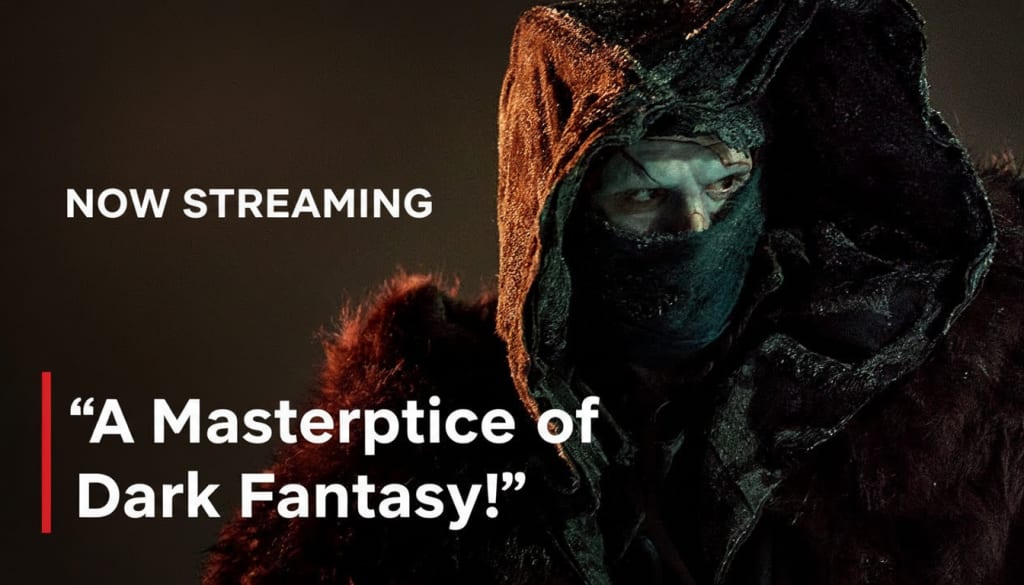
Chapter 1: The God Complex
We live in an era obsessed with optimization.
Look at your daily routine. You probably track your sleep with a watch, track your calories with an app, and track your productivity with a spreadsheet. We are constantly trying to hack our biology. We are trying to cheat exhaustion. We are trying to cheat aging. And ultimately, we are trying to cheat death.
We have convinced ourselves that if we just work hard enough, if we just "optimize" enough, we can become something more than human. We can become Gods.
But there is a dark side to this obsession. When you spend your whole life trying to be perfect, what happens to the parts of you that are flawed? What happens to the parts of you that are weak, ugly, slow, or sad?
You kill them. Or at least, you try to.
This is the hidden psychological trap of the modern world. And this is exactly why Guillermo del Toro’s 2025 adaptation of Frankenstein is the most important film of the year. It is not a movie about a green creature with bolts in his neck. It is a movie about you. It is a movie about our collective arrogance, and the terrifying price we pay for trying to leave our humanity behind.
Chapter 2: The History of Our Arrogance
To understand why this movie matters in 2025, we have to go back to 1816.
The Year Without a Summer.
Mary Shelley, a young girl of only 18, was stuck indoors due to a volcanic winter. The Industrial Revolution was just beginning. Factories were rising. The sky was turning black with coal smoke. Science was promising to solve all of humanity's problems. There was electricity in the air—quite literally. Scientists were experimenting with "Galvanism," using electric currents to make dead frog legs twitch.
The world was drunk on the idea that Science could conquer Nature.
In that dark, cold summer, Shelley wrote Frankenstein. She didn't write it to scare people. She wrote it as a warning. She looked at the scientists of her day men who thought they could control life and death—and she asked a simple question: What happens when you succeed?
Victor Frankenstein is not a villain in the traditional sense. He is a genius. He is a visionary. In today's world, Victor Frankenstein would be on the cover of Forbes magazine. He would be giving TED Talks. He would be the CEO of a tech giant in Silicon Valley, promising to cure death or merge our brains with the cloud.
He represents the peak of human ambition. He wants to create life without the messiness of birth. He wants to create perfection.
But when his creation opens its eyes... Victor runs away.
Chapter 3: The Trap of Perfection
Why does Victor run?
This is the question that unlocks the "Matrix" of our modern society. Victor doesn't run because the monster is trying to kill him. In the beginning, the creature is innocent. It reaches out a hand. It wants love. It wants a father.
Victor runs because the creature is ugly.
Because it is imperfect. Because it reflects the grim reality of biology—blood, guts, stitches, and chaos. Victor wanted the glory of being a God, but he couldn't handle the responsibility of being a Father.
In 2025, we are all Victor Frankenstein.
Look at how we treat our digital lives. On Instagram and LinkedIn, we curate a version of ourselves that is stitched together. We filter out the acne. We crop out the messy room. We delete the posts that don't get enough likes. We are building a Digital Monster a version of ourselves that looks successful, happy, and perfect.
But deep down, we are terrified. We are terrified that people will see the stitches. We are terrified that the world will see us for who we really are: lonely, confused, and imperfect humans.
We reject our true selves just like Victor rejected his creature. And that rejection creates a monster.
Chapter 4: The AI Reflection
There is another layer to this film that makes it terrifyingly relevant to 2025: Artificial Intelligence.
We are currently birthing a new intelligence. We are building LLMs and neural networks. We are, essentially, stitching together the collective knowledge of humanity to create a new form of life.
And just like Victor, we are doing it because we can, not because we should.
Del Toro’s film explores the loneliness of the creation. Imagine being brought into a world that hates you. Imagine having a father who is disgusted by you. The "Monster" in Frankenstein learns to speak, learns to read, and learns to feel complex emotions. But everywhere he goes, he is met with stones and fire.
Society creates the monster.
If you treat a child like a beast, they will eventually become one.
If you treat a segment of society like they are worthless "NPCs" or "failures," they will eventually burn the village down to feel its warmth.
In our modern economy, if you are not "useful," you are discarded. If you lose your job to automation, if you fall behind on your EMIs, if you don't fit the mold of the "successful worker," the system treats you like the wretch. It casts you out.
This movie challenges that system. It asks us to look at the things we have thrown away—the homeless, the addicts, the failures, the ugly—and realize that they are not monsters. They are the victims of a society that only values perfection.
Chapter 5: The Return to Humanity
So, what is the solution? How do we escape this trap?
Guillermo del Toro is known for his sympathy for monsters. In The Shape of Water and Pinocchio, he shows us that the "freaks" are often more human than the normal people.
Frankenstein (2025) is a call to stop running.
We need to stop running from our own imperfections. We need to stop trying to "optimize" every second of our lives. We need to accept that being human means being messy. It means aging. It means failing. It means having scars.
The system wants you to hate your scars because if you hate yourself, you will buy things to fix yourself. You will buy the cream, the car, the course, the surgery. Self-hatred is the fuel of the capitalist engine.
But if you can look in the mirror—scars and all—and love what you see, you break the wheel.
When you watch this movie, don't look at the creature with fear. Look at him with empathy. He represents the part of you that you have locked away. The part of you that is crying out for attention while you are busy working 12 hours a day to please a boss who doesn't care about you.
Victor Frankenstein died chasing glory. The creature lived on in misery.
Don't be Victor. Don't chase a fake version of perfection until it destroys you.
Embrace the stitches. Embrace the chaos. Embrace your humanity.
Because in a world full of artificial perfection, being real is the only rebellion left
About the Creator
Bolt Movies
Bolt Movies delivers spoiler-free movie reviews, film breakdowns, and rankings—from Marvel hits to indie gems. Sharp, honest, and insightful. Follow for expert takes, cinematic deep dives, and verdicts worth watching.🎬✅
Keep reading
More stories from Bolt Movies and writers in Geeks and other communities.
Silver Screen Magic with Mae West
American actress and singer Mae West became a popular film actress during the Great Depression. She started entertaining in vaudeville, then performed on Broadway, and finally went to Hollywood. She signed up with Paramount Pictures and made her debut in the 1932 film “Night After Night.” She also starred in musicals, comedies, and crime dramas. The American Film Institute named her one of the best classic Hollywood actresses.
By Rasma Raisters6 days ago in Geeks
The Conspiracists Is Less About Secrets and More About Us
Conspiracy theories used to live on the fringes. Today, they thrive in comment sections, podcasts, and algorithm-fed echo chambers. The Conspiracists steps directly into this cultural minefield—not to mock it, glorify it, or neatly explain it away, but to sit uncomfortably inside it. What emerges is a film that feels eerily familiar, disturbingly intimate, and surprisingly human.
By David Cookabout 7 hours ago in Geeks


Comments
There are no comments for this story
Be the first to respond and start the conversation.