
The Member of the Wedding by Carson McCullers
Why It's a Masterpiece (Week 52)

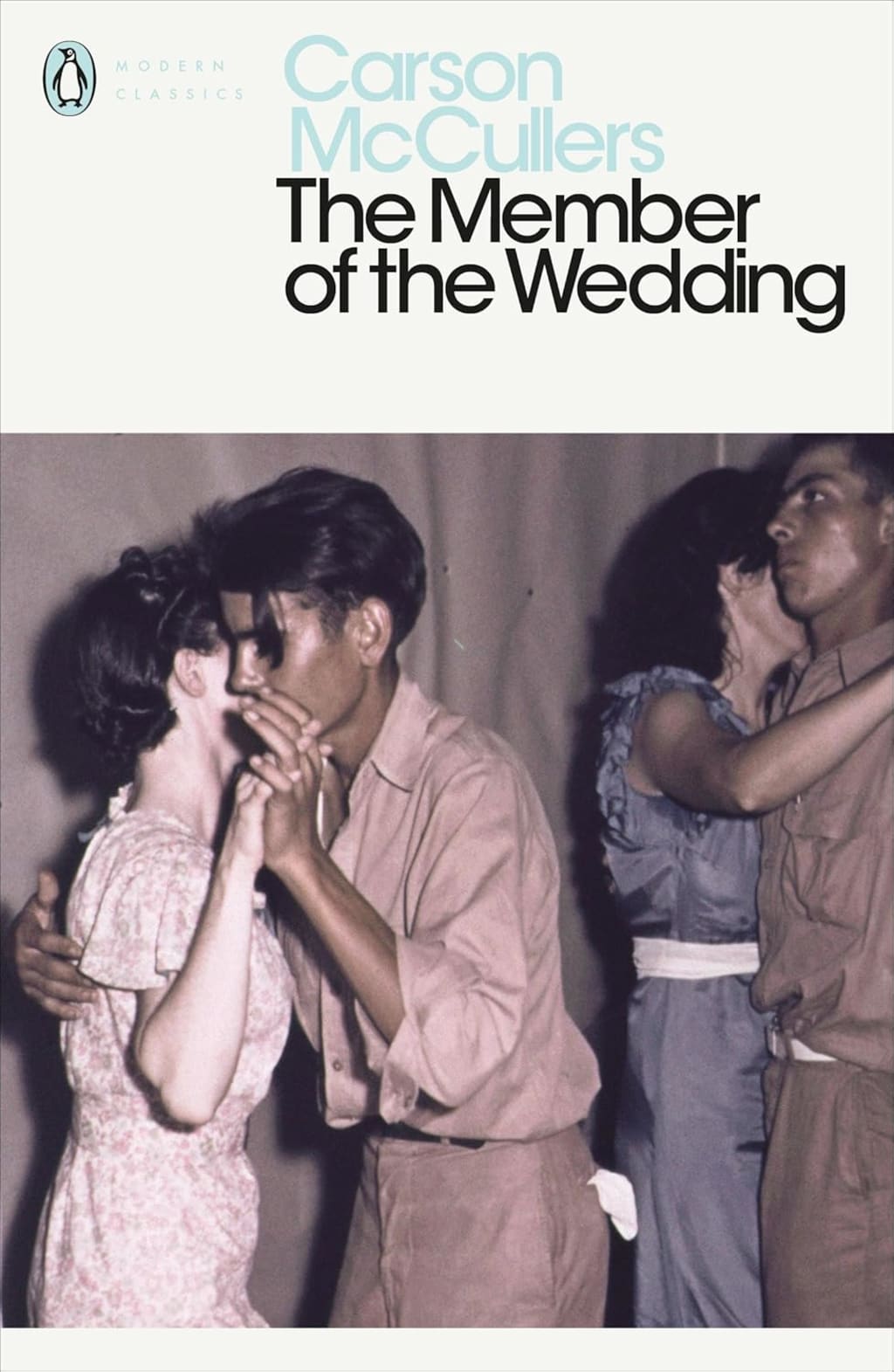
Carson McCullers’ novel, "The Member of the Wedding," was first published in 1946, marking a significant addition to the literary landscape of the mid-20th century. McCullers, already acclaimed for her earlier works such as "The Heart Is a Lonely Hunter," continued to explore themes of loneliness, belonging, and the tumultuous journey of adolescence in this novel.
"The Member of the Wedding" emerged during a period when American literature was deeply engaged with issues of identity and societal roles, reflecting the post-war era’s preoccupations. The novel received considerable praise upon release, with critics lauding McCullers’ sensitive and profound portrayal of a young girl’s inner world.
Its success was further solidified by a Broadway adaptation in 1950 and a subsequent film in 1952, both of which brought McCullers’ characters to a broader audience. The novel’s publication not only reinforced McCullers’ reputation as a significant voice in American literature but also provided a poignant narrative that resonated with readers’ own experiences of growth and self-discovery.
Plot

"The Member of the Wedding" centres around twelve-year-old Frankie Addams, who feels disconnected and restless in her small Southern town. Set during a languid summer in the 1940s, the story unfolds in the Addams household, where Frankie lives with her widowed father. Her life is filled with a sense of longing and dissatisfaction; she feels neither child nor adult, caught in the awkward transition of adolescence. Frankie’s world is primarily occupied by two figures: her six-year-old cousin John Henry West and the family’s African American housekeeper, Berenice Sadie Brown.
The novel’s pivotal event is the impending wedding of Frankie’s older brother, Jarvis, to his fiancée, Janice. Frankie becomes obsessed with the wedding, convinced that it will be her ticket to belonging. She dreams of escaping her mundane existence and joining her brother and his bride on their travels, thus becoming a part of something larger and more meaningful. This fixation grows as the wedding day approaches, fuelling her fantasies and leading to a series of emotional upheavals.
Frankie’s conversations with Berenice and John Henry reveal much about her inner turmoil. Berenice, a wise and compassionate figure, shares her own experiences of love and loss, attempting to guide Frankie through her confusion. John Henry, with his childlike innocence, serves as a contrasting presence to Frankie’s turbulent emotions.
As the wedding day arrives, Frankie’s dreams of inclusion and escape are starkly shattered. She realises that she is not, and never will be, a part of the newlyweds’ life. This devastating realisation forces Frankie to confront her sense of self and place in the world. In the aftermath, she attempts to run away but is quickly brought back home, symbolising her inescapable connection to her roots and her need to find her own path within the confines of her reality.
Into the Book

Frankie’s quest for identity and belonging is the novel’s central theme. Her longing to be a “member” of the wedding signifies her deeper desire to find a place where she fits in. McCullers portrays Frankie’s struggle through her vivid imagination and desperate actions. Frankie’s assertion, “They are the we of me,” encapsulates her yearning to be part of a collective, to escape her isolation and loneliness. Her fixation on the wedding represents her hope to transcend her current existence and find meaning in her life.
The theme is further exemplified by Frankie’s relationship with Berenice. Berenice’s stories of her four husbands reflect different facets of belonging and identity. Her advice to Frankie, to "accept whatever comes," contrasts sharply with Frankie’s idealistic aspirations, highlighting the generational and experiential gap between them.
Frankie’s declaration, “They are the we of me,” epitomises her desperate need to belong. She views the wedding as her salvation, a way to escape her perceived insignificance. Her fantasies of travelling with Jarvis and Janice are filled with idealistic notions of inclusion and adventure, illustrating her immature understanding of relationships and belonging.
Berenice’s role is crucial in this theme. She represents a grounded and experienced perspective, contrasting with Frankie’s naivety. Her advice, “You can’t just go ‘round thinking the world is your private property,” serves as a reality check for Frankie, urging her to find a sense of belonging within her current circumstances rather than in unattainable fantasies.
“The trouble with me is that for a long time I have just been an I person. All people belong to a We except me. Not to belong to a We makes you too lonesome.”
- The Member of the Wedding by Carson McCullers
The novel poignantly captures the pain and confusion of adolescence. Frankie’s emotional volatility, her feeling of being “an unjoined person,” and her longing for change all speak to the universal experience of growing up. McCullers uses the summer setting to mirror Frankie’s internal heat and restlessness. The oppressive Southern heat serves as a backdrop to her turbulent emotions, amplifying her sense of entrapment and urgency.
Frankie’s interactions with John Henry and Berenice illustrate her struggle to reconcile her childhood innocence with her burgeoning awareness of the adult world. John Henry’s tragic fate, succumbing to meningitis, underscores the vulnerability and unpredictability of life, reinforcing the harsh realities Frankie must come to terms with as she matures.
Frankie’s internal struggle is vividly depicted through her fluctuating emotions and actions. Her feeling of being “an unjoined person” captures the essence of adolescent angst. This sense of not fitting in anywhere drives her to cling to the wedding as a solution to her identity crisis.
The oppressive summer heat mirrors Frankie’s inner turmoil. McCullers writes, “The summer was too long. It was like a great race between the sun and time, and the summer was winning.”. This description not only sets the mood but also reflects Frankie’s impatience and restlessness, typical of adolescence.
John Henry’s death adds a poignant dimension to this theme. His innocence and untimely demise highlight the fragility of life and the abrupt end of childhood. Frankie’s grief and subsequent realisation that life is unpredictable and often harsh contribute to her painful journey towards maturity.
“She was afraid of these things that made her suddenly wonder who she was, and what she was going to be in the world, and why she was standing at that minute, seeing a light, or listening, or staring up into the sky: alone.”
- The Member of the Wedding by Carson McCullers
Through Berenice, McCullers explores themes of racism and social inequality in the American South. Berenice’s experiences reflect the systemic racism and personal injustices faced by African Americans. Her complex character, filled with wisdom and resilience, provides a stark contrast to Frankie’s naive outlook. Berenice’s recounting of her marriages, particularly to her abusive husband Ludie, sheds light on the intersectionality of race and gender oppression.
Berenice’s presence in the Addams household also highlights the intimate yet unequal relationships between black servants and white families in the South. Despite her close bond with Frankie and John Henry, Berenice remains an employee, constrained by societal norms and prejudices. Her perspective offers a critical commentary on the social hierarchies and injustices of the time.
Berenice’s character embodies the racial tensions and social inequalities of the South. Her recounting of her marriages, especially to Ludie Freeman, reveals the intersecting oppressions of race and gender. She says, “Ludie made me feel like a real person. But after he died, I was back to being nothing.”. This statement underscores the precariousness of black women’s social status and the profound impact of personal relationships on their sense of self.
The dynamics in the Addams household further illustrate these themes. Despite her close relationship with the family, Berenice is acutely aware of her place as a servant. Her bond with Frankie and John Henry is genuine, yet it is always tempered by the social boundaries of the time. Berenice’s complex position in the household serves as a microcosm of the broader racial and social hierarchies in the South.
“There are all these people here I don't know by sight or by name. And we pass alongside each other and don't have any connection. And they don't know me and I don't know them. And now I'm leaving town and there are all these people I will never know.”
- The Member of the Wedding by Carson McCullers
Why It's a Masterpiece

"The Member of the Wedding" is considered a masterpiece for several reasons. Firstly, McCullers’ ability to capture the nuanced emotions and inner life of a young girl on the brink of adolescence is unparalleled. Her prose is both lyrical and precise, painting a vivid picture of Frankie’s world and the broader societal context. The novel’s exploration of universal themes such as identity, belonging, and the pains of growing up resonates deeply with readers, transcending time and place.
McCullers’ characterisation is another hallmark of the novel’s excellence. Each character, from the restless Frankie to the wise Berenice and the innocent John Henry, is meticulously crafted and multidimensional. Their interactions and individual stories weave together to create a rich, immersive narrative. The emotional depth and authenticity of these characters enable readers to connect with their experiences on a profound level.
Moreover, McCullers’ handling of social issues such as racism and inequality is both subtle and powerful. Through Berenice, she offers a poignant critique of the social order, highlighting the complexities and injustices faced by African Americans in the South. This social commentary, intertwined with the personal struggles of the characters, adds a layer of depth and relevance to the novel.
Conclusion

We continue to read "The Member of the Wedding" today because its themes of identity, belonging, and the pains of growing up remain universally relevant. McCullers’ masterful storytelling and deep empathy for her characters create a timeless narrative that resonates with readers of all ages. The novel’s exploration of social issues, particularly racism and inequality, also provides valuable insights into the historical and cultural context of the American South, making it a rich and enduring work of literature.
Next Week: Under the Volcano by Malcolm Lowry
About the Creator
Annie Kapur
I am:
🙋🏽♀️ Annie
📚 Avid Reader
📝 Reviewer and Commentator
🎓 Post-Grad Millennial (M.A)
***
I have:
📖 280K+ reads on Vocal
🫶🏼 Love for reading & research
🦋/X @AnnieWithBooks
***
🏡 UK
Keep reading
More stories from Annie Kapur and writers in Geeks and other communities.
Book Review: "The Days of Abandonment" by Elena Ferrante
Now, you're probably thinking about why I'm only reading this now. To be honest I think I have only ever read one other Elena Ferrante novel in my life and I remember disliking it. Her female protagonists are often obsessed with the men they are with and are two-dimensional characters who complain about practically everything. Unfortunately, this was no different. I have been trying desperately to enjoy this author because everyone else does. But her storylines are only average and her characters are often insufferable. So, unfortunately I think I'm going to stop reading her for a while until someone recommends something I might actually enjoy by her. I apologise.
By Annie Kapur11 months ago in Geeks
Marvel Zombie
The last entry into our 2025 superhero projects catalogue is Marvel Zombies. This was a show that was anticipated by absolutely no one and it disappeared from the public consciousness as quickly as it was released. There was nothing special about the project that made it a must see, or a must remember. In fact if anything it's a must forget.
By Alexandrea Callaghan26 days ago in Geeks
Twitter Outage
For millions of users around the world, Twitter—now known as X—is more than just a social media platform. It’s a real-time news source, a communication tool, and a digital town square. So when a Twitter outage occurs, confusion spreads quickly. Users rush to search questions like “is Twitter down?”, “is X down right now?”, or “why is X not working?” hoping for clarity. In recent years, X outages have become highly visible events, often trending across other platforms within minutes. Whether the issue lasts a few minutes or several hours, a Twitter down situation highlights how deeply embedded the platform is in daily online life. When Twitter Goes Down: What Users Experience During a typical Twitter down incident, users may encounter several problems at once. Timelines stop refreshing, posts fail to load, and notifications disappear. Some users can open the app but see blank feeds, while others are completely locked out. These moments spark a flood of searches like “is Twitter down right now?” and “Twitter not working.” As branding has shifted, the same frustration now appears under newer searches such as “is X down?”, “X down?”, or “X is down.” The name may have changed, but user expectations remain the same: instant access and real-time updates. The Role of X Down Detectors and Status Tools When users suspect an outage, many turn to tools like X down detector or Twitter down detector websites. These platforms collect real-time reports from users and visualize spikes in complaints. A sudden surge often confirms that the issue isn’t isolated. People also search for Twitter status updates, hoping for official confirmation. While X occasionally posts updates during major outages, users often rely on external sources first—especially when the platform itself isn’t accessible. Is X.com Down or Something Else? One of the most common questions during an outage is “is x.com down?” While it may appear that the entire platform is unavailable, the underlying cause can vary. Sometimes the issue affects only certain regions, mobile apps, or specific features like posting or direct messages. In other cases, users notice that third-party integrations fail. This leads to additional searches such as “X not working” or “is X down?” as people try to determine whether the problem lies with their device, internet connection, or the platform itself. Cloudflare and Large-Scale Outages Occasionally, outages are linked to infrastructure providers rather than X directly. Cloudflare, a major content delivery and security service used by many large websites, has been associated with widespread disruptions across the internet. During a Cloudflare outage, multiple platforms can experience downtime simultaneously. When this happens, searches for “Cloudflare outage” often rise alongside “Twitter is down.” These events show how interconnected modern platforms are and how a single failure point can affect millions of users at once. Grok Down: A New Kind of Concern With the introduction of AI-powered features, outages now extend beyond basic posting and browsing. Some users have reported instances of Grok down during broader X outages. When Grok, the platform’s AI assistant, stops responding, it adds another layer of frustration—especially for users who rely on it for research, summaries, or creative tasks. As X continues to expand its feature set, future outages may impact different services independently, making it harder to quickly understand what exactly is broken. Why Twitter Outages Feel So Disruptive Unlike many platforms, X thrives on immediacy. It’s often the first place people go during breaking news, global events, or emergencies. When Twitter is down, users lose access to real-time conversations and firsthand updates. This is why even short outages trigger widespread concern. Questions like “is Twitter down?” or “is X down right now?” aren’t just about inconvenience—they reflect a sudden loss of connection to the global conversation. How Users Cope When X Is Down When an X outage occurs, users often migrate temporarily to other platforms to confirm the issue or share updates. Ironically, people frequently use those platforms to say that Twitter is unavailable. In the meantime, down-detector sites, tech forums, and news outlets become the primary sources of information. For creators, journalists, and businesses, downtime can disrupt workflows and audience engagement. Scheduling posts, responding to trending topics, or managing customer communication becomes impossible until service is restored. What Outages Reveal About Digital Dependence Every major Twitter outage serves as a reminder of how dependent modern communication has become on a few centralized platforms. Whether the search term is “Twitter down?” or “X down?”, the concern is universal. While most outages are resolved relatively quickly, their impact lingers. They raise questions about platform stability, transparency, and the importance of having alternative channels for communication. Final Thoughts A Twitter outage—or X outage—is rarely just a technical hiccup. It’s a moment that exposes how essential the platform has become for news, discussion, and connection. From searches like “is Twitter down right now?” to monitoring X down detector reports, users instinctively seek reassurance and answers.
By Saboor Brohi 5 days ago in Geeks


Comments (1)
I own a copy; it's on my TBR list. And I know a little about the author, like the fact that she was so ill at one point, she could only use one finger to type this one out... Thank you for this one.