
Book Review: "The Days of Abandonment" by Elena Ferrante
2/5 - it could've been great...but the main characters were insufferable to a whole new level...


Now, you're probably thinking about why I'm only reading this now. To be honest I think I have only ever read one other Elena Ferrante novel in my life and I remember disliking it. Her female protagonists are often obsessed with the men they are with and are two-dimensional characters who complain about practically everything. Unfortunately, this was no different. I have been trying desperately to enjoy this author because everyone else does. But her storylines are only average and her characters are often insufferable. So, unfortunately I think I'm going to stop reading her for a while until someone recommends something I might actually enjoy by her. I apologise.
From the outset, Ferrante plunges the reader into Olga’s devastation. Her husband, Mario’s abrupt departure sets off a torrent of raw, unfiltered emotion that ranges between rage, despair, and self-loathing. Olga’s voice is searing and unrelenting, dragging the reader into the darkest recesses of her psyche. Ferrante’s prose captures this turmoil with unflinching honesty. Each sentence pulses with anger and pain, making Olga’s unraveling seem very real. It’s a harrowing portrait of a woman coming undone, and Ferrante’s commitment to depicting the ugliest, most uncomfortable truths of heartbreak is admirable. This, I have to admit was something that is difficult to do and so, though it wasn't really my thing - it was still something I have to respect. Unfortunately, that respect didn't last very long.
This unrelenting focus on Olga’s suffering also becomes a sticking point. The protagonist’s repetitive inner monologue grated me down. Her vacillation between moments of clarity and overwhelming self-pity feels authentic to the experience of grief but also exhausted my patience. At times, Olga’s obsessive ruminations—her fixation on Mario’s betrayal and her inability to move beyond it—become suffocating. While it’s clear that Ferrante intentions were to inhabit Olga’s fractured mental state fully, the lack of variation in her thoughts can feel monotonous and frustrating. This is added on by the monotony of her very average life. It isn't poetic in description but rather just as I would put it - 'blah'.

As a protagonist, Olga is maddeningly inconsistent. Her back-and-forth reactions—moments of resolve quickly followed by emotional collapse—make her journey feel interminable. Yet, it’s precisely this inconsistency that underscores Ferrante’s commitment to authenticity. Real grief is messy and nonlinear, and Olga’s portrayal captures that truth. Still, the sheer relentlessness of her emotional state can make her a challenging character to root for. Her flaws—her self-absorption, her inability to prioritise her children, her often irrational behavior—are laid bare, making her feel deeply human but also deeply frustrating. So even though it is something that we as readers can admire, there is something deeply stupid about the way she is conducting herself. I cannot imagine any woman would care so much that one random person exits her life. You just feel yourself saying "get on with yourself...from what we know about him, I don't think any of the readers care if he's under a bus."
Ferrante’s secondary characters, particularly Olga’s children and the enigmatic neighbor Carrano, provide moments of relief and depth. The children’s confusion and need for stability serve as a stark contrast to Olga’s turmoil, while Carrano’s quiet presence offers a glimmer of hope. These relationships add texture to the narrative, reminding the reader that life continues to unfold even in the wake of personal disaster. Having other characters around except for these two idiots was a breath of fresh air. It provided something else to look at instead of the idiocracy of Mario or the monotony of Olga. It was basically the only salvation.
In conclusion, The Days of Abandonment is a raw and unrelenting examination of heartbreak and self-reclamation. Ferrante’s mastery lies in her ability to render the messy, unvarnished truths of human emotion with precision and intensity. Yet, the novel’s unrelenting focus on Olga’s suffering and the flatness of Mario’s character detract from its impact. If I've said it once I've said it a million times: it may be a good premise on paper, but without a character to latch on to, the reader cannot get anywhere fast. So, all in all, this is an author I probably won't be bothering with from now on.
About the Creator
Annie Kapur
I am:
🙋🏽♀️ Annie
📚 Avid Reader
📝 Reviewer and Commentator
🎓 Post-Grad Millennial (M.A)
***
I have:
📖 280K+ reads on Vocal
🫶🏼 Love for reading & research
🦋/X @AnnieWithBooks
***
🏡 UK
Keep reading
More stories from Annie Kapur and writers in Geeks and other communities.
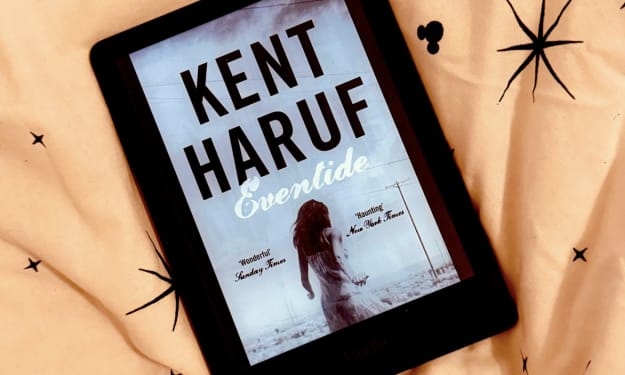
Book Review: "Eventide" by Kent Haruf
The second book in the series beginning with Plainsong had to be one of the weirdest discoveries of books I've had in a while. I waltzed through Amazon, looking at how Plainsong had gone back up in price and slowly giggling to myself about getting it on sale. Slowly scrolling down the page, I saw then that there were two more books in the series. I started to read the blurb to the next Eventide and began to panic. The two beloved characters of the first novel were now about to encounter 'tragedy'. I was beside myself. I purchased both books despite knowing I did not have the funds to do so. As of January 3rd (when this review is being written), I have finished the second book and it was incredible, heartbreaking and completely immersive. It was just as good as the first book...
By Annie Kapur11 months ago in Geeks
The Rachels - 2025
Much to my surprise, I have kept a list of the films I‘ve seen this year. I daresay it isn’t complete. There will be films that snuck in on a late night in front of the TV that I would’ve forgotten to note. Or others, that I went to watch at the cinema, but then had a red wine and promptly forgotten about. But it’s not a bad approximation of the films I’ve seen this year. In total, there are 53 films listed, so an average of one a week and one for good luck.
By Rachel Robbins26 days ago in Geeks
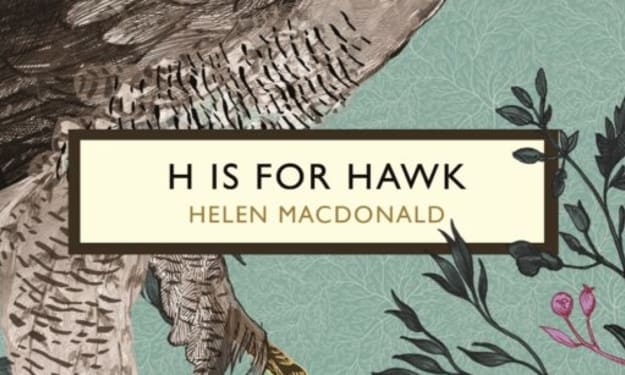
H Is for Hawk by Helen Macdonald Audiobook Review – A Soaring Journey Through Grief
Helen Macdonald’s H Is for Hawk has long been celebrated as a genre-defying memoir that blends nature writing, biography, and personal grief into a single, powerful narrative. Experiencing the book as an audiobook adds another emotional dimension, transforming the story into an intimate, almost confessional journey. In audio form, H Is for Hawk becomes not just a book you listen to, but a space you enter—one where loss, obsession, and the wildness of nature echo directly into the listener’s mind.
By Fiaz Ahmed Brohi6 days ago in Geeks


Comments (1)
Never read her work, but I was curious about the cult of personality about her. Not sure I may bother with her now...