
The Making of The Electric State: What Went Wrong with Netflix’s Most Ambitious Sci-Fi Film?
How a $300M Sci-Fi Epic Became a Hollow Spectacle
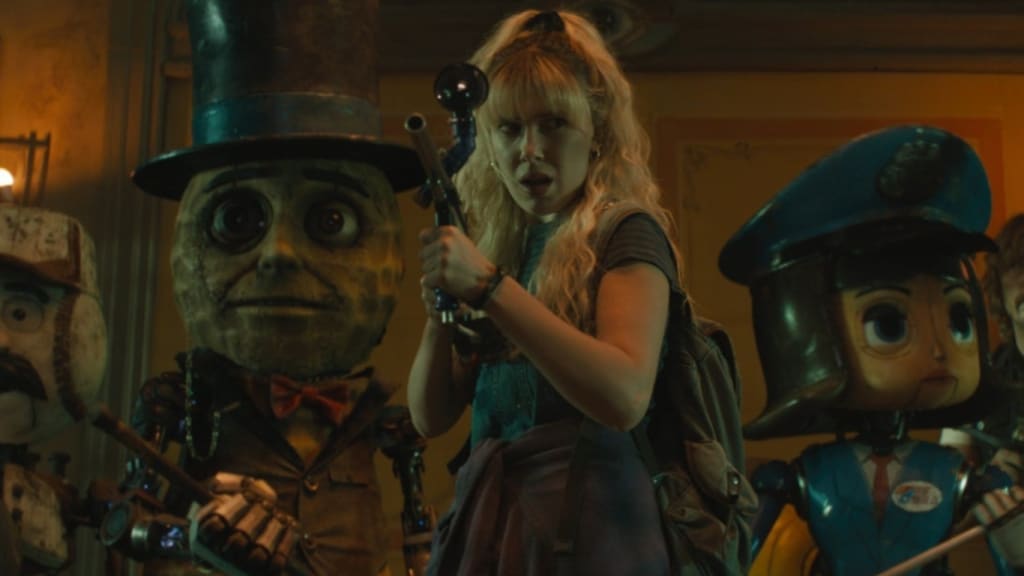
Netflix’s The Electric State had all the ingredients for a sci-fi masterpiece—an acclaimed source material, a star-studded cast, and the directing duo behind some of the biggest blockbusters of all time. Yet, despite its massive $300 million budget and grand ambitions, the film ended up feeling like a soulless, visually stunning, but emotionally hollow experience. So, what went wrong?
The Promise of a Unique Sci-Fi Vision
The film is based on Simon Stålenhag’s 2018 illustrated novel, The Electric State, which paints a hauntingly beautiful picture of an alternate 1990s America, where remnants of a collapsed technological era loom over desolate highways. Stålenhag’s work is known for its melancholic storytelling, blending personal journeys with dystopian landscapes in a way that feels both intimate and epic.
Netflix, always on the hunt for its next big hit, saw the potential for a visually striking sci-fi epic. They brought in Joe and Anthony Russo, the directors behind Avengers: Infinity War and Endgame, to helm the project. With the addition of Millie Bobby Brown, Chris Pratt, and an ensemble of Hollywood’s A-listers, expectations soared.
The Russo Brothers’ Approach: A Safe Bet?
While the Russo brothers have proven their ability to handle massive ensembles and action-heavy narratives, their track record outside the Marvel Cinematic Universe has been shaky. The Electric State was an opportunity for them to showcase a different side of their storytelling, one that required emotional depth, subtlety, and a sense of isolation.
However, instead of embracing the book’s eerie, introspective tone, the directors turned it into yet another high-stakes, quip-filled, action-packed sci-fi adventure. The film was loaded with unnecessary comedic side characters, high-energy chase sequences, and a Marvel-esque formula that felt at odds with the original material.
The Netflix Effect: Chasing Engagement Over Substance
Netflix has developed a reputation for prioritizing content that drives engagement rather than crafting deeply artistic films. While the streaming giant does release thought-provoking films from time to time, The Electric State seemed like an example of a project designed more for mass appeal than creative integrity.
Instead of allowing for slow, atmospheric world-building, the film rushes through its story, cramming in exposition and flashy set pieces at the expense of character development. It plays it safe, never truly exploring the deeper themes of loneliness, nostalgia, and the consequences of technological overreach that made the book so compelling.
The Cast: A Star-Studded But Mismatched Ensemble
On paper, the casting of Millie Bobby Brown as Michelle, the film’s protagonist, seemed like a perfect choice. After all, she has already proven herself in sci-fi projects like Stranger Things and Godzilla: King of the Monsters. However, the film gives her little room to showcase her acting chops, reducing her character to a typical rebellious teen on a mission.
Chris Pratt, playing a slovenly scavenger named Keats, delivers a performance that feels like a rehash of his usual wisecracking persona. Meanwhile, the film’s AI characters, voiced by actors like Anthony Mackie and Woody Harrelson, exist mostly to deliver comic relief rather than evoke any real emotion.
Stanley Tucci and Giancarlo Esposito, both fantastic actors, are wasted in one-dimensional villain roles. Their characters exist only to provide obstacles for the heroes, rather than being fully realized antagonists with complex motivations.
The Visuals: Stunning But Empty
There’s no denying that The Electric State is a visual feast. The towering remains of a forgotten technological era, the vast deserts filled with colossal AI remnants, and the retro-futuristic design all look spectacular. The cinematography effectively captures the desolation and beauty of the film’s setting.
But impressive visuals alone cannot carry a film. Without emotional stakes or meaningful storytelling, the beautifully crafted world feels like an elaborate backdrop rather than an integral part of the narrative. Unlike films like Blade Runner 2049 or Mad Max: Fury Road, where every frame serves the story, The Electric State often feels like it’s just showing off its CGI budget.
A Climax That Feels Predictable and Hollow
One of the biggest disappointments in The Electric State is its predictable and formulaic climax. What should have been an emotional, thought-provoking resolution instead becomes a typical Hollywood action-packed finale. There’s a large-scale battle, a last-minute heroic sacrifice, and a villainous monologue—all elements we’ve seen countless times before.
The source material’s eerie, quiet conclusion—one that leaves readers reflecting on the nature of humanity and technology—is swapped for a crowd-pleasing ending that ultimately lacks impact. It feels like the filmmakers were afraid to take risks, choosing instead to deliver something familiar and easily digestible.
Final Verdict: A Missed Opportunity
The Electric State could have been a bold, unique sci-fi film that stood out from the endless sea of big-budget spectacles. Instead, it became just another formulaic blockbuster, stripped of the depth and emotion that made its source material special.
While casual viewers might enjoy it as background entertainment, fans of Stålenhag’s book and sci-fi enthusiasts looking for something fresh will likely walk away disappointed. The film serves as yet another reminder that bigger budgets and star power don’t always translate to better storytelling.
In the end, The Electric State is a movie that looks incredible on the surface but lacks the soul needed to make it truly memorable. It’s a film built for engagement metrics rather than emotional resonance—a product of Hollywood’s current obsession with maximizing audience retention rather than creating lasting cinematic experiences.
About the Creator
Keep reading
More stories from Sangita Nandi and writers in Geeks and other communities.
Where Does Jason Sudeikis Live?
Jason Sudeikis, the talented actor and comedian best known for his roles in Ted Lasso, Saturday Night Live, and various hit comedies, has had a fascinating journey through different cities in the U.S. and beyond. His career has taken him from small-town Kansas to major entertainment hubs like New York and Los Angeles. But where exactly does Jason Sudeikis live today? Let’s explore his past and present homes, tracing his journey through the places that shaped his life and career.
By Sangita Nandi10 months ago in Geeks
Silver Screen Magic with Mae West
American actress and singer Mae West became a popular film actress during the Great Depression. She started entertaining in vaudeville, then performed on Broadway, and finally went to Hollywood. She signed up with Paramount Pictures and made her debut in the 1932 film “Night After Night.” She also starred in musicals, comedies, and crime dramas. The American Film Institute named her one of the best classic Hollywood actresses.
By Rasma Raisters6 days ago in Geeks



Comments
There are no comments for this story
Be the first to respond and start the conversation.