
The Importance of Reading “Swann’s Way” by Marcel Proust
Proust's Magnum Opus.

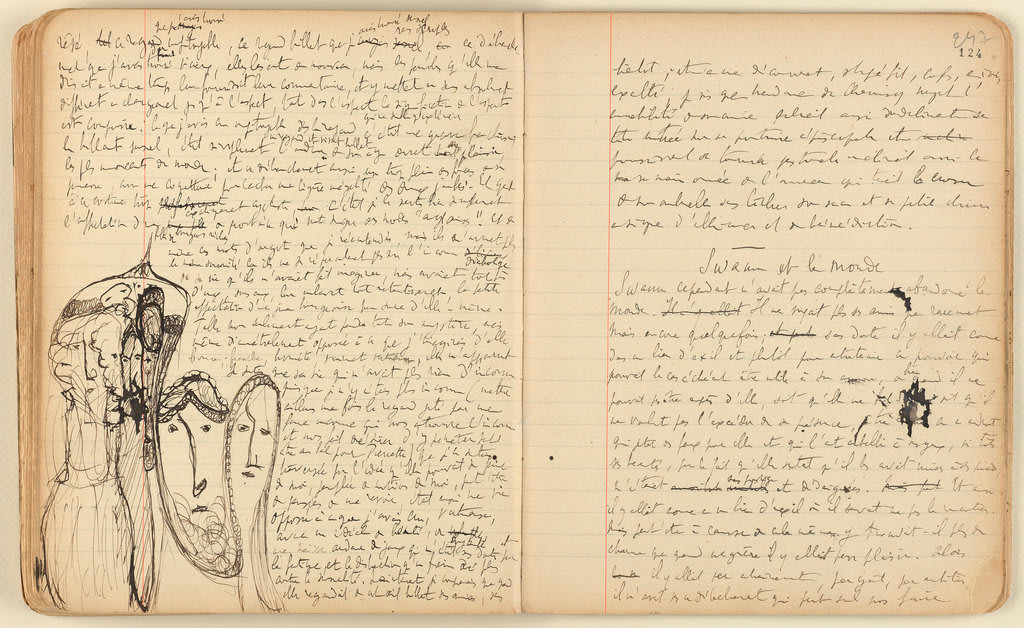
Born in the July of 1871 in France, Marcel Proust would go on to write what is considered to be one of the longest novels ever accomplished in human history. Sometimes called either “A Remembrance of Things Past” or more commonly, “In Search of Lost Time” - this book starts off with the first and possibly most famous volume - “Swann’s Way”. “Swann’s Way” is about the narrator’s memory of a man of elegance and style, a Jewish man named Charles Swann who would bring the family apricots in a basket and eventually began speaking to the narrator of a writer that he knew and the young narrator was obsessed with the idea of. But before this, we get various memories of a family who owns a home in Combray and how Charles Swann initially became a hinderance in the narrator’s life. An exercise in the futility of familial relations and a display of how one person can hinder another’s life and upbringing. This metaphorical flower of a narrator can never actually flower since Charles Swann is being entertained downstairs whilst the child narrator is therefore being deprived of his mother’s goodnight kiss and such. There is a massive importance to reading this novel today, especially if you wanted to start to understand how French Literature slowly made its way from Victor Hugo’s older and more revolutionary one into this newer one in which decadence was a slowly dying trade and people were afraid of whenever the next war may break out. The emotional maturity of this novel never ceases to amaze and enlighten me as to exactly how many emotions are actually possible for one human being.
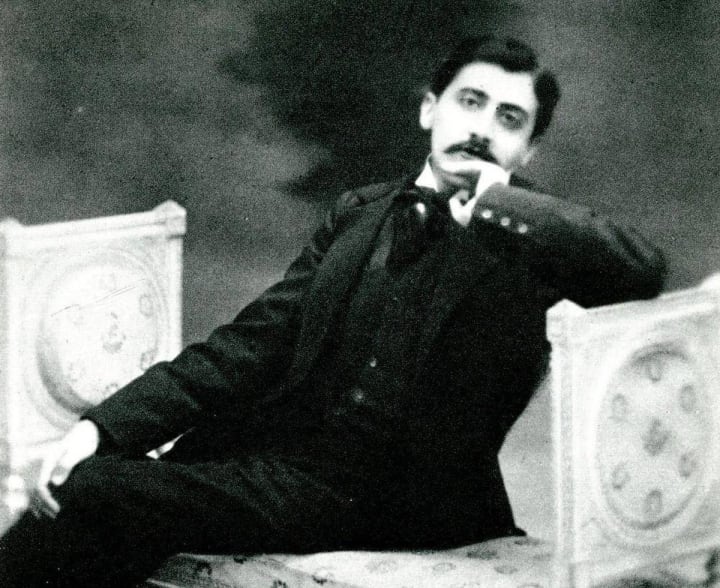
I actually first read “Swann’s Way” - or at least tried - when I was sixteen. I never said that it did not work, I simply could not get my head around all the French words in there and yet, by that time I had already read “War and Peace”. The thing about “Swann’s Way” is it isn’t just the French Language which is interspersed in the novel, it is also the French way of life and the culture of the fin-de-siecle that makes its way under the storyline and out the other end. There is a ton of philosophy and when I reread it at about twenty I think I understood it a whole lot more than I did four years before. Recently, revisiting the novel now five years’ later than the reread, I have found that there is a lot of importance to reading the book than I initially thought. Not just the characteristics of emotions, but the very idea of the decadence of life itself. Characters often embody either a trade that is sprouting or an idea that is new and progressive with some even embodying ideas and beliefs that are dying with the time. The thing is, you have to stay as close to the narrator as physically possible if you want to understand why he feels so overwhelmed and so much all the time.
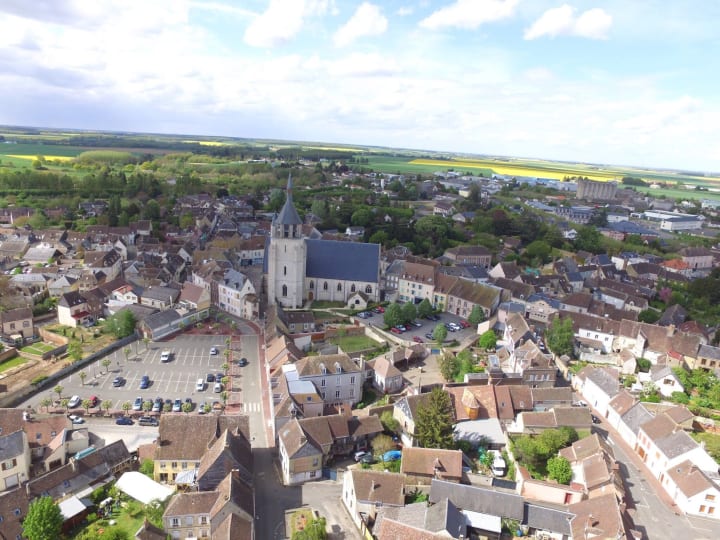
For example, the friend of the narrator who is named ‘Bloch’ is a young Jewish man that, for his insatiable appetite for criticisms upon the narrator’s own family, is asked to leave and not return to befriend the narrator and so we can really see the amount of control that the family and his elders have in his life. However, it is also suggested that there is a reason to believe some members, especially the elderly ones, of the family are anti-semitic. Again, this is a dying belief system and so, the progressive youth does not feel this way towards the Jewish man. In fact, the narrator points out that he has no idea whether his family knows that Swann is in fact, Jewish. Though he doesn’t really think it matters all that much. This dichotomy between narrator and narrative shows us that though the narrator is almost always unreliable, he has a reliability factor more than others as he is able to point of the flaws of his own circles of people - including those of which he was raised by. The hint of reliability will later go to the narrator’s head in the future volumes of “In Search of Lost Time” and make the reader once again question how far his allegiance of truth will go in order to protect those he cares most about.
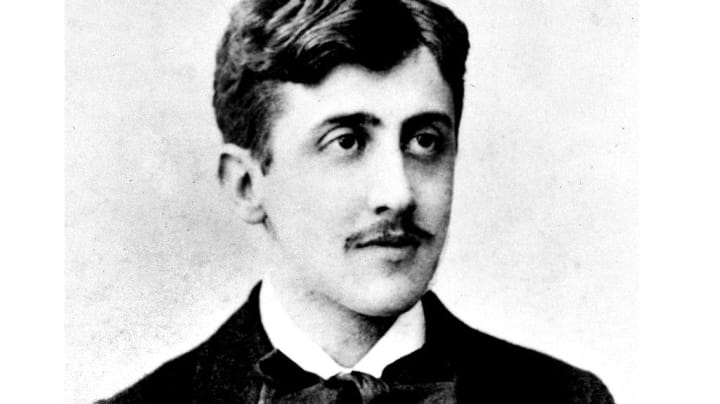
The reader can often see the extent to which emotion is dissected by the narrator and sheer requirement to feel anything at all being brought into almost any conversation whether familial, academic or even to spark any interest about the weather (this some characters call ‘interesting conversation’ - not as ‘interesting’ is used today but as ‘interesting’ as to gain the interest of the other person). The narrator constantly gives us his overwhelming state at each turnpike of the novel as he encounters and experiences more things, only at the allowance of his parents. This authority that his parents have over him has meant that every new experience he has he tends to cherish with an overflowing of feeling and passion:
“The thirst for something other than what we have…to bring something new, even if it is worse, some emotion, some sorrow; when our sensibility, which happiness has silenced like an idle harp, wants to resonate under some hand, even a rough one, and even if it might be broken by it.”
The ‘something new’ is resonant of these dreams that the narrator has in which there is a woman, and is also resonant of his first in-depth conversation with the character Charles Swann, to which he discusses an author and speculates on the family of Swann. What many people would think insignificant as a conversation with a family friend turns into a memory that cannot be forgotten, this narrator is basically showing the reader the thoughts and memories that have made him the man he is in the present who is now looking back on this encounter. He tells us this in small ‘asides’ in various parts of the narrative at points where the plot goes into or comes out of a dream state or when it does not encounter these memories recalled:
“The places we have known do not belong solely to the world of space in which we situate them for our greater convenience. They were only a thin slice among contiguous impressions which formed our life at that time; the memory of a certain image is but regret for a certain moment; and houses, roads, avenues are as fleeting, alas, as the years.”
But there is another side to reading “Swann’s Way” which makes it important to understand why we should not trust even the most reliable of narrators. In these memories, the narrator recites descriptions of things that are so far into the past that one could not possibly remember them all. Descriptions of great detail and even some greater inconsequential detail, those which bear only symbolic value and none to the furthering of the actual memory. It is a lesson on how we as readers are duped by a seemingly honest and reliable narrator into believing that everything he recites is true and biographical. Instead, what has actually happened is that we have become so connected and pitiful of the narrator that we ourselves are under the very same spell that he is put under by Swann, whom he finds intriguing, overwhelming and incredible all at once. He even suggests this very action of remembering things that have happened with exquisite detail and then it being not wholeheartedly true, a number of times throughout the narrative:
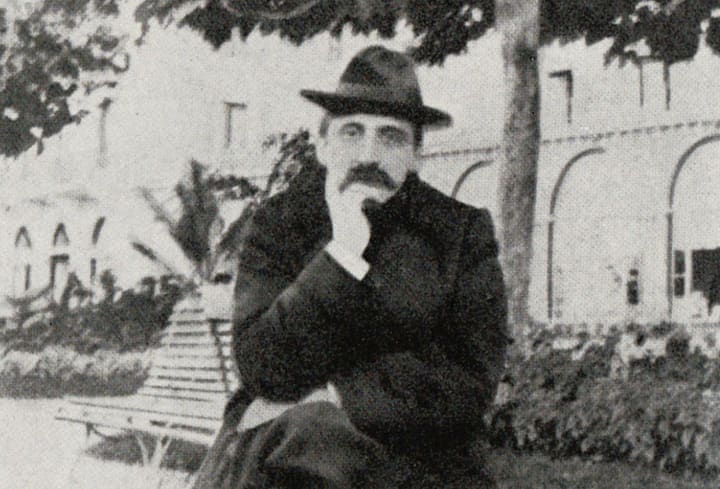
“Even in the most insignificant details of our daily life, none of us can be said to constitute a material whole, which is identical for everyone, and need only be turned up like a page in an account-book or the record of a will; our social personality is created by the thoughts of other people.”
Throughout the novel, the narrator keeps hinting at not only the fact that he can remember such inconsequential things as things that are important to his character now, but he has also been hinting at the fact that some of it may have been embellished. The question is always to what extent but the narrator quickly glosses over this in order to return us towards our more philosophical enlightenment on what he is reading or dreaming, or even conversing. The importance of reading this book is therefore for the realisation that the narrator can almost seduce the reader into believing anything, even the most distant and more shallow memories are recited from absolute fact.
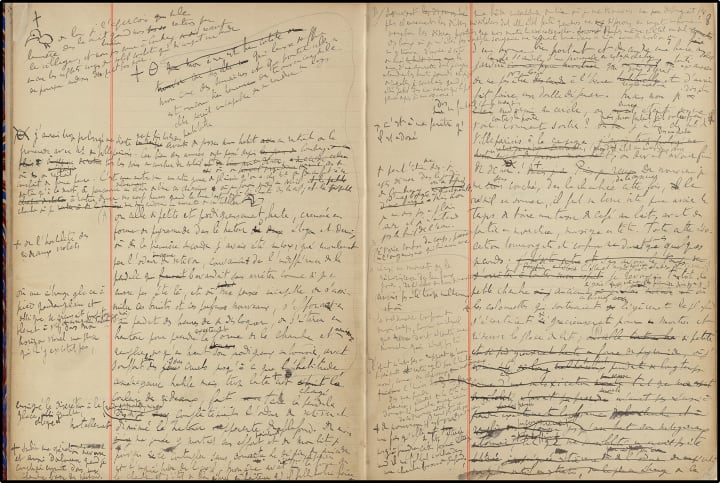
One of the biggest lessons of this entire book though is the way in which the writer treats his own social class - the richer, but not the richest, of people. To be proper in your station would always be considered to be better than someone who is acting out of a want to help another person and to the narrator - these two things coexist very rarely. Cowardice is often associated with being or becoming a gentleman of his station and therefore, we as readers have every notion to understand that this anxiety about his mother not being around him is a product of his environment and no fault of his own:
“In my cowardice I became at once a man, and did what all we grown men do when face to face with suffering and injustice; I preferred not to see them.”
What he teaches the reader about his own social class and their ironies, hypocrisies and things better left unsaid is vital into understanding why he makes friends with Bloch and later on, with Charles Swann. It presents that the narrator makes friends with those of a different class because he is trying to escape what is the banal ability for conversation of his own family with one of his family members solely discussing their own health and sometimes even their own death.
As a conclusion, we could say that the importance of reading “Swann’s Way” by Marcel Proust is to bridge that gap between the old and the new where things begin to collide in culture and manners, mixing together to create what is a man trapped between honour and progress with neither of them being able to live in this continuous cycle of revisiting a memory of a woman he cannot quite place. It is all a giant metaphor for his own anxieties about his own life. An anxiety taught to him by others.
About the Creator
Annie Kapur
I am:
🙋🏽♀️ Annie
📚 Avid Reader
📝 Reviewer and Commentator
🎓 Post-Grad Millennial (M.A)
***
I have:
📖 280K+ reads on Vocal
🫶🏼 Love for reading & research
🦋/X @AnnieWithBooks
***
🏡 UK
Keep reading
More stories from Annie Kapur and writers in Geeks and other communities.
Book Review: "You Let Me In" by Camilla Bruce
If you know me then you also know that I absolutely adore folk horror with all of my heart and more. Not just the Faustian Pact we see in the play by Christopher Marlowe and Goethe’s iconic masterpiece. But also more modern books such as: “Bellman and Black” by Diane Setterfield, “A Cosmology of Monsters” by Shaun Hamill, the modern masterpiece “Tyll” by Daniel Kehlmann and there are many more. Folk horror, I am proud to say, is making a very special comeback amongst the film scene with the films of Ari Aster becoming ever more popular and ever more folkloric, and I can only hope that this spills over into literature and we get a flood of folk horror because I will have so much more to read. Just imagine me as an anime character with those big massive heart eyes and that is pretty much what I will look like. But now you’re going to probably ask: what is folk horror? Folk horror is simple. It takes folkloric archetypes such as fairies, magic beings, faustian pacts, etc. and works them into the real world, creating a disturbing mix between the real and unreal. This is exactly what “You Let Me In” by Camilla Bruce does as well. And it does it so well that I almost put the book back down it was that repulsive.
By Annie Kapur4 years ago in Geeks
Silver Screen Magic with Mae West
American actress and singer Mae West became a popular film actress during the Great Depression. She started entertaining in vaudeville, then performed on Broadway, and finally went to Hollywood. She signed up with Paramount Pictures and made her debut in the 1932 film “Night After Night.” She also starred in musicals, comedies, and crime dramas. The American Film Institute named her one of the best classic Hollywood actresses.
By Rasma Raisters4 days ago in Geeks
How Lakshya hit the bullseye with The Ba***ds of Bollywood
Lakshya has no qualms admitting that he is a boring guy off set with not much happening around him. “The only fun that I have is when I prepare for characters and shoot,” says the actor, who goes only by his first name. “In the last few days, I have been trying to discover the psyche of the character I am playing. That is the exciting part for me… when I have to play a different person and live a character,” he tells Forbes India in the middle of a hectic 12-hour film shoot.
By Dena Falken Esq5 days ago in Geeks



Comments
There are no comments for this story
Be the first to respond and start the conversation.