
The Golden Girls' Lesson on Personal Responsibility
The ladies brought the point home in one episode

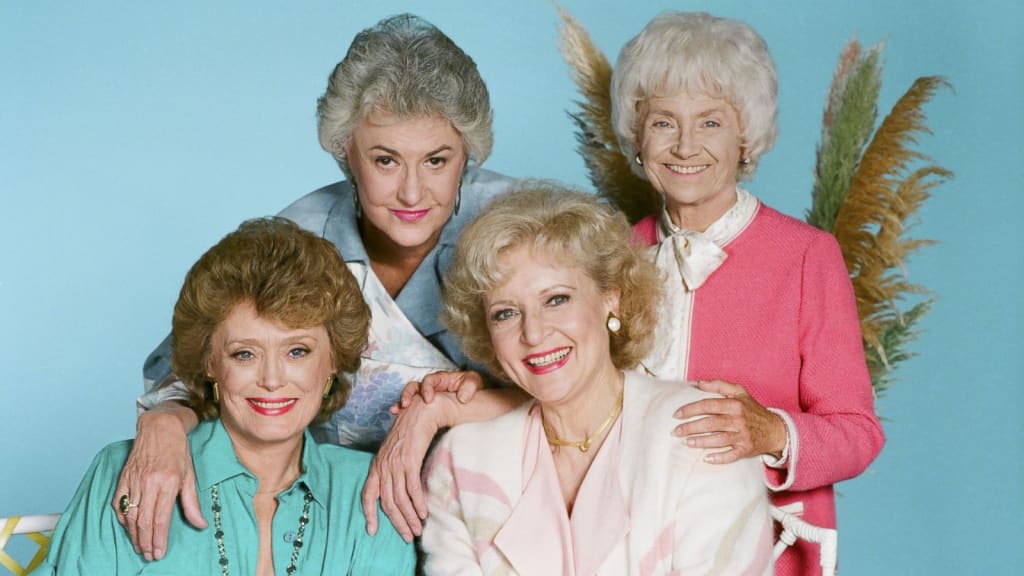
The Golden Girls subtly pushed a truth about whether parents are to blame for the misfortunes of their children and whether someone should diet for another person or not with a hard lesson; it's about personal responsibility.
In the season six episode, "What A Difference A Date Makes," the ladies face various challenges. The A plot is a Dorothy centric story, which brings a former high school flame to Miami to woo her. Eventually, it pits her against her mother, Sophia.
Likewise, the B plot is focused on Blanche. Her anniversary is nearing and she decides to diet in order to fit into her wedding dress. Comedic antics ensue as the regimen deprives her of food.
There is comedy in both stories, this was a sitcom in the early 1990s after all, but the writers made sure to drive home the serious points they wanted to make.
By using the laughs, some of the lessons might have been obstructed. However, the actresses were able to deliver the sermon with panache and make sure that it was relayed to the audience.
And the choice of the characters was no mistake or because of contractual necessity. Rather, the writers knew that the audience would be able to connect with what they were saying via Dorothy and Blanche. Two characters that needed these lessons.
Personal responsibility is imperative. Laying the blame for things or doing something for someone else is not going to end well.
---
Dorothy's story starts with a bit of a trope. John Neretti, who stood her up on prom night, is in Miami and asked her on a date. She intends to exact her revenge by showing that she's been living well without him.
When he comes to pick her up, Dorothy realizes that she's still attracted to him. She tells Rose that she will get her revenge on him the next morning. The two leave the house.
The next time we see them is at a Medieval restaurant. John and Dorothy are having a great time, their rapport is easy. There is a jester in the background, imagery that suggests there is going to be a reveal that someone kept them apart for many years.
Indeed, when John brings Dorothy home, they have a conversation about the upcoming prom that she is chaperoning. He volunteers to come as her date. She shoots back that she wants to make sure that he shows up this time.
It is here that he tells her that he showed up for their first prom. However, Sophia took one look at him and sent him away. This sets off a chain reaction to the story.
Before the revelation, Dorothy hands John her house key. This seems like an odd action at first until it is viewed as a metaphor. Once she learns about her mother sending him away, the blame for her bad life is laid at her mother's feet.
After a good night kiss, John hands the keys back to Dorothy. The metaphor complete, she is responsible for the choices that she made in her life.
When she enters the house, the first thing Dorothy does is blame Sophia for sending John away all those years ago. Her mother acknowledges that she did send him away because he wasn't good enough.
"What's the big deal?" Sophia said.
"Stanley Zbornak, ma. That's the big deal. When John didn't show up that night, I lost all my self-esteem. And when Stan asked me out two weeks later, I said yes because I didn't think I could do any better. That's why I went to that drive-in movie with Stan, and that's why I got pregnant. And that's why I got married." Dorothy said.
This exchanges places the blame for Dorothy marrying and staying with known cheater, Stan, squarely on Sophia. In her view, Sophia sending John away sent her down a path of unhappiness.
That line of logic is used a lot for people who claim that they could have made better choices than their parents. Except, this logic forgoes the fact that they still made choices.
Something that Dorothy acknowledges as the episode comes to an end. After her date with John, he tells her that he always wanted to thank Sophia for sending him away, it was a turning point in his life. She has a realization and goes into the house.
Sophia is on the couch and Dorothy apologizes to her. She says that her choices are her own, if her life didn't turn out great, then she needs to accept accountability for it.
This story hits the theme of person accountability a bit harder than the Blanche dieting story.
---
Blanche's story is a bit more subtle about hitting the theme. The point comes across just as strong. Writers and producers used a bit of symbolism to drive home the message.
With her wedding anniversary approaching, Blanche decides to go on a diet. She wants to fit into her wedding dress, something that she has always been able to do.
She does the "Shake Diet," where she is allowed to consume two shakes and a sensible meal every day. In the 1980s, this was a trendy weight loss plan and millions of people tried it.
However, Blanche was destined to fail with this diet. She was depriving herself of foods that she loved. Her reasoning was that she wanted to be beautiful for the people around her, not herself.
The story starts with her seeming to be ok with the decision to diet. But as she throws away the junk food, there is a longing in her eyes. Blanche does not want to diet, she is doing it for outside influences.
When Dorothy asks how the diet is going, Blanche says fine. Then she launches into an analogy of chocolate cake. As she speaks, her eyes indicate that she really wants the treat that she is talking about.
Because this was not something she wanted to do for herself, Blanche begins to get angry. It climaxes with her shaking Rose after the latter eats her sensible meal and drinks her shake.
By this point, she is so delusional with anger and hunger that it's almost as if she has no idea what she is doing. Once she comes to grips with everything, she decides that it's fine because her anniversary is the next day. Because she is doing this for outside adulation, she lets out the frustration on her friend.
In the next scene that she is in, Blanche is in a red dress. Rose is surprised that her friend was married in red. The show's explanation is that the character would not have been able to keep a straight face walking down the aisle in a white dress.
However, red symbolizes looking for stimulation. In Blanche's case, she wants to be complimented and other people to shower her with affection. She is seeking positive reinforcement from others.
Take this line:
"George would be so proud of me."
Notice that she is not proud of herself. Her deceased husband is proud of her for fitting into the wedding dress.
When she turns around to walk away, it is revealed that the dress isn't fully zipped up. The motivation for her diet wasn't right, so it failed. Blanche needed to diet for herself, to be proud of herself.
Personal accountability is an imperative part of life. By using laughs and two different storylines, The Golden Girls brought home that point with grace.
About the Creator
Edward Anderson
Edward writes queer led stories that show that the LGBTQIA+ characters lives are multifaceted.
Keep reading
More stories from Edward Anderson and writers in Geeks and other communities.
No One Mourns The Wicked Reveals Glinda's Sad Fate
"And goodness knows the wicked's lives are lonely. Goodness knows the wicked die alone. It just shows when you're wicked, you're left only on your own," Glinda sings during the first song in the musical Wicked. To those gathered, and even to the audience, she seems to be singing about the Wicked Witch of the West, aka Elphaba.
By Edward Anderson3 months ago in Geeks
No Other Choice (2025)
It is only February, so other films may well surpass “No Other Choice”, but I think this is the best film I’ve seen so far this year. And that surprises me, because, it is a subtitled film and while I am pretentious enough to choose to watch foreign-language films, I was also very tired and that was an extra commitment from me. But more importantly, let me warn you, this film is gruesome and violent. There were times I had to turn away from the screen to avoid the worst of it (including some self-inflicted dentistry).
By Rachel Robbins22 days ago in Geeks
War from Swords to Satellites
War has been a part of human history for thousands of years. From ancient battlefields where warriors fought with swords and shields to today’s technologically advanced conflicts monitored by satellites, warfare has changed dramatically. The evolution of war reflects the development of human societies, technologies, and political systems.
By shaoor afridiabout 13 hours ago in Geeks
The BAFTA Awards
By now, in a stunning departure from recent years, most of the world is aware of what happened at the BAFTA film awards. Social Media Headlines will tell you the bare bones: that John Davidson, a Tourette's Syndrome advocate, shouted a racial slur at two Actors of Colour, Michael B Jordan and Delroy Lindo.
By Natasja Rose3 days ago in Psyche




Comments
There are no comments for this story
Be the first to respond and start the conversation.