
The Future of AI: Building Agents for Digital Collectivization and Digital Revolution
Harnessing Collective Intelligence and AI for Cognitive Optimization and Digital Revolution

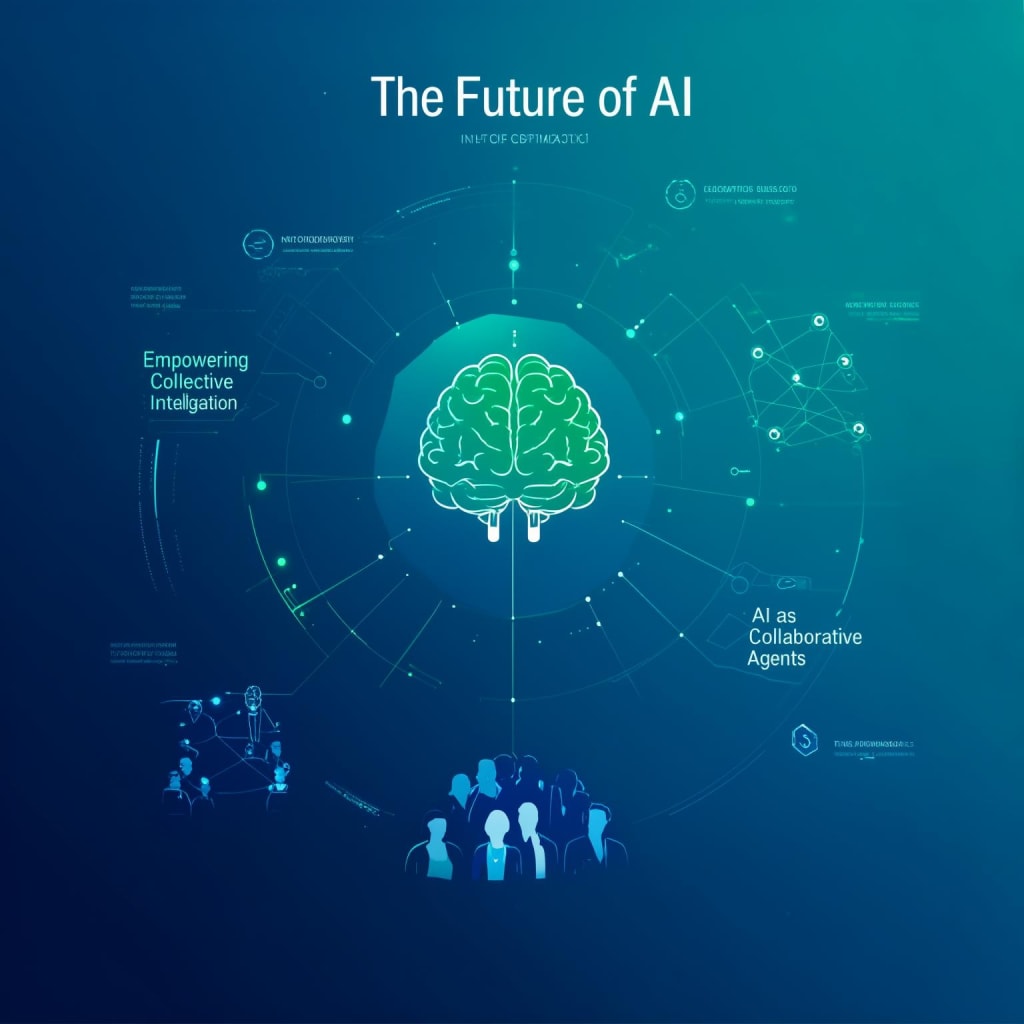
Imagine a future unfolding across the digital landscape, a place where minds don't just connect – they truly *coalesce*. This isn't mere networking; it's the forging of a collective consciousness, sparked by the very frontiers of advanced AI. In the midst of today's dizzying AI revolution, where sophisticated digital entities are rapidly reshaping the contours of our online existence, a project steps forward with a heartbeat unlike any other: Maximgrad. It draws an unexpected, even provocative, breath of inspiration from the Soviet era – not to resurrect its shadowed past, but to radically redefine digital collectivism and explore how, together, we might elevate the very act of human thought. Let's peel back the layers, exploring the intricate craft behind building these intelligent systems, the philosophy weaving through their design, and the deep currents that animate audacious initiatives like Maximgrad.
So, who are these digital inhabitants we're calling AI agents? Forget the idea of simple tools just following orders. Picture them, instead, as nascent digital beings in their own right. They possess the remarkable capacity to learn from the world around them, twist and adapt their own behaviour, and actively pursue complex goals. Building them feels less like wrestling with a purely technical puzzle and more like unlocking entirely new dimensions of productivity, sharpening our collective decision-making edge, and weaving a far richer, more collaborative digital tapestry. As the lines between human lives and technology blur ever further, the sheer potential of intelligent agents working *in genuine partnership* with us, amplifying our capabilities, holds a promise that truly stirs the soul.
Maximgrad enters this stage, unveiling an ecosystem purposefully built to echo, in a fresh digital form, that powerful spirit often associated with Soviet collectivism – a sharp, unwavering focus on the strength of the group over the individual when pursuing shared aims. Its core belief is disarmingly simple, yet carries immense power: pooled intelligence, when truly unleashed, can achieve cognitive leaps far beyond the reach of any single mind alone. Through the lens of AI, Maximgrad envisions a space where minds converge – a vibrant digital commons where users contribute their insights, tackle challenges side-by-side, and collectively refine their cognitive abilities. This isn't some abstract notion; picture a user grappling with a particularly stubborn coding challenge. Instead of relying solely on their personal agent or sifting through fragmented, isolated online forums, Maximgrad's architecture could allow their agent to tap into a vast, shared well of collective intelligence. It might draw on code snippets scattered across the network, parse debugging logs from countless other users (or their agents) who've faced similar hurdles, and synthesize insights born from shared struggle. The collective 'mind' swiftly digests this diverse data, offering up a refined, nuanced solution far more comprehensive than any single agent could realistically conjure alone. This concrete scenario paints a vivid picture of how digital collectivization aims to translate shared effort directly into enhanced outcomes, benefiting both the individual contributor and the larger group.
Translating the very soul of Soviet-era collectivism into a digital framework like Maximgrad runs far deeper than simple philosophical nods; it crystallizes into tangible, deliberate design choices. Consider feature development, which might heavily favour tools that actively cultivate shared workspaces and make contributions across the entire network utterly transparent, consciously pushing back against the notion of rigid individual "ownership" over specific pieces of code or data. Success within this ecosystem isn't measured purely by individual user output, but rather by the collective advancement of knowledge or the enhancement of the group's overall problem-solving muscle. Imagine a function where numerous user-agents automatically donate processing power and data fragments to a shared model, working together to fine-tune a particularly complex predictive algorithm. The entire collective reaps the rewards of that improved model, perhaps gaining access to sharper insights for future tasks. It's about constructing digital architecture that actively incentivizes contributions to the whole, seeing individual activity as a vital thread woven into the broader, richer tapestry of collective intelligence.
The technical bedrock supporting Maximgrad largely rests upon the robust, versatile shoulders of Python, a language celebrated for its sheer flexibility and inviting accessibility. This wasn't a casual choice; it's a strategic decision aimed squarely at empowering a wide spectrum of developers to contribute the foundational scripts and components that keep this intricate ecosystem humming. By anchoring itself in Python, Maximgrad deliberately lowers the barrier to entry, flinging its doors open to a diverse community and actively cultivating a spirit of shared creation that resonates deeply with its collectivist ambitions.
As we dive deeper into the fascinating challenge of weaving AI agents into the very fabric of our digital lives, certain fundamental principles invariably rise to the surface. Standing prominently among them is the undeniable necessity of **adaptability**. AI agents cannot, and must not, be static structures; they must possess the inherent capacity to learn, to morph, and to reshape themselves in response to their interactions and the ever-shifting currents of their environment. This innate plasticity isn't merely a desirable trait; it's their essential superpower, enabling them to navigate complexity with a certain grace and respond fluidly to change – an absolutely indispensable characteristic in our breathtakingly dynamic world.
Then there is the profound, almost transformative principle of **collective intelligence**. The true power of AI isn't fully unleashed when confined in isolation, but rather when it hums *in perfect synchronicity*. Maximgrad's model of digital collectivization serves as a compelling living example, casting a bright light on the immense, transformative potential locked within shared knowledge and intelligently pooled resources. By cultivating a platform where individual contributions actively enrich the whole, and where every user benefits from the accumulated wisdom of the collective, projects like this dare to reach for a future where cognitive performance is elevated and genuine innovation blossoms across the entire community.
Finally, any meaningful conversation about advanced AI development inevitably leads us to confront the vital, often complex, landscape of **ethics**. As our digital agents grow increasingly sophisticated, we *must* grapple with profound concerns surrounding privacy, security, the subtle but insidious spread of bias, and the potential for unforeseen consequences or outright misuse. Maximgrad's collective framework offers a particularly fertile ground for examining these dilemmas. Consider a potential ethical minefield: who shoulders the burden of accountability if a collective AI agent makes a harmful decision, a decision built upon data contributed by a multitude of individuals? In a traditional, siloed system, pinpointing blame can feel frustratingly like grasping at smoke. Maximgrad's model, with its deep-seated emphasis on shared responsibility and transparent contribution to the collective intelligence, *might* uniquely address this by fostering a system where the community itself actively shapes and enforces norms, where problematic contributions can be collectively identified and corrected, and where accountability is understood not as an isolated burden, but a shared one. This collective oversight holds the potential to nurture a far more robust, self-policing ethical framework than purely individual checks could ever hope to provide. This shared accountability doesn't just promise greater transparency; it fosters a deeper, more ingrained sense of responsibility within the AI sphere, helping to genuinely mitigate the inherent risks that accompany the deployment of such powerful tools.
To truly unlock the immense promise held within intelligent agents and visionary ecosystems like Maximgrad, let's embrace a few guiding principles as our compass. Nurturing a culture of **collaboration** isn't just important; it's absolutely paramount. Fostering environments where knowledge flows unimpeded naturally strengthens collective intelligence and acts as a powerful, dynamic engine for innovation. This demands actively building tools and championing practices that make sharing and connecting feel utterly seamless, almost effortless. Simultaneously, design must be relentlessly focused on **adaptability**. We must build agents wired for continuous learning and evolution, leveraging techniques that allow them to constantly refine their performance based on the messy, unpredictable feedback of the real world. This ensures they remain dynamic, potent forces, capable of navigating the unexpected, rather than quickly becoming obsolete curiosities. And perhaps most crucially, we must commit, deeply and without wavering, to **ethical development** from the very moment the first line of code is written. Weaving transparency, accountability, and fairness into the fundamental DNA of AI design isn't some afterthought or optional add-on; it is a foundational imperative. It calls for broad, inclusive engagement with diverse voices to ensure our intelligent creations truly serve human values and contribute, genuinely and positively, to the rich tapestry of society.
Ultimately, the profound convergence of sophisticated AI agents and the resonant philosophy of digital collectivization, so compellingly explored by initiatives like Maximgrad, presents us with a breathtaking, almost visceral opportunity to completely reimagine how we might sharpen our collective minds. Projects like this do more than just hint at the *potential* of leveraging AI for shared intelligence; they paint a vivid, tangible picture of a future where technology actively champions collaboration and fuels mutual advancement on an unprecedented scale. As we press forward, crafting ever more intelligent systems, let the unwavering beacons of adaptability, authentic collaboration, and steadfast ethical responsibility illuminate our path toward building not merely smarter technology, but a future that we can truly share, together, and make better for every single one of us.
About the Creator
Maxim Dudko
My perspective is Maximism: ensuring complexity's long-term survival vs. cosmic threats like Heat Death. It's about persistence against entropy, leveraging knowledge, energy, consciousness to unlock potential & overcome challenges. Join me.
Keep reading
More stories from Maxim Dudko and writers in Geeks and other communities.
How to Instruct Cline to Fully Support and Complement Cascade in Windsurf
# How to Instruct Cline to Fully Support and Complement Cascade in Windsurf Setting up Cline as a companion agent to complement Windsurf's Cascade creates a powerful dual-agent development environment that leverages the strengths of both tools. This approach combines Windsurf's real-time contextual awareness with Cline's strategic planning capabilities and cost-effective flexibility.
By Maxim Dudko6 months ago in Geeks
Silver Screen Magic with Mae West
American actress and singer Mae West became a popular film actress during the Great Depression. She started entertaining in vaudeville, then performed on Broadway, and finally went to Hollywood. She signed up with Paramount Pictures and made her debut in the 1932 film “Night After Night.” She also starred in musicals, comedies, and crime dramas. The American Film Institute named her one of the best classic Hollywood actresses.
By Rasma Raisters5 days ago in Geeks
5 Pieces Of 'X-Men' Content Worth Revisiting Before 'Avengers: Doomsday
It's an exciting time to be a fan of the Fox X-Men films. While 2024's Deadpool and Wolverine initially seemed to act as a love letter/goodbye to the Fox-verse, fans were delighted earlier in 2025 with the reveal that some of the Fox-verse X-Men were set to appear in Avengers: Doomsday. Doomsday's third teaser focuses on a few of these returning characters, including Patrick Stewart as Professor X, Ian McKellen as Magneto, and James Marsden as Cyclops.
By Kristy Anderson6 days ago in Geeks
Rachel Reviews: The Spiral Archive by Pieter Hendrik
It's difficult for me to know where to start with a review of this book as it was, for me, an entirely unique experience and one that I'll probably never have again. I don't want that to be interpreted as unenjoyable but it has left me scratching my head a little and ruminating on its content, its themes and its characters.
By Rachel Deemingabout 14 hours ago in BookClub




Comments
There are no comments for this story
Be the first to respond and start the conversation.