
The Enduring Love for Giant Robot Anime in Japan
How this Genre ties in with Japan's History, Culture, and Tourism

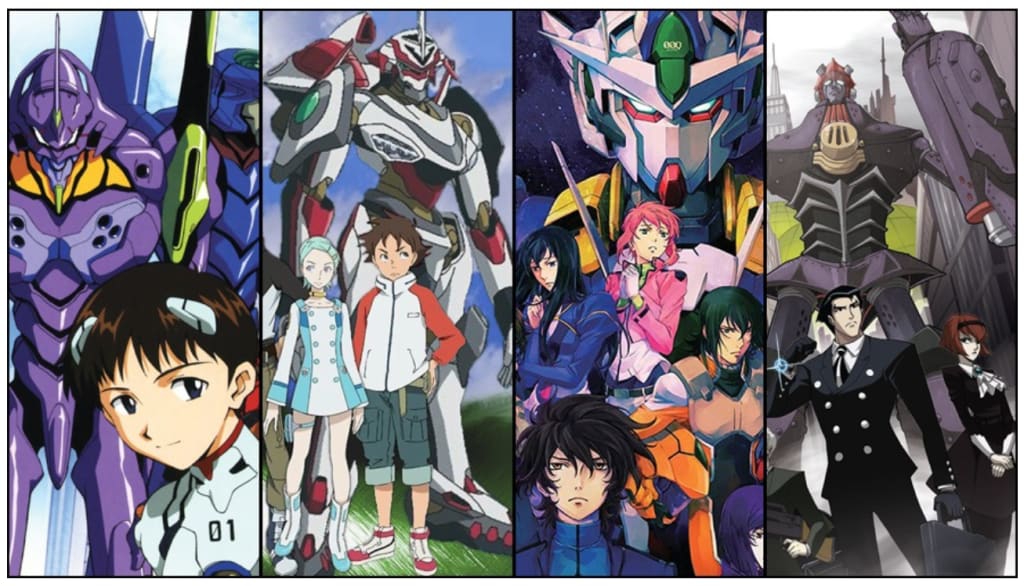
Japan's fascination with giant robots, or "mecha," has become an essential part of its cultural identity. From their origins in the 1960s to their evolution into modern-day franchises, giant robot anime has captivated audiences and left an indelible mark on Japanese pop culture. This genre not only reflects Japan’s technological aspirations but also serves as a powerful storytelling medium, tackling themes of war, heroism, and human ingenuity. Over time, the appeal of mecha has extended beyond television and film into tourism, with life-sized statues, theme park attractions, and merchandise drawing millions of visitors each year.
The Origins of Giant Robot Anime

The roots of giant robot anime trace back to the 1960s, with Osamu Tezuka’s "Tetsujin 28-go" (1963), also known as "Gigantor" in the West. This anime laid the foundation for the genre, introducing the concept of a remotely controlled robot used for battle. However, it was Go Nagai’s "Mazinger Z" (1972) that revolutionized mecha storytelling by introducing the concept of a piloted giant robot. This innovation turned the genre into a dynamic fusion of human and machine, allowing for more complex narratives and character development. Nagai's approach to storytelling added a new level of personal engagement, as the pilot’s emotions and decisions directly influenced the robot's movements, making for richer character arcs.
As the 1980s arrived, the golden era of giant robot anime took full form with iconic franchises like "Mobile Suit Gundam," "Macross," and "Armored Trooper Votoms." "Gundam" redefined the genre by moving away from the traditional "super robot" archetype, which portrayed robots as nearly invincible machines, and instead introduced the "real robot" concept. These machines were not only fallible but also treated as tools of war, requiring maintenance, strategy, and political maneuvering. This shift not only matured the genre but also expanded its audience to include older viewers who appreciated its nuanced storytelling. The intricate mechanical designs of Yoshiyuki Tomino’s "Gundam" series, combined with its deep world-building and ethical dilemmas, set a precedent for all future mecha anime.
Beyond Gundam, other series like "Macross" introduced elements of music, romance, and cultural fusion, adding additional dimensions to the genre. The idea of transforming mecha, such as the iconic Valkyrie fighters in "Macross," became a hallmark of the genre, further broadening its appeal. By the end of the decade, giant robot anime had solidified its place not just as a form of entertainment, but as a reflection of Japan’s evolving relationship with technology and war, laying the groundwork for its integration into broader cultural expressions.
Giant Robots and Japanese Cultural Identity

Japan’s love for giant robots is deeply intertwined with its technological advancements and post-war reconstruction. The fascination with large, humanoid machines reflects the country’s engineering prowess and industrial achievements. Robotics research, particularly in companies like Honda and SoftBank, has mirrored the vision of anime, further reinforcing the synergy between fiction and reality. The desire to innovate and push technological boundaries can be seen in projects like the life-sized Gundam statues and Japan's continued investment in AI-driven robotic development, demonstrating the cultural significance of mecha beyond just fiction.
Additionally, the themes explored in mecha anime often resonate with Japan’s historical experiences. The portrayal of war in "Gundam" reflects the country’s pacifist stance following World War II, as well as the moral complexities of armed conflict. Unlike Western depictions of war, which often focus on clear-cut heroes and villains, Japanese mecha anime frequently presents morally ambiguous characters who struggle with the burden of their actions. This mirrors Japan’s own historical reflections on warfare, making these stories particularly impactful to domestic audiences. At the same time, the resilience of characters piloting these machines mirrors Japan’s own perseverance in times of hardship, such as its post-war economic recovery and the challenges faced in modern globalized industries.

Meanwhile, series like "Neon Genesis Evangelion" (1995) delve into deeper psychological and philosophical themes, showing how the genre evolved to explore human emotion and existential crises. Hideaki Anno’s groundbreaking work redefined mecha storytelling by prioritizing character psychology over traditional heroism, with protagonists suffering from depression, anxiety, and the pressures of saving humanity. This shift expanded the scope of mecha anime, proving that giant robots could serve as vehicles for profound introspection rather than just epic battles. The continued success of "Evangelion" highlights how deeply intertwined the genre is with Japan’s collective consciousness, making it more than just a form of entertainment but also a means of cultural and philosophical exploration.
Giant Robots as a Tourism Phenomenon
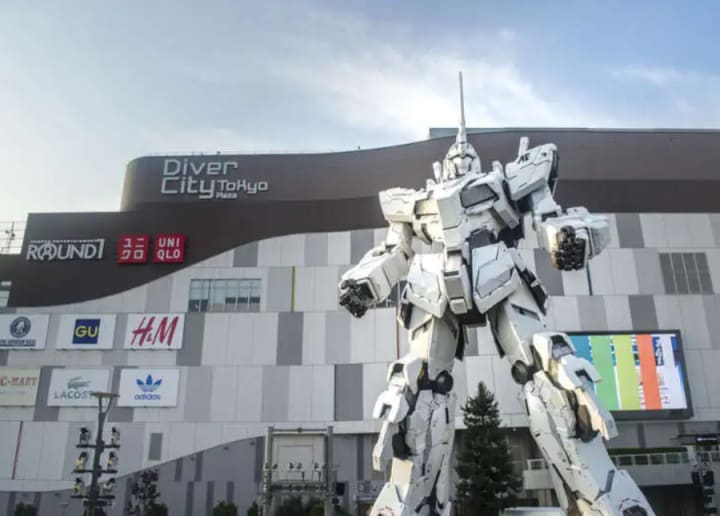
In recent decades, giant robot anime has transcended entertainment and become a key element of Japan’s tourism industry. Life-sized statues of iconic mecha have been constructed across the country, attracting both domestic and international fans. The most notable example is the full-scale Gundam statue in Odaiba, Tokyo, which has become a must-visit destination. The 18-meter-tall RX-78-2 Gundam was replaced in 2020 by a new moving Gundam in Yokohama, bringing a futuristic dream to life. The walking Gundam in Yokohama’s Gundam Factory features advanced robotic engineering, allowing it to move its arms, legs, and head, further enhancing its allure to visitors and researchers alike. These real-life representations of anime icons blur the line between science fiction and reality, inspiring engineers and anime fans alike.

Gundam-themed attractions and events play a significant role in Japan’s tourism economy. "Gundam Base Tokyo," a massive store dedicated to model kits, offers exclusive merchandise and interactive exhibits where visitors can customize their own plastic models. Additionally, locations such as the "Gundam Café" provide an immersive dining experience inspired by the franchise, complete with themed food, drink, and character interactions. Beyond Gundam, other giant robot attractions like the "Evangelion: World" theme park section at Fuji-Q Highland bring fans into the world of their favorite series, allowing them to experience larger-than-life recreations of scenes, interact with props, and even step into cockpit simulators.
The influence of giant robot anime on tourism extends to seasonal conventions and pop culture events. The "Tokyo International Anime Fair" and "Anime Japan" attract thousands of attendees, many of whom come specifically for mecha-related exhibits. Model kit expos showcase intricate plastic builds from franchises such as "Gundam" and "Macross," allowing collectors and builders to share their passion. In addition, mecha-themed attractions can be found in Akihabara, Japan’s anime hub, where stores cater to fans looking for collectibles, rare model kits, and exclusive screenings of classic series. These locations not only fuel Japan’s economy but also solidify the mecha genre’s status as an enduring cultural phenomenon.
The Future of Giant Robot Anime

The mecha genre continues to evolve, incorporating new animation technologies and storytelling techniques. Modern series like "Gundam: The Witch from Mercury" and "SSSS.Gridman" have introduced fresh perspectives while maintaining the core elements that make giant robot anime beloved. Additionally, Japan’s continued innovation in robotics suggests that the boundary between fiction and reality may blur even further in the coming years.
Ultimately, the Japanese love for giant robots is more than just nostalgia; it is a testament to the country’s enduring spirit of creativity, technological ambition, and cultural storytelling. Whether through anime, tourism, or real-world robotics, the legacy of mecha remains a defining aspect of Japan’s identity, ensuring that the love for giant robot anime will continue for generations to come.
About the Creator
JRManglicmot
A Striving father and husband, trying to be the best I can be. I'm not perfect, but I try to be the one my family can look up to. I stumble and make mistakes from time to time, most often, but I try to learn from my mistakes.
Keep reading
More stories from JRManglicmot and writers in Geeks and other communities.
Anime’s Portrayal of America
Anime, Japan’s globally popular form of animated media, has long depicted America in a variety of ways, ranging from glorified representations of heroism to satirical takes on Western culture. These portrayals often reflect Japan’s historical relationship with the United States, shaped by war, diplomacy, cultural exchange, and globalization. By analyzing how America is depicted in anime, one can discern underlying perceptions influenced by political events, economic relations, and societal changes. The range of portrayals of America in anime reflects a complex interplay of admiration, criticism, and satire, each shaped by different historical and cultural factors.
By JRManglicmotabout a year ago in Geeks
The Politics of Playing Dress-Up
Well, to start off I'd like to say a happy world book day to all who celebrate. I know I haven't really posted anything on my socials about it but I'm not a jubilant kind of person. I lay low most of the time. Let's start off with a popular anecdote from the vaults...
By Annie Kapur6 days ago in Geeks
Could Silver the Hegdehog be Shadow's Grandson?
Lately, I have been seeing comments on Facebook, Instagram, and YouTube saying that Silver is Shadow the Hedgehog’s son. This could be true because there are some similarities between them. For example, the highlighted area around their eyes. Shadow has it red, while Silver is black.
By stephanie borges6 days ago in Geeks




Comments
There are no comments for this story
Be the first to respond and start the conversation.