
Anime’s Portrayal of America
A Reflection of Historical Influence between 2 Countries

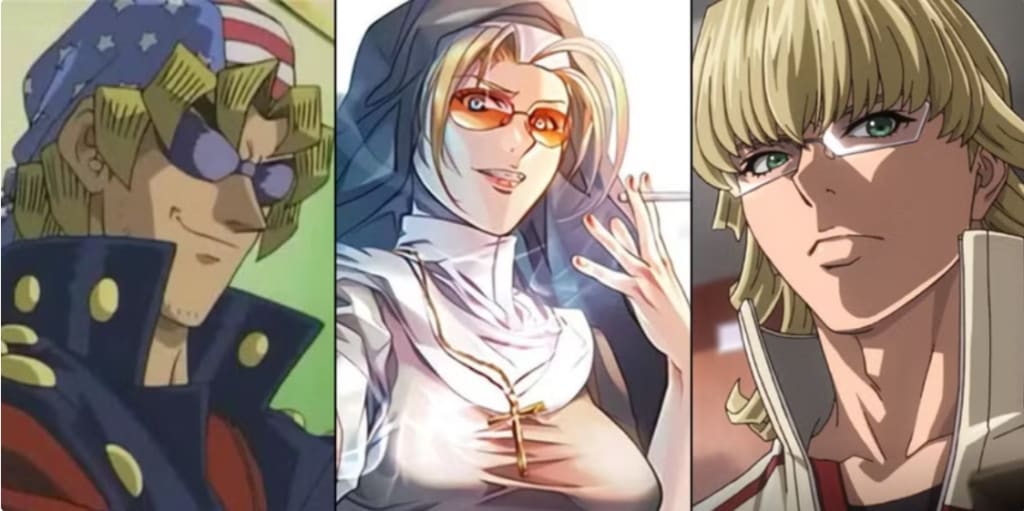
Anime, Japan’s globally popular form of animated media, has long depicted America in a variety of ways, ranging from glorified representations of heroism to satirical takes on Western culture. These portrayals often reflect Japan’s historical relationship with the United States, shaped by war, diplomacy, cultural exchange, and globalization. By analyzing how America is depicted in anime, one can discern underlying perceptions influenced by political events, economic relations, and societal changes. The range of portrayals of America in anime reflects a complex interplay of admiration, criticism, and satire, each shaped by different historical and cultural factors.
One of the most prevalent portrayals of America in anime is that of the powerful, militaristic superpower. This is largely a consequence of Japan’s historical interactions with the U.S., particularly during and after World War II. The presence of U.S. military bases in Japan, the devastation of Hiroshima and Nagasaki, and the subsequent American occupation of Japan played significant roles in shaping this perception. In series such as "Akira" and "Ghost in the Shell," America is often portrayed as a dominant force exerting influence over global affairs, sometimes to the detriment of other nations. These narratives reflect Japanese anxieties about foreign intervention and loss of national autonomy. Additionally, series like "Full Metal Panic!" and "Code Geass" introduce fictionalized versions of American military forces, reinforcing the idea of America as an overwhelming geopolitical force whose presence alters the balance of power in various scenarios.
Another common theme in anime is the depiction of American culture as both admired and exaggerated. Many anime series showcase American characters as boisterous, confident, and sometimes over-the-top personalities. For instance, characters like Bob Makihara from "Tenjou Tenge" or Bandit Keith from "Yu-Gi-Oh!" embody exaggerated stereotypes of American bravado and individualism. This portrayal is rooted in Japan’s post-war fascination with Western culture, as American music, fashion, and cinema became immensely popular. However, this admiration is often coupled with satire, where anime humorously critiques American consumerism, fast food culture, and perceived arrogance. Shows like "Excel Saga" and "Hellsing" use absurdity and comedic exaggeration to poke fun at American stereotypes, demonstrating a playful yet critical take on American cultural influence in Japan.
Beyond military and cultural portrayals, America is also represented in anime as a land of opportunity and excess. This is particularly evident in works like "Baccano!" and "Cowboy Bebop," where the United States is depicted as a land of vast landscapes, crime syndicates, and boundless freedom. Such representations echo the American Dream mythology that Japan, like many other nations, has absorbed through Hollywood films and global media. However, these portrayals often mix reality with fiction, incorporating elements of organized crime, corruption, and lawlessness, possibly reflecting a Japanese critique of America’s internal struggles with capitalism and inequality. In "Black Lagoon," America’s role as a center of crime and economic power is heavily emphasized, portraying the country as both a land of opportunity and a place where power struggles and corruption are rampant.
Interestingly, anime has also explored how America’s diversity is perceived by Japan. While the majority of American characters in anime are depicted as white, some works have attempted to include African American and Latino characters. For instance, "Afro Samurai" showcases a fusion of Japanese and African American cultures, portraying a protagonist deeply influenced by both worlds. Similarly, series like "Michiko & Hatchin" take inspiration from Latin American cultures, influenced by America’s cultural melting pot. These portrayals, though less frequent, demonstrate Japan’s evolving perception of America as a multicultural nation, even if these depictions sometimes fall into stereotypical representations.
Ultimately, anime’s depiction of America is not monolithic but rather a complex reflection of Japan’s historical and cultural exchanges with the U.S. Whether presenting America as a dominant force, an exaggerated caricature, or a land of opportunity, these portrayals serve as a mirror of Japan’s evolving perspectives on its relationship with the West. As globalization continues to blur cultural boundaries, it will be interesting to see how anime’s portrayal of America adapts in the future. The interplay between admiration, criticism, and satire in anime’s depiction of America highlights the nuanced and multifaceted nature of international cultural perceptions. Future anime productions may continue to refine these portrayals, integrating more nuanced and varied representations of America as perspectives continue to evolve with ongoing global changes.
About the Creator
JRManglicmot
A Striving father and husband, trying to be the best I can be. I'm not perfect, but I try to be the one my family can look up to. I stumble and make mistakes from time to time, most often, but I try to learn from my mistakes.
Keep reading
More stories from JRManglicmot and writers in Geeks and other communities.
Diving Deep into Kaiju No. 8
The popularity of Kaiju No. 8, a manga series created by Naoya Matsumoto, marks yet another milestone in Japan’s enduring fascination with kaiju (monstrous creatures). With its unique blend of action, humor, and humanity, the series brings a modern twist to the kaiju genre, solidifying its place in Japan's cultural legacy. To fully appreciate Kaiju No. 8, it’s important to delve into the history of kaiju culture in Japan, its origins, its symbolic meanings, and its significance in the collective consciousness.
By JRManglicmotabout a year ago in Geeks
Stage 284's "Mean Girls" is a Totally Fetch Time!
On Wednesdays, we wear pink. Stage 284 presents “Mean Girls: The Musical,” based on the classic 2004 film. 16-year-old Cady Heron attends public school for the first time. While trying to fit in, she befriends ‘The Plastics,’ an A-list clique. Cady is a hit, until she falls for Aaron Samuels, the ex-boyfriend of Alpha plastic, Regina George.
By Marielle Sabbag4 days ago in Geeks


Comments
There are no comments for this story
Be the first to respond and start the conversation.