
The End of The Tour (2015)
Media Literacy Movie Review and more



I have a confession to make: I was yesterday years old when I discovered David Foster Wallace and his significance as a contemporary American writer. I'll turn 55 in a couple of weeks. I know, it's embarrassing. My only excuse is that I lived half of my life in the Soviet and post-Soviet cultures.
Still, I don't know how his work escaped me when I was in my doctoral program, especially because it is so pertinent for my area of specialization - mass communication, and specifically consumerism and media obsession. But I've never heard of David Foster Wallace (DFW) before. Which felt even more frustrating when I realized that he was a Gen-Xer as well, just 8 years my senior. Had he not died by suicide, he would have turned 63 this February. His father died in 2019; his mother is still alive. It pains me to think how hard it must have been for her to cope with her son's death.
I have discovered DFW accidentally. I'm teaching Presentational and Digital Literacy this semester and was looking for great examples of commencement speeches to use as an exercise for my students to reverse-engineer a speech by creating its outline while listening to it.
I had in mind Steve Jobs' 2005 Stanford Commencement speech that I had analyzed in my persuasion class. While looking for its link online I came across the Time Magazine's ranking of top 10 best commencement speeches of all times. It had David Foster Wallace's 2005 speech at Kanyon ranked as #1, higher than Steve Jobs, Winston Churchill, and JFK. That peaked my interest and I listened to the speech. I was floored by both the ideas and delivery. What started out as a slightly condescending reflection on the ignorance of the young ended with the most compassionate and humbling message for the entire humanity and life. If you haven't yet, you can listen to it here and make your own conclusions about it (read the comments to the video too, they are precious):
After this, I was hooked. I listened to DFW reading his excellent essay "Consider the Lobster" on the 2003 Maine Lobster Festival where he discusses many issues relating to how humans treat animals and consume them for food (every vegan will love it) and much larger issues of humanity, restraint and indulgences.
I have also listened to snippets of his PBS interview with Charlie Rose where DFW described how he'd discovered his own avant-garde and postmodern philosophy and the importance of being an authentic self for a writer. The more I learned, the more I liked him. So I ordered his most influential book -- Infinite Jest -- and when my colleague saw me unpacking the 1,000-page brick today, he said excitedly, "Oh, David Foster Wallace! I've read this book in my grad program. Have you seen the movie about him, titled The End of The Tour?"
I haven't but now I had to. Immediately after I was done with teaching today, I went to Amazon Prime and bought the movie. I've just finished watching it. Since this preamble to the review is already too long, I will make the review using my usual formula succinct and brief.
1. Cognitive Dimension (What did I learn from the film?)
I've learned a lot about DFW as a person and a writer. The movie is based on the book by David Lipsky, played by Jesse Eisenberg, who had interviewed DFW (excellently played by Jason Segel) for the Rolling Stone magazine while on the last leg of the Infinite Jest book tour. The interaction between them was indeed one of the most interesting conversations about life, virtue, and human condition.
2. Emotional dimension (How did the movie make me feel?)
I went through a host of emotions, empathizing with both DFW as a rather reclusive deep thinker who doesn't know how the interview will turn out and has anxieties about how the people reading it will perceive him and with Lipsky, trying to find an angle to write a story about this enormous literary figure for a popular culture magazine. In retrospect, it also made me feel for creative people prone to depression and thoughts of suicide.
3. Aesthetic dimension (What did I appreciate in the movie about the way it was executed?)
The movie is incredibly intimate, closely showing how complete strangers can foster a deep human bond and develop trust within just three days of constant interaction and staying together. Eisenberg is a natural for this and Segel was a complete revelation in terms of how accurately he rendered DFW's speech and mannerisms. Must have been a big fan of his.
4. Moral dimension (What ethical and moral lessons does the movie teach us?)
The biggest and most important lesson of the movie for me was that even the most famed, influential and well-established writers are deeply insecure about their talent (DFW has a pretty good message there about the imposter syndrome) and vulnerable. To the point where they can end their own life at a high point of their career that they think is the low one.
Even though the suicide is not the main focus of the film, except for one point where Lipsky asked DFW about his prior suicide watch, I would not recommend this movie to those who might be prone to similar thoughts. But my highest recommendation if you want to see an excellent movie about the writer's existential angst.
I'm off to read Infinite Jest. Expect a book review from me in the future, but not too soon - I have picked up an overload assignment and will be teaching five classes this semester.
About the Creator
Lana V Lynx
Avid reader and occasional writer of satire and short fiction. For my own sanity and security, I write under a pen name. My books: Moscow Calling - 2017 and President & Psychiatrist
@lanalynx.bsky.social
Reader insights
Nice work
Very well written. Keep up the good work!
Top insights
Easy to read and follow
Well-structured & engaging content
Excellent storytelling
Original narrative & well developed characters
Expert insights and opinions
Arguments were carefully researched and presented
Eye opening
Niche topic & fresh perspectives
On-point and relevant
Writing reflected the title & theme
Heartfelt and relatable
The story invoked strong personal emotions
Keep reading
More stories from Lana V Lynx and writers in Geeks and other communities.
Past Lives
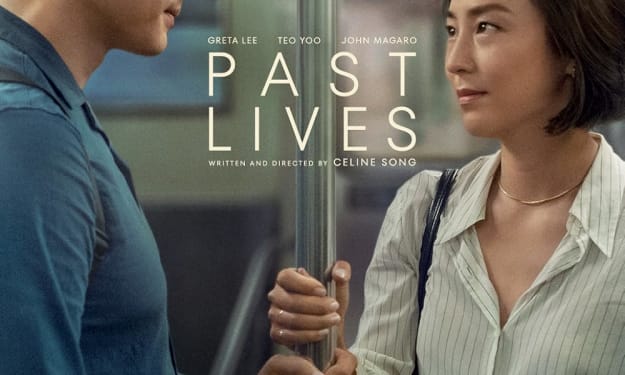
I watched this movie on the plane from Rome to New York almost a year ago. I started writing this story by getting the image, putting in the title and the first sentence. However, I never got around to actually writing it up until this week when in my Intercultural Communication course I used the movie clip as an illustration of non-verbal communication in different cultures. The memories and feelings of the movie flooded and urged me to return to this review. So I will try to point out some of the ways the movie affected me at the four distinct levels from the media literacy perspective:
By Lana V Lynxabout a year ago in Geeks
The Politics of Playing Dress-Up
Well, to start off I'd like to say a happy world book day to all who celebrate. I know I haven't really posted anything on my socials about it but I'm not a jubilant kind of person. I lay low most of the time. Let's start off with a popular anecdote from the vaults...
By Annie Kapur4 days ago in Geeks
Revisiting She's The Man: Gender, Identity, and the Legacy Of a Teen Comedy
Plot Summary She's The Man centers on Viola Hastings, a talented teenage soccer player frustrated when her school disbands the girls' team and is denied an opportunity to try out for the boys' squad. Determined to prove herself, she disguises herself as her brother, Sebastian, and enrolls at his boarding school, Illyria Prep. There, she joins the boys' soccer team while struggling to maintain her secret identity. Complications arise when she develops feelings for her roommate and becomes involved in romantic misunderstandings involving Duke and Olivia. Ultimately, Viola must reveal the truth in a climactic match that tests her courage and convictions.
By TheScreenAnalyst3 days ago in Geeks
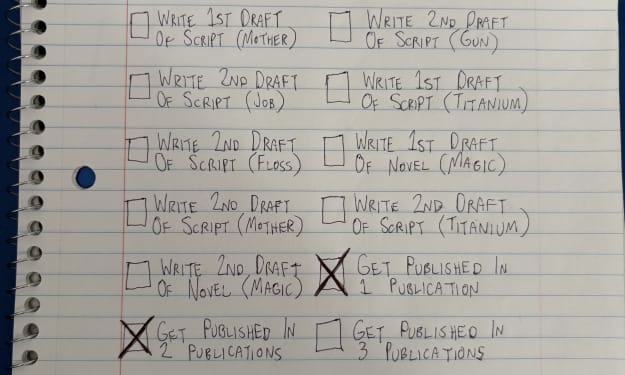
Early March 2026: 4 Goals Accomplished
It's early March and I've now accomplished my 4th writing goal for the year of 2026. Before diving into the behind-the-scenes of it... why not tell you up front what that accomplishment was? I was published in a 2nd publication for this year. Published in Helix Literary Magazine out of Central Connecticut State University. You can read it for free right now!
By Stephen Kramer Avitabile3 days ago in Writers


Comments (12)
I loved the background as context for your review, Lana, and now I need to see the movie. Thanks for sharing and congrats on the Top Story! Richly deserved!
Well done on getting TS for this ☺
Wow! Well-deserved top story!💕💗🎉🎉🎉
This was enlightening for me as I know very little of him. I’m sad he committed suicide. I have the book Infinite Jest but have never read it. It sounds like a challenge. And I have never heard of this movie either. Jessie Eisenberg is a great actor. Excellent content and review Lana! Good luck teaching your classes. 😊
Well deserve Top Story. Great review at the same time. It sad, the top cause if suicide is the feeling of Failure
Congratulations on your top story! Lana✨🎉
Back to say congratulations on your Top Story! 🎉💖🎊🎉💖🎊
I saw the film when it was - I was very intrigued by the premise - and I have read many of the essays and speeches. I still have to get into 'IJ', but I will get there. Well spoken.
Oh, goodness....I must have been under a rock, because I don't remember his name or work. I am definitely going to check out the link though since you recommend it so much. Congratulations on your Top Story - well done!
I've never heard of DFW before 😅 I'm very suicidal so it's better I avoid the movie. But any idea why he committed suicide?
This was very interesting. I'm going to watch that commencement speech later. I have heard of him but I'm not sure in what context or where from? Also, sometimes you put DWF instead of DFW. Hope you don't mind me pointing it out. I'm always grateful when people direct me to typos in my work.
Great review/article, Lana!! <3