
The Dharma Bums by Jack Kerouac
Why It's a Masterpiece (Week 98)

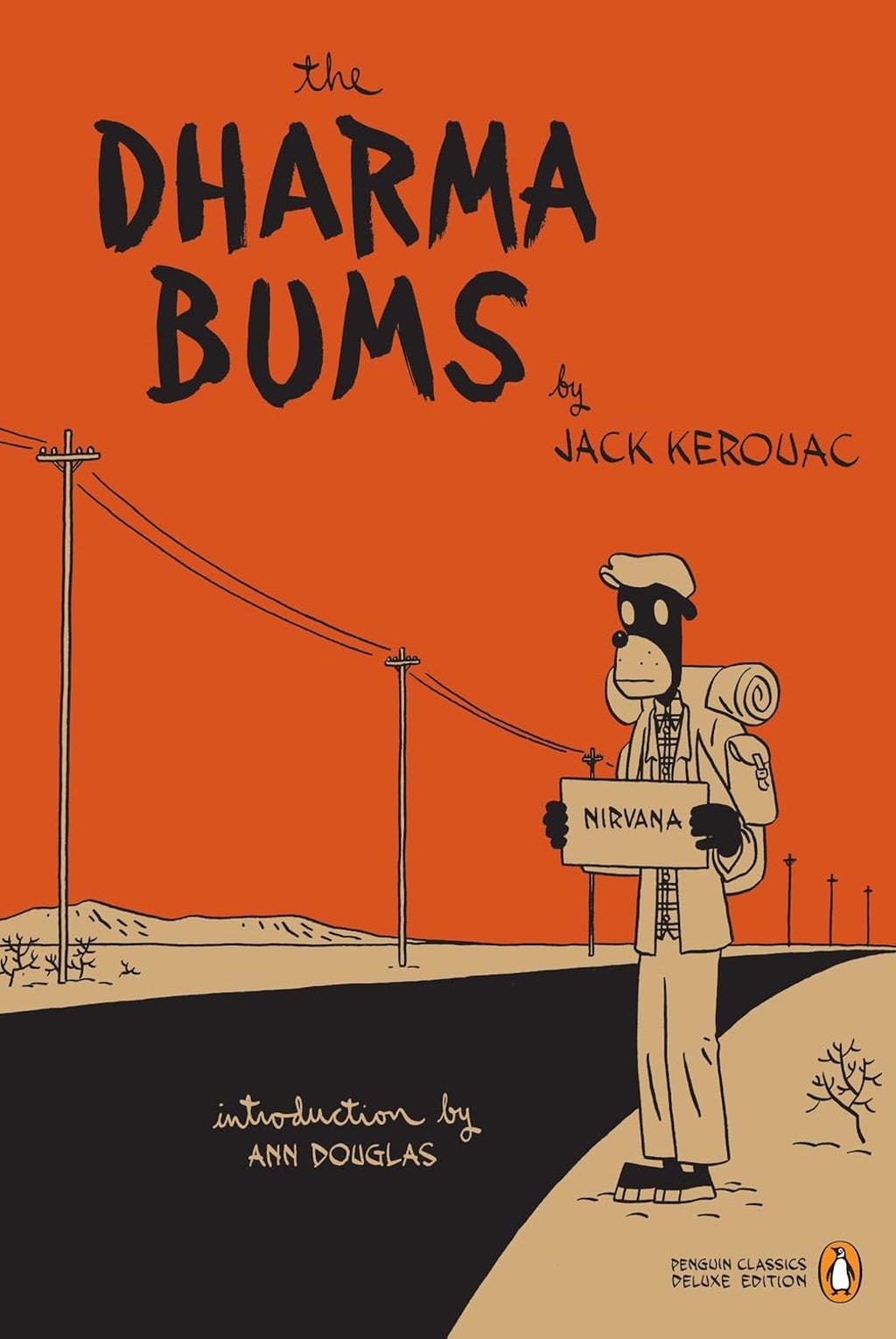
One of the most definitive books of the Beat Generation, The Dharma Bums, was first published in 1958 by Jack Kerouac. Yet another book about the rejection of the conformity that came with post-war America and its consumerism. The novel, like many others by Kerouac, is semi-autobiographical and most of the narrative is based within the experiences he had in the American West during the latter part of the decade. It's told from the perspective of an alter-ego named Ray Smith and chronicles the relationship he has with friend Japhy Ryder - roughly based on the poet Gary Snyder. It's this character that introduces Ray to Zen Buddhism. Kerouac's own spirituality was definitely an inspiration for the book too with philosophical exploration being the beating heart of the whole text.
The 'spontaneous prose' style of Kerouac never gets old and definitely underscores this particular novel as much as others. It's free-flowing and unstructured, some even say it's difficult to follow his scattered thoughts. The attempt to capture how immediate and raw human experiences are was at the centre-point of many of Kerouac's works - including The Dharma Bums. It also serves as part of a series that can be read together which includes On the Road (1957) and finally, Desolation Angels (1965).
Plot
Ray and Japhy traverse the American West searching for enlightenment. Set against the backdrop of the Beat Generation culture of anti-consumerism, this is a novel purely about self-discovery and personal freedom. The men meet in San Francisco and bond over their share feeling of disillusionment and their yearning for meaning where there seems to be none at all.
Japhy is a poet and the mentor to our main character, he teaches Ray about Zen philosophy and how it applies to everyday life. They then set off on a journey to the Sierra Nevada Mountains and begin with mountain climbing, self-reflection and deep philosophical conversations about the nature of existence. This shows us Ray encountering challenges he has never encountered before. There are physical challenges like the climbing but then there are mental challenges like confronting one's own insecurities and fears.
Ray's understanding of true enlightenment culminates in the idea that true enlightenment is not found through external achievement or societal approval but through the practice of self-awareness that he has now learnt from Japhy.
There is something special to him now, about living in the present moment.
Into the Book

The Search for Spiritual Enlightenment:
A huge theme in The Dharma Bums is the search for spiritual enlightenment, particularly through the teachings of Zen Buddhism. The novel contrasts the frenetic energy and materialism of post-war American society with the tranquility and mindfulness of Zen practice. Kerouac’s exploration of Zen is embodied in the character of Japhy Ryder, who introduces Ray to the idea that true enlightenment comes not from intellectual knowledge but from direct experience and mindfulness. Zen Buddhism encourages living in the present moment, shedding attachments, and realising the interconnectedness of all things.
The novel shows Ray’s spiritual evolution, which is marked by a deepening understanding of the Zen teachings that Japhy shares with him. One of the most significant lessons Japhy imparts to Ray is the concept of "letting go" of expectations, as centralised in Japhy’s words: “You’re too tied up, man, too tied up in this ‘being’ stuff. Let it go.” This philosophy of letting go is vastly important in the novel as it reflects the rejection of conventional ways of thinking and the embrace of a more fluid, experiential approach to life.
Ray’s personal growth, particularly during the mountain climb in the Sierra Nevadas, illustrates the unfolding of his spiritual journey. The mountains themselves become symbolic of the climb towards enlightenment which is both physical and mental. At one point, Ray reflects on the power of nature in his personal transformation: “The mountains are my great teachers. Every time I climb a mountain, I learn more about myself.” This line shows how the physical challenge of climbing becomes a form of meditation, providing Ray with clarity about his life and his deeper understanding of Zen philosophy.
“I felt like lying down by the side of the trail and remembering it all. The woods do that to you, they always look familiar, long lost, like the face of a long-dead relative, like an old dream, like a piece of forgotten song drifting across the water, most of all like golden eternities of past childhood or past manhood and all the living and the dying and the heartbreak that went on a million years ago and the clouds as they pass overhead seem to testify (by their own lonesome familiarity) to this feeling.”
- The Dharma Bums by Jack Kerouac
Personal Freedom vs. Societal Norms:
Another theme of the novel is the tension between personal freedom and societal norms. The Beat Generation rejected the rigid expectations of post-war American society, advocating instead for a life of spontaneous expression, personal exploration, and nonconformity. Ray and Japhy both seek freedom from the traditional structures of work, consumerism, and family obligations. Their life on the road, with its lack of fixed plans or goals, reflects their rejection of the American Dream, which they see as shallow and empty.
In the novel, this desire for freedom is shown through Japhy’s character, who embraces a lifestyle of simplicity and independence. Japhy exclaims: “I want to live in the present tense. That’s all I care about. The here and now, the big NOW.” This phrase is the central ethos of the Beat movement which believes in 'living fully in the moment', without worrying about the future or the expectations of others. By rejecting the constraints of conventional life, the characters in The Dharma Bums strive to live authentically, as individuals free from societal pressure.
Ray’s journey of self-discovery in the novel is driven by his growing understanding that true freedom is found not through societal approval but through the act of creating his own path. As Ray notes, “I’ve got to be myself, and that’s all there is to it. I want to get out of this system and find out what it’s all about.” This quest for freedom, particularly through the rejection of structured society, becomes a crucial part of his spiritual and personal growth.
“One day I will find the right words, and they will be simple.”
- The Dharma Bums by Jack Kerouac
Nature:
Nature is another key theme in The Dharma Bums, serving as a backdrop for Ray’s journey of self-discovery and spiritual awakening. Throughout the novel, the natural world is depicted not just as a place of beauty, but as a source of spiritual clarity and wisdom. For the characters, nature is an environment where they can experience mindfulness, connect with the universe, and step away from the distractions of modern life.
Ray’s experiences in the wilderness are transformative, allowing him to reflect deeply on his own inner struggles and desires. For instance, when he is climbing the mountain, he reflects on the transcendent beauty of nature and its capacity to bring clarity: “I felt the oneness of everything. I knew I was part of it, part of the mountain, the sky, the birds, and the trees.” This moment of unity with nature reinforces the Buddhist principle of interconnectedness, suggesting that spiritual enlightenment can be found in surrendering the ego and experiencing a deep connection with the world around us.
The mountains are symbolic of spiritual ascension. The physical climb mirrors Ray’s journey toward inner peace and understanding. When Ray and Japhy discuss their experiences in the mountains, Japhy states: “You have to climb the mountain yourself. There’s no other way to do it. You have to be there.” This line suggests that the journey to spiritual enlightenment is intensely personal and more importantly - that there is no shortcut, no easy answer. Like the climb, it requires effort, perseverance, and a willingness to confront one's inner fears and limitations. This makes the mountains both literal and metaphorical.
“Down on the lake rosy reflections of celestial vapor appeared, and I said, "God, I love you" and looked to the sky and really meant it. "I have fallen in love with you, God. Take care of us all, one way or the other." To the children and the innocent it's all the same.”
- The Dharma Bums by Jack Kerouac
Why It's a Masterpiece
As it contains these deep philosophical concerns which were littered about the consumerist realm, The Dharma Bums has become one of those novels that we now constantly revisit and ask ourselves 'well, why didn't we listen back then?' as we look at where we are now. We are constantly bombarded with consumerist culture from every angle, even more so than Kerouac would have been and so, if you are going to visit a novel that reminds you of the importance of looking at alternative lifestyles, then perhaps make it this one.
Conclusion

Whilst at university, I often engaged with these subsets of bohemian middle-class folk who would read Kerouac and found myself drawn into this series of philosophies. Personally, I would go on to cite the books The Town and the City and The Sea is My Brother as my favourite Kerouac books but there was always something about that mountain climbing scene in The Dharma Bums which struck me as something symbolic. Life itself is a force to be reckoned with. It is the mountain.
Next Week: Jacob’s Room by Virginia Woolf
About the Creator
Annie Kapur
I am:
🙋🏽♀️ Annie
📚 Avid Reader
📝 Reviewer and Commentator
🎓 Post-Grad Millennial (M.A)
***
I have:
📖 280K+ reads on Vocal
🫶🏼 Love for reading & research
🦋/X @AnnieWithBooks
***
🏡 UK
Keep reading
More stories from Annie Kapur and writers in Geeks and other communities.
Book Review: "Coffee" by H.E Jacob
You guys have probably realised that I love coffee and I normally drink between 8 and 12 cups a day. My coffee of choice is either L'Or's Ristretto Pods for my Nespresso Machine, or if I'm having a cafetière then it would be Skull Crusher's French Vanilla Ground Coffee. I also enjoy Nespresso's own Istanbul blend and of course my favourite coffee shop is Costa and their double espressos are amazing. Coffee is one of the few joys in my life that I have left and so, I expect to carry on with it regardless of what others think. Money spent on coffee is never wasted. But if you put sugar and milk in my coffee then you will no longer be my friend, put it in yours if you want - just not in mine. I could only listen to Coffee by Chappell Roan whilst writing this review, there was no other way...
By Annie Kapura day ago in Geeks
How to Watch Hulu in Canada in 2026
Hulu is one of the most popular streaming services in the U.S., known for hit shows, movies, and original content. However, Hulu isn’t officially available in Canada due to licensing restrictions. If you’re living in Canada and want to watch Hulu, this guide explains safe, legal, and effective options for accessing the service in 2026.
By David Cooka day ago in Geeks




Comments
There are no comments for this story
Be the first to respond and start the conversation.