
The Breakfast Club and St. Elmo’s Fire: Two Essential 80s Movies That Defined the Brat Pack’s Rise and Fall
A Brat Pack Primer

I. Introduction: The Label That Stung
We all remember the films. They were the cinematic bedrock of Gen-X adolescence: stories about finding your place, ditching the squares, and navigating the horrifying emotional landscape between high school graduation and paying your own rent. But here’s the thing: most of us only remember half the story.
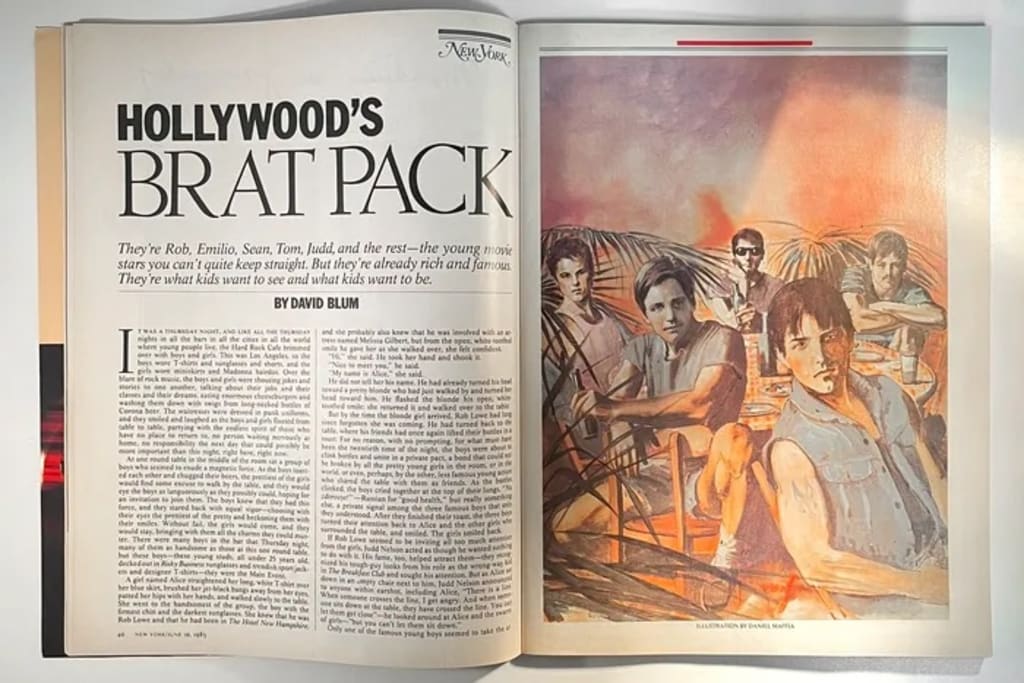
The “Brat Pack” wasn’t a club they formed; it was a label slapped on them by a jealous Hollywood establishment in a single, devastating magazine article. That term instantly turned a talented group of friends into “spoiled brats,” forcing them to split up and spend the next three decades trying to escape their own history. But who were the real members? And which films cemented their status as both heroes of teen angst and villains of the tabloid scene?
II. The Core Eight: An Official Definition
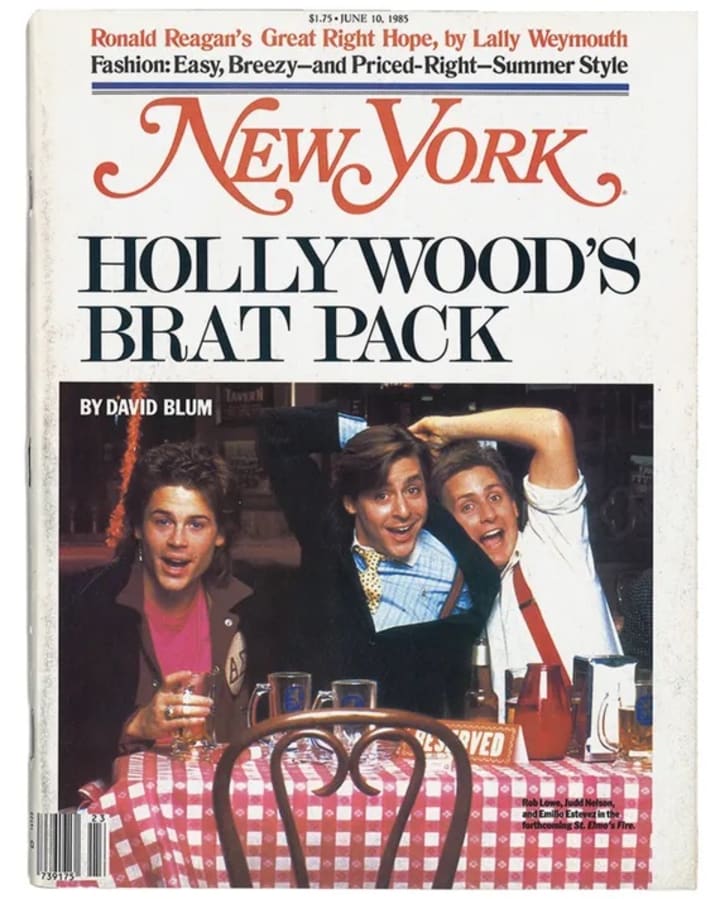
The Brat Pack began-and officially ended-with a single New York magazine cover story in June 1985 titled “Hollywood’s Brat Pack.” Reporter David Blum was observing Emilio Estevez, and the article quickly branded a cluster of young, rising stars who frequently appeared together and-crucially-socialized together off-screen.
To pass the real Brat Pack Test, this article uses the Cinematic Core, which is defined by shared ensemble credits (The Breakfast Club and St. Elmo’s Fire):
- Emilio Estevez (The unofficial leader)
- Anthony Michael Hall (The quintessential nerd-turned-cool)
- Rob Lowe (The Golden Boy)
- Andrew McCarthy (The sensitive outsider)
- Demi Moore (The breakthrough ingenue)
- Judd Nelson (The resident rebel)
- Molly Ringwald (The undisputed Queen)
- Ally Sheedy (The overlooked misfit)
The Magazine’s Tourists vs. The Cinematic Core:
A shocking piece of Brat Pack trivia is that the original New York magazine article was wildly inconsistent. While reporter David Blum created the label, his list of who counted was sprawling and, frankly, excluded many of the people the public remembers most! You can read the article for yourself at the link in the Sources section at the end to see what we mean.
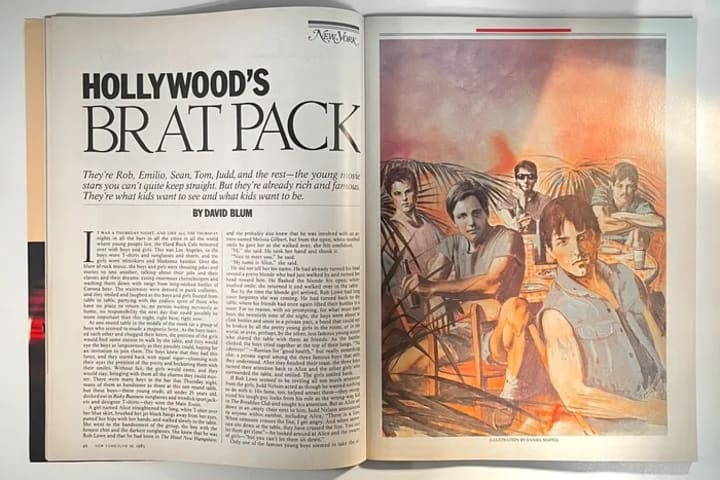
The article primarily named Emilio Estevez, Rob Lowe, Judd Nelson, Tom Cruise, Sean Penn, Timothy Hutton, Matt Dillon, and Nicolas Cage as members-failing to even mention core ensemble stars like Molly Ringwald and Demi Moore by name in his core group summaries.
This is why this article-and most Gen-X history-rejects the original list in favor of the Cinematic Core.
Actors like Cruise (Risky Business), Penn (Fast Times), Dillon, Hutton, and Cage are considered “tourists” in the cinematic sense. They were big stars of the 80s, but they lacked the crucial combination of factors we use for the test: they weren’t in the cross-pollinating ensembles that defined the movement (like The Breakfast Club or St. Elmo’s Fire), and they weren’t part of the core group that stuck together through those films. Their fame was individual; the Brat Pack’s identity was built on being an inseparable, scandalous clique. These eight were the residents. Their influence was so powerful because they defined two completely separate types of 80s movies. We stick to the Cinematic Core because their collective work is the true bedrock of Gen-X cinema.
III. The Detention Dream (The Breakfast Club)
Before they were “brats,” they were us. This film, more than any other, is the artistic core of the Brat Pack, giving them cultural relevance and emotional weight. It stripped away high school stereotypes and forced five strangers-Estevez, Hall, Nelson, Ringwald, and Sheedy-to see past their social masks.
The Crucial Film: The Breakfast Club (1985).
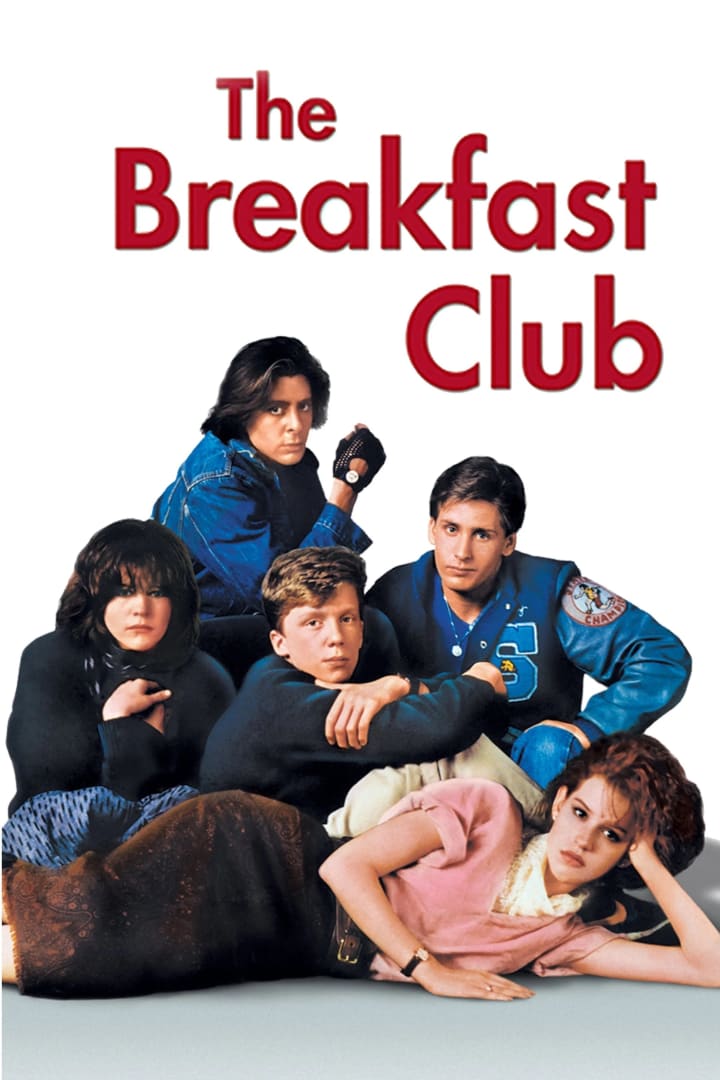
This movie didn’t talk down to Gen-X kids. It addressed our deepest anxieties directly. Who hasn’t felt the pressure of social cliques, or the frustration of being misunderstood? The Breakfast Club is remembered for the vulnerability of Ringwald and the genuine, anti-establishment fury of Nelson’s Bender. Hughes gave them permission to be complex, sad, and frustrated. They were our champions, validating the fact that our struggles were real, even if they were just about a school dance or Saturday detention. This side of the Brat Pack was built on empathy, sensitivity, and the search for identity.
IV. The Post-Grad Nightmare (St. Elmo’s Fire)
This is where the ‘Brat’ part came in. If The Breakfast Club centered on high school lockers, this film centered on bar stools, expensive apartments, and crushing disillusionment. The media wasn’t looking at five vulnerable teens anymore; they were looking at seven cynical adults.
The Crucial Film: St. Elmo’s Fire (1985).
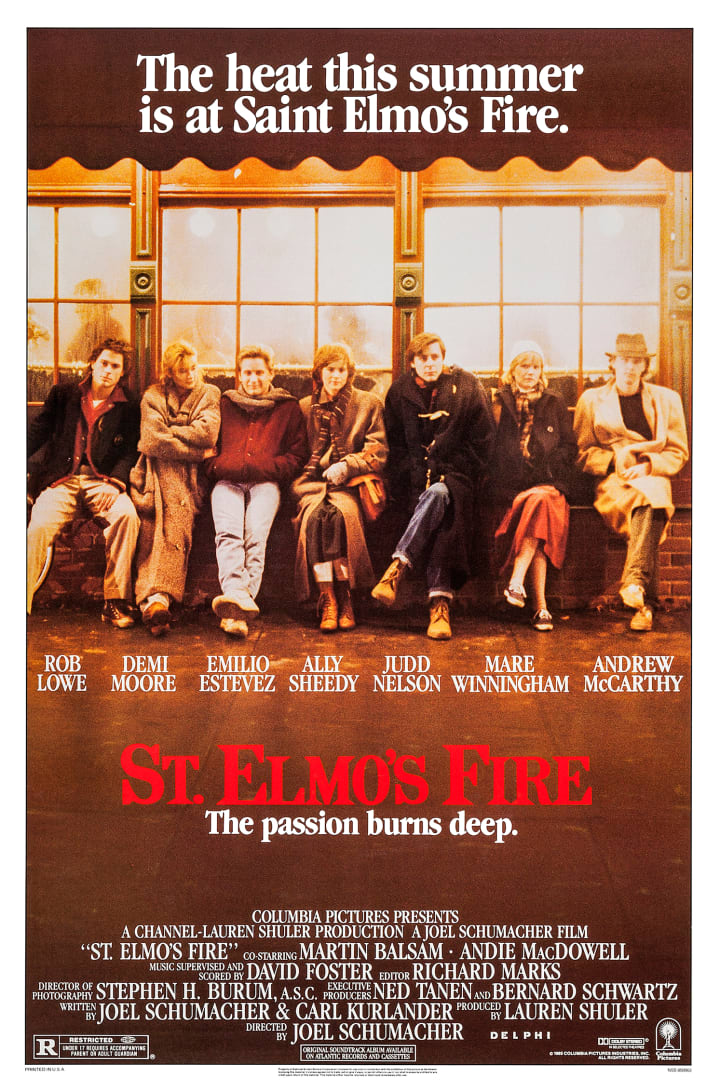
This movie took a huge chunk of the core cast-Estevez, Moore, Lowe, Sheedy, and Nelson-and showed what happens with life after graduation. The idealism was gone. St. Elmo’s Fire was a dark, messy film about ambition, addiction, self-sabotage, and the crushing weight of having everything and still feeling empty. The characters were often selfish, cruel, and hedonistic.
Because many of these actors were reportedly living and partying together off-set during this time, the media narrative quickly blended the on-screen dysfunction with the off-screen behavior. This is where the legends of their wild stories and off-screen romances began to leak out, further fueling the “brat” reputation. The critics didn’t see actors playing parts; they saw entitled young stars who were too successful, too quickly. The label “Brat Pack” wasn’t a compliment-it was a jealous warning, signaling to Hollywood that these kids needed to be taken down a peg.
V. The Lasting Legacy
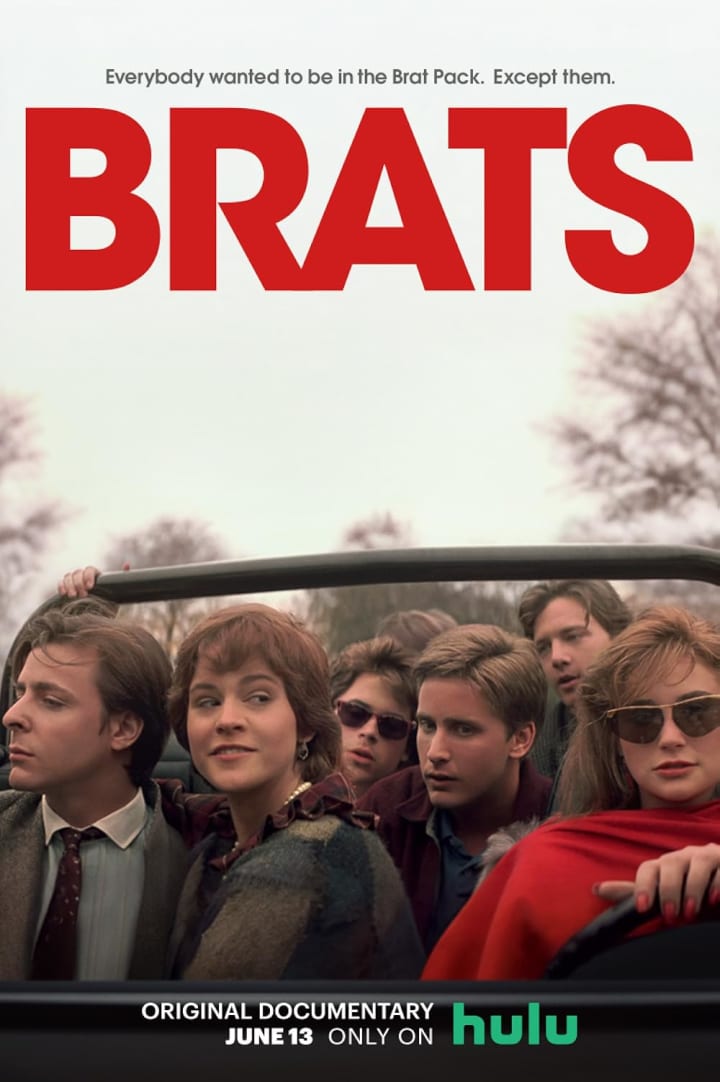
The Brat Pack era was lightning in a bottle. It lasted barely three years (1984–1987), but it left an indelible mark. It created a specific aesthetic for an entire generation. Today, the label is a nostalgic badge of honor, but at the time, it forced its members to actively choose different paths. Andrew McCarthy, who initially distanced himself, recently directed the documentary Brats (2024), revisiting the entire cultural phenomenon; Molly Ringwald has also reflected extensively on her time with the group. Emilio Estevez went into directing; Rob Lowe and Demi Moore battled the press.
They may have eventually broken up the band, but their combined work gave Gen-X the definitive cinematic documentation of its high school and post-college anxieties. In fact, if you’re ready to revisit the Post-Grad Nightmare, St. Elmo’s Fire is returning to theaters nationwide on October 17th for its 40th-anniversary re-release. Now go put on Don’t You (Forget About Me) and remember what it felt like to truly belong.
About the Author:
This piece was written by Tai Freligh, a Gen-X enthusiast and writer obsessed with reliving an 80s childhood. He uses his website and social platforms to wax nostalgic about the films, television, and pop culture that shaped the generation. Follow him on Instagram or check out his content on TikTok and YouTube to keep the 80s conversation going.
Sources:
- The New York Magazine Article (1985): David Blum, “Hollywood’s Brat Pack,” New York Magazine, June 10, 1985.
- The Breakfast Club (1985): John Hughes, released February 15, 1985.
- St. Elmo’s Fire (1985): Joel Schumacher, released June 28, 1985.
- Brats (2024): Directed by Andrew McCarthy, released on Hulu.
About the Creator
Tai Freligh
I write about entertainment and pop culture. My favorite movies are superhero or comic book movies...same with TV shows. I'm based in Huntington Beach, CA, but have been known to jaunt into L.A. Exclusive interviews are my jam.
Keep reading
More stories from Tai Freligh and writers in Geeks and other communities.
Silver Screen Magic with Mae West
American actress and singer Mae West became a popular film actress during the Great Depression. She started entertaining in vaudeville, then performed on Broadway, and finally went to Hollywood. She signed up with Paramount Pictures and made her debut in the 1932 film “Night After Night.” She also starred in musicals, comedies, and crime dramas. The American Film Institute named her one of the best classic Hollywood actresses.
By Rasma Raisters6 days ago in Geeks
Center Stage with Paul Stewart
*** I'm keen to republish the interviews I did for my series with Vocal creators. It's been a few years and I thought it might be nice to revisit these wonderful conversations. I'll be releasing them one at a time for a few weeks/months.
By Heather Hubler4 days ago in Interview



Comments (1)
This is such a compelling breakdown of how the Brat Pack became both icons and victims of their own fame. I love how you traced the emotional evolution from The Breakfast Club’s raw vulnerability to St. Elmo’s Fire’s disillusionment. It’s an insightful reflection on how media narratives can shape and distort cultural legacy.