
The 10 Most Dangerous Places on Earth (Where Survival Is a Gamble)
"Where Nature, Mystery, and Death Collide—Explore the World's Most Lethal Locations"
Introduction: The Allure of the Forbidden
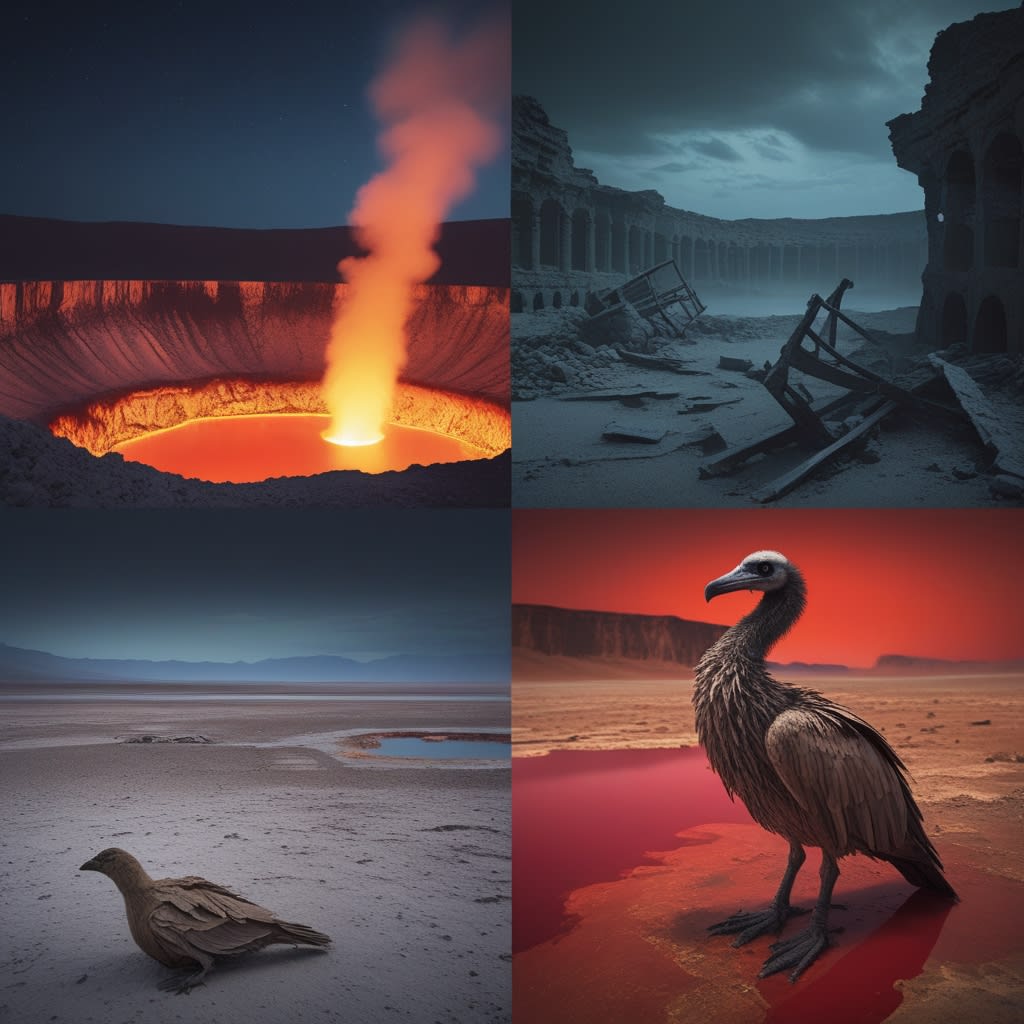
There’s a reason why dark tourism—travel to hazardous or macabre sites—is booming. Humans crave the adrenaline of flirting with danger, even if only through stories. But some places aren’t just risky; they’re actively hostile to life.
These 10 locations defy logic: lakes that mummify, islands where snakes rule, deserts that swallow signals, and villages where cold itself is a killer. Governments ban visits to some; others are guarded by tribes who’ve killed intruders for centuries.
Buckle up. This isn’t just a list—it’s a survival guide to places where one wrong step could be your last.
1. The Door to Hell (Darwaza Gas Crater, Turkmenistan)
Why It’s Deadly:
A 230-foot-wide infernal pit burning since 1971.
Temperatures hit 1,000°F (537°C)—hot enough to melt aluminum.
Toxic methane and hydrogen sulfide gases suffocate unprepared visitors.
The Backstory:
In 1971, Soviet geologists drilled into a cavern of natural gas, causing the ground to collapse. Fearing methane would poison nearby villages, they set it ablaze, expecting the fire to die in weeks. 50+ years later, it still rages.
Survivor Tales & Science:
Explorer George Kourounis became the first person to descend into the crater in 2013, wearing a heat-reflective suit. He described it as "standing on another planet."
Microbes found in the crater’s extreme heat hint at how life might survive on planets like Mars.
Local Myth:
Turkmen nomads call it "The Gateway to Hell" and whisper that the flames are the screams of the damned.
Can You Visit?
Legally? Yes, but tours are rare.
Safely? No. Heatstroke and gas exposure are constant risks.
2. Snake Island (Ilha da Queimada Grande, Brazil)
Why It’s Deadly:
4,000+ golden lancehead vipers—one bite delivers 7% fatality rate (untreated).
Venom melts flesh, causes kidney failure, and paralyzes diaphragms.
No antivenom exists on the island.
The Backstory:
11,000 years ago, rising sea levels trapped snakes on the island. With no ground predators, they evolved into hyper-lethal hunters. Birds are their prey—and they’ve grown venom potent enough to kill them mid-flight.
Horror Stories:
The Last Lighthouse Keeper: In the 1920s, a keeper and his family fled after vipers slithered in through windows. Their bodies were later found covered in bites.
Pirates’ Curse: Folklore claims the snakes guard treasure buried by pirates.
Scientific Oddity:
The vipers’ venom is being studied for heart disease treatments—despite its deadliness.
Can You Visit?
Legally? No. The Brazilian Navy bans all entry.
Safely? Only researchers with special permits dare to go.
3. Lake Natron (Tanzania)
Why It’s Deadly:
pH of 10–12 (as corrosive as bleach).
Temperatures reach 140°F (60°C).
Alkaline water preserves animals like ancient mummies.
The Science:
The lake’s extreme alkalinity comes from sodium carbonate leaching from volcanic ash. Most animals that touch it calcify, turning into eerie statues.
Survival Paradox:
Lesser flamingos thrive here, feeding on algae. Their scaly legs protect them.
Photographer Nick Brandt posed preserved birds for haunting images in his book "Across the Ravaged Land."
Local Legend:
Maasai tribes believe the lake’s crimson hue (from salt-loving bacteria) is the blood of ancient giants.
Can You Visit?
Legally? Yes, but access is remote.
Safely? Only with guides—one slip could mean chemical burns.
4. North Sentinel Island (Andaman Islands, India)
Why It’s Deadly:
Home to the Sentinelese tribe, who attack outsiders on sight.
Illegal to approach within 3 miles (5 km).
No immunity: any disease could wipe them out—or you could be speared.
The Backstory:
The Sentinelese have lived in isolation for over 60,000 years. They survived tsunamis, colonization, and modernity, fiercely protecting their way of life.
Deadly Encounters:
2006: Two fishermen drifted too close and were killed.
2018: American missionary John Allen Chau was fatally attacked trying to preach Christianity.
Survival Fact:
Even helicopters surveying tsunami damage were shot at with arrows.
Can You Visit?
Legally? No. Indian law forbids any contact.
Safely? Absolutely not.
5. The Bermuda Triangle (Atlantic Ocean)
Why It’s Deadly:
Ships and planes vanish mysteriously.
Wild weather shifts, magnetic anomalies, and rogue waves.
Theories and Files:
Methane gas eruptions could reduce water density, sinking ships.
Magnetic anomalies mess with compasses.
Rogue waves up to 100 feet high have been spotted.
US Navy declassified files cite strange incidents but no conspiracy proof.
Famous Disappearances:
Flight 19: Five bombers vanished in 1945.
USS Cyclops: Largest non-combat Navy loss—309 men gone.
Can You Visit?
Legally? Yes, cruises cross it daily.
Safely? Statistically yes—but mysteries persist.
6. Oymyakon (Russia)
Why It’s Deadly:
Coldest inhabited place on Earth: −96°F (−71°C).
Car batteries die, flesh freezes in minutes.
The Daily Grind:
Residents leave cars running all day to prevent freezing.
Eyelashes freeze solid after minutes outdoors.
Survival Tricks:
Diets are heavy in meat and fat for warmth.
Schools only close below −61°F (−52°C).
Can You Visit?
Legally? Yes, during winter festivals.
Safely? Only with serious cold-weather gear.
7. Danakil Depression (Ethiopia)
Why It’s Deadly:
Acid pools, toxic gases, temperatures up to 130°F (54°C).
The Alien Landscape:
Multicolored salt flats, boiling sulfur springs.
Home to microbes that survive extreme conditions—potential clues to life on Mars.
Local Warnings:
Water sources are toxic.
The Afar people have adapted, but outsiders rarely last long.
Can You Visit?
Legally? Yes, but only with armed guides.
Safely? Caution is critical.
8. Skeleton Coast (Namibia)
Why It’s Deadly:
Shipwrecks litter the coast—known as "The Land God Made in Anger."
Deserts meet deadly surf with no fresh water for miles.
Shipwreck Graveyard:
Shifting sands trap ships even today.
Whale bones and rusted wrecks create a haunting landscape.
Survival Nightmares:
Lost sailors often died of thirst long before rescue.
Can You Visit?
Legally? Yes, with tours.
Safely? With preparation.
9. Mount Washington (New Hampshire, USA)
Why It’s Deadly:
Holds the world record for surface wind speed: 231 mph (372 km/h).
Blizzards can strike any season.
Deadly Mistakes:
Hikers underestimate the weather.
Hypothermia claims lives yearly.
The Science:
Three storm tracks converge here—creating freakishly fast-changing conditions.
Can You Visit?
Legally? Yes—there’s a summit road and cog railway.
Safely? If you monitor weather obsessively.
10. Zona del Silencio (Mexico)
Why It’s Deadly:
Radio signals vanish.
Magnetic anomalies scramble compasses.
Alien Legends:
Locals tell of strange lights and alien encounters.
Site of a 1970 Athena missile crash—carrying radioactive cobalt.
Scientific Theories:
High iron content in the soil.
Natural gas deposits may affect electronics.
Can You Visit?
Legally? Yes.
Safely? Mysteries aside, it’s a harsh desert—bring supplies.
Conclusion: Should You Risk It?
From boiling pits of gas to venomous islands and icy death traps, these places challenge the limits of survival. They blur the line between science and legend—and dare the bravest to tread carefully.
One mistake could turn your thrill-seeking journey into your final story.
About the Creator
A Knight of the Seven Kingdoms Series Review (Season 1)
As one of the biggest properties in fantasy, A Song of Ice and Fire remains immensely popular with audiences. After reaching far into the past with House of the Dragon, a second spin-off was on the cards. A Knight of the Seven Kingdoms serves up a bite-sized slice of action and drama, but it still claims a spot among the best small-screen titles.
By Robert Cain7 days ago in Geeks
How to Install and Use MetaTrader 4 (MT4) on Mac in 2026
MetaTrader 4 (MT4) remains one of the most widely used trading platforms for Forex and CFD markets in 2026. Despite the release of newer platforms, MT4 continues to dominate retail trading because of its stability, flexibility, and strong ecosystem of indicators and automated strategies.
By Ethan Colea day ago in Geeks



Comments
There are no comments for this story
Be the first to respond and start the conversation.