movie
Best geek movies throughout history.
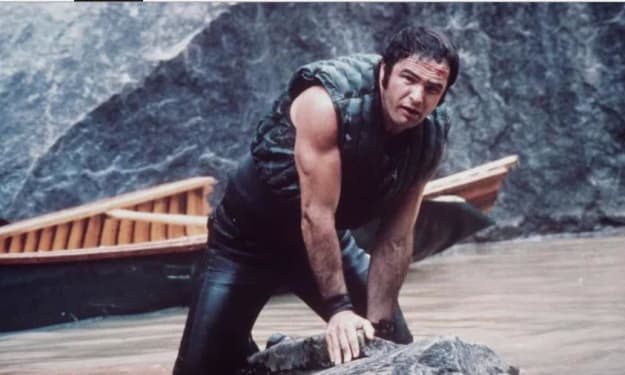
How masterly horror Deliverance set a controversial trend
ased on James Dickey's best-selling novel, Deliverance (1972) marked a highpoint in the work of British director Sir John Boorman. Having made the successful jump to Hollywood several years before, Boorman directed some of the strongest films of the period. In particular, Point Blank (1967) and Hell in the Pacific (1968) confirmed him as a director of note in the 1960s. Boorman went on to have a highly successful career, his films littered with prizes, while he received a Bafta fellowship in 2004 and, earlier this year, a knighthood. Yet Deliverance, released in the US 50 years ago this weekend, is the work that stands out in his varied and accomplished catalogue of work, not simply for its qualities but as one of the most controversial and unnerving films of the 1970s.
By Many A-Sun3 years ago in Geeks
The Power of the Dog: A five-star 'brooding melodrama'
It's been 28 years since the release of Jane Campion's Palme d'Or- and Oscar-winning masterpiece, The Piano, but you can hear its echoes ringing through her new film, The Power of the Dog. Again, Campion has made an atmospheric period drama shot in the wilds of New Zealand. Again, it features a cruel man, a sensitive man, and a single mother who marries one of them. You can probably guess which instrument the single mother plays. But for all its similarities to Campion's best-known work, The Power of the Dog is darker, stranger, and horribly gripping in its own right. Unless you've read the novel by Thomas Savage from which it's adapted, it's impossible to guess where it's going. It also boasts one of Benedict Cumberbatch's most remarkable transformations. Perhaps he told his agent that he was sick and tired of playing socially awkward scientists, and that he wanted to try the most different role imaginable – preferably while wearing a ten-gallon hat.
By Sue Torres3 years ago in Geeks
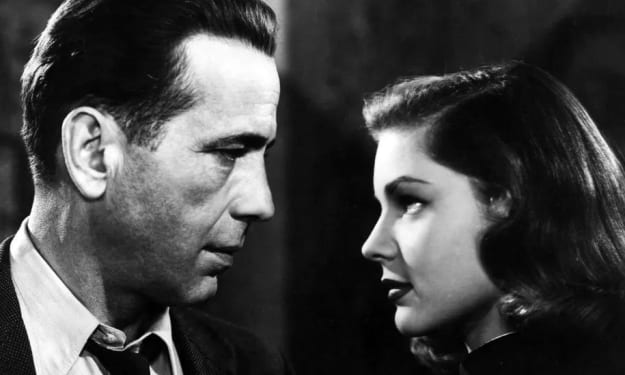
The Big Sleep: The most baffling film ever made
The Big Sleep was released 75 years ago, and its plot has been puzzling viewers ever since. There is no disputing that Howard Hawks's Los Angeles-set noir classic is one of the most entertaining of all US films, thanks to its firecracker dialogue, brutal action, sultry atmosphere, and the volcanic sexual chemistry between its stars, Humphrey Bogart and Lauren Bacall. But there's also no disputing that it's hard to know what exactly is going on. When The Big Sleep came out in 1946, the New York Times's Bosley Crowther pronounced it "a web of utter bafflement... in which so many cryptic things occur amid so much involved and devious plotting that the mind becomes utterly confused". All these decades later, the film's judgemental Wikipedia entry tuts that it "is impossible to follow", and is celebrated by "movie-star aficionados" only because "they consider the Bogart-Bacall appearances more important than a well-told story". Take that, movie-star aficionados!
By Cindy Dory3 years ago in Geeks
Diana biopic Spencer wobbles between the bold and the bad
You may feel that you've had enough of Princess Diana's story on the big and small screens, what with Naomi Watts taking the role in Oliver Hirschbiegel's awful Diana in 2013, and then Emma Corrin playing her in the most recent season of The Crown, with the mantel set to be passed in Elizabeth Debicki in the next run. But, to give it its due, Pablo Larraín's Spencer marks the only time the People's Princess has been shown delivering a lecture on Anne Boleyn to an old coat that she has just stolen off a scarecrow, and then having a chat with the ghost of Boleyn herself shortly afterwards. The Chilean director doesn't go in for conventional biopics, as anyone who has seen Jackie (starring Natalie Portman) or Neruda will know. And here again he has gone for a surreal portrait of his iconic subject. The snag is that his experimental art house spirit keeps bumping up against the naffness and the familiarity of British films set in stately homes, so his psychodrama ends up being both ground-breaking and rib-tickling.
By Copperchaleu3 years ago in Geeks
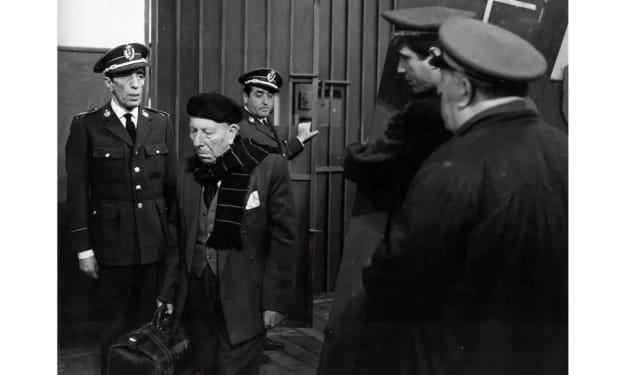
Why Berlanga is Spain's greatest film director
There's some debate over how it happened. It might have been after the screening of The Executioner, which satirised capital punishment in Spain, at the Venice Film Festival in September 1963 – or it might have been after Welcome, Mr Marshall! (1953) lampooned Spanish hopes for a slice of the US money destined to rebuild Europe after World War Two. In any case, one of the ministers of Spain's then dictatorship reported the latest irritation from the director Luis García Berlanga with the words: "Of course, Berlanga is a communist." To which the dictator Francisco Franco replied, "No, he's something worse: he's a bad Spaniard."
By Alessandro Algardi3 years ago in Geeks
Why Asian superhero Shang-Chi could truly change the world
hen, in 2018, Black Panther hit cinemas, it grossed $1bn worldwide and brought Marvel Studios its first ever Oscars. But its impact was about more than money and awards – with a predominantly black cast and crew, led by star Chadwick Boseman and director Ryan Coogler, it sent a message to Hollywood that there was a huge thirst for black stories that was still not being properly catered for.
By Mao Jiao Li3 years ago in Geeks
The Eyes of Tammy Faye: 'Hollywood Oscar bait'
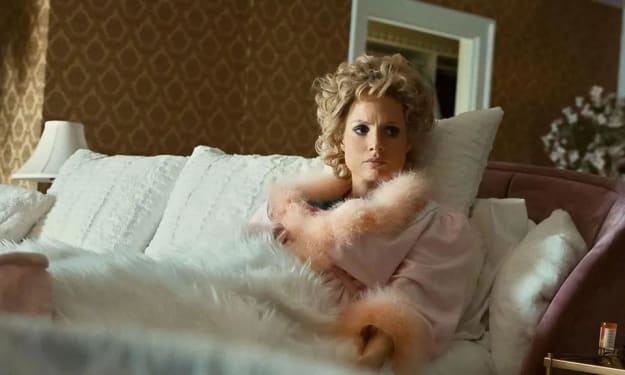
There aren't many screen heroines with the garishly bad taste of Tammy Faye Bakker, brought to flamboyant life by Jessica Chastain in The Eyes of Tammy Faye. But the real Tammy was also a one-of-a-kind spectacle. In the 1970s and '80s, comedians mocked her tarantula-like fake eyelashes and crying fits. But she was also embraced by her target audience, viewers of the popular daily talk show she starred in with her husband, Jim Bakker, one of the most successful televangelists of the time. He preached to the converted and asked them for money, and she belted out faith-based songs in a show broadcast on their own flourishing satellite television network. They even built a Christian theme park, Heritage USA. The empire crumbled after Jim admitted, in 1987, to paying hush money to a woman with whom he'd had a one-night stand, and two years later was convicted of fraud over their company's fundraising. On the day he was pronounced guilty, Tammy Faye, ever the show woman, sang on the courthouse steps.
By Many A-Sun3 years ago in Geeks
No Time To Die: The women who have shaped Bond
magine if in Dr No, the first James Bond film in a franchise that has spanned nearly 60 years, the title character had been the lead villain's pet monkey rather than the villain himself. Or everyone had talked in the style of Chicago hitmen instead of using the dialogue from Ian Fleming's seminal spy novels. Both these twists made it into iterations of the screenplay during Dr No's development, and had it not been for Johanna Harwood, a woman whose impact on Bond was vast and yet is seldom credited, 007's 1962 debut could have looked very different.
By Cindy Dory3 years ago in Geeks
The Last Duel: Cinema's 11 best showdowns
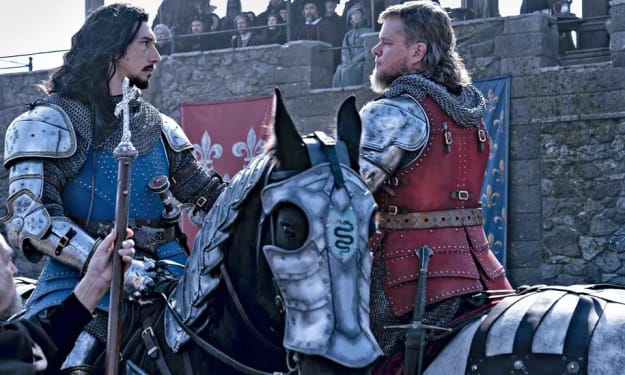
The duel in The Last Duel is a long time coming. Ridley Scott's Medieval drama has been underway for two hours before Matt Damon and Adam Driver get on their horses, grab their lances, and gallop towards each other – and by then we know their characters, we know why they're ready and willing to fight to the death, and we know what's at stake in the wider world of 14th-Century France. In other words, Scott has laid all the groundwork necessary for a classic big-screen showdown.
By Sue Torres3 years ago in Geeks