literature
Geek literature from the New York Times or the recesses of online. Our favorite stories showcase geeks.
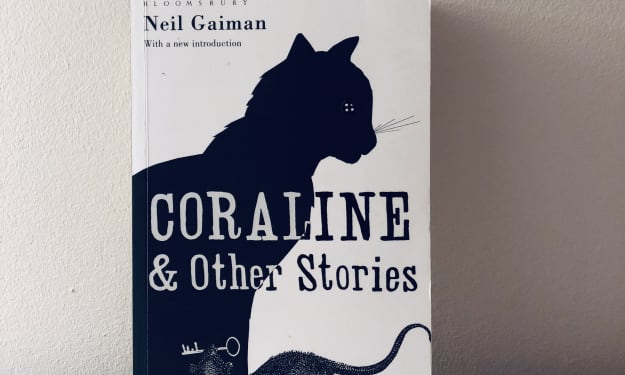
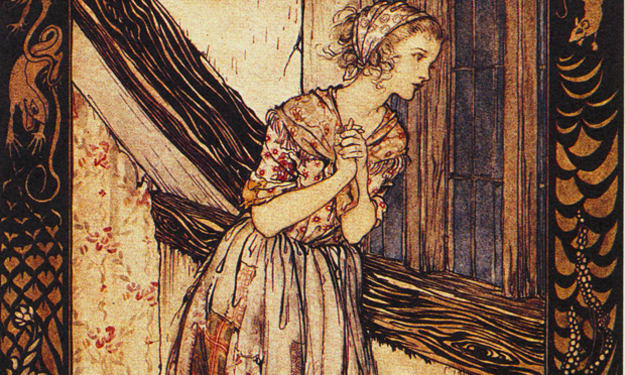
'Coraline & Other Stories' by Neil Gaiman | Book Review
Coraline, an 11-year-old girl, and her family have just moved to a new house, much to Coraline’s annoyance. As she adjusts to her new home, she gets to know her strange neighbours and uncovers strange goings-on in her new home.
By Joe Harris7 years ago in Geeks
Free Falling
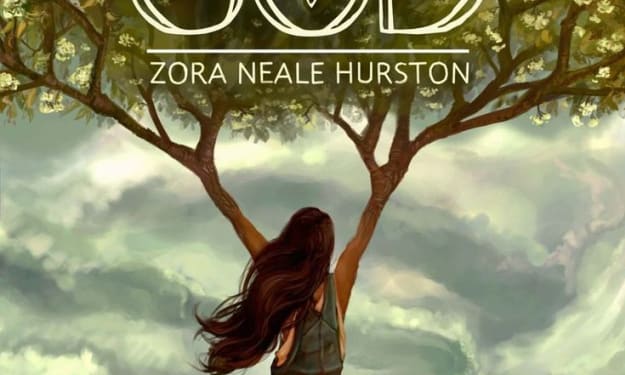
What does it mean to be free? Seems like a rather simple and puzzling question to ask since we are all free. Aren’t we? What it means to be free is a concept that so many feel unreachable and others take for granted. In Zora Neale Hurston's novel, Their Eyes Were Watching God, Janie Crawford, the granddaughter of a former slave has grown up knowing the weight of the word freedom and the painful history behind it as an African American. Growing up not only black but a woman of the 30s has shown her a form of imprisonment that was tolerated by society at that time. Having been the wife to three different men over the cause of many years has shown her dependence upon others, and her lacking experience of living life alone. That is until the death of her second husband, Joe Starks, where she has for the first time in her life chosen to be independent from others especially men. This is the first time since she was a child that Janie is free.
By Bridget Barnes7 years ago in Geeks
The Deviancy of Rural America
Even though the life and habits of different cultures seem completely, many qualities reveal themselves after time to be rather universal. There is the proverb in Swahili that roughly translates as “It takes a village to raise a child.”
By Jonathan Moore7 years ago in Geeks
The Lost Art of Reading
Bright digital light shines from all corners, projections of images filling the room like an endless flood. A once happy place filled with laughter and joy and hope now holds loneliness, disconnect and distrust. Four walls, four screens, one box with lovers who have turned to strangers. These are what Ray Bradbury called parlor walls. Television screens the size of a living room wall. Imagine living in the 1950s and welcoming this into your home. Thinking about it as a millennial in 2017 is absurd. We all know of the television and we all own one or two or maybe even three of them. Having a t.v that size is like a dream right? Having a whole room with images coming at you from every corner. News, entertainment, pop culture all presented to you whether you like it or not. No escape no way out. That is something I’m sure is not too hard to imagine. That would be because we already living like like that. That is the world we have created. This almost magical screen is what makes it possible for us to have all the gadgets in our pockets. This makes it very hard to fathom what life was like before we had all this technology. To think that instead of mindlessly keeping our eyes glued to a screen we had the power to know every wonder there ever was just by picking up a book.
By Bridget Barnes7 years ago in Geeks
Reading Journal: 'Pride and Prejudice'
Jane Austen’s Pride and Prejudice is one of the most famous and influential romance novels ever written and established a number of the tropes found in later books and films. The formula we recognize from a number of romantic comedies (a spirited and outspoken heroine who is “not like the other girls,” an aloof hero who eventually warms up to her, and a misunderstanding which leads to dislike and then to love) find their origins in Austen’s work.
By Rachel Lesch7 years ago in Geeks
The Different Types of Nonfiction
The first thing people think of when nonfiction is mentioned is probably a biography, or maybe that textbook you spent 300 bucks on and have opened exactly twice. Neither of these things makes me excited for even the possibility of cracking open a nonfiction book, and in my heart, I'm a little bitter about it.
By M.G. Sprinkle7 years ago in Geeks
Stephen King & the Ambiguously Gay Trope
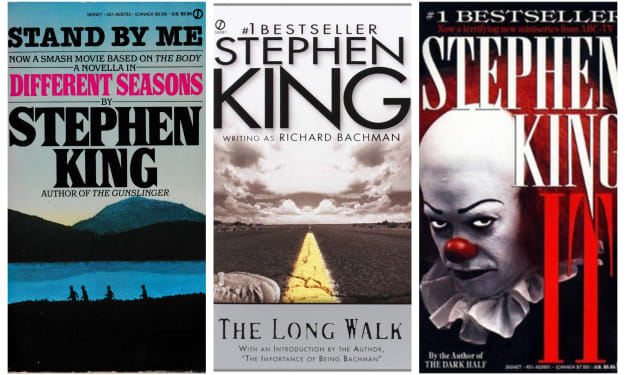
The collected work of Stephen King reads as a who’s who of strange monsters, bone-chilling villains, and the characters created within the cycle of his classic tropes. King is not only famous for his unique way with words and amazingly horrific stories but also for his staple line-up of tropes/vintage plot devices and characteristics. Authors and writers are bound to have their own assorted line-up of personal tropes or stereotypes. King’s are a huge part of the charm he has as a writer and storyteller. They act as a familiarity to let the reader know the novel their reading is a true King masterpiece. It’s part of what makes the man so great and his work so special. Most of King’s readers or fans of his films are able to recognize some of his more well-known character tropes. Most notably in his writing one can easily find a religious character, an alcoholic, a writer, childhood bullies and more. One that flies under the radar but is very apparent in his work are the undertones of homosexuality between chosen characters. Looking at characters from just three of King’s most popular stories; The Body, The Long Walk, and IT, it becomes clearer to see this interesting character relationship/trait that has been included in multiple stories of his.
By Jaime Burbatt7 years ago in Geeks
JK Rowling Should Stop Talking About Harry Potter
Harry Potter was one of those iconic childhood experiences that seemed to shape us as individuals and as society as a whole. It instilled in me a grand sense of wonder that I had not felt often in my youth. Reading became my favorite past time, and I found some friends over my love for the series. When Pottermore came out, I was one of the first to sign up for its beta premiere, and I frequently use the Hogwarts Housing system as a Myers-Briggs/astrology shorthand to analyze people and characters.
By Haley Booker-Lauridson7 years ago in Geeks