literature
Geek literature from the New York Times or the recesses of online. Our favorite stories showcase geeks.
Book Review: "Therese Desqueyroux" by Francois Mauriac
“Therese Desqueyroux” was a very strange book because I had felt like I had read similar storylines in the works of Virginia Woolf and other authors of that liking. But, in this case there was darkness looming beneath it. When Therese Desqueyroux fails to poison her husband, she is acquitted of attempted murder and goes free into the world without him. Believing at first that she was the one who did wrong, she looks back on her life with him as the abusive, oppressive overlord and observes the jail that we call marriage as now, a free woman. Only then does she learn to see the world in an increasingly new way. The story is both a celebration of a woman’s freedom and a journey of self-discovery - it wanders and loops in on itself and Therese is there for the ride in its ups and downs. The dark aspect of the story is constantly there and looming - the fact that she tried to kill him. But as you learn more and more about him through her, it becomes apparent that you are no longer angry that she tried, but angry that she did not succeed. It is written in an amazing way with these grotesque images pouring through grand descriptions of France and its cultural landscape, littered with everything that is poetic and beautiful. An excess makes it look almost naturalistically decadent in all the wrong ways.
By Annie Kapur5 years ago in Geeks
Glass
I can almost see it now....whatever "it" is.The sparkling glass reflects my own image in every space of this room like a house made of mirrors. As I get closer to the glass an image begins to surface. And image not my own. As our eyes meet the glass around us cracks slowly at first and then quickens until it finally shatters to nothing but dust and fragments of my imagination. Before I can get my bearings, I am startled awake by the sound of my phone going off buzzing loudly like a bee.
By Kelsey Burton5 years ago in Geeks
2020: My Year in Books
When I was growing up, I used to spend hours and hours a day reading. The summers in between school years was where I really thrived; I would plow through book after book, staying up all hours of the night reading. I ended up reading 53 books in one single summer break.
By Haily King5 years ago in Geeks
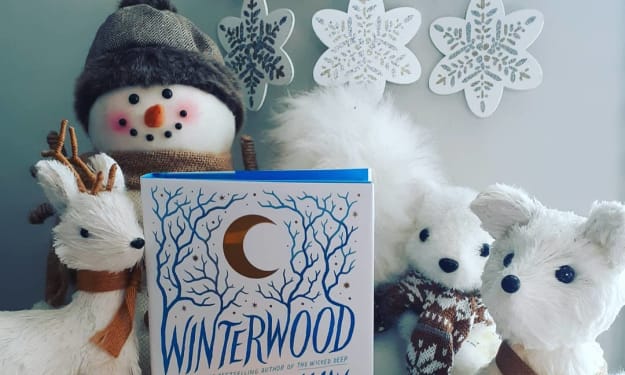
A Winterwood Winterland
I love winter! I'm like the child that would've been produced if Martha Stewart and Buddy The Elf had a baby. I know it's a weird thought. I love decorating and baking, however with COVID going on this year, I have been feeling pretty down. My anxiety and depression has consistently been at an all time high. Even my children tore down my Christmas tree a total of 6 times. It was as if the universe was deliberately trying to prevent me from having that holiday cheer!
By Kayla Lindley5 years ago in Geeks
Book Review: "Last Witnesses" by Svetlana Alexievich
Svetlana Alexievich’s nonfiction novel entitled “Last Witnesses” is exactly what it states. It is a bunch of recollections by people, now fully grown Russians, about the Nazi German invasion and what they remember of it from their childhood. From losing their parents to bombs dropping, from hiding amongst rubble to losing cherished childhood memories, from losing their own homes to migrating for safety - this book really does explore all the children and their lives that were impacted by war. Many of them not only lost their parents but lost their sense of belonging - they were flung into the midst of the war with no safety net and, as they grew up you get a clear sense that not a single one of them forgot even a slither of memory of what happened in those dark times. Recounting their tales are people from every walks of life, from the pensioners to the hairdressers, the accountants and the philosophers, the linguists and television technicians, the engineers to the chefs and so on. This book explores what it was like to lose your childhood to a war someone else started and how that memory haunts the country’s youth growing up like a black shadow. Here are some of the most touching quotations that I could see in this text. They were all pretty heartbreaking and I had trouble picking key ones I enjoyed, I hope you like the selection I did choose though.
By Annie Kapur5 years ago in Geeks
Book Review: "American Predator" by Maureen Callahan
In the book “American Predator” I think that even though there is a great amount of research and well written extracts to be had in here - there is also a certain amount of laziness with the way in which it has been put together. There is a clear bias in which certain law enforcement officers are looked at as more important in the case than others and there is also a clear dislike for various attorneys on the case. This makes the book very difficult to judge for the crimes of Keyes alone. By now, everyone in our century knows that Keyes was an absolute monster and was thoroughly misinformed about his own intelligence, but I think that there is a certain amount of stuff you have to take with a grain of salt with this book because of the bias within the book. Not only this, but the interviews with Keyes are not really private information if you have heard of the guy before and to assume, in the beginning, that nobody has is a bit presumptuous. It is to assume that your reader is ill-informed about such cases in a ‘holier than thou’ attempt in true crime. I don’t think anyone would really choose to hear about him and wish that they had not.
By Annie Kapur5 years ago in Geeks
Why The Right Book (For You) Can Help in Dark Times
If you can find it, the right book at the right time can be a balm. It can ease the rawness caused by, for example, a pandemic, abuses of power, or widespread social unrest. Partially, this is because reading offers a distraction or an escape. But, there are actually more reasons that the right book can help, and there’s science that backs them up.
By Erica Ball5 years ago in Geeks
Book Review: "Death at Intervals" by Jose Saramago
“Death at Intervals” is one of the many books I am re-reading by Saramago and I have been really enjoying my relaxation of my first re-reads of Saramago in a long while. Along with this I have re-read “Blindness” - my favourite of his, and “The Gospel According to Jesus Christ” - both of these books are amazing but I have to say, I have not felt the same in a very long time to when I first read “Death at Intervals” some five or six years ago. Thankfully, it was like reading it for the first time, with fleeting similarities and familiarities in experience. The beginning, with all of its abruptness in media res, the style of the writing in all of its tragic passion and then we have the brilliance of this vagrant image which colours the book with the natural landscape, small villages and simple peoples. It is one of those things that I think is a real quality of Saramago and have enjoyed seeing it in his other great works. I have not read everything by Saramago, but from what I have read and re-read I can honest tell that he has a fascination in what happens when you take something very essential to human survival away. In “Blindness” Saramago takes away a man’s sight in a sudden act of apparent nothingness, changing the life of the man forever. But in this book we get something more extreme. In “Death at Intervals” we get the whole concept of death being taken away and when it is finally returned, it really is no longer the same. It begs the question about whether someone should know when they are going to die and exactly how much power our own expiration should have over us. I personally believe that there is no way to conquer it and we should settle with what we are dealt with unless avoidable.
By Annie Kapur5 years ago in Geeks
Book Review: "The Quest for Corvo" by A.J.A Symons
“A Quest for Corvo” was one of those books that I was really looking forward to reading and I can honestly say that I was not in the least bit disappointed. It was just as good and if not, better, than what I had first imagined. There was definitely a certain amount of trepidation going in since I already knew the book this book was constantly making reference to [“Hadrian the Seventh” by Rolfe] and yet, I had never really given the author a second look. I did not know that this author and the author of “A Quest for Corvo” were both so interesting with the latter trying to find the other through intense amounts of passionate readings, searchings and research that lasts for the entire book. Through newspaper reports and other journalistic and non-fiction publications, we get an image of this man who was practically lost to literary history until right here and right now. The language is often wrought with passion, defiance and this want and urge to know as much as physically possible whilst also mourning the very strange loss of this author alongside it, almost like it is flowing underneath through the tunnel of the soul of the novel. I cannot describe how much I enjoyed reading this book, split up into sections entitled things such as “The Problem” - it gives us a chronological look at what happens when we follow the literary rabbit hole of a strange and estranged author.
By Annie Kapur5 years ago in Geeks
Book Review The King of California
Mark Arax and Rick Watzerman wrote the story of a family of means originating from the antebellum period in Georgia, though they claim to have roots in fifteenth century Scottish Royalty, who came to California with the bold patriarch Lieutenant Colonel J.G. Boswell. The book is titled The King of California, J.G. Boswell and the Making of a Secret American Empire. It follows much of the family, with anecdotes from family and friends, primary sources, moments with J.G Boswell’s nephew and heir to the empire Jim Boswell, and a narrative like structure following J.G. Boswell’s life after being discharged from the army. The book tells readers how the Boswell family became one of the countries largest land holders, and the biggest in California. At 200,000 acres they are masters of the central valley landscape. The book raises many questions on how these cotton barons, and the cotton crop in general has affected the environment in California, and the treatment of ethnic labor in California.
By Gus Krider5 years ago in Geeks