
Book Review: "Therese Desqueyroux" by Francois Mauriac
4/5 - Short, but filled with three-dimensional emotional imagery...

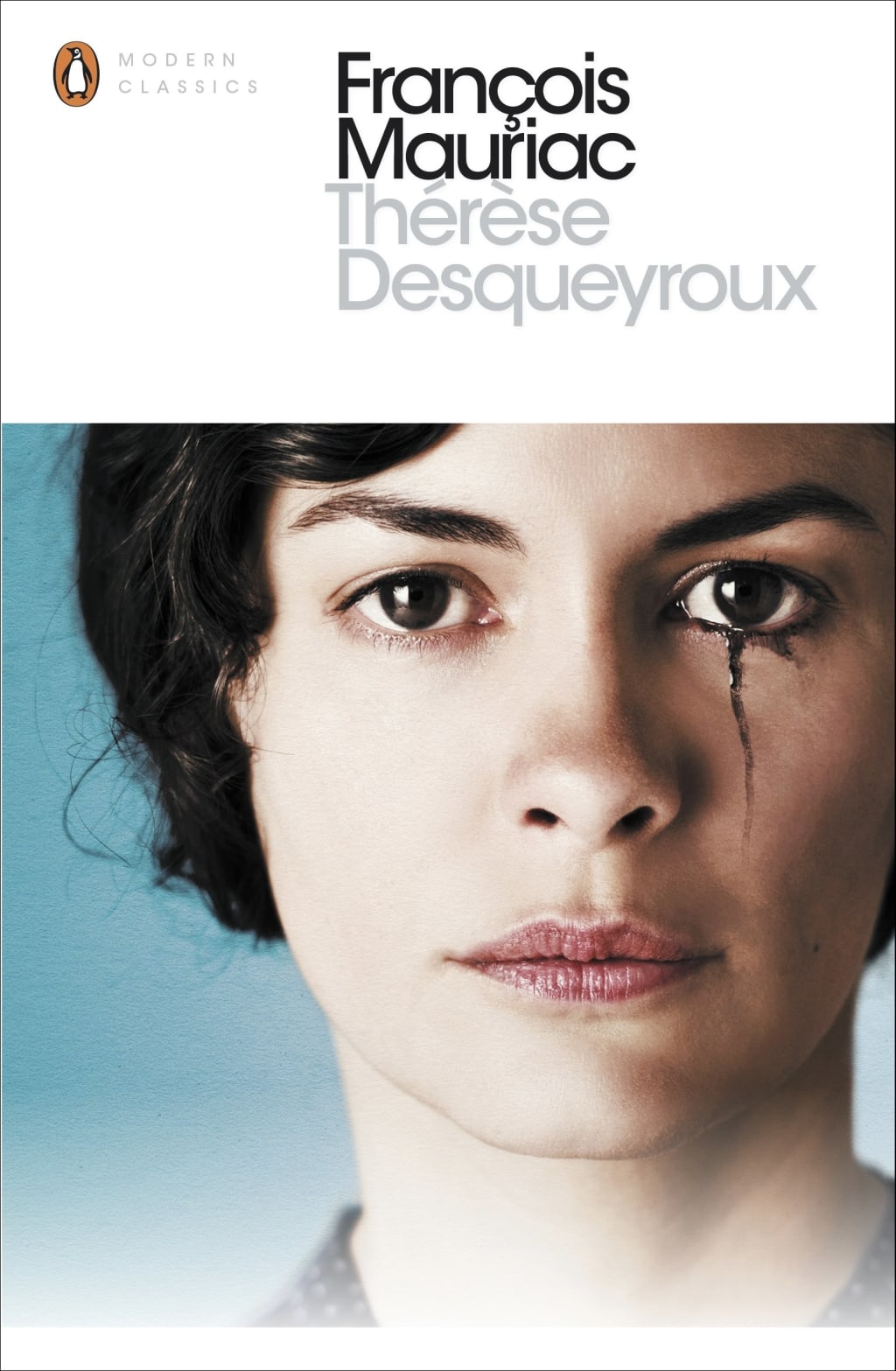
“Therese Desqueyroux” was a very strange book because I had felt like I had read similar storylines in the works of Virginia Woolf and other authors of that liking. But, in this case there was darkness looming beneath it. When Therese Desqueyroux fails to poison her husband, she is acquitted of attempted murder and goes free into the world without him. Believing at first that she was the one who did wrong, she looks back on her life with him as the abusive, oppressive overlord and observes the jail that we call marriage as now, a free woman. Only then does she learn to see the world in an increasingly new way. The story is both a celebration of a woman’s freedom and a journey of self-discovery - it wanders and loops in on itself and Therese is there for the ride in its ups and downs. The dark aspect of the story is constantly there and looming - the fact that she tried to kill him. But as you learn more and more about him through her, it becomes apparent that you are no longer angry that she tried, but angry that she did not succeed. It is written in an amazing way with these grotesque images pouring through grand descriptions of France and its cultural landscape, littered with everything that is poetic and beautiful. An excess makes it look almost naturalistically decadent in all the wrong ways.
The descriptions are also emotionally charged with tension no matter the subject matter. Whether it is the poisoning trial or whether it is simply the woman walking from one place to another. It always has this strange uncertainty bubbling beneath the surface, that like a well-written speech, keeps you hanging on until the last word.
“They were walking more quickly now, and Therese did not hear Duros’s answer. Once more she breathed in the damp night air like someone threatened with suffocation. Suddenly, there rose before her inner eyes the face of Julie Bellade, the maternal grandmother she had never seen: never even in representation, for she might have sough in vain among family possessions of the Larroques or the Desqueyroux for a portrait, a daguerreotype, a photograph of the woman about whom she knew only that one day she had just vanished. It occurred to her that she too might have been blotted out from human memory, completely obliterated, so that to her own daughter, her little Marie, might never, in days to come, have found so much as a picture of the woman who had brought her into the world. As like as not, at this very moment, the child was fast asleep in her room at Argelouse, the house which she would reach later that night. There, in the darkness, the young mother would hear the even breathing of her slumbering child, would lean above her bed and drink down, like a draught of cool, refreshing water, the small sleeping life.”
This is one of my favourite quotations from the whole book because of its incredible ability to look at the sheer amount of possibility in the mind of the main character whilst she is simply and physically doing very little. It is a brilliant combination of picturesque views of the outside, inner thoughts of possessiveness and possibility, and finally there is the more concrete thoughts about her daughter - which almost present a slumbering, sleepy and yet melancholy atmosphere to the book’s quotation.
“But what would there be to talk about now that the nightmare was over? She could see in imagination the house in which he lay waiting - a lost and hidden place buried in a wild countryside. She had a vision of the bed standing in the middle of the stone-flagged room, of the lamp burning low amid the litter of newspapers and medicine-bottles on the table. The watchdogs, roused by the sound of the carriage, would bark awhile and the fall silent. All around them would be the solemn country stillness, as on those other nights when she had sat there gazing at Bernard as he struggled with his spasms of nausea. She forced herself to contemplate the immediate future, the way in which they would look at one another when they met and then the prospect of the night ahead, the morrow and all the days and weeks which lay before them in that house in Argelous with the need removed to build up a plausible version of the drama of their lives.”
Again, another dark but beautiful quotation, these litter the book and have this moment of stoppage as if the entire world has just halted and Therese is there alone, thoughts to herself - possibilities arising.
About the Creator
Annie Kapur
I am:
🙋🏽♀️ Annie
📚 Avid Reader
📝 Reviewer and Commentator
🎓 Post-Grad Millennial (M.A)
***
I have:
📖 300K+ reads on Vocal
🫶🏼 Love for reading & research
🦋/X @AnnieWithBooks
***
🏡 UK
Keep reading
More stories from Annie Kapur and writers in Geeks and other communities.
A Filmmaker's Guide: True Crime Cinema
In this chapter of ‘the filmmaker’s guide’ we’re actually going to be learning about literature and film together. I understand that many of you are sitting in university during difficult times and finding it increasingly hard to study and I understand that many of you who are not at university or not planning on it are possibly stuck of what to do, need a break or even need to catch up on learning film before you get to the next level. This guide will be brief but will also contain: new vocabulary, concepts and theories, films to watch and we will be exploring something taboo until now in the ‘filmmaker’s guide’ - academia (abyss opens). Each article will explore a different concept of film, philosophy, literature or bibliography/filmography etc. in order to give you something new to learn each time we see each other. You can use some of the words amongst family and friends to sound clever or you can get back to me (email in bio) and tell me how you’re doing. So, strap in and prepare for the filmmaker’s guide to film studies because it is going to be one wild ride.
By Annie Kapur5 years ago in Geeks
History of The Three Stooges (Part I: The Beginnings and Columbia Pictures - 1920s-1936)
I have been itching to write about The Three Stooges on Vocal for close to two years, but I couldn't figure out how to do it. I wanted to do it by third Stooge, but that's a bit complicated. I know this much. I was about eight or nine years old when I first saw The Three Stooges. I remember one of my local channels had the Stooges on for hours, and I tried my damnedest to be up for those shorts. I remember that the Family Channel actually had an hour of the Stooges on from 11PM to midnight, and it was the entire library on during that time.
By Clyde E. Dawkins4 days ago in Geeks


Comments
There are no comments for this story
Be the first to respond and start the conversation.