literature
Geek literature from the New York Times or the recesses of online. Our favorite stories showcase geeks.
"Frankenstein" by Mary Shelley
“Frankenstein” by Mary Shelley is regularly called the world’s first Sci-Fi novel and for years it has been the marker from which body horror has been created. About a man called Victor Frankenstein who sets his entire life upon making a creature so close to a living man that when it happens, he regrets the whole thing - this book has enthralled audiences for over two hundred years.
By Annie Kapur4 years ago in Geeks
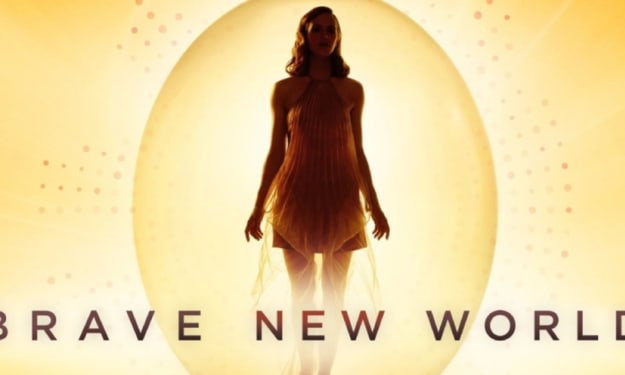
Brave New World: Why Lenina Crowne is my Favourite Character
If you haven’t read Brave New World by Aldous Huxley. I highly recommend that you do. It’s a well written dystopian tale of a future where the concepts of mothers, fathers, families, monogamy, childbirth, and many other things have all been abolished and seen as perverse by society. All human reproduction is down to a science, all new humans created and decanted (born) from a bottle in a Laboratory.
By Dark Phoenix Apocalypse4 years ago in Geeks
Book Review: "The Aleph and Other Stories" by Jorge Luis Borges
Jorge Luis Borges has written so many great books over his lifetime and in my own time, I have read a few of them. I have read Fictions, Labyrinths and The Library of Babel and yet, I am no closer to discovering the true message of Borges' works. He is seriously a man of mystery and a man whom I think is trying to teach us about the more compassionate aspects of the human condition through riddles, puzzles and paradoxes. It has, admittedly, been a while since I have read anything by Borges and so I sought to pick up a book of short stories rather than a full-length novel in order to get a better feeling of his literary life lessons and their background, of his philosophies and their roots and where in the critical literary compass he lies. I may not have answered all of these questions, but I have definitely got a better, more confident feeling of reading and re-reading Borges now that The Aleph and Other Stories is over.
By Annie Kapur4 years ago in Geeks
Book Review: "Ravelstein" by Saul Bellow
For all of you who know me, you will know how difficult I have always found it to really sink my teeth into the works of Saul Bellow. I once re-read The Adventures of Augie March in the act of trying to prove to myself that I was simply in a really foul mood when I read it the first time. In fact, I was not - I simply did not think too much of the novel. And that, I had to learn, was okay. Not everyone will like what snobby academics call the 'great novels' and that is perfectly fine. As for Saul Bellow's other works, I have found some liking in the collected nonfiction writings such as It All Adds Up and some of his books such as: Dangling Man and The Victim. Often people regard Saul Bellow as one of the great writers of the 20th century, I have to say that I beg to differ, but it is simply based on opinion. If you do in fact, enjoy Saul Bellow's books, then do not let me take that away from you.
By Annie Kapur4 years ago in Geeks
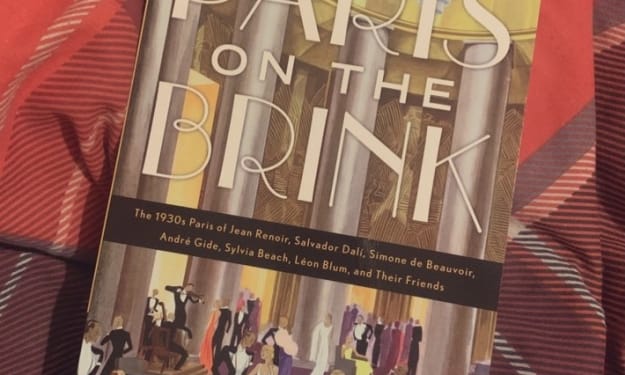
Book Review: "Paris on the Brink" by Mary McAuliffe
I have been interested in the Belle Epoque to the French Modernist Era for a while and I have read extensively into French Literature during the second world war as well. I think France's greatest literature is within this period from their golden age of the 19th century all the way down to their 1950s literature. One of the first extensive books on the Belle Epoque that I actually got to read (as opposed to just articles) was called The Man in the Red Coat by Julian Barnes and it was absolutely divine. I had before that read many books from the era, articles about the era but never a full book which captured it heart and soul. Fortunately enough for me, I also located the books of Mary McAuliffe and started with her nonfiction book entitled Paris on the Brink.
By Annie Kapur4 years ago in Geeks
The Language of Spears: A Review
D’Andre August’s The Language of Spears weaves a pulse pounding, adrenaline pumping tale of war, corruption, and one man’s unfailing duty to the kingdom he and so many have bled for. Heavily inspired by African culture, the story follows Emani the “Tower”, the greatest warrior of Ko’Mazi and the Askarai (general) of its legendary military, as he is faced with a foreign concept more unsettling to him than war: peace. As a transition of power draws nearer, Emani finds himself in an unfamiliar battlefield, one that cannot be won through the strength of muscles and spears, but through making peace with those they have made war with for years. To complicate things further, there is talk of an army of monsters gathering, and a king of great power who can create them and seeks to conquer all the kingdoms. Emani is forced to put his life on the line, as well as face the wrath of the Council and the new king, in order to ensure the survival of Ko’Mazi, no matter how much blood he must spill. Through it all, he finds himself in a shaky alliance with Kadra the “Cat”, a mercenary warrior as deadly as she is alluring, and her sometimes dubious intentions.
By Warren Johnson4 years ago in Geeks
Remember Me
"My name is Illustriador, remember me!" This phrase... this thought... was racing through my mind not so very long ago. You see I had all but lost and was facing a bitter end. It's quite strange when one, especially an elf, is at what they consider the final moments of their existence, when there is no tomorrow or next time. I think for everyone it may be slightly different. For me this single moment was a culmination of everything I was and had been. I felt as though all the power of Arnor had been funneled into my very being and I had one last glorious vision... I would make these hounds of darkness remember the name Illustriador!
By Josh Hanshaw4 years ago in Geeks
Book Review: "London: The Illustrated Literary Companion" by Rosemary Gray
In the book Around the World in 80 Books by David Damrosch, I got to read this beautiful chapter about London and its literary components. It started with an analysis of London according to Clarissa Dalloway from Virginia Woolf's legendary realist novel Mrs. Dalloway. It moves on to a number of different authors from which my possible favourite has to be Charles Dickens. But apart from just Dickensian London, there are other aspects waiting to be explored. It was the book by David Damrosch which made me seek out a compiled source of beautiful texts on the city of London throughout the ages and I am so glad that I came across this compiled classic by Rosemary Gray.
By Annie Kapur4 years ago in Geeks