
Surfboard Market Size and Forecast 2025–2033
How innovation, sustainability, and global surf culture are reshaping the future of wave riding


Surfboard Market at a Glance
The global Surfboard Market is projected to grow from US$ 2.94 billion in 2024 to US$ 4.45 billion by 2033, expanding at a compound annual growth rate (CAGR) of 4.72% from 2025 to 2033, according to Renub Research. This steady growth reflects the rising popularity of surfing as both a recreational lifestyle and a professional sport, supported by coastal tourism, youth participation, material innovations, and the increasing influence of eco-friendly product design.
Surfing today is no longer confined to traditional beach communities. From artificial wave parks in Europe to river surfing in urban centers and resort-driven tourism in Asia and the Middle East, surfing has evolved into a global phenomenon. As a result, surfboards—once handcrafted niche products—have become technologically advanced, customizable, and increasingly sustainable sports equipment.
Global Surfboard Market: Industry Overview
A surfboard is a long, buoyant board designed to glide across ocean waves, enabling surfers to balance, maneuver, and perform tricks on water. Traditionally constructed from polyurethane foam, fiberglass, and resin, modern surfboards now incorporate epoxy, carbon fiber, plant-based resins, and recyclable cores to improve performance while reducing environmental impact.
Surfboards are available in various designs—shortboards, longboards, fish boards, gun boards, and funboards—each tailored to different wave conditions and surfer skill levels. Shortboards dominate competitive surfing due to their speed and agility, while longboards and funboards are preferred by beginners and recreational surfers for their stability.
Beyond equipment, surfing represents a global lifestyle. The influence of surf culture across fashion, travel, social media, and wellness has broadened its appeal, especially among Gen Z and millennials. Increased disposable income, adventure tourism, and the popularity of coastal sports have further fueled consumer demand for premium, customized, and performance-oriented surfboards.
What’s Driving the Surfboard Market Forward?
1. Rising Popularity of Surfing as a Global Sport
Once limited to destinations such as Hawaii, California, and Australia, surfing has expanded into Asia, Europe, Latin America, and the Middle East. Its inclusion in the Olympic Games and the global reach of the World Surf League (WSL) have dramatically increased awareness, legitimacy, and participation.
Surf schools, surf camps, and beginner-friendly training programs have made the sport more accessible. Artificial wave pools and indoor surf parks have further eliminated geographical barriers, allowing urban populations to experience surfing year-round. Meanwhile, social media influencers and professional athletes continue to inspire younger audiences to take up the sport.
As participation increases, so does demand for boards that offer better control, durability, and personalization. This cultural and sporting expansion remains one of the strongest long-term growth drivers for the global surfboard market.
2. Technological Advancements in Design and Materials
Innovation is transforming surfboard manufacturing. Traditional hand-shaping is increasingly complemented by computer-aided design (CAD), 3D modeling, and precision shaping machines, enabling highly customized boards tailored to wave conditions, body weight, and surfing style.
Modern boards incorporate epoxy resins, carbon fiber reinforcements, and hydrodynamic contours that enhance speed, maneuverability, and responsiveness. These advancements allow manufacturers to deliver boards that perform consistently across diverse conditions—from small recreational waves to professional competition environments.
In July 2024, professional surfer John Florence and renowned shaper Jon Pyzel introduced the Power Tiger, a surfboard model engineered for versatility across a wide range of waves. Combining innovative design with advanced materials, the board reflects how athlete collaboration and technology are reshaping the performance standards of the industry.
3. Introduction of Eco-Friendly and Sustainable Surfboards
Sustainability is now a defining trend in the surfboard market. Traditional manufacturing relies on non-biodegradable foams, fiberglass, and chemical resins, which contribute to environmental pollution and waste. As surfers are often environmentally conscious, demand for eco-friendly alternatives has surged.
Manufacturers are increasingly adopting bio-resins, recycled foams, balsa wood, natural fibers, and carbon-neutral production techniques. These materials reduce carbon footprints while maintaining performance standards.
In July 2024, Firewire Surfboards launched the MACHADOCADO, developed in collaboration with surfing legend Rob Machado. The model integrates sustainable materials with advanced performance design, reflecting the industry’s commitment to responsible innovation.
While eco-friendly boards may carry higher production costs, growing consumer awareness and regulatory pressure are accelerating adoption, positioning sustainability as a key competitive differentiator in the coming decade.
Challenges Facing the Surfboard Market
Environmental Impact and Manufacturing Costs
Despite advancements, sustainability remains a major challenge. Eco-friendly materials are often more expensive and difficult to scale, making mass production complex. Manufacturers must balance performance, durability, cost efficiency, and environmental responsibility—a combination that remains difficult to achieve consistently.
Additionally, disposal of old surfboards remains problematic, as many traditional boards are not recyclable. This creates long-term waste concerns, particularly as the global user base expands.
Seasonal Demand and Limited Accessibility
Surfing remains highly dependent on geography and seasonality. Demand peaks during favorable weather and declines in colder months, creating inconsistent revenue patterns. Inland regions with limited access to surfable coastlines face infrastructure barriers, limiting market penetration.
While artificial wave pools offer solutions, their high construction costs and limited global availability restrict their immediate impact. Moreover, premium surfboards remain costly for beginners, creating entry barriers in developing markets.
Regional Insights: Surfboard Market by Country
United States
The United States leads the global surfboard market, supported by extensive coastlines, established surf culture, and major brand presence. California, Hawaii, and Florida remain key hubs, hosting surf schools, competitions, and high volumes of recreational surfers.
Growing interest in sustainability, coupled with strong research and development in materials and design, positions the U.S. as a global innovation leader. Events such as the Vans US Open of Surfing and expanding surf tourism continue to strengthen demand for both professional and recreational boards.
Germany
Germany represents a fast-emerging non-coastal market. While lacking traditional surf beaches, the country has embraced river surfing—notably at Munich’s Eisbach—and artificial wave parks. German consumers prioritize sustainability, making eco-friendly surfboards particularly appealing.
Surf-inspired fashion, wellness travel, and online retail channels are further expanding consumer awareness. Germany’s market demonstrates how infrastructure innovation can unlock surfing demand beyond coastal regions.
China
China’s surfboard market is growing rapidly, driven by government-backed tourism initiatives and rising youth interest in Western sports culture. Coastal regions such as Hainan Island and Guangdong Province are emerging as key surfing destinations.
Local manufacturing capabilities and investments in surf resorts support domestic production and accessibility. While infrastructure and skilled coaching remain limited, China is expected to become one of the fastest-growing surfboard markets in the Asia-Pacific region over the forecast period.
Saudi Arabia
Saudi Arabia’s surfboard market is still in its early stages but shows promising potential. Under Vision 2030, the Kingdom is investing heavily in tourism, sports, and leisure infrastructure along the Red Sea coastline.
Luxury resorts, international partnerships, and surf schools are introducing water sports to new audiences. Although cultural adaptation and limited local expertise pose challenges, growing youth interest in adventure sports and government-backed coastal development are expected to drive gradual market expansion.
Recent Developments in the Surfboard Industry
June 5, 2023: Agit Global Inc. and Mattel announced a collaboration between Wavestorm and Barbie, introducing a new line of outdoor sporting goods. The initiative blends lifestyle branding with water sports, encouraging youth participation.
December 12, 2023: Starting Line Sailing (SLS) and Hobie Cat Company II mutually ended their licensing agreement, signaling strategic realignment in distribution and manufacturing operations.
2022: The Kinetic Option launched the TKO 001, an electric surfboard enabling wave-free surfing. Made from carbon fiber and weighing under 40 pounds (without battery), it represents innovation in powered water sports.
2022: WaveShark introduced Jetboard 2 and Foil 2, capable of speeds up to 60 km/h with extended runtimes, reinforcing advancements in the electric surfboard segment.
Surfboard Market Segmentation
By Product Type
Shortboards
Longboards
Fish Boards
Gun Boards
Others
By Material Type
Polyurethane
Balsa Wood
Others
By Distribution Channel
Online
Offline
By Application
Recreational
Professional
Geographic Coverage (25-Country Outlook)
North America: United States, Canada
Europe: France, Germany, Italy, Spain, United Kingdom, Belgium, Netherlands, Turkey
Asia-Pacific: China, Japan, India, Australia, South Korea, Thailand, Malaysia, Indonesia, New Zealand
Latin America: Brazil, Mexico, Argentina
Middle East & Africa: South Africa, United Arab Emirates, Saudi Arabia
Key Players in the Surfboard Market
Infinity Surfboards Incorporated
Beachbeat Surfboards
Superbrand Surfboards
Xanadu Surfdesigns
Brusurf LLC
Global Surf Industries
Hobie Cat Company Inc.
Haydenshapes Surfboards
Agit Global Inc.
Keeper Sports Products LLC
Each company is analyzed across five strategic dimensions:
Company Overview, Key Persons, Recent Developments & Strategies, SWOT Analysis, and Sales Performance.
Future Outlook: Where the Market Is Headed
The global surfboard market is entering a transformative phase. While traditional coastal regions will continue to drive demand, the future lies in technological innovation, sustainable manufacturing, and geographic diversification.
Artificial wave technology, eco-friendly materials, and digital customization will redefine product offerings. At the same time, emerging markets in Asia-Pacific and the Middle East will play a crucial role in expanding the global consumer base.
With a projected value of US$ 4.45 billion by 2033, the surfboard market reflects more than just equipment sales—it represents the growing convergence of sports, lifestyle, technology, and sustainability.
Final Thoughts
The surfboard market’s steady growth highlights the evolving nature of surfing from a niche coastal activity into a global lifestyle and competitive sport. Backed by rising participation, technological innovation, and sustainability initiatives, the industry is well positioned for long-term expansion.
As manufacturers invest in eco-friendly materials, smart design, and new wave-creation technologies, surfboards are becoming more accessible, high-performing, and environmentally responsible. For investors, manufacturers, and enthusiasts alike, the coming decade promises a wave of opportunity—where innovation meets tradition, and sustainability becomes the new standard of performance.
About the Creator
Marthan Sir
Educator with 30+ years of teaching experience | Passionate about sharing knowledge, life lessons & insights | Writing to inspire, inform, and empower readers.
Keep reading
More stories from Marthan Sir and writers in Geeks and other communities.
North America Christmas Tree Market Size and Forecast 2025–2033
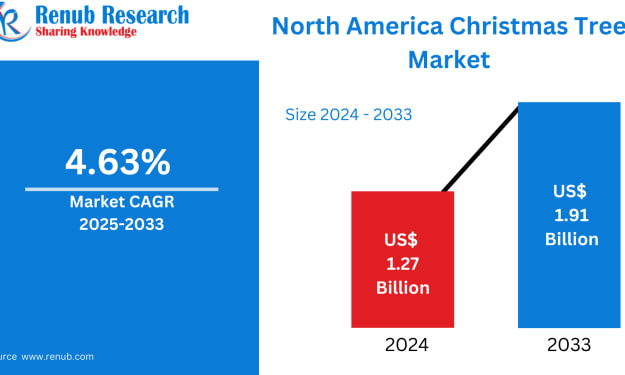
North America Christmas Tree Market Outlook The North America Christmas Tree Market is projected to grow from US$ 1.27 billion in 2024 to US$ 1.91 billion by 2033, expanding at a CAGR of 4.63% during 2025–2033, according to Renub Research. This steady growth reflects the enduring cultural relevance of Christmas celebrations, evolving consumer preferences, and increasing interest in sustainable and visually appealing holiday décor.
By Marthan Sir14 days ago in Geeks
Landman Season 2 Episode 8 Breakdown: The Twist That Changes Everything
Landman Season 2 is racing toward its final showdown, and right before the finale, the show suddenly slams the brakes and pivots in a direction nobody saw coming. With only two episodes left, the writers are clearly setting Tommy up for an ending that most of us did not expect—so we need to unpack it.
By Bella Anderson2 days ago in Geeks


Comments
There are no comments for this story
Be the first to respond and start the conversation.