
Supernatural Clowns in Horror: From Killer Jokesters to Demonic Forces
Terifiere 3 is not the best clown in town
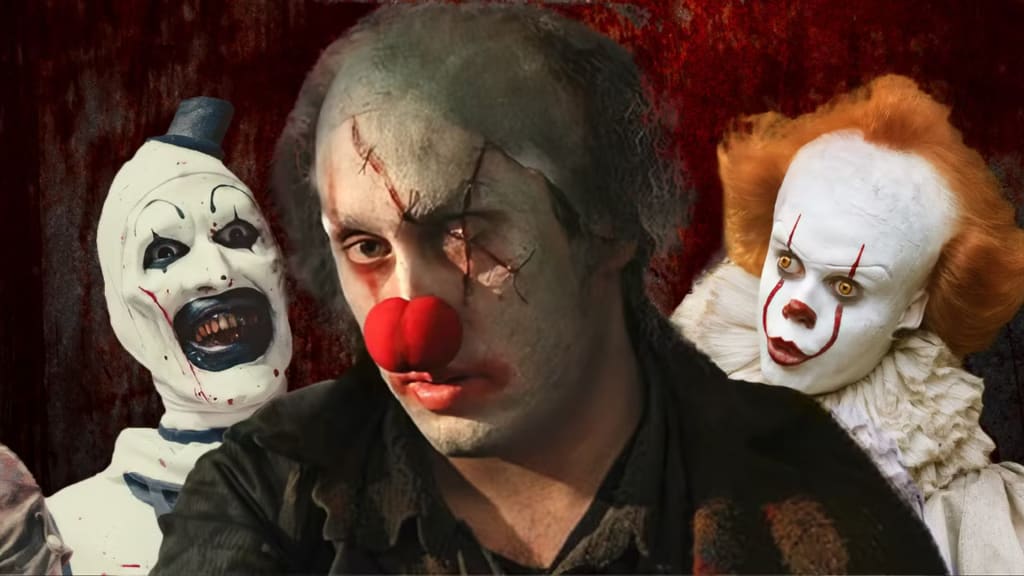
The clown archetype has long teetered between humor and terror, representing both joy and fear. This tension is amplified in horror cinema, where clowns often embody supernatural evil, transforming into killing machines that blend gore with dark humor. Over the decades, the supernatural clown subgenre has produced iconic figures that push the limits of horror, creating a potent mixture of dread, violence, and grotesque amusement.
Clowns as Harbingers of Horror
The 1990 miniseries IT and its 2017 remake catapulted the killer clown to mainstream horror fame. Pennywise, the central villain, is more than just a clown—he’s an ancient, shapeshifting entity that feeds on the fears of children. Stephen King’s creation encapsulates the dichotomy of clowns: simultaneously playful yet deeply unsettling. While Pennywise cracks jokes and engages in childlike antics, his true nature is profoundly malevolent, reflecting the supernatural evil beneath the surface. The juxtaposition of his humor and horrifying violence is emblematic of the subgenre.
In Killer Klowns from Outer Space (1988), the killer clowns are literally aliens who take the form of circus performers. Unlike IT, this film leans into absurdity, blending slapstick humor with grotesque horror. These clowns use cotton candy cocoons and shadow puppets to murder their victims, reveling in the absurd while still maintaining a disturbing edge. The film merges supernatural otherness with clownish aesthetics, resulting in an unforgettable collision of alien invasion tropes and clown-themed gore.
Similarly, Violator from the Spawn comic series and film adapts this terrifying clown persona. Violator, a demon masquerading as a clown, embodies both grotesque humor and unhinged violence. His grotesque appearance, vulgarity, and gory transformation into a monstrous form emphasize the chaos clowns can represent in horror. The supernatural elements here add a dimension of unpredictability, as Violator’s powers are far beyond human, symbolizing a terrifying blend of malevolent humor and unstoppable demonic force.
The Demonic, Humor, and Gore Connection
Clowns in horror, particularly supernatural clowns, often walk a fine line between humor and terror. This blend of the grotesque with comedy creates an unsettling atmosphere, where the audience is never sure whether to laugh or recoil. Films like Killjoy (2000) and Stitches (2012) exploit this tension. In Killjoy, the clown is summoned through a supernatural ritual, embodying revenge-driven violence with campy antics. His exaggerated persona mocks his victims, offering one-liners while dispatching them in gory fashion, all the while maintaining a supernatural aura that heightens the terror.
Stitches, an Irish horror-comedy, takes this concept a step further by introducing a more creative and narrative-driven use of clown powers. In the film, Stitches the clown returns from the dead to seek revenge on the children who inadvertently caused his death during a prank. The film cleverly intertwines slapstick gore and dark humor, such as when Stitches transforms a child’s intestines into a twisted balloon animal or when his red nose takes on a life of its own, symbolizing the clown’s supernatural persistence. The film’s creativity in using clown props to engineer grotesque deaths stands out, making it a fresh entry in the supernatural clown canon.
In contrast, John Watts’ Clown (2014) takes a more disturbing route. A father who dons a cursed clown suit to entertain his child slowly transforms into a demonic being, unable to remove the suit as it fuses with his body. The horror here lies in the transformation itself, turning an innocent act of love into a nightmarish descent into possession and body horror. The clown’s supernatural presence is tied to a demonic curse, reinforcing the subgenre’s reliance on the overlap between innocence (the clown persona) and pure evil (demonic possession).
Stitches vs. Terrifier: A Tale of Two Clowns
One of the most significant comparisons in this subgenre is between Stitches and Terrifier (2016, 2022). While Stitches is more creative with its narrative and the use of clown powers, Terrifier introduces Art the Clown as a sadistic, mute clown with a penchant for extreme violence and gore. Initially portrayed as a psychopathic human, Art becomes a supernatural force in Terrifier 2, further emphasizing the genre’s shift toward the paranormal. Art’s silent demeanor and grotesque killings—especially the infamous hacksaw scene in the first film—showcase a grim approach to violence, using the clown motif as a vehicle for brutality rather than humor.
Where Stitches is inventive in the way it uses clown tropes (balloon animal intestines, a self-repairing red nose), Terrifier relies more on sheer shock value and visceral gore. The character of Stitches uses humor and clownish tricks in inventive ways to kill his victims, infusing the supernatural with a creative edge. In contrast, Art the Clown’s brutality is more grounded in visceral horror, focusing on the grotesque spectacle of violence. Terrifier uses minimal narrative or supernatural explanation, allowing Art’s increasingly supernatural abilities to emerge slowly. This distinction makes Stitches the more creative and narratively satisfying film in terms of using supernatural clown powers.
Conclusion: Clowns and the Supernatural in Horror
The supernatural killer clown subgenre taps into a deep-seated fear of clowns, transforming what is traditionally a figure of humor into an icon of terror. Films like IT and Terrifier push the boundaries of gore, while others, like Stitches, balance horror and creativity, weaving supernatural elements into the clown’s grotesque killings. The link between demonic possession, humor, and gore ensures that supernatural clowns will remain a staple in horror for years to come, continuously evolving in their methods to both terrify and amuse audiences.
Ultimately, while Terrifier thrives on shock value and brutal violence, Stitches stands out as the more inventive and playful film, using supernatural clown powers to their fullest, grotesque potential.
About the Creator
Nazgol Rasoolpour
An emerging researcher with a passion for horror narrative. My focus revolves around the captivating subgenres of religious horror and techno horror.
Reader insights
Nice work
Very well written. Keep up the good work!
Top insight
On-point and relevant
Writing reflected the title & theme
Keep reading
More stories from Nazgol Rasoolpour and writers in Geeks and other communities.
Cynthia Erivo & The Wicked Poster Drama
Cynthia Erivo’s recent uproar over the fan-altered *Wicked* movie poster has reignited discussions about the role of image in Hollywood and the complex relationship between celebrities and their audiences. At the heart of this controversy lies an intriguing history: *Wicked*’s original Broadway poster from 2003 cleverly avoided showcasing any specific actor’s face. The design, an illustration of the witch Elphaba with her iconic green skin and Glinda whispering into her ear, has since become iconic. By excluding any actor’s likeness, the artwork transcended individual performances and became a timeless representation of the story, a tactic that allowed the production to avoid the pitfalls of recasting actresses in long-running shows. The faceless design also helped preserve the mystique of the story rather than centering on any one performer.
By Nazgol Rasoolpourabout a year ago in Geeks
Marvel Zombie
The last entry into our 2025 superhero projects catalogue is Marvel Zombies. This was a show that was anticipated by absolutely no one and it disappeared from the public consciousness as quickly as it was released. There was nothing special about the project that made it a must see, or a must remember. In fact if anything it's a must forget.
By Alexandrea Callaghan25 days ago in Geeks
In the Blink of an Eye: A Forgotten Thriller That Explores How Fast Life Can Shatter
Some movies don’t rely on spectacle or big budgets to leave an impression. Instead, they unsettle you quietly, planting a sense of unease that lingers long after the credits roll. In the Blink of an Eye (1996) is one such film—a made-for-television thriller that may not be widely remembered today, but one that delivers a chilling message about how quickly trust, identity, and safety can disappear.
By David Cook6 days ago in Geeks
Smart phones, Humans and Aliens.
WARNING. I will be tapping into one of your favorite creative tensions: The absurdity of humans worshipping their glowing rectangles as if they were tiny oracles. There’s something deliciously poetic about that contradiction, and it lends itself beautifully to an instructive proviso.
By Novel Allen4 days ago in Poets


Comments (1)
Hey thanks for this ! I have never heard of Killer Clowns from outer space and oh boy! Absurdity at it best it seems!